If you are trying to eat more plant-based meals, build muscle, or simply stay full longer, protein matters.
But here is the surprise many people miss: some “vegetables” contain a meaningful amount of protein – especially when you eat them in realistic portions.
Most people never realize “protein rich veggies” because they think protein only comes from meat, eggs, or whey.
In reality, a few plant foods can seriously boost your daily total, especially when combined together.
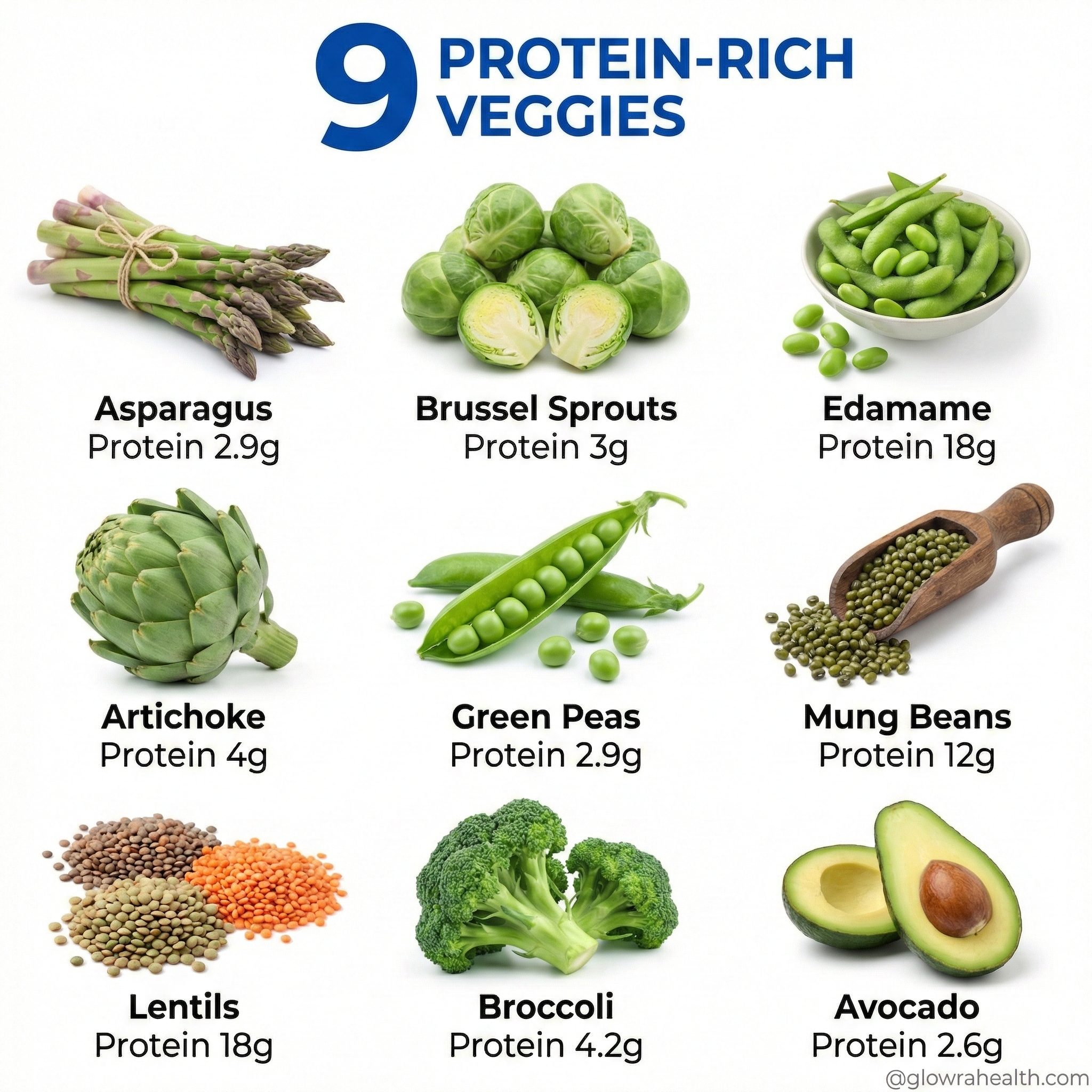
Asparagus (Protein 2.9g)
Asparagus is a light, fiber-rich vegetable that supports digestion while adding a small protein boost.
It also provides folate, vitamin K, and potassium, which support recovery and fluid balance. Asparagus is easy to pair with higher-protein foods without making meals feel heavy.
How to eat it
- Roast with olive oil and salt
- Add to egg scrambles
- Toss into rice bowls or stir-fries
Brussel Sprouts (Protein 3g)
Brussel sprouts are a cruciferous vegetable known for fiber and micronutrients.
They provide vitamin C, vitamin K, and antioxidants, which support immune function and recovery. Their fiber helps keep you full longer, making them useful for weight management.
How to eat it
- Roast until crispy edges form
- Shred into salads
- Sauté with garlic and lemon
Edamame (Protein 18g)
Edamame is one of the highest-protein plant foods on the list.
It is a complete protein source compared to most vegetables and provides fiber, iron, folate, and magnesium. It also makes plant-based meals more satisfying.
How to eat it
- Steam and snack
- Add to salads, noodle bowls, or stir-fries
- Blend into dips for a protein boost
Artichoke (Protein 4g)
Artichokes are best known for their fiber, but they also provide modest protein.
They contain prebiotic fibers that support gut bacteria, which can improve digestion and nutrient absorption over time—especially helpful when eating higher protein.
How to eat it
- Add artichoke hearts to salads
- Mix into bowls with grains and beans
- Stir into pasta or soups
Green Peas (Protein 2.9g)
Green peas are a smart “two-in-one” option because they provide both protein and fiber.
They also contain vitamin C and iron, making them a helpful add-on to meals that need more balance.
How to eat it
- Add to soups or stews
- Mix into rice or quinoa bowls
- Toss into stir-fries or omelets
Mung Beans (Protein 12g)
Mung beans are protein-rich and often easier to digest than some other legumes.
They provide fiber, folate, magnesium, and plant compounds that support metabolism and recovery. They are a great option for plant-based protein variety.
How to eat it
- Cook into soups and stews
- Make a warm mung bean bowl with veggies
- Use sprouted mung beans in salads
Lentils (Protein 18g)
Lentils are one of the best plant-based protein staples.
They provide protein plus a large amount of fiber, which supports blood sugar balance and appetite control. Lentils also contain iron and folate, important for oxygen delivery and performance.
How to eat it
- Add to soups and curries
- Use in salads or grain bowls
- Mix into sauces as a “meaty” texture
Broccoli (Protein 4.2g)
Broccoli is a surprising protein contributor for a vegetable.
It also provides vitamin C, vitamin K, folate, and antioxidants, supporting immune health and inflammation balance. Because broccoli is high-volume and low-calorie, it helps you eat bigger meals without overeating.
How to eat it
- Roast or steam
- Add to stir-fries
- Blend into soups for thickness
Avocado (Protein 2.6g)
Avocado is not the highest protein food, but it supports plant-based meals in a different way.
It provides healthy monounsaturated fats and fiber, which helps keep you full and supports nutrient absorption. It makes high-fiber meals feel satisfying.
How to eat it
- Add to bowls with lentils or mung beans
- Use on toast with eggs
- Blend into smoothies for creaminess
How to Use These “Protein Veggies” for Real Results
Vegetables alone usually do not reach high protein targets.
But these foods increase your total fast when you combine them.
Try simple combos:
- Lentils + broccoli + avocado (fiber + protein + satiety)
- Edamame + green peas + brussel sprouts (high-volume, high-protein plant meal)
- Mung beans + asparagus + artichoke hearts (digestive-friendly, protein-packed bowl)
When You’ll Notice Changes
- Within 2–5 days: many people feel fuller and snack less when meals include legumes and fiber
- Within 2–4 weeks: steadier energy and better digestion are common with consistent intake
- Over 6–12 weeks: body composition changes happen when protein intake and strength training are consistent
Safety Notes
- Increase legumes slowly if you are not used to them, to avoid bloating.
- Rinse canned beans well to reduce sodium.
- If you have kidney disease or specific dietary restrictions, check with a clinician before increasing protein or potassium rich foods.
Final Takeaway
If you want more protein without relying only on meat or powders, these 9 plant foods are powerful.
The biggest “protein winners” from the image are:
- Edamame (18g)
- Lentils (18g)
- Mung beans (12g)
Use them consistently, combine them smartly, and your meals will feel more filling and balanced.
Read more “16 longevity foods “