Foods to eat during the luteal phase play a key role in supporting energy, appetite, and overall balance after ovulation.
During this phase, progesterone rises, metabolism slightly increases, and many people notice changes in energy, appetite, digestion, and mood.
Food choices during the luteal phase matter more than many realize. The goal is not restriction, but stability: steady blood sugar, supported digestion, and adequate micronutrients to help the body adapt to hormonal shifts.
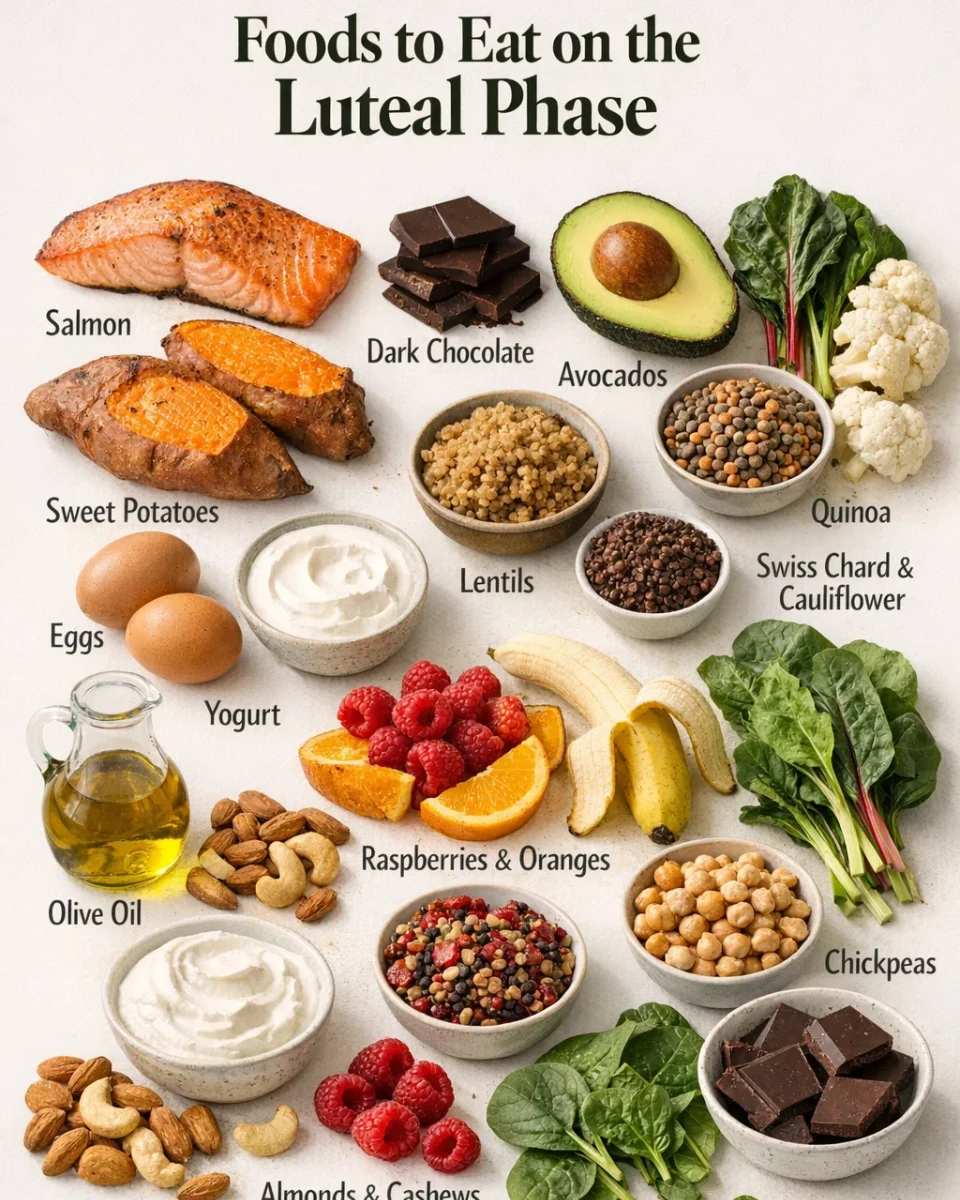
This guide explains why certain foods work better in the luteal phase and how the foods shown in the infographic support the body during this time.
What Happens in the Luteal Phase After Ovulation
From a physiological perspective, the luteal phase is characterized by:
-
Higher progesterone levels
-
Increased resting energy expenditure
-
Greater need for magnesium, B vitamins, and complex carbohydrates
-
Slower digestion for some people
-
Increased cravings or appetite toward the late luteal phase
These changes are normal. Eating in a way that supports them can reduce fatigue, bloating, and intense cravings.
Nutrition Goals During the Luteal Phase
Foods that work well during this phase tend to provide:
-
Stable energy, not quick spikes
-
Adequate protein to support satiety
-
Healthy fats to support hormone signaling
-
Complex carbohydrates to support serotonin and mood
-
Minerals like magnesium, iron, and zinc
The foods in the infographic align well with these needs.
Foods to Eat During the Luteal Phase
Salmon
Rich in omega-3 fatty acids and high-quality protein, salmon supports inflammation balance and helps stabilize energy and mood during the progesterone-dominant phase.
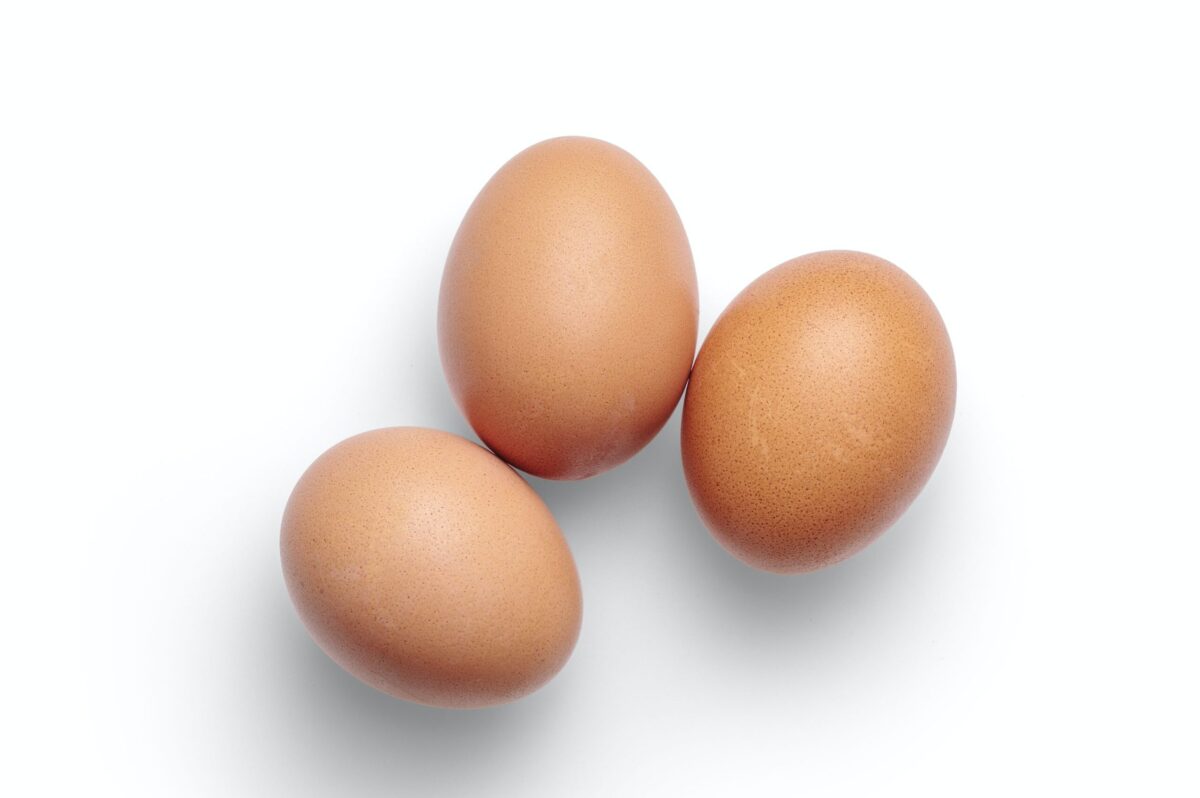
Eggs
Eggs provide complete protein, choline, and B vitamins. They help support neurotransmitter function and keep meals more satisfying.
Yogurt
Yogurt offers protein and probiotics that support digestion, which can feel more sensitive during the luteal phase.
Lentils
Lentils are a slow-digesting carbohydrate source rich in iron, fiber, and B vitamins. They help prevent energy dips and support fullness.
Chickpeas
Chickpeas provide a combination of fiber, plant protein, and complex carbs, helping to stabilize blood sugar and reduce late-day cravings.
Quinoa
Quinoa is a complex carbohydrate with more protein than most grains. It supports serotonin production and steady energy.
Sweet Potatoes
Sweet potatoes are rich in complex carbohydrates and potassium. They help support energy needs and may reduce intense sugar cravings.
Dark Chocolate
Dark chocolate provides magnesium and polyphenols. In moderate amounts, it can support mood and reduce cravings without destabilizing blood sugar.
Avocados
Avocados supply healthy fats and potassium, supporting hormone signaling and satiety.
Olive Oil
A source of monounsaturated fats, olive oil supports hormone production and helps meals feel more satisfying.
Almonds and Cashews
These nuts provide magnesium, healthy fats, and protein, which can help with energy and stress regulation.
Raspberries and Oranges
These fruits provide fiber, vitamin C, and antioxidants. They support digestion and micronutrient intake without excessive sugar spikes.
Swiss Chard and Spinach
Leafy greens provide magnesium, folate, and iron, nutrients that are especially valuable in the days leading up to menstruation.
Cauliflower
Cauliflower offers fiber and compounds that support estrogen metabolism and digestive health.
Why These Foods Work Better Than “Light” Options
During the luteal phase, the body generally does better with foods that:
-
Digest more slowly
-
Provide enough calories to meet increased energy needs
-
Reduce blood sugar fluctuations
Very low-calorie or low-fat meals can worsen fatigue, irritability, and cravings during this phase.
The foods shown in the infographic are not “heavy,” but they are structurally satisfying, which helps the body feel more regulated.
How to Build Luteal Phase Meals
A simple luteal-phase-friendly meal often includes:
-
A protein source (eggs, salmon, yogurt, lentils)
-
A complex carbohydrate (sweet potatoes, quinoa, chickpeas)
-
Healthy fats (olive oil, avocado, nuts)
-
Vegetables for fiber and micronutrients
You do not need perfection. Consistency matters more than variety.
A Gentle Reminder
Hormonal phases are not problems to fix. They are rhythms to support.
If your appetite increases or your energy feels lower during the luteal phase, that is not a failure. It is a signal. Responding with nourishing, grounding foods often leads to better balance than restriction.
Want to Learn More?
If this topic resonates with you, you may also enjoy reading:
-
How food structure affects hunger and cravings
-
Why complex carbohydrates matter for hormone health
-
How to eat for steadier energy across the menstrual cycle
You can explore these guides in the Food & Nutrition section of the blog.