If you have ever opened the fridge and found your cheese sweaty, slimy, or oddly sour, you are not alone. Cheese is alive in a way. It keeps changing after you bring it home, and the way you wrap it decides whether it stays flavorful or turns into a moisture-trapped science experiment.
Most people never realize this works because cheese needs a balance of moisture and airflow. Too much sealing traps humidity and invites mold. Too much exposure dries it out and makes it taste flat.
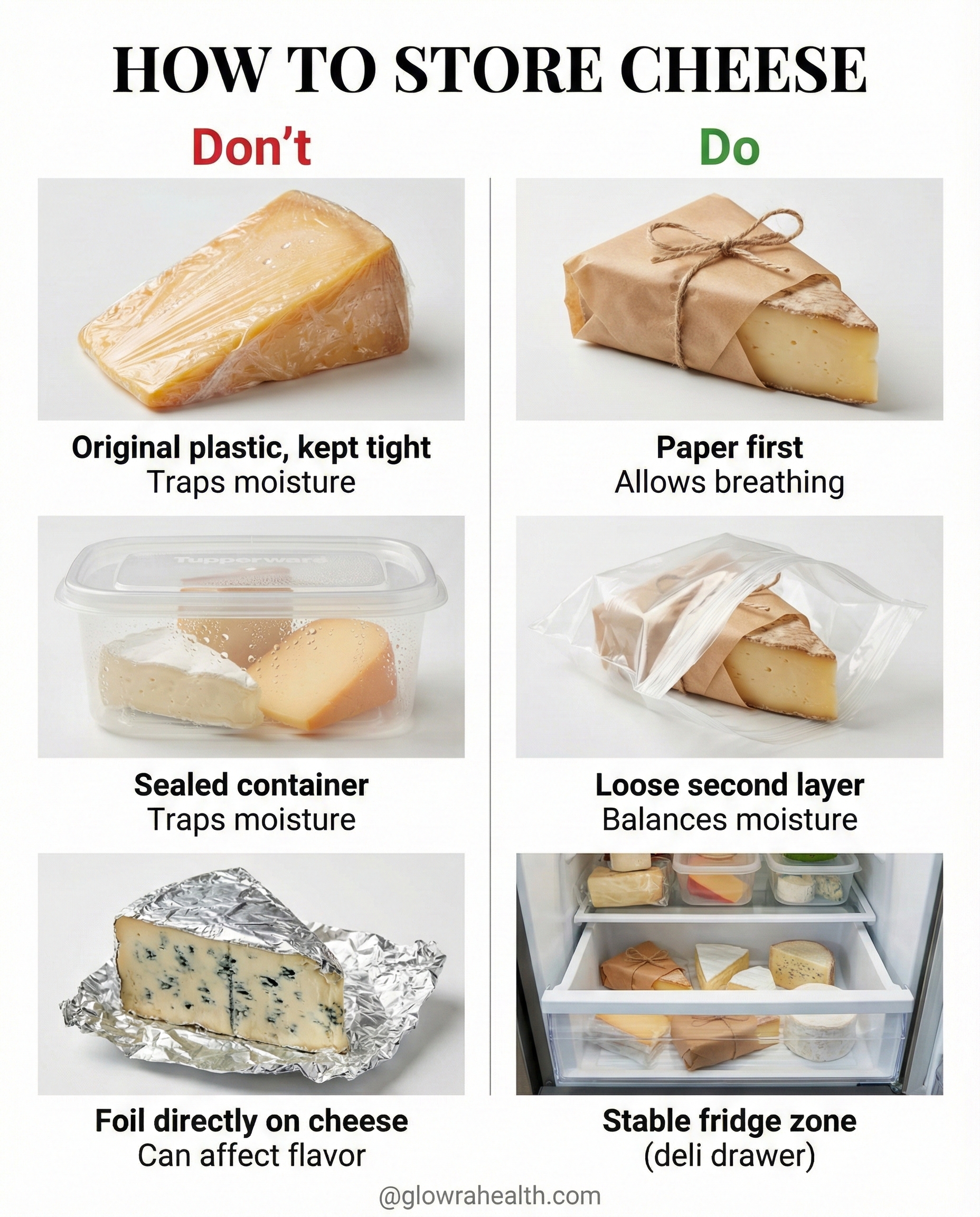
Below is the simple “Don’t vs Do” guide, plus a few practical tweaks so you can store cheese with less waste and better flavor.
The Biggest Cheese Storage Mistake: Trapping Moisture
Cheese contains water and fat, and it releases moisture over time in the fridge. When that moisture has nowhere to go, the surface stays damp. Damp surfaces encourage unwanted mold and off smells. When cheese cannot “breathe,” it can also develop ammonia-like notes, especially in softer or aged cheeses.
Your goal is simple. Let cheese breathe a little, while still protecting it from drying out.
Don’t: Original plastic, kept tight (Traps moisture)
That tight factory wrap is great for shipping, but it is not ideal once opened.
Why it goes wrong
- Plastic clings to the surface and traps condensation.
- The cheese can get sweaty and sticky.
- Flavor can turn dull or “fridgey” faster.
A better move
- After opening, rewrap using “paper first” (you will see that below).
Don’t: Sealed container (Traps moisture)
A fully sealed container can seem tidy, but it often creates a humid microclimate.
Why it goes wrong
- Moisture builds up quickly, especially if the cheese was cold when stored.
- Condensation forms on the lid and drips back onto the cheese.
- Mold can appear sooner because the surface stays wet.
If you must use a container
- Use it only as a loose outer layer, not airtight.
- Or add a breathable wrap inside and do not lock it down tightly.
Don’t: Foil directly on cheese (Can affect flavor)
Foil is tempting because it is quick, but it is not always cheese-friendly.
Why it goes wrong
- Foil pressed directly on the surface can trap moisture in pockets.
- It can also affect aroma and flavor for some cheeses, especially if stored longer.
Better option
- Use paper first, then a second layer that is not tight.
Do: Paper first (Allows breathing)
This is the “game changer” that many home kitchens skip.
What “paper first” means
- Wrap the cheese in cheese paper if you have it.
- If you do not, use parchment paper or wax paper.
Why it works
- Paper allows gentle airflow.
- It reduces surface sweat.
- It helps preserve the cheese’s natural aroma without making it soggy.
Quick tip
- Wrap it snugly, but do not crush the cheese. You want contact, not compression.
Do: Loose second layer (Balances moisture)
After the paper layer, add a second layer that protects the cheese from drying out, but does not suffocate it.
Easy options
- A loosely closed plastic bag.
- A reusable silicone bag left slightly unsealed.
- A light overwrap of plastic that is not pulled tight.
Why it works
- The paper handles breathing.
- The loose outer layer prevents the fridge from drying the cheese out.
- Together, they balance moisture instead of trapping it.
Do: Stable fridge zone (deli drawer)
Where you store cheese matters more than people think.
Why the deli drawer helps
- It tends to have steadier temperature and humidity.
- Cheese stays away from warm air blasts when the door opens.
- Flavors stay cleaner and texture stays more consistent.
Good rule
- Avoid the fridge door for cheese. It is the most temperature-unstable spot.
How to Build a Simple Cheese Storage Routine
If you want the simplest repeatable method, do this every time you open cheese:
- Pat the cut surface gently if it looks wet.
- Wrap in parchment paper or wax paper.
- Add a loose second layer with a bag or light wrap.
- Store in the deli drawer or a stable fridge zone.
- Rewrap with fresh paper if it gets damp.
When You’ll Notice the Difference
This is not a “weeks later” payoff. You usually notice results quickly.
- Within 24 to 48 hours, cheese often smells fresher and feels less sweaty.
- Within 3 to 5 days, you typically see less sliminess and slower surface mold.
- Over 1 to 2 weeks, texture and flavor hold up better, especially for semi-hard and hard cheeses.
Realistic expectation: very soft cheeses still have shorter lives. Wrapping helps, but it cannot make a fragile cheese last forever.
Quick Safety Notes
- If cheese has widespread fuzzy mold, a strong ammonia smell, or a slimy coating that returns quickly, it is safer to discard it.
- For hard cheeses, a small spot of mold can sometimes be cut off with a generous margin, but if mold has spread in multiple areas, throw it away.
- Keep cheese away from strong-smelling foods. Cheese absorbs odors easily.
Final Takeaway
If you remember only one thing, make it this: paper first, then a loose second layer, stored in a stable fridge zone. That one change stops the moisture trap that ruins flavor and speeds spoilage.