If you’ve been chasing that “glass skin” finish, a DIY glass skin toner is one of the easiest add-ons to your routine. This simple mix uses rice, rose water, milk, and honey to create a lightweight, mistable toner that can leave skin looking more hydrated and refreshed.
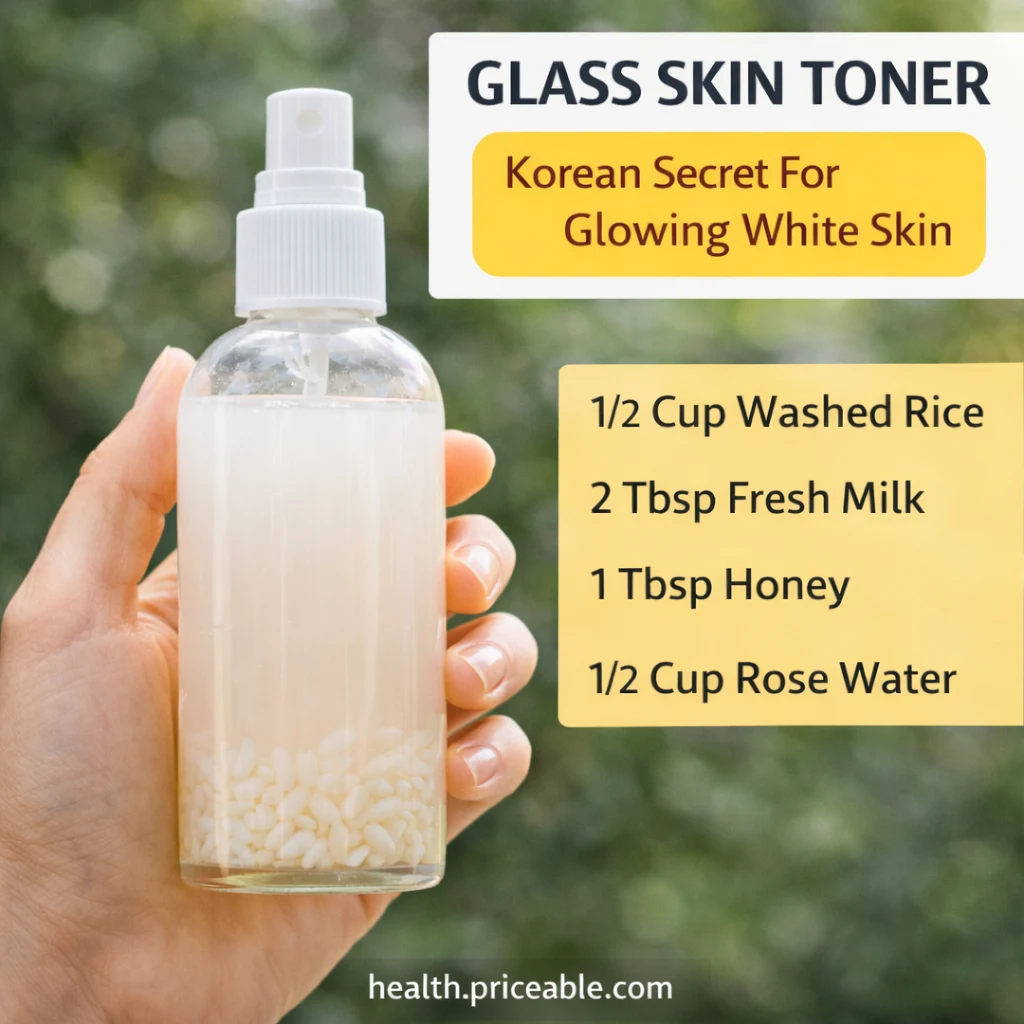
Below is the exact recipe from the viral post, plus the practical stuff people always wish they knew: how long to soak, how to strain it properly, how to store it safely (important with milk), and what to buy if you want a cleaner, longer-lasting setup.
DIY Glass Skin Toner Recipe (Exact Measurements)
You’ll need:
-
1/2 cup washed rice
-
2 tbsp fresh milk
-
1 tbsp honey
-
1/2 cup rose water
Recommended tools:
-
Fine-mesh strainer or cheesecloth
-
Clean bowl or mason jar
-
Funnel
-
Clean spray bottle (fine mist works best)
How to Make DIY Glass Skin Toner Step-by-Step
Step 1: Wash the rice well
Rinse 1/2 cup rice under cool water until the water runs less cloudy.
This helps remove extra starch and dust so the toner feels lighter on skin.
Step 2: Create the rice base
Add the washed rice to a bowl or jar.
Pour in 1/2 cup rose water.
Let it sit for 20–30 minutes, then gently swirl and lightly “massage” the rice with clean hands to release the milky liquid.
Step 3: Strain
Strain the liquid into a clean container using a fine strainer or cheesecloth.
Try not to press hard, or you’ll push extra sediment through.
Step 4: Mix in milk + honey
Stir in:
-
2 tbsp fresh milk
-
1 tbsp honey
Mix until the honey dissolves as much as possible.
Step 5: Bottle it
Use a funnel to pour into a clean spray bottle.
Shake gently before each use (natural separation is normal).
How to Use It in a Simple Routine
Use it after cleansing, before moisturizer.
-
AM: Cleanser → toner mist → moisturizer → broad-spectrum sunscreen SPF 30+
-
PM: Cleanser → toner mist → moisturizer
How often:
-
Start 2–3 times per week
-
If your skin is happy, you can use it daily
How to apply:
-
Mist 2–4 sprays onto clean skin from about 8–10 inches away
-
Or spray onto a cotton pad and swipe lightly if you prefer
Storage and Safety Notes (Read This First)
Because this recipe contains milk, it’s perishable.
-
Store in the refrigerator immediately
-
Use within 3–5 days
-
If it smells sour, looks curdled, or changes color, toss it
-
Do a patch test on your inner arm or behind the ear for 24 hours
-
Avoid using on broken, irritated, or freshly exfoliated skin
-
If you’re sensitive to fragrance, choose a rose water with minimal ingredients (and stop if you sting or itch)
If you have a dairy allergy or break out easily from milk, skip the milk and replace it with a simple hydrating alternative like vegetable glycerin (start with 1/2 tsp per batch) or just keep it as rice + rose water.
Common Mistakes (and Quick Fixes)
Mistake 1: It feels sticky
Why it happens: Too much honey or it isn’t dissolving.
Fix:
-
Reduce honey to 1–2 teaspoons
-
Warm the strained liquid slightly (not hot) to help dissolve honey, then refrigerate
Mistake 2: It clogs the sprayer
Why it happens: Rice sediment.
Fix:
-
Strain again through cheesecloth
-
Use a fine mist spray bottle designed for facial mists
Mistake 3: It breaks you out
Why it happens: Milk can be heavy for some skin types, and old product can irritate.
Fix:
-
Make smaller batches
-
Use within 3 days
-
Try it without milk for a week and compare
Mistake 4: No “glow,” just dryness
Why it happens: Toner alone won’t seal in hydration.
Fix:
-
Apply moisturizer right after while skin is slightly damp
-
Don’t skip sunscreen in the morning (sun exposure makes skin look dull over time)
Buying Guide: What to Look for Before You Mix a Batch
If you want your DIY glass skin toner to feel cleaner, spray better, and last those few days safely, the right supplies matter more than the “right brand.”
Best spray bottle for face mists
Look for:
-
Fine mist sprayer (not a harsh stream)
-
Glass bottle or BPA-free plastic
-
2–4 oz size (smaller stays fresher)
-
Easy-to-clean straw and cap
A travel-size fine mist bottle is perfect if you’re making small batches every few days.
Rose water: what to check on the label
Look for:
-
Short ingredient list
-
Minimal added fragrance
-
No harsh alcohols that can feel drying
If you’re sensitive, patch test rose water by itself first.
Milk: which type is easiest on skin
Many people do best with:
-
Plain pasteurized milk (simple, consistent)
-
If you’re acne-prone, consider skipping milk entirely and keeping the formula lighter
Honey: what’s worth buying
Look for:
-
Pure honey (no added flavors)
-
If you want less residue, choose a lighter honey that dissolves easier
Strainers and cotton pads
A cheap upgrade that makes a big difference:
-
Fine-mesh strainer or cheesecloth for a smoother toner
-
Soft cotton rounds if you prefer wiping instead of misting
What Results to Expect (Realistically)
This toner can support a “glassy” look mainly by helping skin feel more hydrated and fresh.
Most people notice the best effect when they:
-
Apply it consistently
-
Follow with a fragrance-free moisturizer
-
Wear sunscreen daily
It’s not a bleach or “whitening” product, and it won’t change your natural skin tone. Think glow, bounce, and a more even-looking finish.
FAQ: Quick Answers People Search For
Does DIY glass skin toner actually work?
Some people find it helps skin look more hydrated and glowy, especially when paired with moisturizer and sunscreen.
Can I leave rice in the bottle like the photo?
It’s better to strain it well. Rice pieces can harbor bacteria and clog the sprayer.
How long does rice toner with milk last?
Because of milk, keep it refrigerated and use within 3–5 days.
Can I use this toner every day?
Start 2–3 times per week. If you don’t get redness, itching, or breakouts, you can use it daily.
Is rose water good for sensitive skin?
It depends on the formula. Choose minimal-ingredient rose water and patch test first.
Can I use it if I have acne-prone skin?
You can, but milk may be too heavy for some people. Consider making it without milk and keep batches very fresh.
Do I still need moisturizer after toner?
Yes. Toner adds lightweight hydration, but moisturizer helps seal it in for a smoother, glassier finish.
Should I use this in the morning or at night?
Either works. In the morning, always finish with broad-spectrum sunscreen SPF 30+.