Orange foods are not “orange” by accident. That warm color usually comes from carotenoids – plant pigments your body can convert into vitamin A (or use as antioxidants). Vitamin A supports eye health, immune defenses, and healthy skin and mucous membranes (your nose, throat, and gut lining).
What people often misunderstand is this: you do not need mega-doses. You need steady, repeatable intake a few orange foods across the week so your body always has building blocks for repair.
Pumpkin
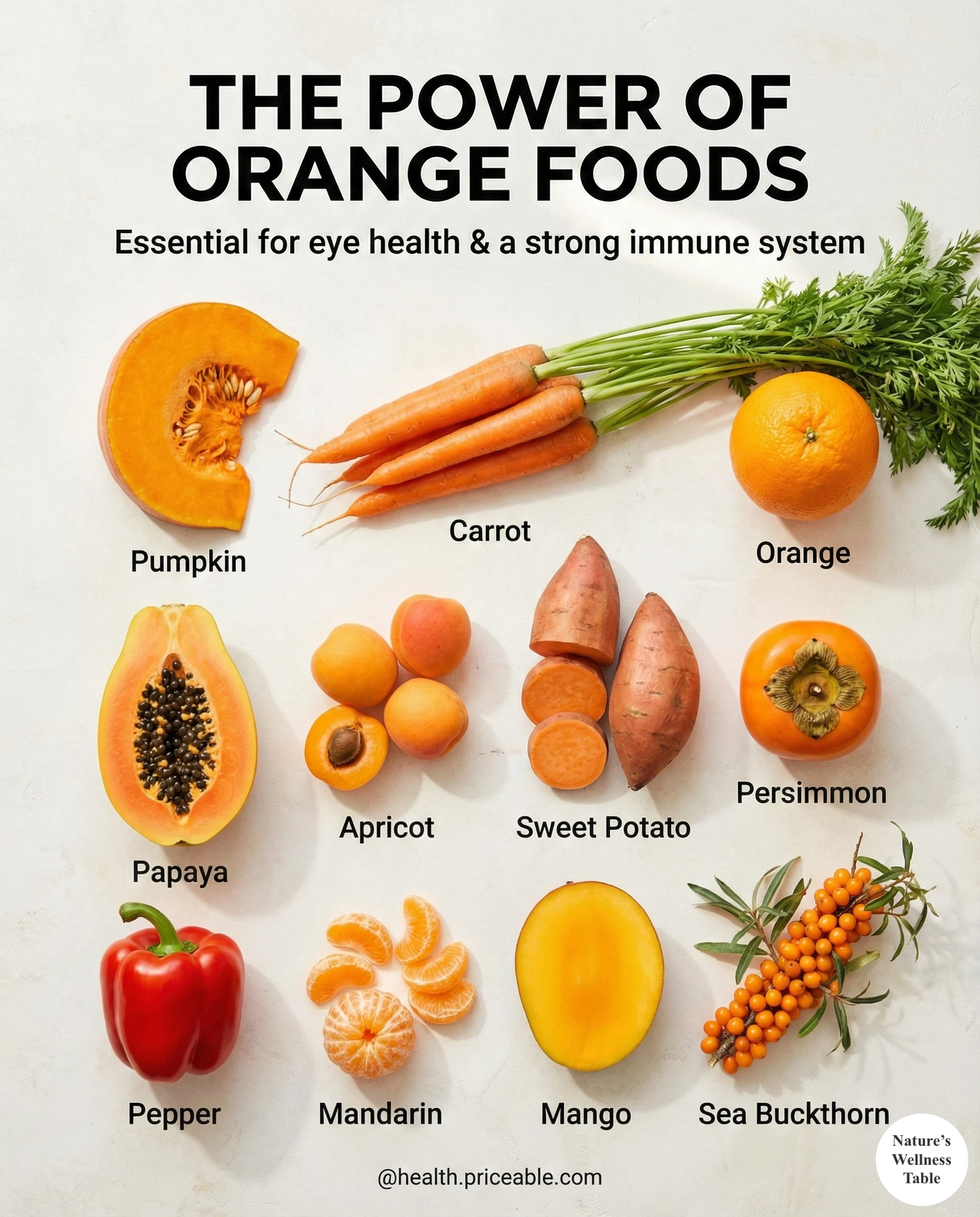
Pumpkin is rich in beta-carotene, plus fiber and potassium. Beta-carotene is a vitamin A precursor that supports night vision and immune function.
Easy ways to use
- Roast pumpkin cubes with olive oil and salt
- Blend into soup with ginger
- Stir pumpkin puree into oats
Carrot
Carrots are one of the best-known sources of beta-carotene. They also provide fiber that supports gut regularity, which indirectly supports immune balance.
Easy ways to use
- Eat raw with hummus or bean dip
- Roast with spices
- Grate into salads or stir-fries
Orange
Oranges are famous for vitamin C, plus hydration and plant antioxidants. Vitamin C supports immune function and helps the body maintain healthy connective tissue.
Easy ways to use
- Eat as a snack
- Add orange segments to salads
- Use orange zest to flavor oats or yogurt
Papaya
Papaya offers vitamin C, beta-carotene, and digestive enzymes (like papain). Many people find papaya easier to digest than heavier desserts when they’re bloated.
Easy ways to use
- Eat chilled with lime
- Blend into smoothies
- Add to fruit bowls with yogurt
Apricot
Apricots contain beta-carotene and potassium. Dried apricots are more concentrated but also higher in natural sugar, so portion matters.
Easy ways to use
- Fresh as a snack
- Chop into oats
- Add dried apricot pieces to trail mix
Sweet Potato
Sweet potatoes are a powerhouse source of beta-carotene, plus fiber and potassium. They are also very satisfying, which helps when you’re trying to eat well consistently.
Easy ways to use
- Bake and top with beans for a budget meal
- Roast wedges with olive oil
- Mash and serve alongside protein
Persimmon
Persimmons provide carotenoids and polyphenols, plus fiber. They taste naturally sweet, making them a helpful “dessert swap” in a whole-food pattern.
Easy ways to use
- Eat ripe persimmon plain
- Slice into yogurt bowls
- Add to salads with nuts
Pepper (Orange/Red Bell Pepper)
Bell peppers are especially high in vitamin C and provide carotenoids too. They support immune function and add crunch without heaviness.
Easy ways to use
- Slice into snacks
- Roast with olive oil
- Add to stir-fries, rice bowls, or omelets
Mandarin
Mandarins are another vitamin C–rich citrus option, often easier to peel and snack on. They also add hydration, which matters for energy and immune resilience.
Easy ways to use
- Pack as a grab-and-go snack
- Add to salads
- Pair with nuts for a balanced snack
Mango
Mango offers beta-carotene, vitamin C, and supportive antioxidants. It’s a great way to make smoothies taste sweet without added sugar.
Easy ways to use
- Blend into smoothies
- Dice into salsa for fish or beans
- Add to yogurt or chia pudding
Sea Buckthorn
Sea buckthorn berries are known for being rich in vitamin C and carotenoids, with a tart, bold flavor. Many people use it as juice, puree, or powder.
Easy ways to use
- Stir sea buckthorn puree into yogurt
- Blend into smoothies (sweeten with banana if needed)
- Mix into warm water as a tart “tea” base
How to Build a Daily Plate Using Orange Foods
You do not need all 10 every day. Use a simple rhythm:
- Breakfast: oats + mango or apricot
- Lunch: salad with carrots + peppers + mandarin
- Dinner: sweet potato or pumpkin + protein
- Snack: orange, papaya, or persimmon
This makes eye- and immune-supportive nutrition feel automatic.
When You’ll Notice Changes
Set realistic expectations:
- Within a few days: steadier digestion and better snack control (more fiber + water-rich fruit)
- 2–4 weeks: improved “recovery feel” if your overall diet is consistent
- Long term: stronger nutrition foundation for eyes, skin, and immune resilience
No single food will “boost immunity overnight,” but consistent patterns help.
Tips to Combine Them Effectively
- Add a little healthy fat (olive oil, nuts, yogurt) with carrot/sweet potato/pumpkin to support carotenoid absorption.
- Rotate fresh + cooked options. Cooking can make some carotenoids easier to absorb, while fresh fruit boosts hydration.
- Keep it simple: aim for 1–2 orange foods per day, not perfection.
Quick Safety Notes
- If you have diabetes or insulin resistance, enjoy fruit in reasonable portions and pair it with protein or healthy fat.
- If you’re on blood thinners or have kidney concerns, speak with a clinician before dramatically increasing certain high-potassium foods (like large daily servings of sweet potato).
- Bright orange skin tint can happen if you eat extremely high amounts of carotenoid-rich foods. It’s usually harmless, but it’s a sign to rebalance variety.
Final Takeaway
Orange foods are a practical, affordable way to support eye health and immune function because they deliver carotenoids (vitamin A building blocks), vitamin C, fiber, and antioxidants. Pick a few you actually enjoy, repeat them weekly, and your body will thank you.