Are your beloved houseplants struggling despite all your love and attention? 🌱 It sounds surprising, but sometimes, the secret to lush, thriving indoor plants isn’t more care, but less! We often think that constant attention, frequent watering, and regular fertilizing are the keys to a happy plant, but for many popular houseplants, this can actually do more harm than good.
The truth is, the most common reason indoor houseplants die isn’t neglect; it’s over-attention. Excessive watering, constant repotting, and frequent chemical fertilizing can suffocate root systems, alter soil chemistry, and invite destructive root rot. Many popular houseplant species actually evolved in rocky, nutrient-poor, or drought-prone environments. For these resilient varieties, stepping back and doing less is the key to lush, thriving growth.
Discovering which plants thrive on minimal attention can simplify your plant parenting journey and lead to happier, healthier greenery! What if a simpler approach could transform your plant game?
Embrace the Art of Intentional Neglect
For these six fantastic varieties, learning to step back and trust their natural resilience will unlock their full potential. Let’s dive into the plants that surprisingly prefer a little ‘tough love’ from their plant parents.
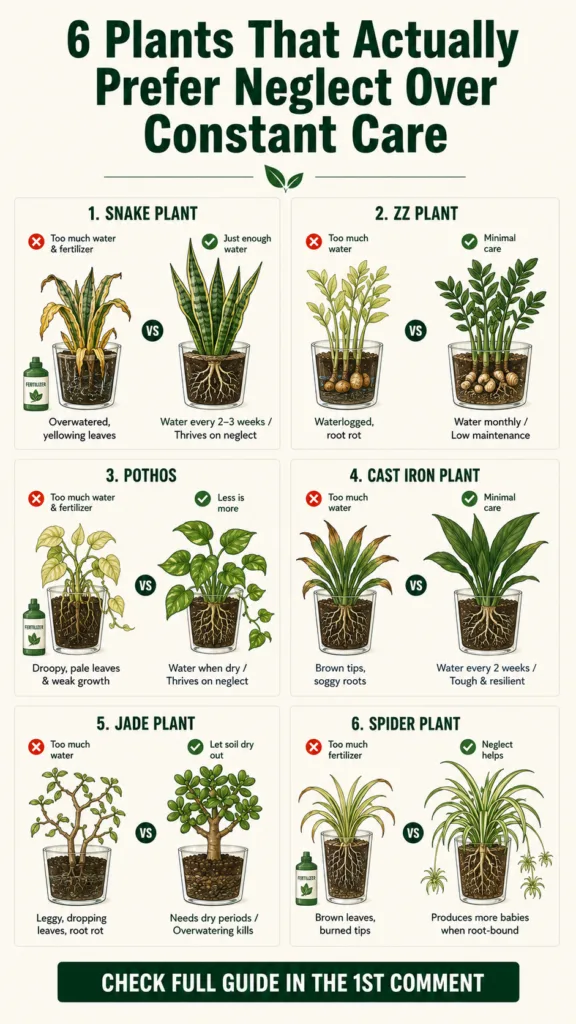
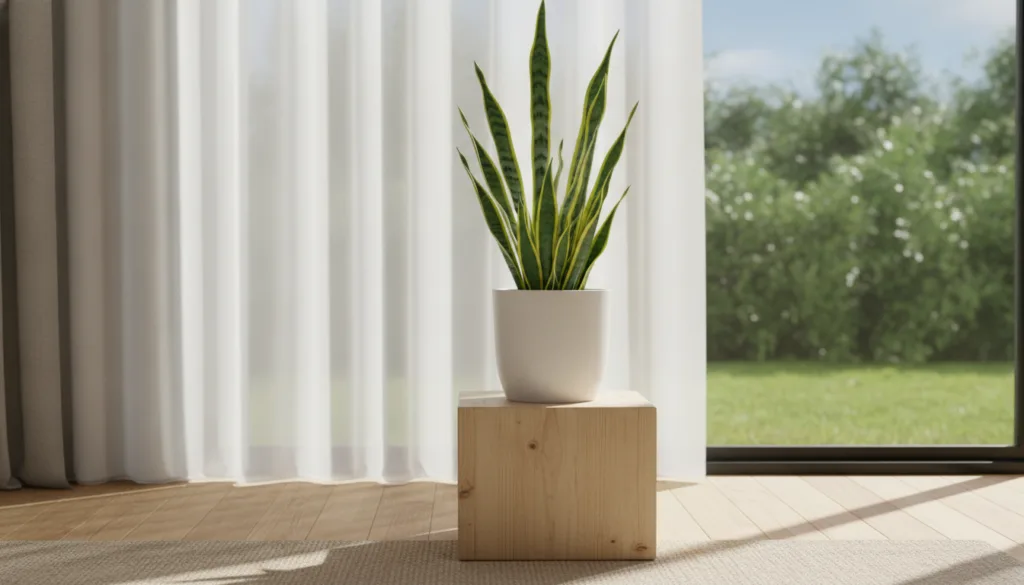
1. Snake Plant (Dracaena trifasciata)
Snake plants are renowned for their striking, upright foliage and incredible hardiness. They are native to arid tropical West Africa, where they naturally survive long periods between rainfall.
- The Problem with Constant Care: Frequent watering and heavy feeding cause root systems to turn mushy and foul-smelling, often leading to soft, yellowing, and collapsed leaves.
- Why Neglect Works: Snake plants are succulents! They efficiently store water in their dense, fibrous leaf tissues and utilize Crassulacean Acid Metabolism (CAM) to minimize water loss. They thrive on dry conditions.
- Care Routine: Water once every 2 to 3 weeks during summer and once a month in winter. Always allow the potting soil to dry out 100% between waterings.
2. ZZ Plant (Zamioculcas zamiifolia)
Originating from Eastern Africa, the ZZ plant is built like a desert survivor, even though it comes from tropical regions. Its waxy leaves and thick rhizomes are clear indicators of its drought-resistant nature.
- The Problem with Constant Care: Overwatering is the biggest killer of ZZ plants. It causes the precious rhizomes (underground stems that store water) to rot, leading to yellowing leaves and a collapsing plant.
- Why Neglect Works: Those chunky rhizomes are natural water reservoirs, allowing the plant to go for extended periods without hydration. They prefer their soil to be quite dry.
- Care Routine: Water thoroughly, then let the soil completely dry out. This can mean watering as little as once a month, or even less, especially in winter.
3. Pothos (Epipremnum aureum)
Pothos, also known as Devil’s Ivy, is one of the easiest houseplants to grow, known for its beautiful trailing vines. While it can handle some consistent moisture, it truly excels when given a little breathing room between waterings.
- The Problem with Constant Care: Continuous wet soil leads to root rot, manifesting as yellowing leaves, black stems, and overall plant decline. Over-fertilizing can burn the roots.
- Why Neglect Works: Pothos tolerates drying out between waterings. Its roots prefer to search for moisture, making it more robust. It’s forgiving of inconsistent watering schedules.
- Care Routine: Water when the top 2-3 inches of soil feel dry to the touch. In most homes, this is about once every 1-2 weeks. Less in winter.
4. Spider Plant (Chlorophytum comosum)
Spider plants are classic, easy-care houseplants famous for their arching foliage and