Imagine stepping into your garden and harvesting fresh, aromatic herbs that grow back effortlessly, year after year! That’s the magic of perennial herbs! These resilient plants are a dream for any gardener, offering endless flavor for your kitchen and beautiful scents for your garden with minimal fuss. From savory thyme and rosemary to refreshing mint and soothing lavender, there’s a perennial herb perfect for every space. They truly are the gift that keeps on giving!
Annual herbs like basil and cilantro need to be re-sown from seed every single season. Perennial herbs, on the other hand, establish permanent root systems that survive winter frosts, surging back with fresh, fragrant growth every spring. Adding these 8 resilient perennial herbs to your garden saves money, reduces planting chores, and supplies fresh kitchen seasoning year-round. Get ready to transform your garden into a continuous harvest!
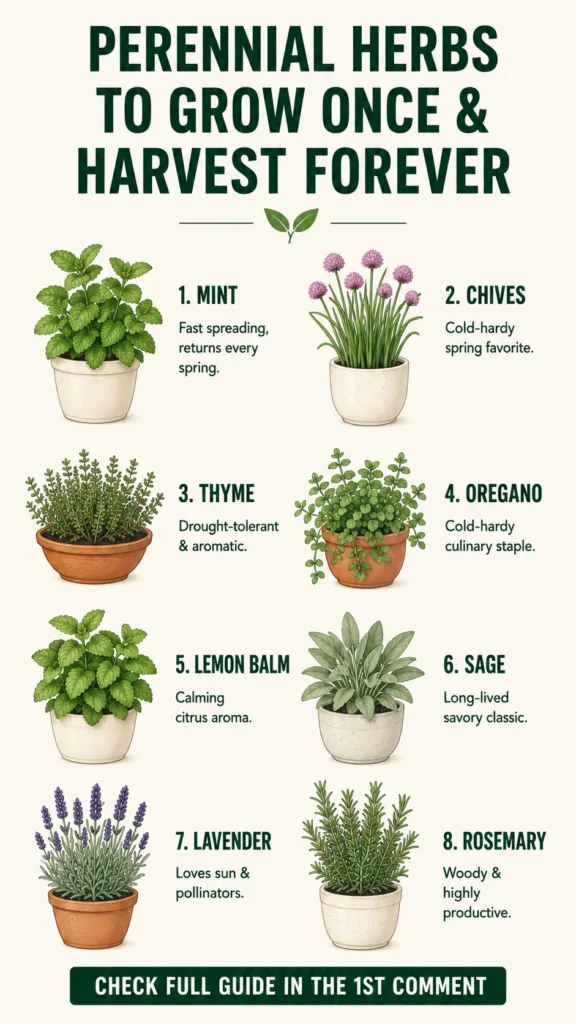
Your Top 8 Perennial Herbs for a Thriving Garden
Let’s dive into the fantastic world of perennial herbs and discover which ones will become your garden’s steadfast companions.
1. Mint (Mentha)
- Why It Lasts: Spreads rapidly through underground runners (rhizomes) and returns vigorously after cold winters.
- Best Use: Refreshing teas, lemonades, summer salads, and pest-repellent garden borders.
- Top Tip: Grow mint in dedicated containers to prevent its roots from overtaking your main garden beds.
2. Chives (Allium schoenoprasum)
- Why It Lasts: One of the earliest greens to emerge in early spring, producing edible purple globe flowers year after year.
- Best Use: Scrambled eggs, baked potatoes, soups, and mild allium garnishes.
- Top Tip: Snip stems down to 1 inch above the soil line to stimulate thick, continuous regrowth.
3. Thyme (Thymus vulgaris)
- Why It Lasts: A low-growing, drought-tolerant semi-evergreen subshrub with woody stems that resist cold and provide continuous harvests.
- Best Use: Roasts, soups, stews, dressings, and as a beautiful ground cover in sunny spots.
- Top Tip: Prune lightly after flowering to encourage bushier growth and prevent woodiness.
4. Oregano (Origanum vulgare)
- Why It Lasts: Forms a robust, spreading clump that thrives in well-drained soil and returns reliably each spring, often expanding its patch.
- Best Use: Italian and Mediterranean dishes, pizza, pasta sauces, grilled meats, and essential oils.
- Top Tip: Harvest before flowering for the most intense flavor, and dry excess for winter use.
5. Lemon Balm (Melissa officinalis)
- Why It Lasts: A vigorous member of the mint family, it self-seeds readily and regrows from its established root system every year, even after harsh winters.
- Best Use: Calming teas, refreshing drinks, salads, desserts, and to attract pollinators to your garden.
- Top Tip: Cut back aggressively multiple times a season to encourage new, tender growth and prevent it from taking over.
6. Sage (Salvia officinalis)
- Why It Lasts: A hardy evergreen or semi-evergreen shrub that develops woody stems over time, providing leaves throughout the year in many climates and bouncing back reliably after pruning.
- Best Use: Poultry stuffings, sausages, roasted vegetables, butter sauces, and as a fragrant ornamental plant.
- Top Tip: Prune in spring to maintain shape and encourage new growth, avoiding cutting into old, woody stems too deeply.
7. Lavender (Lavandula angustifolia)
- Why It Lasts: A drought-tolerant Mediterranean shrub with a deep root system that endures cold and heat, rewarding you with fragrant blooms year after year.
- Best Use: Aromatic sachets, culinary desserts, teas, essential oils, and beautiful ornamental borders that attract bees.
- Top Tip: Prune established plants by about one-third after flowering to promote bushiness and prolific blooms next season.
8. Rosemary (Salvia rosmarinus)
- Why It Lasts: A woody evergreen shrub that becomes more established and resilient with age, tolerating various conditions once rooted.
- Best Use: Roasted meats and vegetables, breads, marinades, infused oils, and as an aromatic hedge or ornamental plant.
- Top Tip: Grow in a sunny, well-drained spot and prune regularly to maintain shape and encourage fresh, flavorful growth. Avoid overwatering.
The Continuous Joy of Perennial Herbs
Adding these 8 resilient perennial herbs to your garden truly is a game-changer. Imagine less planting work, more savings, and a continuous supply of fresh, organic flavors right outside your door. They are a testament to nature’s resilience and a constant source of joy for any gardener.
Which perennial herb is a must-have in your garden? Share your favorites below!