You’ll often see posts about “sperm boosting foods.”
But here’s the more useful way to think about it:
👉 Sperm production is happening constantly in the body (every ~64–72 days)
👉 What matters most is not “boosting,” but protecting the process from damage
Because sperm cells are extremely sensitive to:
• oxidative stress
• inflammation
• heat
• nutrient deficiencies
So these foods don’t magically increase sperm overnight — they help create a better environment for sperm to develop properly.
The Real Mechanism: Oxidative Stress vs Antioxidants
One of the biggest factors affecting sperm quality is oxidative stress.
When there are too many free radicals in the body, sperm cells can get damaged — affecting:
• motility (how well they swim)
• morphology (shape)
• DNA integrity
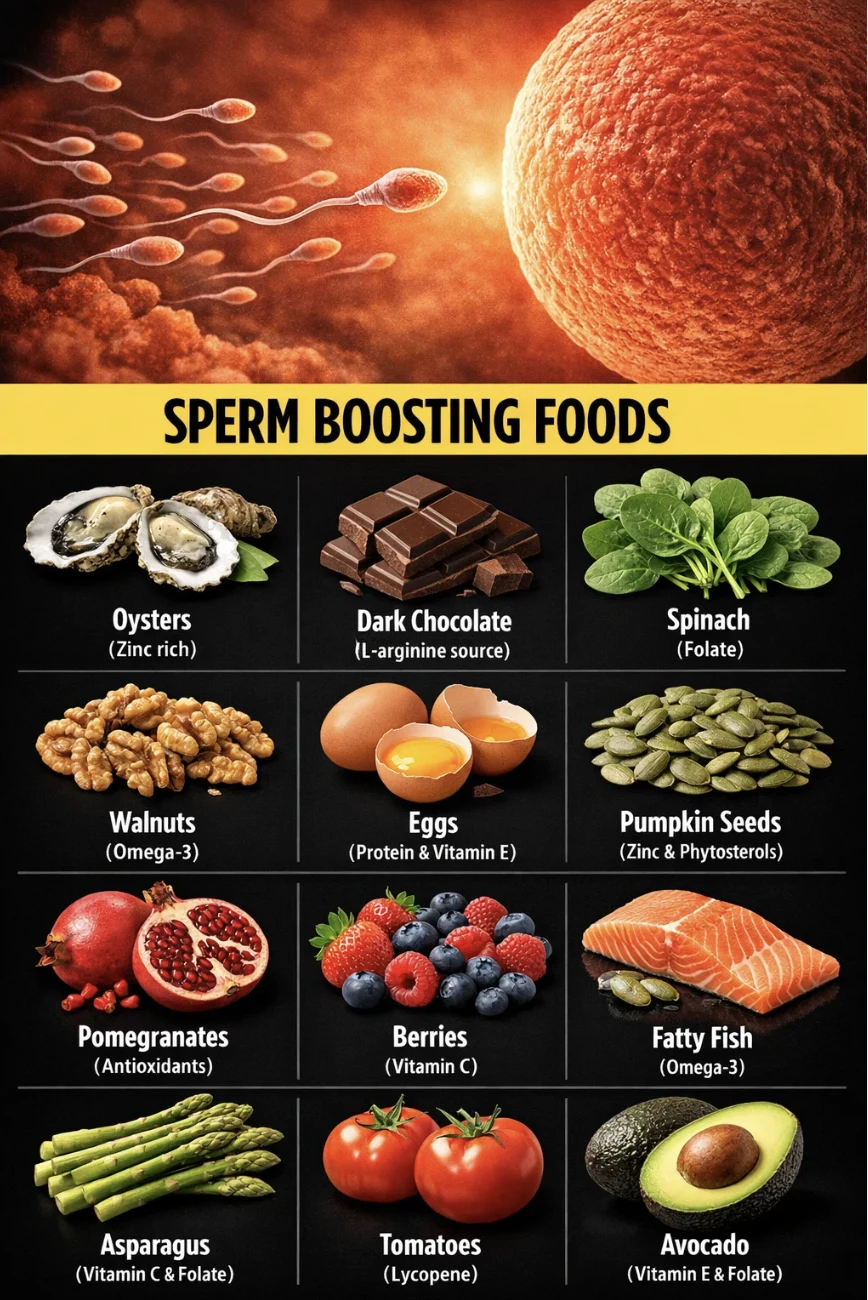
This is why many foods in the image are rich in:
👉 antioxidants
👉 omega-3 fats
👉 micronutrients like zinc
They help reduce damage, not “boost production” directly.
Why Fats Matter More Than People Think
Sperm cells are made with a membrane that depends on healthy fats, especially omega-3s.
Without enough of the right fats, sperm structure and flexibility can be affected.
That’s why foods like fatty fish and nuts show up often — not because they “increase sperm count,” but because they support cell structure and function.
Blood Flow Is a Hidden Factor
Another overlooked piece is circulation.
Better blood flow means better delivery of oxygen and nutrients to reproductive organs.
Some compounds in foods (like certain amino acids and plant compounds) may support this indirectly.
So part of the benefit isn’t just nutrition — it’s how well nutrients are delivered.
Hormones Depend on Overall Diet, Not One Food
Testosterone and reproductive hormones don’t respond to one “superfood.”
They respond to:
• overall calorie balance
• fat intake
• micronutrient status
• sleep and stress
So even if someone eats all the “right foods,” poor lifestyle habits can still impact results.
The Timeline Most People Ignore
This is the part almost no one talks about:
👉 Sperm takes 2–3 months to develop
So any diet change you make today will only show results weeks later.
That’s why consistency matters more than short-term changes.
What Actually Makes the Difference
Instead of focusing on single foods, the real impact comes from:
• consistent nutrient intake
• reducing processed foods
• managing stress
• getting enough sleep
• avoiding smoking and excess alcohol
Food helps — but it’s part of a bigger system.
These foods don’t “boost sperm” instantly. They help reduce damage, support cell structure, and improve the environment where sperm is produced.
And that’s what actually matters.