There comes a point in every gardener’s life when you realize the problem isn’t always your plant.
Sometimes it’s the system.
Too much water, not enough airflow, soil staying soggy too long, fungus gnats showing up exactly when life gets busy these are common frustrations for indoor growers. That is why so many people are turning to LECA, short for lightweight expanded clay aggregate, as a cleaner and more forgiving way to grow houseplants.
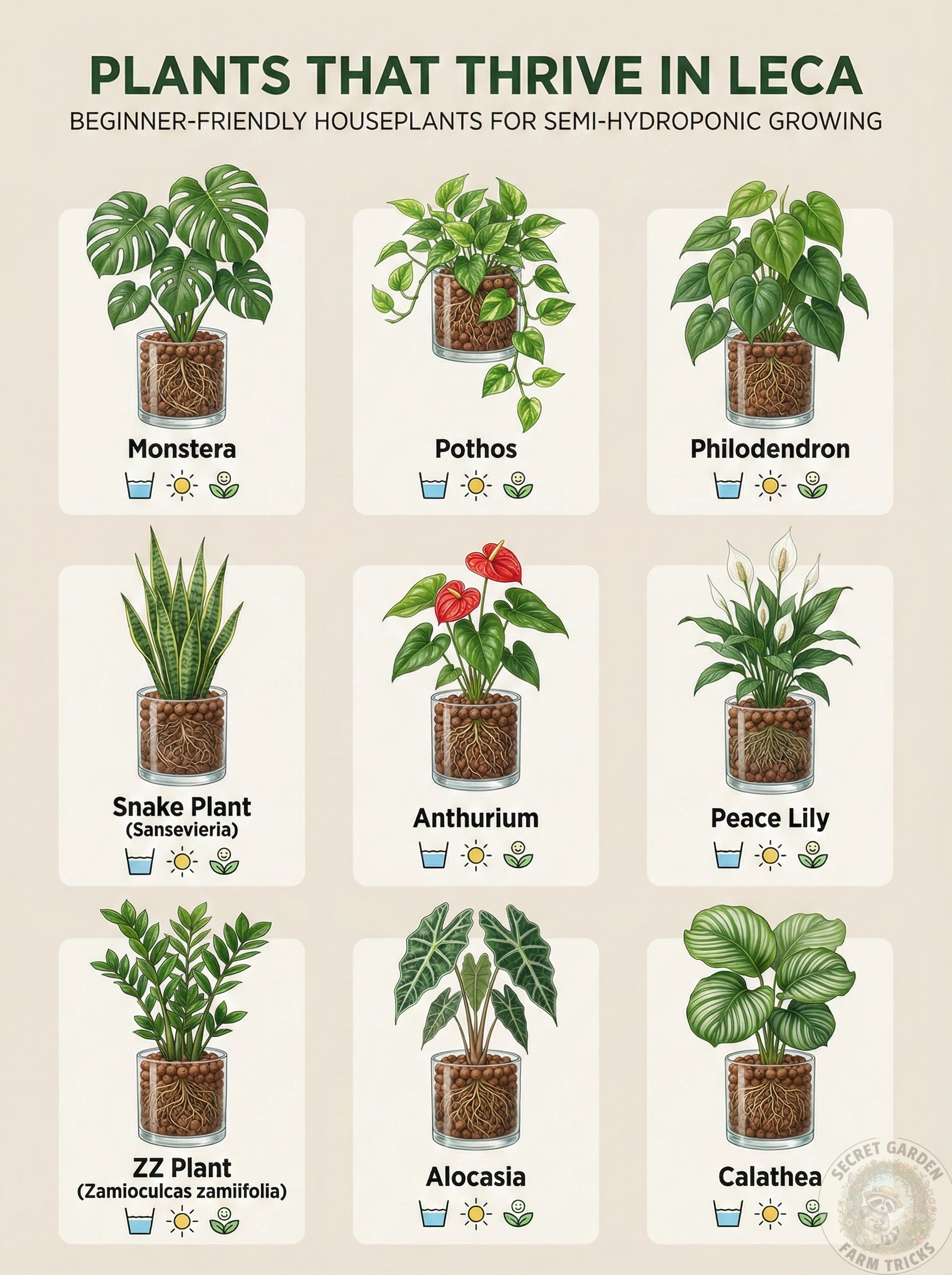
There highlights some of the best beginner-friendly plants for semi-hydro growing in LECA: Monstera, Pothos, Philodendron, Snake Plant, Anthurium, Peace Lily, ZZ Plant, Alocasia, and Calathea. These are plants that can adapt well to a semi-hydro setup when transitioned properly.
And while LECA may seem like an indoor plant topic only, it teaches something much bigger. It teaches system thinking. The same mindset that helps a Monstera thrive in a glass container – clean water, good observation, stable conditions, and consistent care is the same mindset that improves garden care, livestock management, poultry health, and sustainable farm routines.
Let’s walk through how LECA works, which plants do best in it, and what this method can teach us about smarter, calmer care across the whole homestead.
What Is LECA and Why Are Gardeners Using It?
LECA consists of small baked clay balls that do not break down like potting soil. In a semi-hydro setup, LECA acts as a support medium rather than a nutrient source. The plant roots grow among the clay pebbles while drawing moisture and nutrients from a small reservoir of water below.
That makes LECA especially attractive for people who want:
- better root airflow,
- fewer fungus gnats,
- easier monitoring of water levels,
- less mess indoors,
- and a more controlled plant care routine.
For many growers, the greatest advantage is visibility. In a clear or semi-clear setup, you can often see root health, water levels, and salt buildup before they become major problems.
That is one of the best practical gardening tips you can apply anywhere: when you can see what is happening, you can respond earlier and better.
Why Semi-Hydro Growing Appeals to Busy Homesteads
If you live a farm-based life, you already know that consistency matters more than complexity.
A laying flock does best with clean water, reliable feed, dry bedding, and regular observation. Goats do best with secure fencing, sound shelter, clean minerals, and careful hoof checks. Garden beds do best with steady moisture, healthy soil, and timely harvests.
LECA works on the same principle. It is not magic. It is simply a cleaner, more controlled system that reduces some of the most common problems caused by overwatering and dense, poorly draining soil.
That makes it especially attractive for people who are balancing indoor plant care with outdoor gardening, poultry chores, compost turning, seed starting, and seasonal farm work.
The Best Plants That Thrive in LECA
Monstera
Monstera is one of the most rewarding plants to grow in LECA because it usually gives clear feedback. Healthy roots become visible, new growth is easy to monitor, and the plant appreciates stable moisture with good oxygen around the root zone.
Give Monstera bright indirect light and enough room for the leaves to spread. In LECA, keep the reservoir low rather than drowning the roots. The goal is moisture below, airflow above.

Pothos
Pothos may be the easiest gateway plant for semi-hydro growing. It roots readily, tolerates a range of light conditions, and recovers well from beginner mistakes.
If you are new to LECA, start with pothos. It teaches you how water movement works in the container without punishing you too quickly for small errors.
Philodendron
Many philodendrons adapt beautifully to LECA because they like moisture but still want air around their roots. They respond well to routine and usually grow steadily once established.
Keep them in bright indirect light and flush the system regularly to prevent mineral buildup.
Snake Plant
Snake plant is often recommended for beginners, and that still holds true in LECA—though with a caution. Because it is naturally drought tolerant, it does not want to sit constantly wet. Keep the reservoir small and let the upper portion stay airy.
This is a good reminder that even easy plants need care matched to their nature, not just the system.
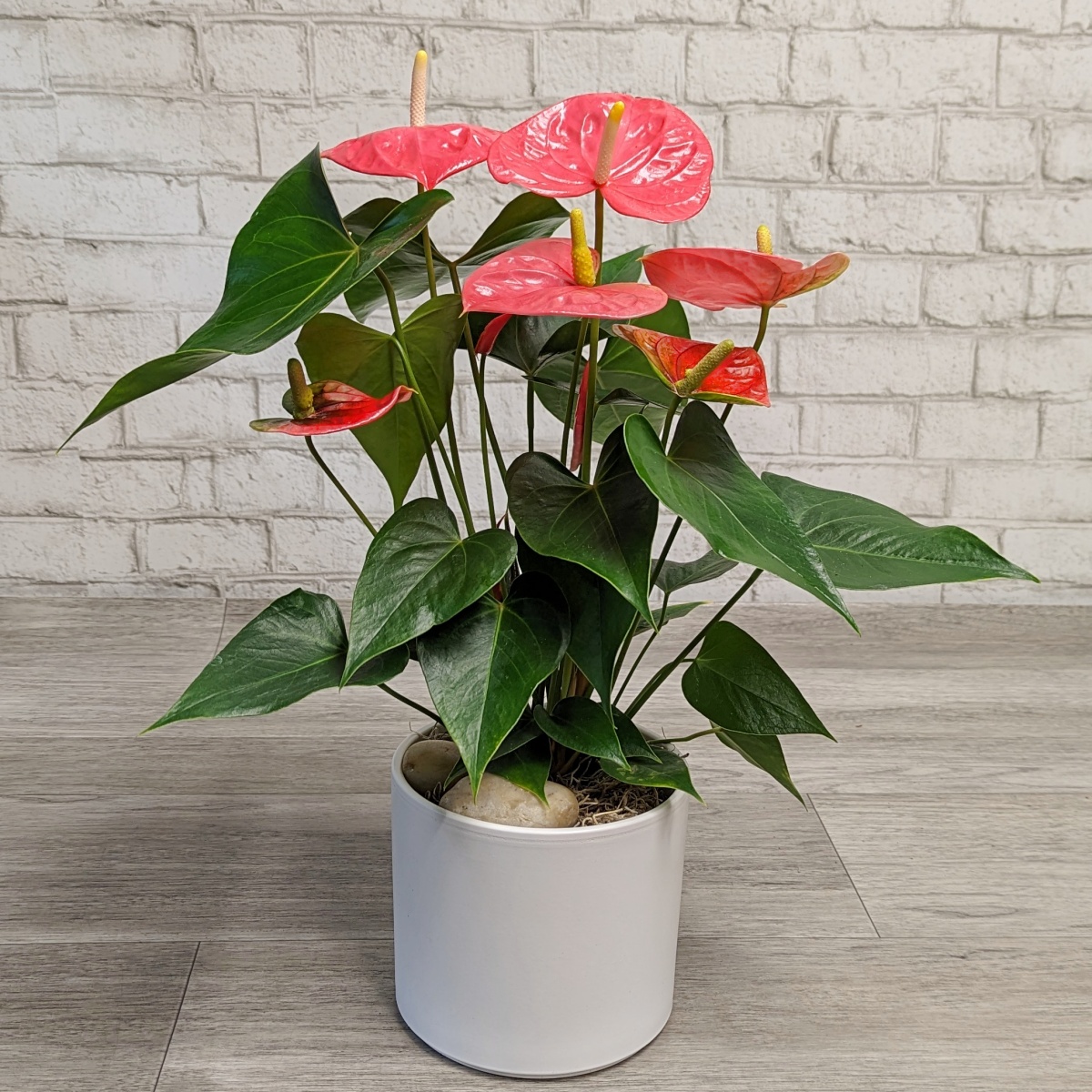
Anthurium
Anthuriums can do very well in LECA because they enjoy steady moisture and appreciate oxygen-rich root conditions. The glossy leaves and colorful blooms reward consistency.
They prefer warmth, filtered light, and a nutrient solution that is not overly strong.
Peace Lily
Peace lilies often transition well because they naturally enjoy evenly moist conditions. In LECA, they can become easier to manage because you are less likely to swing wildly between soaked soil and total dryness.
Still, do not let the reservoir become stagnant. Refresh and flush regularly.
ZZ Plant
ZZ plant is another tough, adaptable choice, but like snake plant, it should not be kept too wet. Its underground rhizomes store water, so restraint is important.
LECA can work beautifully here if you use a light hand.
Alocasia
Alocasia can thrive in LECA, but it is less forgiving than pothos or monstera. It likes warmth, bright filtered light, and stable moisture. If your home is cold or drafty, that matters.
Grow Alocasia in LECA only if you are ready to observe closely.
Calathea
Calathea can appreciate the humidity and moisture stability of semi-hydro systems, but it also reacts quickly to stress. Use good-quality water, keep the environment stable, and avoid harsh direct sun.
It is not the hardest plant in LECA, but it is not the first one I would recommend to a beginner.

How to Transition a Plant Into LECA Without Shock
This is where many growers go wrong: they move a plant from soil to LECA too quickly and assume it will behave as if nothing changed.
Here is a better approach:
First, remove the plant gently from its pot and wash away as much soil as possible. Be patient. Old soil trapped around roots can cause rot later.
Next, trim only what is clearly dead, mushy, or damaged. Do not over-prune healthy roots just to make the plant look neat.
Then place the plant into clean, pre-soaked LECA and keep the water reservoir low. The roots should not be submerged all the way to the crown. Let the plant adapt gradually.
During the first few weeks, expect some adjustment. A few older roots may decline while water roots begin to form. That is normal.
This is exactly like introducing new animals to a flock or moving livestock onto a new pasture. Sudden change causes stress. Gentle transition builds resilience.
Practical LECA Care Tips That Actually Matter
Flush Regularly
Because LECA does not absorb nutrients the way soil does, salts can build up over time. Flush the container thoroughly every few weeks with fresh water.
This matters more than many beginners realize.
Use Dilute Nutrients
Plants in LECA do not feed from soil, so they need nutrients in the water. Use a balanced nutrient solution at an appropriate diluted strength. Stronger is not better.
In farm life, overfeeding is a common mistake too—whether with fertilizer or grain. Balance always wins.
Watch Light More Than Water
When people switch to LECA, they often obsess over water levels and forget light. A plant in perfect LECA but poor light will still struggle.
Healthy growth depends on the whole system.
Keep Containers Clean
Clean vessels reduce algae, odor, and stagnation. A tidy semi-hydro setup is easier to maintain and easier to troubleshoot.
The same principle applies to poultry waterers, livestock troughs, and feeders. Clean systems are healthier systems.
What LECA Teaches About Better Gardening and Farm Care
At first glance, semi-hydro houseplants and poultry housing seem unrelated. They are not.
Both improve when you focus on:
- airflow,
- moisture control,
- sanitation,
- observation,
- and consistency.
A gardener who learns not to drown a peace lily often becomes better at avoiding overwatering seedlings. A grower who notices salt buildup in a LECA jar becomes more likely to notice mineral issues in animal water sources. Someone who learns to transition roots gently may also handle transplant shock in the vegetable garden more successfully.
Good care is transferable.
That is one of the hidden gifts of houseplants. They sharpen the instincts you use everywhere else.

A Note on Indoor Plants and Animals
If you raise poultry, rabbits, or keep curious farm pets near porches, mudrooms, or enclosed sunrooms, place LECA-grown plants thoughtfully. Decorative plants should stay where animals cannot nibble them, knock them over, or drink from their containers.
The best setup is always the one that protects both the plant and the animal without constant conflict.
On a working homestead, convenience matters. If you place a plant where a duck can reach it, the duck will eventually make a point of proving you wrong.
A Beginner-Friendly LECA Plan That Builds Confidence
If you want to start without overwhelm, begin with this combination:
- Choose one pothos for easy adaptation.
- Choose one monstera for visible root growth and strong feedback.
- Choose one snake plant to remind yourself not to overdo the watering.
These three together will teach you most of what you need to know about semi-hydro growing.
Keep them in bright indirect light, use clean water, flush regularly, and resist the urge to fuss too much.
That last part may be the hardest lesson of all.
Final Thoughts: A Cleaner System, a Sharper Eye, a Calmer Routine
LECA is not better than soil in every case. But for many indoor plants and for many busy growers – it is a cleaner, more controlled system that reduces mess and makes plant care easier to monitor.
That alone is valuable.
But the deeper value goes further. LECA trains your eye. It teaches you to think in systems. It helps you notice how roots, water, light, nutrients, and airflow work together. And once you learn to see care that way, the lesson reaches far beyond the windowsill.
It improves how you raise seedlings. How you water herbs. How you manage bedding in a coop. How you check water quality for ducks. How you build calmer, steadier routines across the whole farm.
That is the kind of knowledge that changes daily life.
Not because it is flashy.
But because it works.
And in the end, that is what the best gardening and farm care always do—they make thriving feel less like luck and more like a practice you can return to, season after season.