There is something deeply satisfying about watching a vegetable come back to life on your windowsill.
A trimmed scallion sends up new green shoots. A romaine base begins to unfurl. A forgotten potato starts pushing out pale sprouts, quietly reminding you that food wants to grow. For gardeners, homesteaders, and small farmers, this is more than a clever kitchen trick. It is a mindset shift. It teaches you to see scraps not as waste, but as potential.
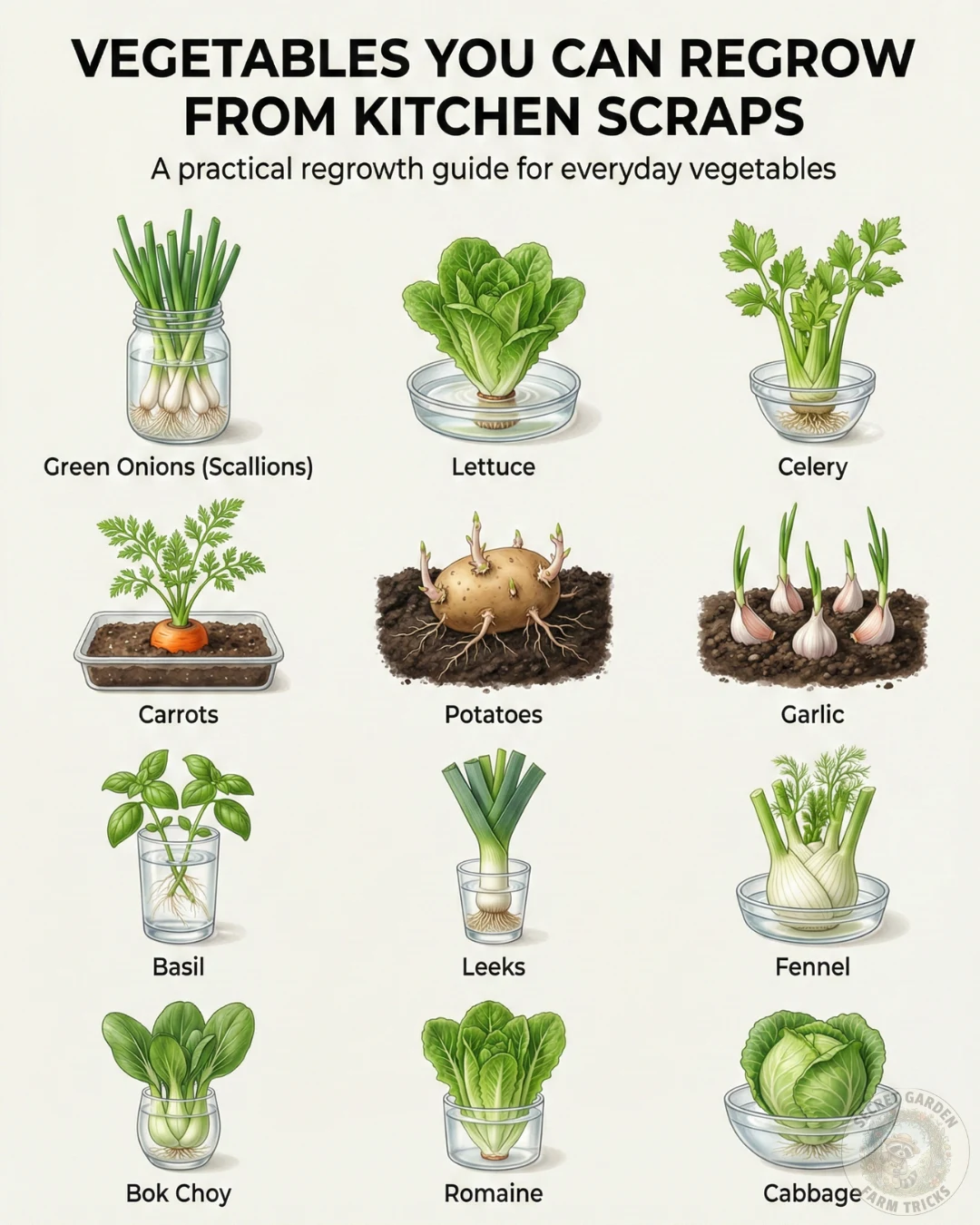
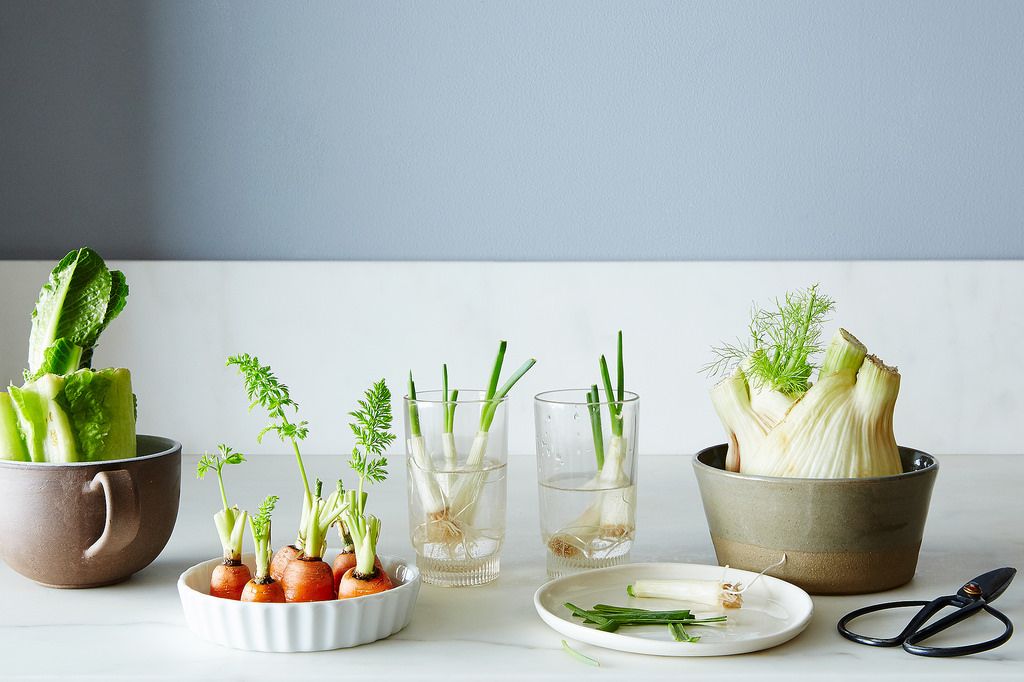
There highlights some of the easiest vegetables and herbs to regrow from kitchen scraps: green onions, lettuce, celery, carrots, potatoes, garlic, basil, leeks, fennel, bok choy, romaine, and cabbage. Some will regrow quickly in water for fresh greens. Others can be moved into soil for a longer harvest. A few, like potatoes and garlic, can become full crops if handled correctly.
And that is where this becomes bigger than a windowsill project.
Regrowing vegetables from scraps teaches the same habits that improve all good gardening and farm care: observation, patience, timing, moisture control, and respect for cycles. It also fits beautifully into a more sustainable household – one where kitchen waste is reduced, compost is valued, and plants, poultry, and livestock all play a role in a more connected system.
Let’s walk through how to do it well.
Why Regrowing Kitchen Scraps Is Worth Doing
Let’s be honest: regrowing scraps will not replace a full vegetable garden. You are not going to feed a large family for a season from a jar of scallions alone. But that is not the point.
The real value is that regrowing scraps helps you:
- stretch food a little further,
- reduce kitchen waste,
- teach children and beginners how plants grow,
- keep fresh greens close at hand,
- and build stronger instincts for watering, light, and plant timing.
For small farmers and homesteaders, these skills matter. The person who notices when celery needs fresh water will often become better at spotting seedling stress in the greenhouse, checking water quality for chickens and ducks, or catching early signs of wilt in the garden.
Small habits build bigger skills.
1. Green Onions (Scallions)
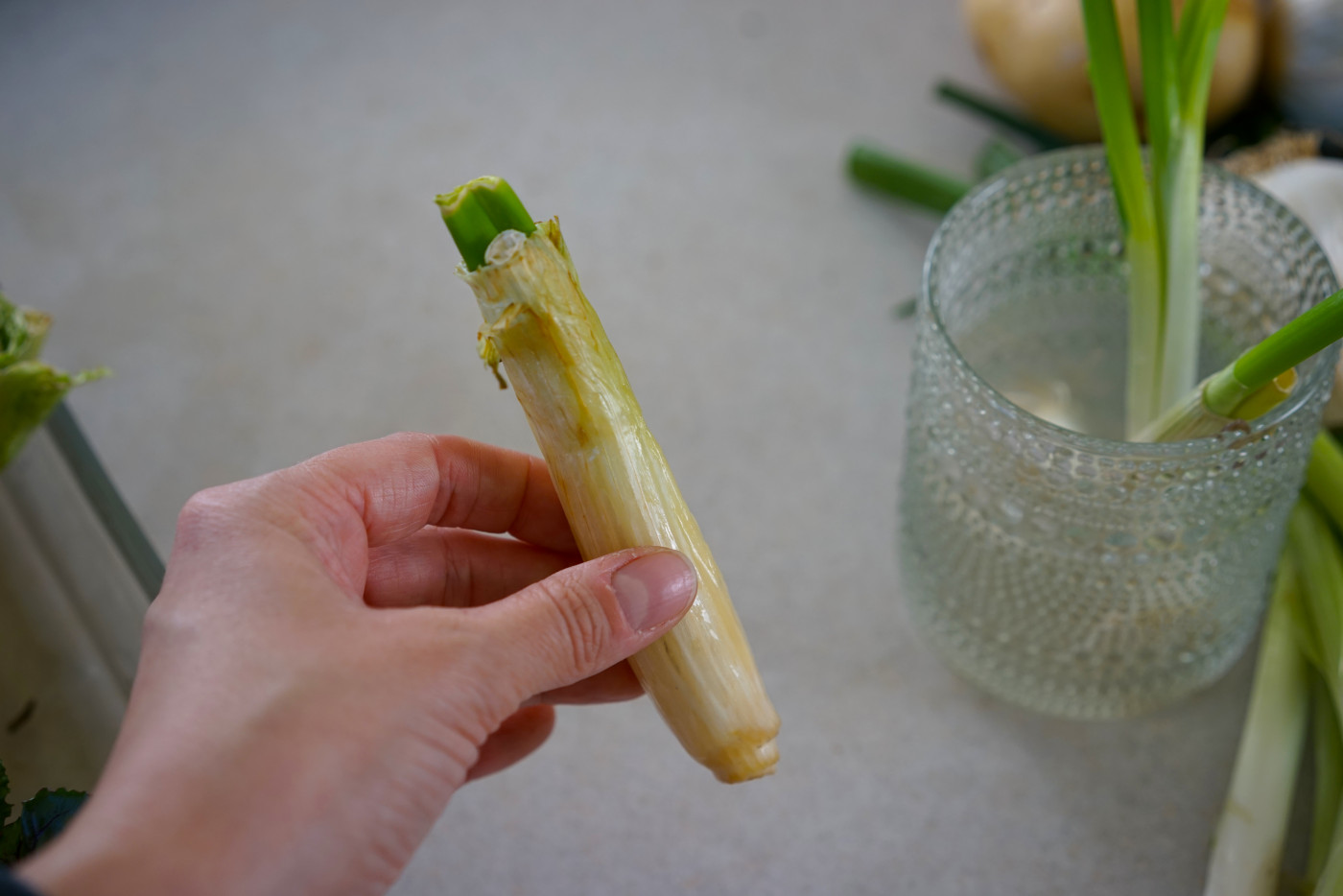
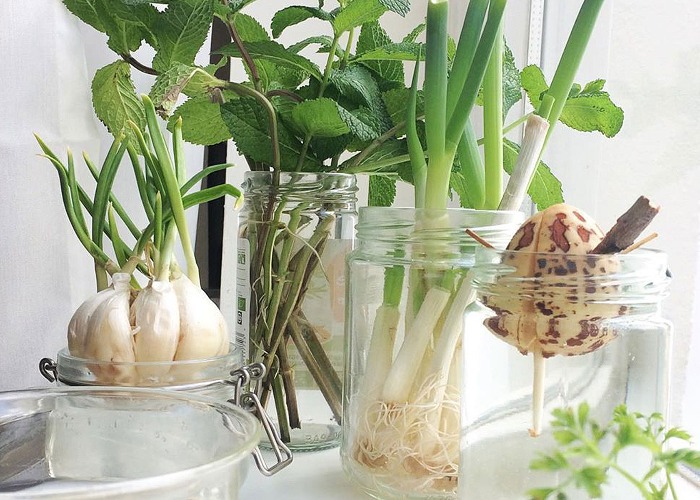
Honestly, there’s not enough hype about how easy it is to regrow green onions from the grocery store. If you’ve used the top part while you’re cooking dinner, all you have to do is tuck the base into a glass of water, and it’ll sprout more greens you can harvest. You just need a scrap with a little bit of white roots still attached at the bottom.
How to Grow Green Onions from Scraps
- Stick the white base of each green onion into a glass or jar filled with fresh water.
- After just a day or two, you’ll notice new growth from the tip of each green onion.
- Change out the water every couple of days.
You can keep your green onions in water until the leaves start to lose their flavor. Alternatively, you can just stick your scraps straight into some soil in a pot or your garden, if it’s warm outside. Bury each scrap so that the white part is entirely covered. Keep it watered, and you’ll be able to snip so many tasty leaves.
→ Check out our full guide to regrowing green onions.
2. Lettuce
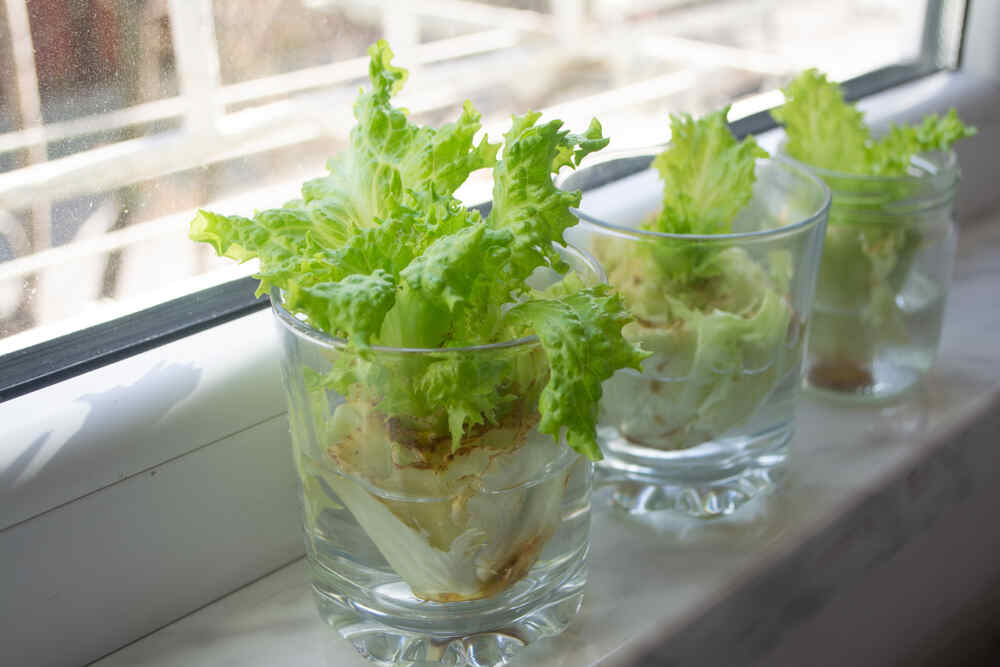
Lettuce is one of those scraps that feels almost magical at first. Save the base from a head of lettuce, set it in shallow water, and you’ll often see fresh little leaves forming from the center. Now, to be clear, you’re not usually growing a whole brand-new supermarket-sized head again. But you can get tender new leaves, and it’s a fun, rewarding way to stretch your produce a little further.
How to Grow Lettuce from Scraps
Save the bottom 1 to 2 inches of the lettuce head.
Place it in a shallow bowl with a small amount of water.
Keep it in bright, indirect light.
Refresh the water every day or two.
Watch for new leaf growth from the center in several days.
Once roots and fresh leaves appear, you can transplant the base into soil. Leave the crown above the soil line, water gently, and harvest the new leaves while they’re young and tender.
→ Check out our full guide to regrowing lettuce.
3. Celery
Celery is one of the most satisfying vegetables to regrow because the center starts waking back up so clearly. After you cut off the stalks, the base still holds plenty of growing energy. Put it in water, and before long you’ll see new leaves begin to rise from the middle. It’s a great reminder that what looks like kitchen waste often still has a lot of life left in it.
How to Grow Celery from Scraps
Cut off the stalks and save the bottom 2 inches of the celery base.
Set the base in a shallow bowl of water with the cut side facing up.
Place it in bright light.
Change the water every couple of days.
Wait for the center to produce fresh leaves and small roots.
Once it starts actively growing, transplant it into a pot or garden bed. Cover the roots and base with soil, but leave the center exposed. Keep it watered, and let the new stalks develop.
→ Check out our full guide to regrowing celery.
4. Carrots
Carrots are a little different from some of the other vegetables on this list. You won’t regrow a full new carrot root from the top, but you can regrow the leafy carrot greens. That makes carrot tops worth saving if you enjoy a fun regrowth project, want greenery for the windowsill, or like using carrot tops in pesto, broth, or compost.
How to Grow Carrots from Scraps
Cut off the top inch of the carrot, where the greens once grew.
Place the carrot top in a shallow dish with a little water.
Set it in bright light.
Refresh the water regularly.
Watch for feathery green growth from the center.
If you’d like, move the carrot top into soil once it starts growing strongly. Just know that you’re growing the greens, not a brand-new carrot root.
→ Check out our full guide to regrowing carrot tops.
5. Potatoes
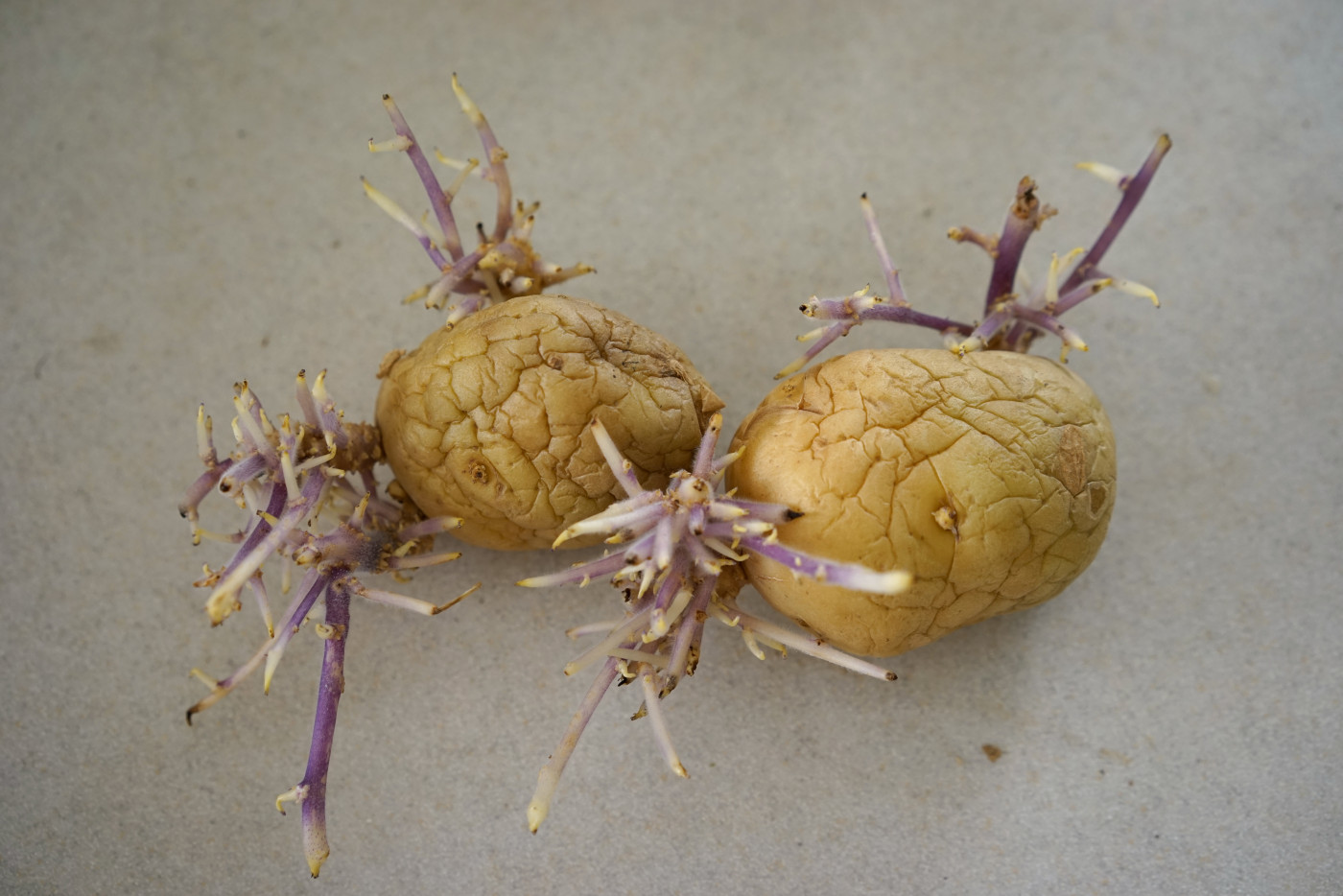
If you’ve ever found a potato in the pantry covered in little eyes and sprouts, you’ve already seen how eager potatoes are to grow. Instead of tossing them, you can turn those sprouting potatoes into a whole new crop. This is one of the most worthwhile kitchen scrap regrowth projects because it can lead to real food, not just decorative leaves.
How to Grow Potatoes from Scraps
Choose a potato with healthy eyes or sprouts.
Cut it into chunks, making sure each piece has at least one eye.
Let the cut pieces dry for a day or two so the surface can toughen up.
Plant each piece in loose soil with the eye facing upward.
Keep the soil evenly moist as shoots emerge.
As the plants grow, mound more soil around the stems to encourage more tuber production. With patience, those scraps can turn into a generous harvest.
→ Check out our full guide to regrowing potatoes.
6. Garlic
Garlic is one of the easiest and most useful kitchen scraps to plant. A single clove can turn into green garlic or, given enough time, a whole new bulb. So if you notice your garlic starting to sprout in the kitchen, don’t think of it as going bad. Think of it as planting material.
How to Grow Garlic from Scraps
Choose sprouting garlic cloves that are still firm.
Plant each clove pointy side up in a pot or garden bed.
Cover with soil, leaving a couple inches between cloves.
Water lightly and place in a sunny location.
Wait for green shoots to appear.
If you harvest early, you can use the shoots like green garlic. If you let the plants mature, the cloves underground can develop into full bulbs.
→ Check out our full guide to regrowing garlic.
7. Basil
Basil doesn’t regrow from a stump the way scallions do, but it roots beautifully from cuttings, which makes it one of the most useful kitchen herbs to propagate. If you’ve bought a bunch of basil or clipped stems from your plant, you can turn those fresh cuttings into brand-new basil plants with very little effort.
How to Grow Basil from Scraps
Take a healthy basil cutting about 4 to 6 inches long.
Remove the lower leaves so the stem is bare at the bottom.
Place the cutting in a glass of fresh water.
Set it in bright, indirect light.
Change the water every couple of days until roots form.
Once the roots are a couple inches long, plant the basil in soil. Keep it warm, pinch it often, and it will grow into a bushy little herb plant you can harvest again and again.
→ Check out our full guide to regrowing basil.
8. Leeks
Leeks behave a lot like green onions, which makes them another excellent candidate for regrowing from scraps. If you save the white root end after cooking, it can send up fresh green growth surprisingly fast. It’s an easy, low-effort project that works well in both water and soil.
How to Grow Leeks from Scraps
Save the white base with the roots still attached.
Place it in a glass with enough water to cover the roots.
Set it in a bright window.
Change the water every few days.
Watch for new green leaves to rise from the center.
For a longer-lasting plant, move the rooted leek base into soil once it starts growing well. Keep the soil moist, and you’ll be able to cut the greens as they regrow.
→ Check out our full guide to regrowing leeks.
9. Fennel
Fennel is one of those vegetables that surprises people when it starts growing again from the bulb base. If you keep the bottom of the bulb intact, it can send up fresh fronds and new center growth with just a little water and light. It won’t always become a huge new bulb, but it’s still a very satisfying regrowth project.
How to Grow Fennel from Scraps
Cut off the fennel stalks and save the bulb base.
Place the base in a shallow dish with a small amount of water.
Set it in bright, indirect light.
Refresh the water every couple of days.
Wait for new green growth from the center.
Once roots and shoots are established, transplant the fennel into soil. Keep it evenly moist and give it plenty of sun for the best continued growth.
→ Check out our full guide to regrowing fennel.
10. Bok Choy
Bok choy is one of the prettiest vegetables to regrow from scraps. Set the base in water, and before long the center starts unfurling fresh, crisp little leaves. It’s a quick project, visually rewarding, and a good choice if you want to see results without waiting too long.
How to Grow Bok Choy from Scraps
Save the bottom inch or two of the bok choy base.
Place it in a shallow dish with a little water.
Keep it in bright light.
Change the water every day or two.
Watch for new leaves to emerge from the middle.
If the plant develops roots and keeps growing strongly, move it into soil. Leave the crown above the soil line, water gently, and keep harvesting the tender new growth.
→ Check out our full guide to regrowing bok choy.
11. Romaine
Romaine is one of the most popular vegetables people try to regrow from kitchen scraps, and for good reason. It responds quickly, and the center often starts producing new leaves within days. It’s best to think of this as a way to get a second round of fresh greens rather than a full replacement head, but it’s still absolutely worth trying.
How to Grow Romaine from Scraps
Save the base of the romaine head, about 1 to 2 inches tall.
Place it in a shallow bowl with a bit of water.
Set it in bright, indirect light.
Refresh the water regularly.
Wait for fresh leaves to form from the center.
When roots and new leaves appear, transplant it into soil for better long-term growth. Keep it watered and harvest the leaves when they’re young and crisp.
→ Check out our full guide to regrowing romaine.
12. Cabbage
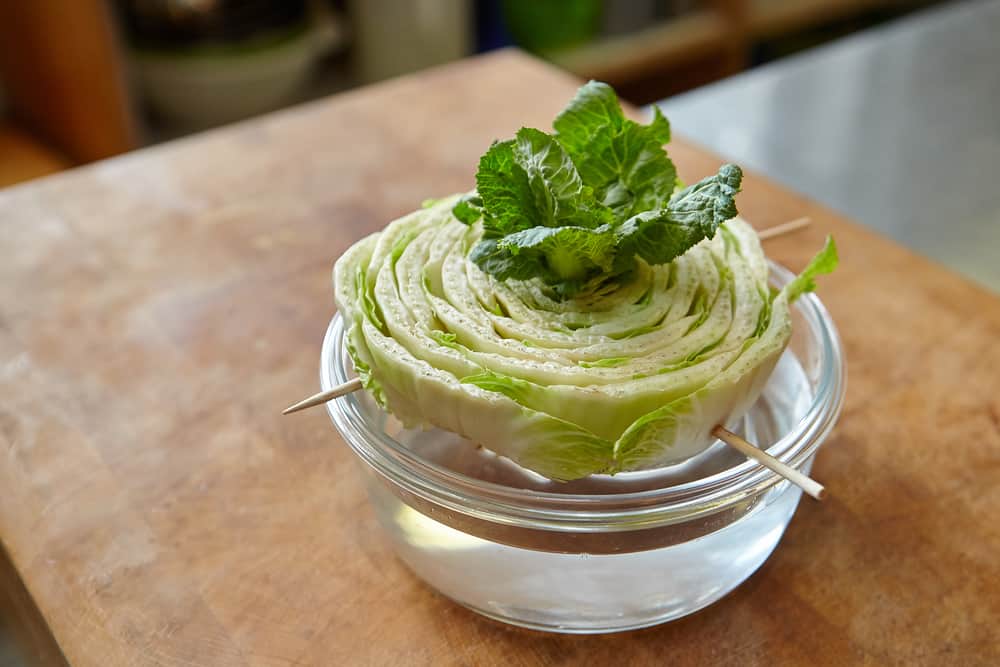
Cabbage can regrow in much the same way as lettuce or bok choy, especially if the base is still firm and fresh. It usually won’t recreate a full tight cabbage head from scraps alone, but it can produce new leafy center growth that is fun to watch and sometimes worth harvesting.
How to Grow Cabbage from Scraps
Save the bottom of the cabbage head with the core intact.
Place it in a shallow dish with a small amount of water.
Keep it in a bright spot.
Change the water every couple of days.
Watch for new leaves to form from the middle.
If the cabbage starts developing roots and healthy new growth, plant it in soil for a stronger second stage. Give it light, moisture, and time, and let it show you what it still has left to give.
→ Check out our full guide to regrowing cabbage.
How to Prevent Rot, Mold, and Weak Growth
Most regrowth failures come down to three problems: too much water, not enough light, or waiting too long to transplant.
Here are the practical habits that make the biggest difference:
Keep Only the Roots or Base in Water
Do not drown the whole scrap. Most regrowing vegetables need only the bottom touching water. Too much submersion causes rot quickly.
Change Water Frequently
Fresh water every couple of days matters more than people think. Stale water leads to odor, slime, and weak regrowth.
Give Strong Light
A bright windowsill is usually best. Weak light creates pale, stretched growth that looks alive but lacks vigor.
Move Strong Growers Into Soil
Scallions can stay in water for a while, but celery, bok choy, basil, potatoes, and garlic all do better long term in soil. Water can start the process; soil supports the future.
Turning Regrowth Into Better Gardening Skills
This is where the practice becomes more valuable than the harvest itself.
Regrowing scraps teaches you to notice:
- how roots form,
- how stems respond to light,
- how quickly water turns stale,
- how plant energy changes after cutting,
- and how some plants bounce back faster than others.
These are not tiny lessons. They are the same instincts that improve outdoor vegetable growing.
A gardener who learns not to overfill a celery dish is less likely to overwater seedlings. Someone who notices that basil roots faster in warmth will better understand spring transplant timing. A grower who sees how quickly scallions respond to fresh water may become more disciplined about clean watering systems for greenhouse trays, rabbits, chickens, or ducks.
That is how simple practices deepen into skill.
How This Fits Into a Smarter Farm and Homestead Routine
On a good homestead, nothing useful is wasted casually.
Kitchen scraps become:
- regrowth projects,
- compost ingredients,
- or controlled feed supplements where appropriate.
That does not mean every scrap goes to every animal. Good animal husbandry still requires caution and species awareness. But the broader principle holds: waste streams can become resource streams.
For example:
- Green onion tops, celery leaves, or lettuce trimmings may become part of compost if not regrown.
- Root scraps that cannot regrow may still feed the soil.
- Healthy herb cuttings can multiply kitchen plants without extra expense.
- Sprouted potatoes and garlic can become future crops instead of landfill.
This thinking strengthens both gardening and farm care. It encourages stewardship, not just consumption.
And that same mindset helps in poultry and livestock care too. Clean waterers, dry bedding, secure nighttime housing, proper ventilation, careful feed storage—these are all forms of resource respect. They prevent waste, illness, and unnecessary labor later.
A Simple Kitchen Scrap Regrowth Routine That Actually Works
If you want a routine that is easy to maintain, begin with just three projects:
- Green onions for quick success
- Romaine or celery for visible center regrowth
- Basil cuttings for rooting and potting up
Once you have those working, add garlic or potatoes in soil.
Keep the setup simple:
- one bright window,
- small jars or shallow dishes,
- a habit of changing water every two days,
- and a willingness to move promising plants into soil instead of leaving them in water forever.
That alone is enough to build confidence.
Common Mistakes to Avoid
Do not expect every scrap to become a full new harvest. Some only regrow greens.
Do not keep scraps in dim corners and then assume regrowth “doesn’t work.”
Do not let jars turn cloudy and foul.
Do not leave strong growers trapped in water too long if they clearly want soil.
And perhaps most importantly, do not treat the process as pointless just because the yield is modest. Skill-building has value too.
Final Thoughts: Regrow More Than Food
Kitchen scrap regrowth is not just about saving money or stretching groceries. It is about retraining the eye and the hand.
It teaches you to pause before throwing something away.
It teaches you to notice where life is still stored.
It teaches you that roots, moisture, light, and timing matter.
It teaches you that small daily care changes outcomes.
That kind of knowledge does not stay on the windowsill.
It follows you into the garden.
Into the greenhouse.
Into the chicken run.
Into the feed room.
Into every part of a more thoughtful, sustainable life.
So save the scallion roots. Set the celery base in water. Plant the sprouted garlic. Root that basil cutting.
Not because each one will change your life alone.
But because together, they teach the kind of care that does.