It is easy to get overwhelmed by nutrition advice.
One day everyone is talking about magnesium. The next day it is vitamin D, zinc, iron, or omega-3s. But when you step back, the real goal is much simpler: build meals around whole foods that naturally provide the nutrients your body uses every day.
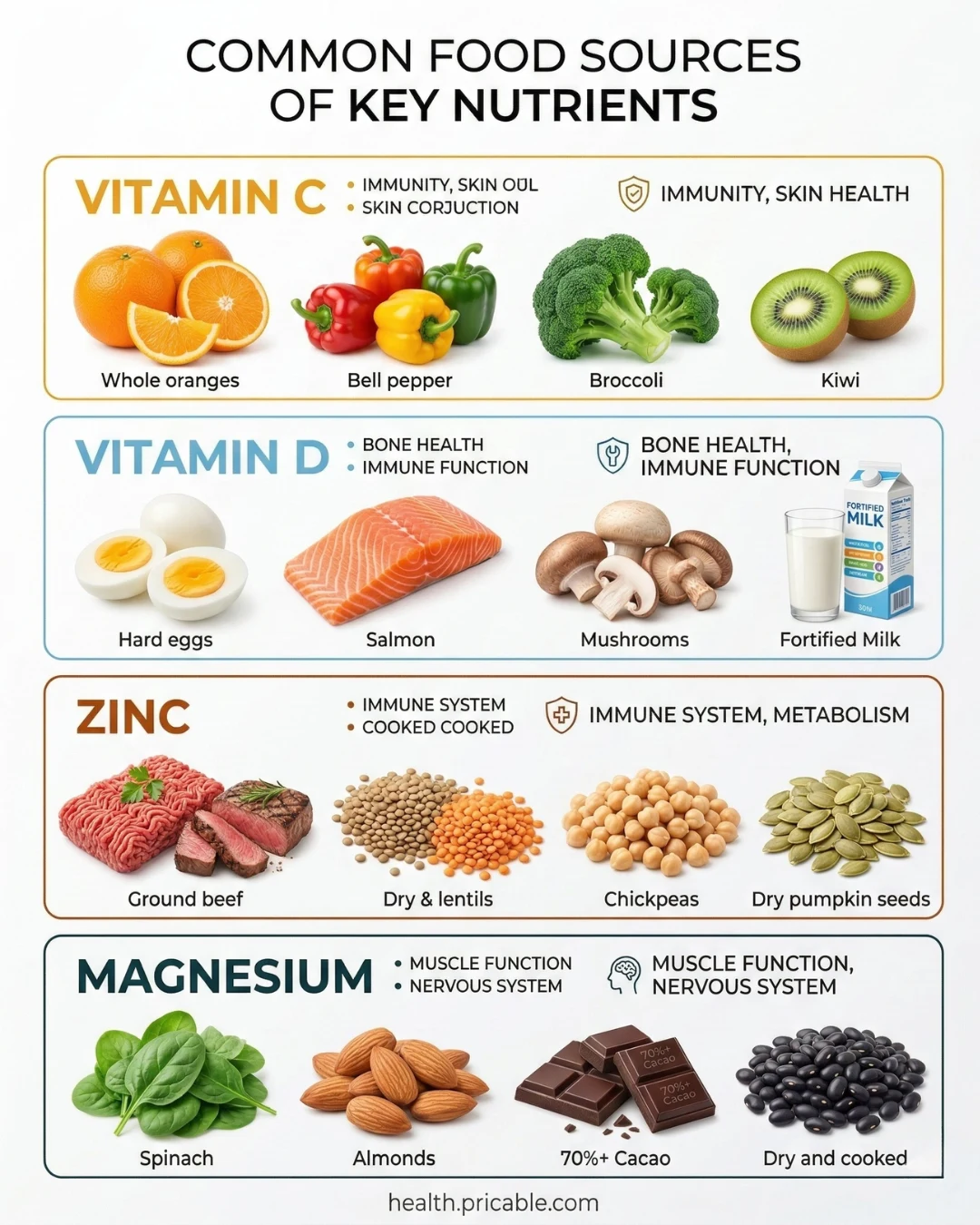
That is exactly why this visual guide is helpful. It shows common food sources of key nutrients in a practical, easy-to-follow way. Instead of chasing random supplements, you can start by understanding which foods support immunity, skin health, bones, metabolism, muscles, and energy.
Most people never realize how much easier healthy eating becomes when they stop asking, “What supplement should I take?” and start asking, “What foods can I repeat each week?”
Vitamin C Foods for Immunity and Skin Health
Vitamin C is one of the best-known nutrients for a reason. It helps support immune function, collagen formation, antioxidant protection, and healthy skin.
Oranges are the classic choice because they are hydrating, portable, and naturally rich in vitamin C.
Bell peppers are especially impressive because they can contain even more vitamin C than many fruits.
Broccoli adds fiber and plant compounds along with vitamin C.
Kiwi is a compact fruit packed with both vitamin C and antioxidants.
A simple way to use this group is to include one vitamin C food daily, especially with meals that also contain iron-rich plant foods.
Vitamin D Foods for Bone Health and Immune Function
Vitamin D matters for bone strength, calcium balance, muscle function, and immune support. It is one of the nutrients many people do not get enough of from food alone, which is why food quality matters here.
Salmon is one of the strongest food sources because it also provides protein and omega-3 fats.
Egg yolks contribute smaller amounts of vitamin D.
Mushrooms can provide some vitamin D depending on how they were grown.
Fortified milk is included because many dairy products are enriched to help support intake.
This is a good reminder that vitamin D is not only about sunshine. A food-first routine still helps.
Zinc Foods for Immunity and Metabolism
Zinc supports immune defense, wound healing, skin health, and many enzyme functions involved in metabolism.
Ground beef provides highly absorbable zinc, which is one reason red meat is often highlighted in zinc discussions.
Lentils and chickpeas offer plant-based zinc along with fiber and protein.
Pumpkin seeds are one of the most practical plant foods for adding zinc to salads, bowls, or snacks.
If you eat mostly plant foods, variety matters more here because plant zinc is not absorbed as efficiently as zinc from animal foods.
Magnesium Foods for Muscles and the Nervous System
Magnesium is one of the most underrated nutrients. It supports muscle contraction, nerve signaling, sleep quality, and energy production.
Spinach is a classic magnesium food because it is nutrient-dense but easy to add to many meals.
Almonds bring magnesium with healthy fats.
Dark chocolate made with 70% or more cacao gives magnesium plus antioxidant compounds.
Black beans round out the list with a powerful mix of fiber, plant protein, and minerals.
This is a great example of how one nutrient can come from both vegetables and satisfying everyday staples.
Why Whole Food Nutrients Work So Well Together
The smartest part of this image is that it does not isolate nutrients from real eating. In real life, foods overlap.
For example:
- Broccoli gives vitamin C, fiber, and plant compounds
- Salmon gives vitamin D, protein, and omega-3s
- Spinach gives magnesium, folate, and vitamin K
- Pumpkin seeds give zinc, magnesium, and healthy fats
That means you do not need to “perfectly target” one nutrient at a time. You just need to build meals that include a range of whole foods often enough.
How to Build a More Nutrient-Dense Plate
A practical plate could look like this:
- Protein: salmon, ground beef, lentils, or chickpeas
- Vegetable: broccoli, spinach, or bell peppers
- Fruit: kiwi or oranges
- Healthy fats/minerals: almonds or pumpkin seeds
- Optional extra: fortified milk or a square of dark chocolate
This kind of meal structure helps cover multiple nutrients without making food complicated.
When You’ll Notice the Difference
Whole food nutrition usually works quietly before it works dramatically.
- Within a few days: meals may feel more filling and balanced
- Within 2–4 weeks: energy, digestion, and meal satisfaction often improve
- Long term: stronger nutrition foundations support immunity, skin, bones, metabolism, and overall recovery
No single orange, handful of almonds, or serving of salmon will transform health overnight. But repeated weekly choices add up fast.
A Few Simple Tips to Combine These Foods Better
To get even more from the foods in the image:
- Pair vitamin C foods like oranges, kiwi, broccoli, or bell peppers with plant iron and zinc foods like lentils or chickpeas
- Include a little healthy fat with vegetables for better absorption of some nutrients
- Rotate both animal and plant sources when possible for broader nutrient coverage
- Use foods like spinach, beans, pumpkin seeds, and almonds regularly instead of only occasionally
Final Takeaway
The best nutrition advice is often the least flashy.
If you want to support your body well, focus on common food sources of key nutrients like the ones in this image: whole oranges, bell pepper, broccoli, kiwi, hard eggs, salmon, mushrooms, fortified milk, ground beef, dry lentils, chickpeas, pumpkin seeds, spinach, almonds, 70%+ cacao, and black beans.
These foods help support the systems you rely on every day: immunity, skin, bones, muscles, nerves, and metabolism.
The real secret is not perfection.
It is eating these foods often enough that your body can count on them.