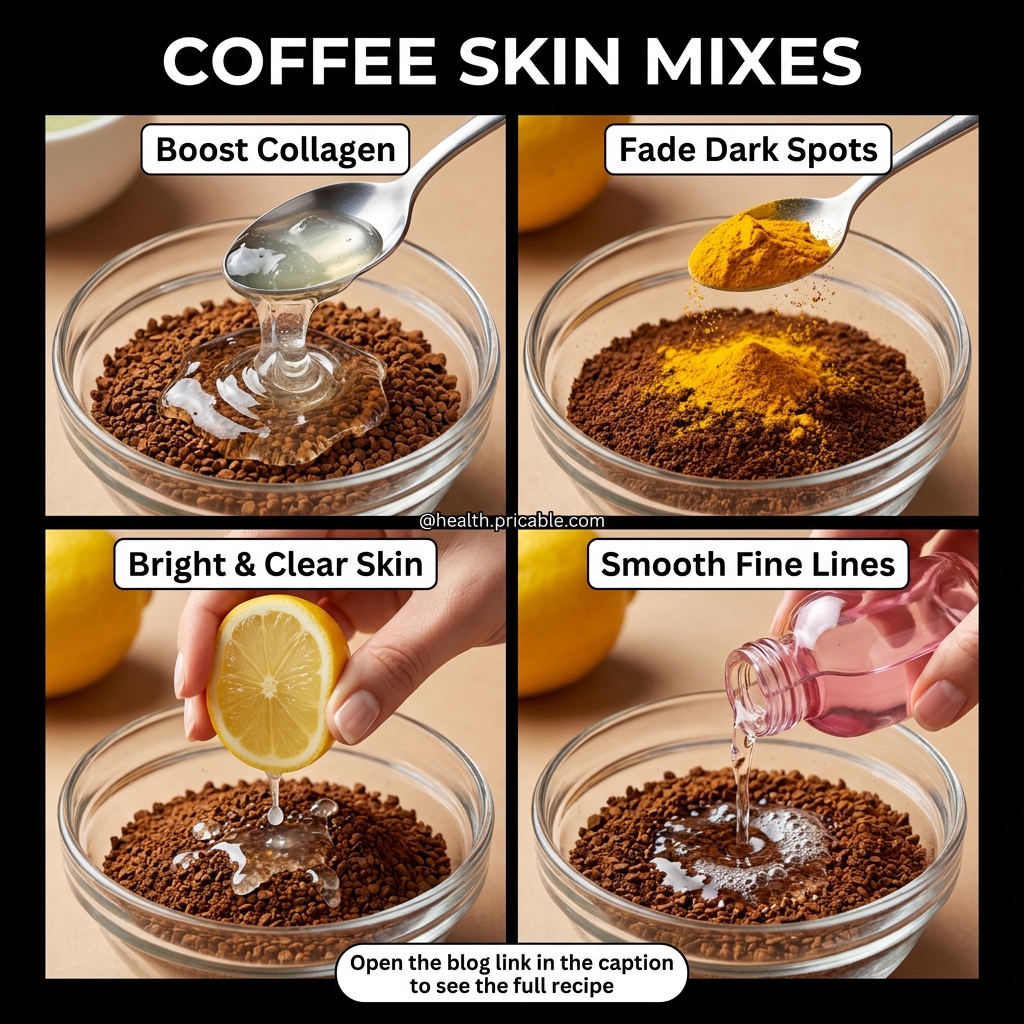
Add aloe for a smooth, bouncy feel. Add turmeric for a brighter-looking tone. Add lemon carefully for a fresh glow. Add rose water when you want a soft, refreshed finish.
The best part is that each mix takes only a few minutes, and you can choose the version that matches what your skin needs today.
Here is the full guide to coffee skin mixes, including exact measurements, safe timing, buying tips, mistakes to avoid, and a realistic timeline.
A gentle reality check: coffee masks can make skin feel smoother and look fresher, but they do not rebuild collagen overnight or erase pigmentation in one use.
Think of them as short-contact exfoliating and refreshing treatments. The goal is softer texture, a cleaner-looking surface, and a more polished glow without irritating your skin barrier.
Why coffee skin mixes can work so well
- Coffee grounds add gentle physical exfoliation: They can help buff away dull surface flakes when used with very light pressure.
- Caffeine gives a refreshed look: Skin may look temporarily more awake, especially when the mask is used briefly.
- Aloe adds slip and comfort: It makes the mix smoother and less scratchy.
- Turmeric supports a brighter-looking tone: It is popular in DIY masks, but it must be used carefully because it can stain.
- Rose water makes the mix lighter: It helps thin the coffee into a spreadable paste without making it too oily.
The decision cue is simple: choose your coffee mix based on your skin goal, not based on how dramatic the recipe looks. A gentle blend used correctly beats a harsh mix every time.
Best coffee face mask for glowing skin
The best coffee mask for a quick glow is usually the gentlest one: coffee plus aloe vera gel.
It gives you the polishing effect of coffee with the soothing, slippery texture of aloe, which helps reduce rough rubbing.
Quick glow coffee and aloe mask
- 1 teaspoon finely ground coffee
- 1 tablespoon pure aloe vera gel
- Optional: 1 teaspoon plain yogurt for a creamier texture
How to make it
- Add coffee and aloe vera gel to a small bowl.
- Mix until it becomes a soft paste.
- If the paste feels too gritty, add more aloe gel.
- Apply a thin layer to clean, slightly damp skin.
- Leave on for 5 to 8 minutes.
- Rinse with lukewarm water using very light circular motions.
Use this mix when your skin looks tired, dull, or dry on the surface. Avoid pressing hard because coffee grounds can scratch if used aggressively.
How to make coffee face mask at home
These four coffee skin mixes are designed for different goals: glow, uneven tone, dullness, and smoother-looking texture.
Use finely ground coffee, not sharp coarse grounds. The smoother the texture, the safer it feels on the face.
Mix 1: Coffee and aloe for a smooth glow
- 1 teaspoon finely ground coffee
- 1 tablespoon aloe vera gel
- Timing: 5 to 8 minutes
- Best for: dull, tired-looking skin
- Mix coffee and aloe until smooth.
- Apply a thin layer to clean skin.
- Let it sit for 5 to 8 minutes.
- Rinse gently without scrubbing hard.
Mix 2: Coffee and turmeric for uneven tone
- 1 teaspoon finely ground coffee
- 1 tablespoon plain yogurt or honey
- 1 tiny pinch turmeric, no more than 1/16 teaspoon
- Timing: 5 minutes
- Best for: uneven-looking tone and post-blemish dullness
- Mix coffee with yogurt or honey first.
- Add a tiny pinch of turmeric and stir well.
- Apply carefully, avoiding eyebrows and hairline.
- Leave on for 5 minutes only.
- Rinse fully and cleanse again if yellow residue remains.
Turmeric can stain towels, nails, and pale skin temporarily. Use a tiny amount and avoid this mix before an important event.
Mix 3: Coffee and lemon for a fresh look
- 1 teaspoon finely ground coffee
- 1 tablespoon honey or aloe vera gel
- 3 to 5 drops fresh lemon juice
- Timing: 3 to 5 minutes
- Best for: oily, dull-looking skin that is not sensitive
- Mix coffee with honey or aloe first.
- Add only a few drops of lemon juice.
- Apply a thin layer, avoiding the eye area.
- Leave on for 3 to 5 minutes.
- Rinse well and apply moisturizer.
Lemon can irritate skin and increase sun sensitivity. Skip this version if your skin is sensitive, dry, freshly exfoliated, acne-inflamed, or easily stings.
Mix 4: Coffee and rose water for smoother-looking texture
- 1 teaspoon finely ground coffee
- 1 teaspoon rose water
- 1 teaspoon aloe vera gel or honey
- Timing: 5 to 7 minutes
- Best for: a lightweight mask before moisturizer
- Combine coffee, rose water, and aloe or honey.
- Mix until spreadable.
- Apply to clean skin in a thin layer.
- Leave on for 5 to 7 minutes.
- Rinse gently and moisturize.
Coffee face mask for dark spots
A coffee face mask may help skin look brighter temporarily, but dark spots usually need consistency, sunscreen, and time.
For a dark-spot-focused DIY mix, the coffee and turmeric version is the most popular, but it should be used gently and not too often.
Dark spot support mix
- 1 teaspoon finely ground coffee
- 1 tablespoon plain yogurt
- 1 tiny pinch turmeric
- Optional: 1/2 teaspoon honey
How to use it
- Apply only to areas of uneven tone or use a very thin full-face layer.
- Leave on for 5 minutes.
- Rinse thoroughly with lukewarm water.
- Follow with moisturizer.
- Use sunscreen the next morning, especially if dark spots are your main concern.
For stubborn dark spots, DIY masks are usually not enough on their own. Sunscreen, vitamin C, niacinamide, azelaic acid, retinoids, or professional guidance may be more effective depending on your skin.
How to use coffee scrub on face safely
The safest way to use coffee on your face is to treat it like a short mask with very gentle rinsing, not like a rough scrub.
Most irritation happens when people rub too hard, use coarse grounds, leave acidic mixes on too long, or repeat the mask too often.
Safe application rules
- Use finely ground coffee only.
- Apply to clean, damp skin.
- Keep the layer thin.
- Use light pressure when rinsing.
- Do not scrub active acne, peeling skin, sunburn, cuts, or irritated patches.
- Limit use to 1 time per week for most skin types.
- Moisturize immediately after rinsing.
- Wear sunscreen during the day, especially after exfoliating.
Best timing by skin type
- Oily skin: 5 to 8 minutes, once weekly
- Normal skin: 5 to 7 minutes, once weekly
- Dry skin: 3 to 5 minutes, every 10 to 14 days
- Sensitive skin: patch test first, then 2 to 3 minutes or skip coffee scrubs
- Acne-prone skin: avoid scrubbing active breakouts
What to look for before you buy coffee face mask
A store-bought coffee face mask can be a better choice if you want a smoother texture and fewer DIY messes.
Look for a formula that exfoliates gently and supports the skin barrier instead of relying only on gritty coffee grounds.
- Fine exfoliating texture: Avoid large, sharp, rough particles that feel scratchy.
- Barrier-supporting ingredients: Look for aloe, glycerin, panthenol, oat, honey, squalane, or hyaluronic acid.
- Low fragrance: Strong fragrance can make a mask feel luxurious but may irritate sensitive skin.
- Clear usage directions: A good mask should tell you how long to leave it on and how often to use it.
- No extreme claims: Avoid products promising instant collagen repair, permanent dark spot removal, or overnight wrinkle erasing.
- Skin-type match: Oily skin may prefer clay-based coffee masks, while dry skin may prefer cream or gel masks.
- Non-comedogenic cues: If you clog easily, avoid very heavy oils or waxy formulas.
- Patch-test recommendation: This is especially important if the mask contains fragrance, essential oils, acids, or turmeric.
- Easy rinse-off: Masks that leave grit behind can cause over-scrubbing during removal.
When comparing options, choose the product that matches your skin type first. The best coffee mask is not the strongest one; it is the one you can use without redness, burning, or roughness afterward.
Common mistakes and quick fixes
- Mistake: Using coarse coffee grounds. Why it matters: rough pieces can scratch the skin. Fix: use finely ground coffee or a smooth store-bought mask.
- Mistake: Scrubbing hard. Why it matters: pressure can damage the skin barrier. Fix: let the mask sit briefly and rinse with light circles.
- Mistake: Adding too much lemon juice. Why it matters: lemon can sting and increase sun sensitivity. Fix: use only a few drops or skip it.
- Mistake: Using turmeric before going out. Why it matters: turmeric may leave yellow residue. Fix: use a tiny pinch at night and rinse well.
- Mistake: Masking over active acne. Why it matters: scrubbing pimples can worsen irritation. Fix: avoid inflamed areas and use a non-gritty treatment instead.
- Mistake: Leaving the mask on until it dries hard. Why it matters: dry masks can feel tight and irritating. Fix: rinse within the recommended time.
- Mistake: Using it every day. Why it matters: over-exfoliation can cause redness, bumps, and sensitivity. Fix: use once weekly or less.
- Mistake: Skipping moisturizer. Why it matters: exfoliated skin needs barrier support. Fix: apply a gentle moisturizer after rinsing.
Safety note before trying coffee skin mixes
Patch test every new mix before using it on your face. Apply a small amount near the jawline or behind the ear, wait 24 hours, and skip the recipe if you notice burning, rash, swelling, or strong itching.
Avoid coffee masks on broken skin, sunburn, eczema flares, rosacea flares, fresh chemical peels, freshly shaved skin, or active irritated acne.
Do not use lemon-based masks before sun exposure. If you use any exfoliating mask, apply sunscreen during the day to help protect against dark spots and irritation.
Make DIY coffee masks fresh each time. Do not store wet coffee mixtures for later because they can become contaminated.
Realistic timeline: what you may notice
Same day
Skin may feel smoother and look fresher because surface flakes have been gently removed. The glow is usually temporary but satisfying.
After 1 week
If your skin tolerates the mask, you may notice a softer texture and better makeup application. Redness or stinging means the mix is too strong or too rough.
After 2 to 4 weeks
With once-weekly use and daily sunscreen, skin may look more even and polished. Dark spots often take longer and usually need a more complete routine.
FAQ
What is the best coffee face mask for glowing skin?
The best coffee face mask for glowing skin is usually coffee mixed with aloe vera gel. It gives a smoother, refreshed look while keeping the texture less harsh than coffee mixed with water alone.
What should I look for before I buy coffee face mask?
Look for fine exfoliating particles, low fragrance, clear directions, hydrating ingredients, and realistic claims. Avoid masks that feel scratchy or promise instant collagen repair or permanent dark spot removal.
How do you make coffee face mask at home?
Mix 1 teaspoon finely ground coffee with 1 tablespoon aloe vera gel, yogurt, honey, or rose water until it forms a soft paste. Apply for 5 to 8 minutes, rinse gently, and moisturize.
How do you use coffee scrub on face safely?
Use finely ground coffee, apply light pressure, avoid active acne, keep contact time short, and limit use to about once weekly. Never scrub until your skin turns red or stings.
Can a coffee face mask help with dark spots?
A coffee face mask may help skin look brighter temporarily, but dark spots usually need sunscreen and consistent brightening ingredients over time. DIY masks should be used as support, not as the whole plan.
Can I use coffee face mask every day?
No. Daily use can over-exfoliate the skin and cause roughness, redness, or sensitivity. Once weekly is enough for most people.
Is coffee good for fine lines?
Coffee masks may make skin look temporarily smoother by polishing the surface, but they do not erase fine lines. Hydration, sunscreen, and retinoids are more important for long-term texture support.
Can I mix coffee with lemon for my face?
You can, but it should be done carefully. Use only a few drops of lemon juice, keep the mask on for 3 to 5 minutes, and avoid it if your skin is sensitive, dry, or irritated.
Will turmeric and coffee stain my skin?
Turmeric can temporarily stain skin, nails, towels, and hairline areas. Use only a tiny pinch and rinse thoroughly.
Should I use used coffee grounds or fresh coffee?
Fresh, finely ground coffee is better for DIY masks. Used coffee grounds may be too wet, uneven, or contaminated if they have been sitting out.
For the easiest choice, start with the coffee and aloe mix, then compare how your skin feels the next day. If you prefer less mess and a smoother texture, a gentle ready-made coffee mask may be worth choosing instead.
Final takeaway
- Use a coffee face mask as a short, gentle glow treatment, not a daily scrub.
- Choose coffee plus aloe for the safest beginner-friendly mix.
- Use turmeric carefully for uneven-looking tone because it can stain.
- Be cautious with lemon, especially if your skin is sensitive or you will be in the sun.
- Buy coffee masks with fine texture, low fragrance, and barrier-supporting ingredients.
- Stop using any mix that causes burning, strong redness, itching, or bumps.