Foods that calm an irritated gut are often simpler than people expect. When digestion feels off, the goal is not to eat less, but to choose foods that are easier to tolerate and support a more stable digestive environment.
Many people continue eating “healthy” foods that are actually too harsh when the gut is sensitive. This can lead to bloating, discomfort, or irregular digestion—especially in the morning or during stressful periods.
The foods in this guide focus on gentle textures, soluble fiber, and simple combinations that may help support digestion without overwhelming the system.
What “Gentle on the Gut” Actually Means
When your gut feels irritated, the goal is not to eat less—but to eat differently.
Gentle foods typically have these characteristics:
- Easy to digest
- Lower in insoluble fiber
- Contain soluble fiber or soothing compounds
- Mild in flavor (not too spicy, acidic, or heavy)
These foods don’t “fix” digestion instantly, but they can help reduce discomfort and support a smoother return to normal eating.
Soft Fruits That Are Easier to Tolerate
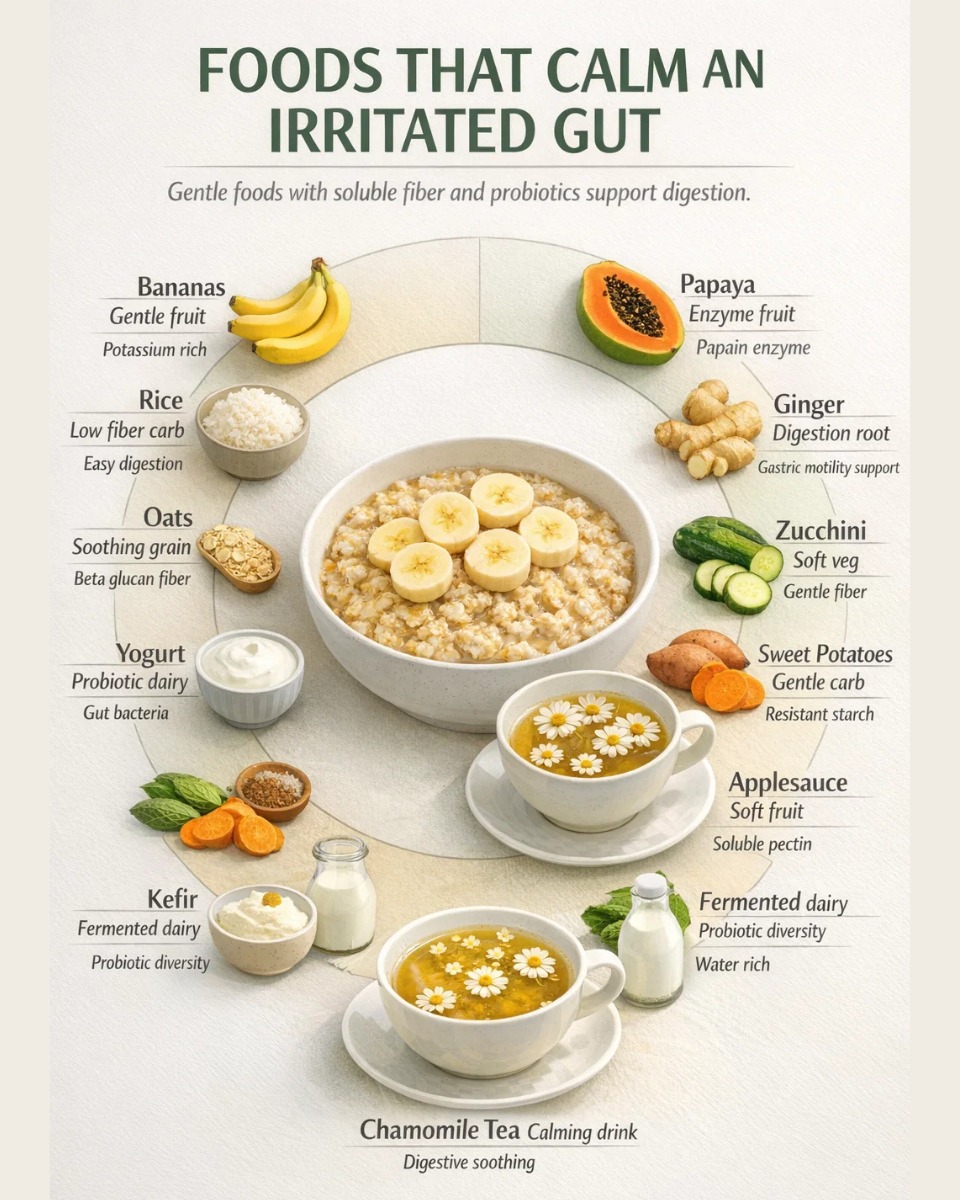
Bananas
Bananas are often one of the first foods people turn to when digestion feels sensitive.
They are:
- Soft in texture
- Rich in potassium
- Easy to digest
How to use:
- Eat on their own
- Slice into oatmeal
Papaya
Papaya contains natural enzymes like papain, which are often associated with digestion support.
How to use:
- Eat fresh in small portions
- Combine with yogurt
Applesauce
Applesauce provides pectin, a type of soluble fiber that may feel gentler than raw apples.
How to use:
- Eat plain
- Use as a side or light snack
Easy-to-Digest Carbohydrates
White Rice
Rice is a low-fiber carbohydrate that is easy on digestion and commonly used when the gut is sensitive.
How to use:
- Eat plain or with simple toppings
- Pair with soft vegetables
Oats
Oats contain beta-glucan, a soluble fiber that forms a soft texture when cooked.
How to use:
- Prepare as warm oatmeal
- Add banana for extra softness
Sweet Potatoes
Sweet potatoes provide gentle carbohydrates and soft fiber when cooked.
How to use:
- Roast or mash
- Eat plain or lightly seasoned
Vegetables That Are Softer on the Gut
Zucchini
Zucchini is a soft vegetable with a high water content and mild fiber.
How to use:
- Steam or sauté lightly
- Add to simple meals
Digestive Support Ingredients
Ginger
Ginger has traditionally been used to support digestion and stomach comfort.
How to use:
- Add to tea
- Use in light cooking
Chamomile Tea
Chamomile tea is often used as a calming drink for digestion.
How to use:
- Drink warm between meals
- Use as part of a calming routine
Probiotic Foods for Balance
Yogurt
Yogurt with live cultures may help support gut bacteria balance.
How to use:
- Eat in small portions
- Pair with banana or oats
Kefir
Kefir provides a wider variety of probiotic cultures.
How to use:
- Drink in small amounts
- Add to smoothies
Fermented Dairy
Other fermented dairy products can provide probiotic diversity, depending on tolerance.
Important note:
Start with small portions if your gut is sensitive.
How to Build a Gut-Calming Meal
When digestion feels irritated, simple combinations work best.
Example 1: Gentle Breakfast
- Oatmeal
- Banana
- Chamomile tea
Example 2: Light Lunch
- White rice
- Steamed zucchini
- Yogurt (small portion)
Example 3: Easy Snack
- Applesauce
- Small handful of oats or soft fruit
Simple Recipe: Soothing Banana Oat Bowl
Description:
A warm, easy-to-digest meal that combines soft textures and gentle fiber.
Ingredients:
- ½ cup oats
- 1 cup water or milk
- 1 banana (sliced)
- Optional: small amount of honey
Instructions:
- Cook oats with water or milk until soft
- Add sliced banana
- Stir and serve warm
Why this works:
This combination provides soft texture, soluble fiber, and mild sweetness without overwhelming digestion.
Practical Tips When Your Gut Feels Irritated
- Choose cooked over raw foods
- Keep meals simple and smaller in size
- Avoid combining too many ingredients at once
- Introduce new foods slowly
- Focus on hydration and warm foods
Final Thoughts
When your gut feels irritated, the solution is often not restriction—but simplification.
Gentle foods like bananas, rice, oats, and yogurt can help create a more comfortable starting point while your digestion settles.
Over time, as symptoms improve, you can gradually return to a wider variety of foods.
Listening to how your body responds—and adjusting accordingly—is often more helpful than following strict rules.