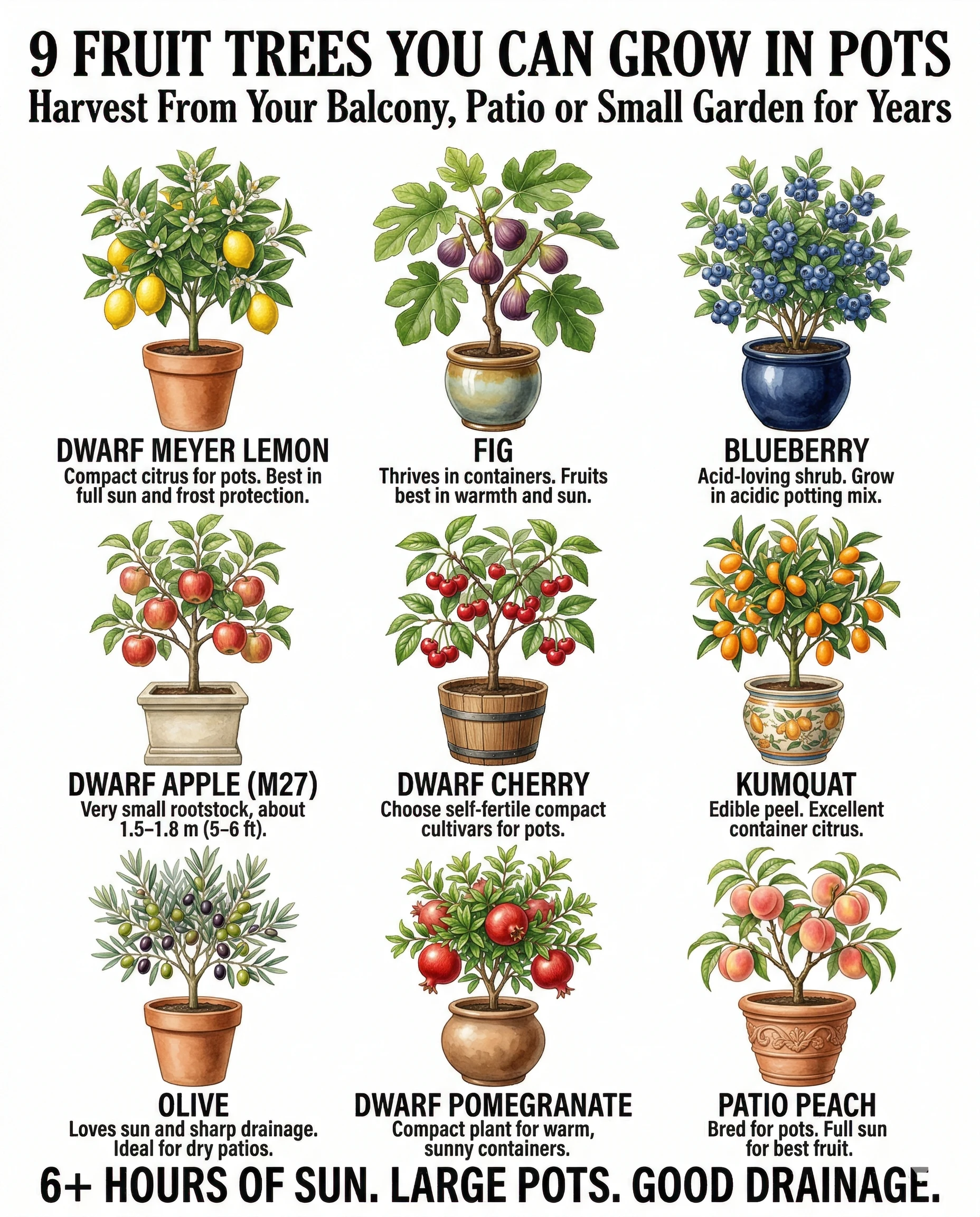
Growing fruit trees at home does not require a large backyard or a traditional orchard. With the right varieties, the right container, and a few steady care habits, you can enjoy years of harvests from a patio, balcony, courtyard, or compact garden. Some of the best choices for container growing include Dwarf Meyer lemon, fig, blueberry, dwarf apple (M27), dwarf cherry, kumquat, olive, dwarf pomegranate, and patio peach. These are especially well suited to pot culture when given at least 6 hours of sun, large pots, and excellent drainage.
That combination is what makes container fruit growing feel so rewarding. It brings beauty, structure, blossom, fragrance, and harvest into spaces that might otherwise hold only a chair and a railing. More importantly, it teaches a practical kind of gardening: careful observation, timely watering, smart feeding, and patient pruning. These are the habits that turn a small growing space into a productive one.
Why fruit trees do well in containers
A potted fruit tree depends more directly on you than one planted in the ground, but that can actually be an advantage. You control the soil mix, the drainage, the feeding, and even the tree’s location. If frost threatens, a pot can be moved. If summer heat becomes intense, you can adjust watering quickly. If a plant needs better light, you can reposition it rather than hoping for the best.
Containers also help keep naturally vigorous trees more compact. That is especially useful for gardeners who want real fruit without dealing with a full-size tree.
The key is to match the tree’s natural needs with a realistic care routine. Fruit trees in pots are not difficult, but they do reward consistency.
Dwarf Meyer lemon
Dwarf Meyer lemon is one of the most satisfying patio trees you can grow. It stays relatively compact, carries fragrant white blossoms, and produces attractive yellow fruit. It performs best in full sun and benefits from protection against frost.
Practical care tip: do not let it sit in cold, soggy soil. Citrus roots dislike that combination. Let the top layer of potting mix dry slightly before watering again, and make sure the pot drains well.
Fig
Fig trees are naturally well suited to container growing. They enjoy warmth and sunshine, and many gardeners find they crop reliably once established. Their root system handles pot life better than many people expect.
Practical care tip: figs like steady moisture while fruit is forming, but not constant saturation. Wide swings between very dry and very wet can stress the plant and affect fruit quality.

Blueberry
Blueberries are one of the best edible shrubs for containers, but they come with one important condition: they need acidic potting mix. This is where many growers go wrong. A healthy-looking pot and good sunlight will not compensate for the wrong soil chemistry.
Practical care tip: use a mix designed for acid-loving plants and avoid assuming ordinary potting compost will do the job. If leaves start yellowing while veins stay green, the plant may be struggling with pH issues rather than lack of water.
Dwarf apple (M27)
A dwarf apple on M27 rootstock stays very small, often around 1.5 to 1.8 meters, making it one of the best options for truly limited spaces. It gives the charm of a traditional fruit tree without overwhelming a patio.
Practical care tip: apples in containers often need closer attention to watering during warm weather than people expect. Fruit formation takes energy and moisture, so do not let the tree repeatedly dry out hard during active growth.

Dwarf cherry
Compact, self-fertile dwarf cherry varieties are ideal for pots. Choosing a self-fertile cultivar makes container growing simpler because you do not have to worry as much about needing a pollination partner.
Practical care tip: cherries can crop heavily for their size. Thin crowded growth and watch branch balance so a small tree does not get strained by uneven weight.
Kumquat
Kumquat is one of the most attractive container citrus options. It has glossy foliage, ornamental fruit, and the bonus of an edible peel. It performs well in pots and suits sunny patios beautifully.
Practical care tip: keep kumquat in a bright, warm position and protect it from cold snaps. Citrus often react badly to sudden changes, so avoid moving it repeatedly between very different conditions.

Olive
Olive trees are excellent for hot, bright spaces and are especially appealing for dry patios. They love sun and sharp drainage, and they bring a calm, architectural look to container gardens.
Practical care tip: resist the urge to overwater. Olive is one of the trees most likely to suffer when kindness turns into soggy roots.
Dwarf pomegranate
Dwarf pomegranate is compact, ornamental, and well suited to warm, sunny containers. It offers bright flowers followed by attractive fruit, making it one of the most decorative edible plants for small spaces.
Practical care tip: place it in the warmest, brightest part of your growing area. It rewards heat with better growth and better fruiting.
Patio peach
Patio peach is bred specifically for pot growing, making it a strong choice for gardeners who want stone fruit in a compact form. It needs full sun to perform well and crop properly.
Practical care tip: peaches often benefit from careful pruning and fruit thinning. A small tree can set more fruit than it can properly support, so removing some young fruit can improve size and reduce branch stress.

The three rules that make container fruit trees succeed
1. Give them at least 6 hours of sun
Fruit trees are not shy about light. They need strong sun to flower, set fruit, and ripen properly. A bright corner is not always enough. Aim for 6 or more hours of direct sun, and more is often even better.
Walk your space before choosing a permanent spot. A balcony may seem sunny at midday but fall into shade earlier than you realize.
2. Use large pots
Fruit trees need room for roots, moisture, and stability. A pot that is too small dries out fast, tips easily, and limits growth. Start with a generous container and upgrade when roots begin to crowd.
A practical rule: do not choose a pot based only on appearance. Choose one that supports the tree’s future, not just its current size.
3. Prioritize drainage
Good drainage is essential. Containers must have drainage holes, and potting mix should allow excess water to move through freely. Waterlogged roots are one of the fastest ways to lose a healthy tree.
Raising pots slightly off the ground helps too. It keeps drainage holes open and prevents water from pooling underneath.
How to care for fruit trees in pots
Water deeply and check often
Container trees dry faster than those in the ground, especially in summer. But frequent tiny sips are not the answer. Water thoroughly so the whole root ball is moistened, then check again before watering next time.
Put your finger below the surface rather than judging by the top alone. The upper layer may look dry while the root zone is still moist.
Feed regularly during growth
Potted trees rely on you for nutrients. Repeated watering slowly washes fertility out of the pot, so regular feeding during spring and summer is important. Keep it steady rather than heavy-handed.
Overfeeding can push weak, lush growth. Underfeeding can reduce fruiting. The best approach is moderate and consistent.
Prune for shape and balance
Container fruit trees need pruning, but not aggressive hacking. Focus on removing dead wood, crossing branches, and congested growth. You are aiming for light, airflow, and a balanced framework.
Compact trees especially benefit from this because every branch matters more in a smaller canopy.
Refresh the top of the soil
Each season, scrape away a little of the old pot surface and replace it with fresh compost or potting mix. This simple task improves nutrient supply and helps keep the container productive without constant full repotting.
Common mistakes to avoid
Choosing a tree that is not truly compact
A standard fruit tree in a pot usually becomes a problem. Start with a dwarf, patio, or naturally compact type.
Using decorative pots without drainage
Looks do not compensate for root rot.
Letting trees dry out repeatedly in summer
Fruit trees can survive stress, but fruit quality and plant vigor suffer.
Forgetting pollination needs
Some apples and cherries need the right cultivar choice to fruit well. The image wisely mentions self-fertile cherry types.
Neglecting seasonal protection
Citrus in particular may need shelter from frost, and all container trees are more exposed than trees in the ground.
A simple weekly routine for healthier potted fruit trees
A strong fruit tree routine can be simple and sustainable:
- Check moisture deeply, not just at the surface
- Inspect leaves for yellowing, pests, or scorch
- Remove fallen leaves or fruit from the pot
- Turn containers slightly if growth is leaning
- Watch drainage after watering
- Note which trees are flowering, swelling fruit, or pushing new growth
This kind of regular observation builds real gardening skill. You start seeing what the tree needs before stress becomes damage.
Final thoughts
A balcony lemon, a patio fig, a blueberry by the doorway, or a compact peach in a sunny corner can turn a small space into a place of real abundance. Dwarf Meyer lemon, fig, blueberry, dwarf apple, dwarf cherry, kumquat, olive, dwarf pomegranate, and patio peach all prove that fruit growing is not reserved for large properties.
The formula is straightforward: plenty of sun, a large pot, excellent drainage, and steady care. Once those basics are in place, container fruit growing becomes less intimidating and far more enjoyable. It teaches patience, improves observation, and makes daily plant care feel deeply worthwhile. That is the kind of gardening knowledge that stays with you and keeps rewarding you season after season.