Grow bags have changed the way many gardeners grow food. They make it possible to turn patios, driveways, balconies, sunny corners, and small backyards into productive vegetable spaces without building permanent beds. But one of the biggest mistakes people make with grow bags is treating them like oversized flowerpots: one plant, one container, and no real strategy.
In reality, grow bags work beautifully for carefully matched vegetable pairs. When you combine crops with similar water needs, compatible root habits, and shared light requirements, you can get more production from the same footprint while keeping the planting easier to manage. Some pairings also make daily care more efficient. A quick-growing crop can fill the surface while a slower one matures. A compact herb can share space with a taller fruiting plant. A shallow-rooted vegetable can live comfortably beside one that mines deeper into the bag.
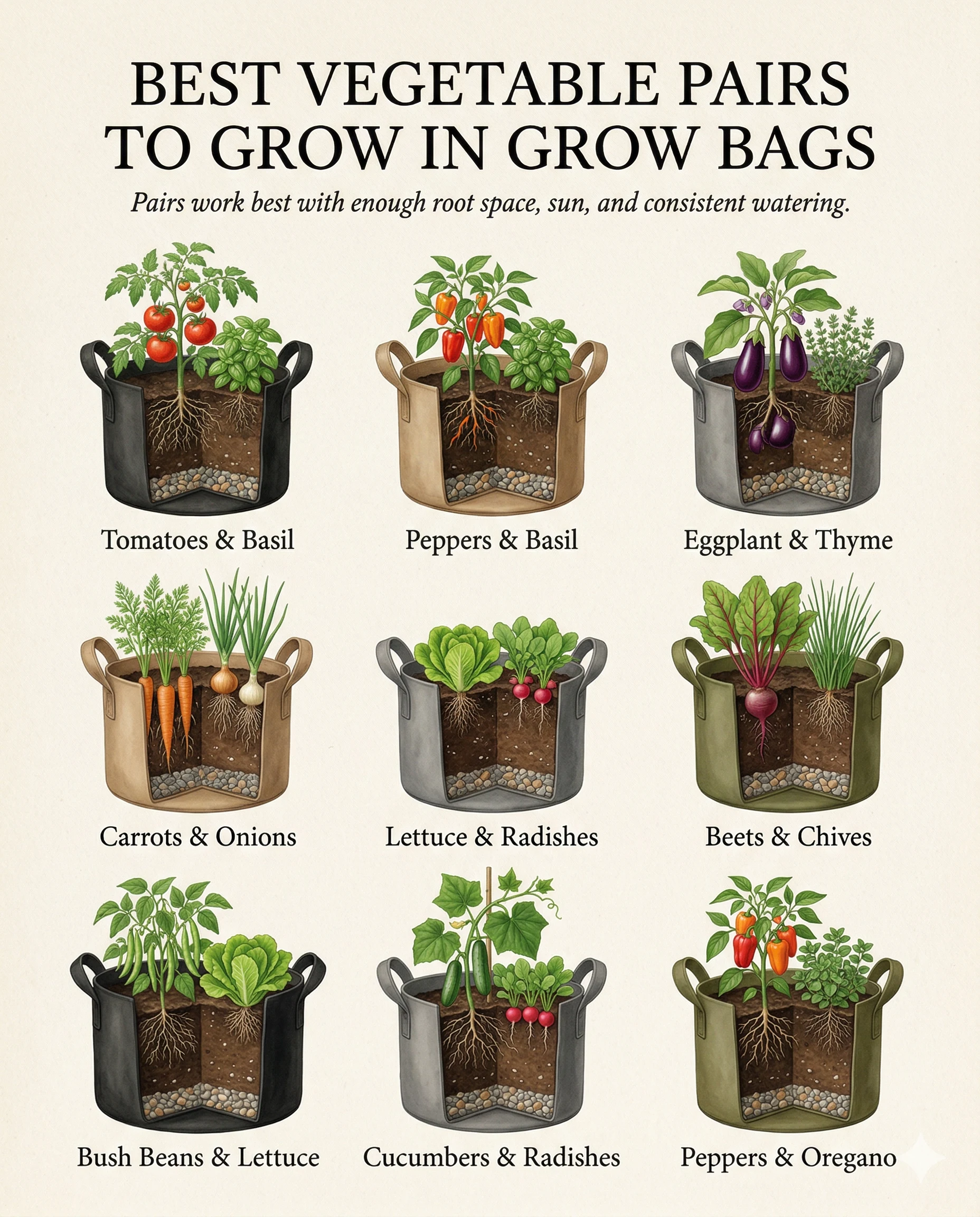
Excellent pairings include tomatoes and basil, peppers and basil, eggplant and thyme, carrots and onions, lettuce and radishes, beets and chives, bush beans and lettuce, cucumbers and radishes, and peppers and oregano. These combinations work best when there is enough root space, full sun, and consistent watering.
Why vegetable pairs work so well in grow bags
A grow bag is a controlled growing environment. That means every choice matters more than it does in open ground. Root competition, drying speed, sunlight, and spacing all become more noticeable. But that is also what makes grow bags powerful. You can design the growing environment with more precision.
A well-matched pair can help you:
- use vertical and horizontal space more efficiently
- harvest more from a small area
- reduce bare soil exposure
- keep roots active at different depths
- simplify watering and feeding routines
- build a container garden that feels full, productive, and intentional
The key is not to cram two random plants into one bag. The key is to choose partners that can realistically share space.
The three rules that make vegetable pairings succeed
Before looking at specific combinations, keep these three principles in mind.
1. Root space matters more than people think
Two plants can only share a grow bag if the container is large enough. Fruiting crops like tomatoes, peppers, eggplant, and cucumbers need generous room. A bag that is too small creates stress quickly, especially in heat.
2. Sun needs must match
A basil plant may tolerate conditions that lettuce prefers, but if its companion is a sun-hungry pepper, the whole bag needs to be placed for the pepper first. Pair crops with similar light demands.
3. Watering must stay consistent
Grow bags dry faster than in-ground beds, especially dark-colored ones in summer. A good pair is one where both crops can live happily under the same moisture routine.
1. Tomatoes and basil: the classic grow bag partnership
This is one of the most practical pairings for small-space gardening. Tomatoes grow upright and deep-rooted, while basil stays lower and fills space near the surface.
Why this pair works
Basil fits naturally at the base of a tomato without demanding the same vertical room. Both enjoy warmth, sun, and regular feeding. They also make sense in the kitchen, which never hurts.
Best way to grow them
Use a large grow bag, not a cramped one. Keep the tomato as the main crop and basil as the companion, not an equal competitor. Stake or cage the tomato early so basil still gets light and airflow.
Practical tip
Do not plant basil directly against the tomato stem. Leave enough space for air movement. A crowded tomato base can trap humidity and encourage disease.

2. Peppers and basil: compact, productive, and easy to manage
This pairing is especially good for gardeners who want high flavor from a modest footprint.
Why this pair works
Peppers grow more compactly than tomatoes, and basil shares their love of sun and warmth. The root systems can coexist well if the grow bag is large enough and the soil is rich.
Best way to grow them
Place the pepper slightly off center and tuck basil toward the edge where it can spill outward a bit rather than crowd the stem base.
Practical tip
Harvest basil regularly. Frequent pinching keeps it bushy and prevents it from becoming tall and shading the pepper.

3. Eggplant and thyme: a smart pair for heat-loving containers
Eggplant can be a beautiful and productive grow bag crop, especially in warm weather. Pairing it with thyme creates a neat, efficient combination.
Why this pair works
Eggplant grows upright with a strong central structure, while thyme stays low and compact. Both appreciate full sun and can tolerate warm conditions once established.
Best way to grow them
Let eggplant take the center position and use thyme as a low edge planting. Thyme should not be overwatered, so the grow bag must drain well even while the eggplant receives steady moisture.
Practical tip
This pair works best when watering is deep but not constant. Eggplant needs consistency, but thyme does not want soggy soil.

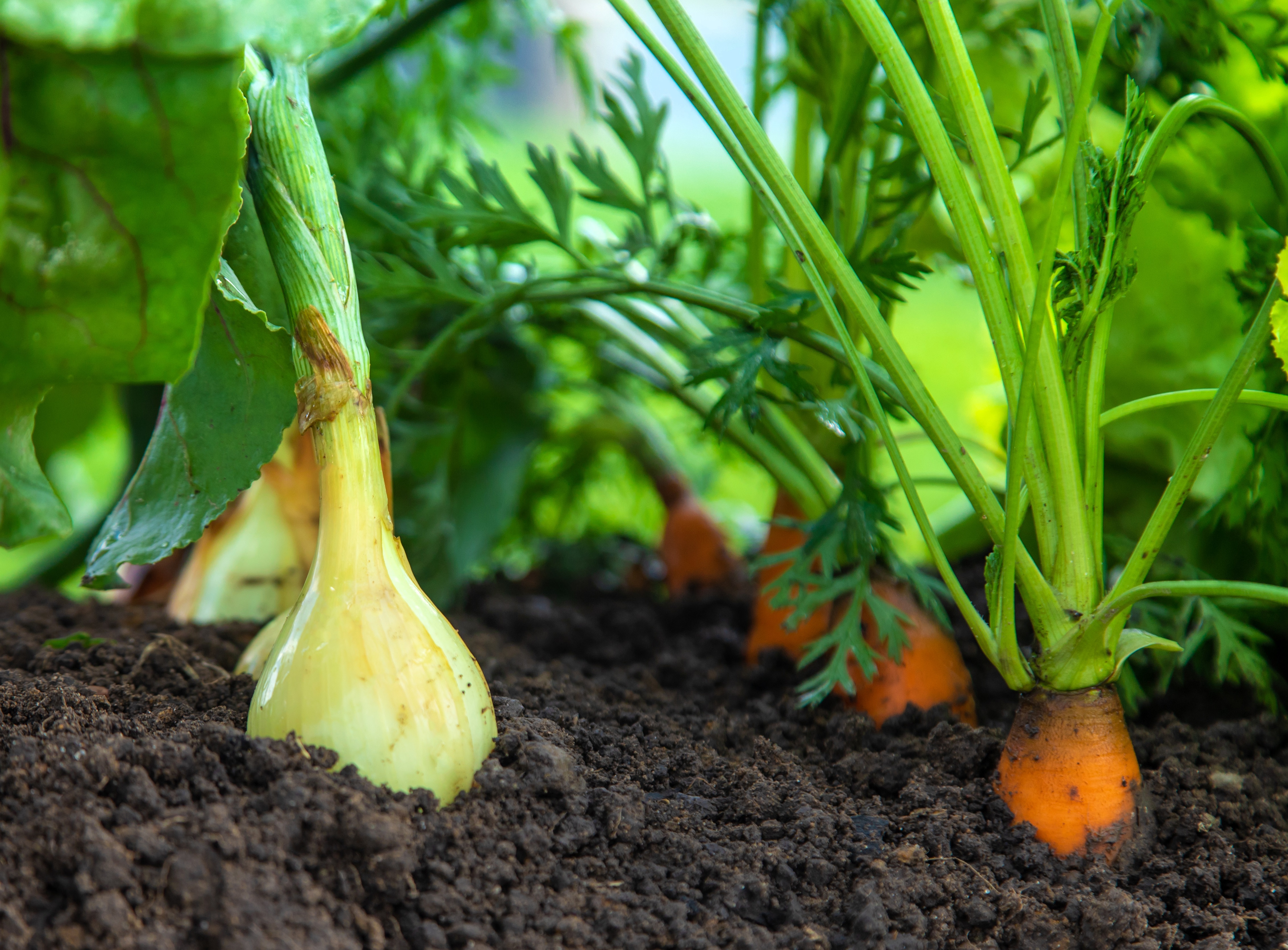
4. Carrots and onions: efficient use of root and leaf space
This is an excellent pairing for gardeners who want a practical, productive root crop bag.
Why this pair works
Carrots grow downward in a narrow root column, while onions take relatively modest root space and rise more vertically above the soil. They can share a bag well without smothering each other.
Best way to grow them
Use a deep grow bag with loose, stone-free mix so carrots can form properly. Space onions more generously than people often do in containers.
Practical tip
Do not let the soil crust or dry hard. Root crops in grow bags need even moisture to stay tender and avoid splitting or stunting.
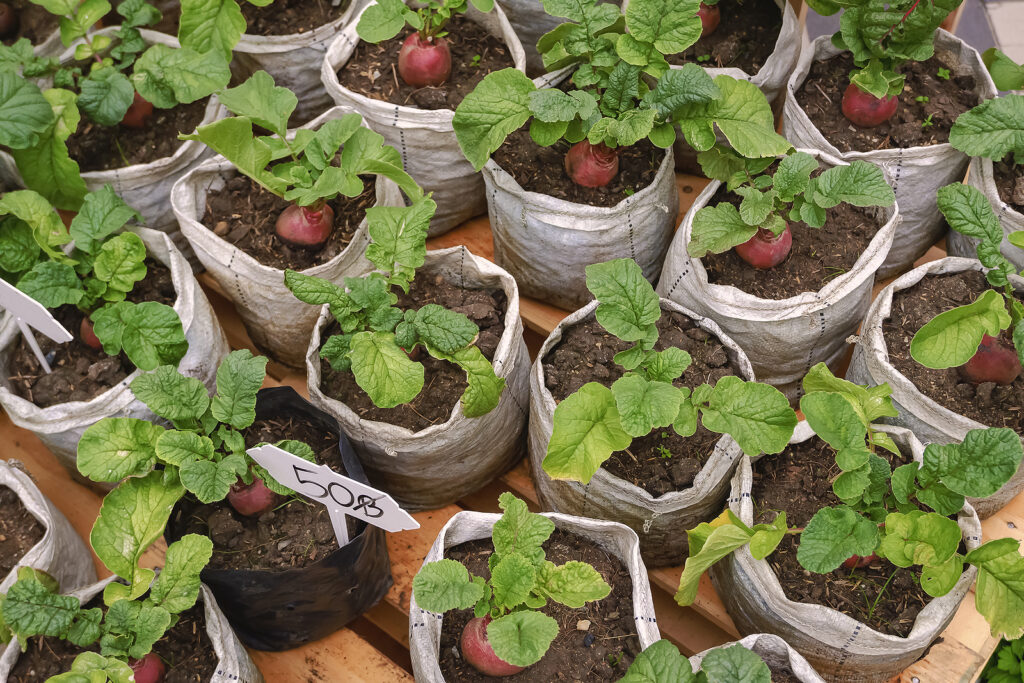
5. Lettuce and radishes: fast-growing and highly rewarding
This is one of the most beginner-friendly pairings in container gardening.
Why this pair works
Both are quick to mature, both handle similar watering routines, and radishes are harvested before lettuce reaches full size. That makes the pairing feel dynamic rather than crowded.
Best way to grow them
Sow radishes in the spaces between lettuce plants or rows. By the time the lettuce starts filling out, many of the radishes are already ready to pull.
Practical tip
Harvest lettuce leaf-by-leaf if possible instead of waiting for full heads. This extends the usefulness of the bag and keeps the planting productive longer.
6. Beets and chives: a tidy, flavorful combination
Beets are often overlooked in grow bags, but they perform very well when given depth and consistent moisture.
Why this pair works
Beets need room to swell underground, while chives stay narrow and upright. The pairing is space-efficient and visually neat.
Best way to grow them
Give beets the central growing room and use chives near the bag edge. Chives are not demanding, so they make a gentle companion rather than a competitive one.
Practical tip
Harvest beet greens lightly while the roots are developing, but do not overdo it. The plant still needs foliage to build the root.
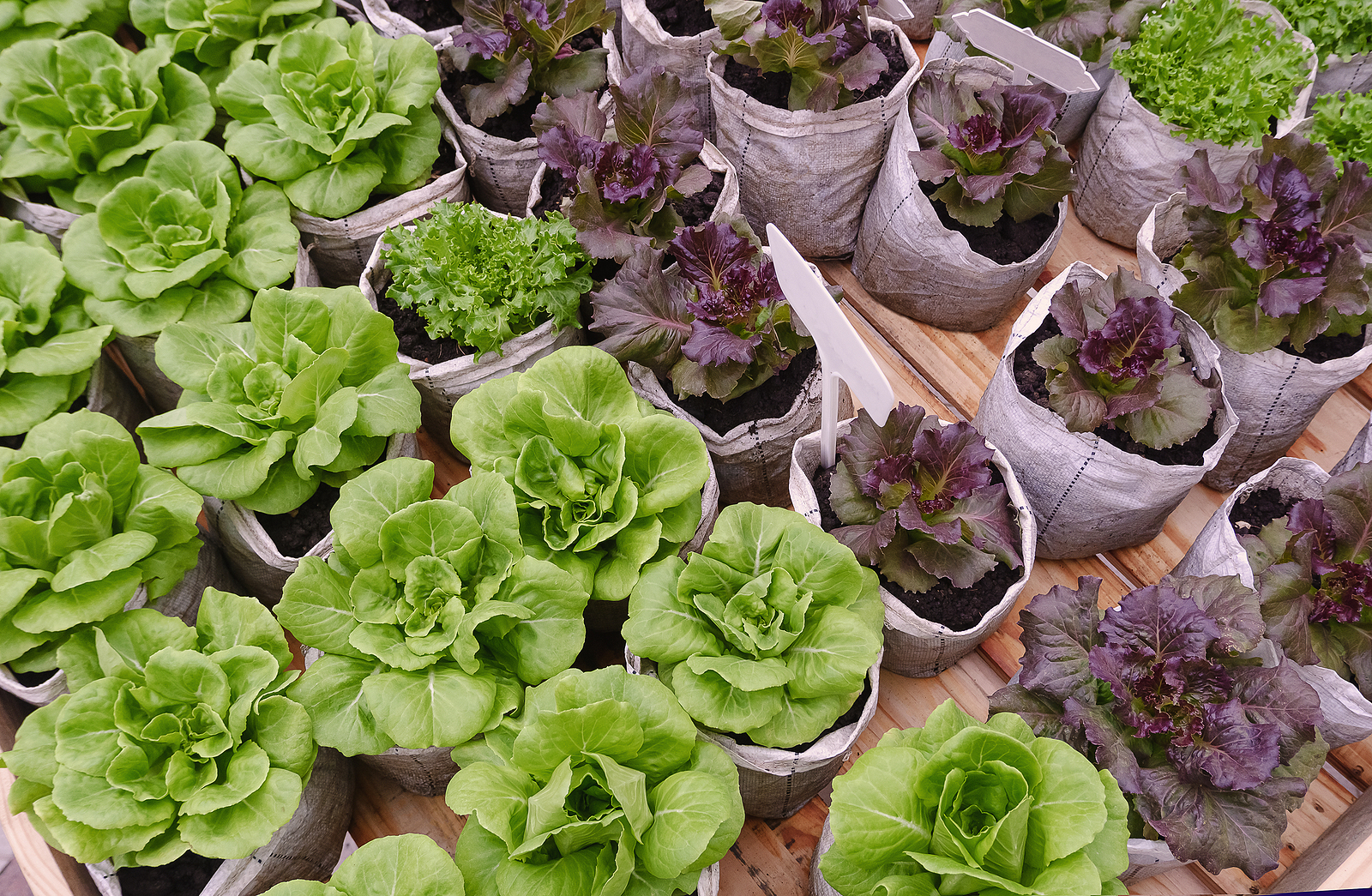
7. Bush beans and lettuce: a useful warm-season pairing
Bush beans can be productive in grow bags, especially when matched with a lower, quicker crop like lettuce.
Why this pair works
Bush beans grow upward but not excessively tall, and lettuce can occupy the lower space early. The lettuce is often harvested before the beans fully fill out.
Best way to grow them
Plant lettuce where it will still get some light before the beans expand. This pairing works especially well in shoulder seasons or in areas where summer heat arrives gradually.
Practical tip
Feed moderately. Bush beans do not need heavy nitrogen feeding, and too much can give you lush foliage without the harvest you want.
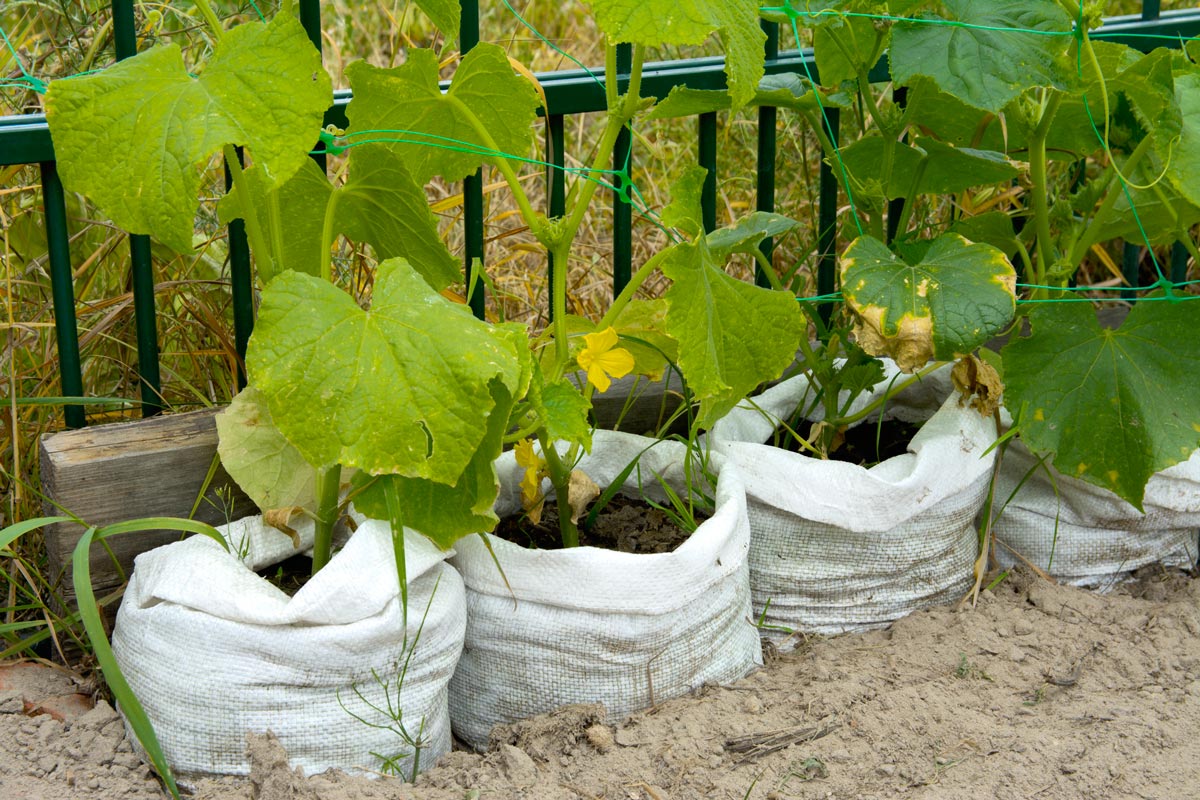
8. Cucumbers and radishes: strong use of vertical and surface space
Cucumbers are vigorous plants, so this pairing works best when the cucumber is trained upward.
Why this pair works
Radishes mature quickly in the surface zone while cucumbers are still getting established. By the time cucumber vines begin to dominate, the radishes are mostly finished.
Best way to grow them
Use a trellis or support immediately. Without vertical growth, cucumbers will overwhelm the bag too quickly.
Practical tip
Keep moisture steady from the start. Cucumbers in grow bags can become stressed very quickly if allowed to dry out, especially once vines start climbing and fruiting.
9. Peppers and oregano: a low-maintenance Mediterranean-style match
This is a very useful pairing for sunny spaces where you want productivity without a lot of fuss.
Why this pair works
Peppers and oregano both enjoy warmth, sun, and reasonably well-drained soil. Oregano stays relatively compact and can spill attractively over the edge.
Best way to grow them
Use the pepper as the anchor crop and let oregano fill the edges. Trim oregano regularly so it does not become woody and dominate surface space.
Practical tip
Good airflow is essential. Even compact pepper plants need breathing room around the crown and leaves.

How to choose the right grow bag size
This is where many good planting ideas go wrong. The pair may be smart, but the container may be too small.
As a general rule:
- Fruiting crops such as tomatoes, peppers, eggplant, and cucumbers need larger grow bags
- Root crop pairings like carrots and onions or beets and chives still need depth
- Quick crops like lettuce and radishes are more forgiving, but they still perform better when not overcrowded
When in doubt, size up. A slightly larger grow bag is usually easier to manage than a cramped one.
Watering and feeding paired crops correctly
Paired grow bags need more attention than single herb pots but less guesswork than many gardeners fear.
Watering
Check moisture daily in warm weather. Grow bags dry from the sides as well as the top, so surface appearance can be misleading. Water deeply enough to moisten the full root zone.
Feeding
Fruiting pairs like tomatoes and basil or peppers and oregano usually need more regular feeding than quick leafy combinations. Root crop bags benefit from balanced fertility rather than heavy nitrogen.
Mulching
A light mulch layer can help hold moisture and reduce temperature swings, especially in summer.
Common mistakes to avoid
Overcrowding
The fastest way to ruin a good pairing is to plant too densely.
Pairing crops with different water needs
A thirsty cucumber and a dry-loving herb do not always make a good bag partnership.
Skipping support
Tomatoes and cucumbers especially need structure early.
Letting one crop dominate
Companion planting should not mean one plant disappears under another.
Final thoughts
Grow bags are not just a substitute for garden beds. They are a flexible, productive system in their own right when used thoughtfully. Tomatoes and basil, peppers and basil, eggplant and thyme, carrots and onions, lettuce and radishes, beets and chives, bush beans and lettuce, cucumbers and radishes, and peppers and oregano are all strong examples of pairings that make sense in shared containers.
The real lesson is simple: successful vegetable pairs depend on enough root space, full sun, and steady watering. Once those three pieces are in place, a grow bag stops being just a container and starts becoming a compact, efficient little ecosystem. That is where gardening gets especially satisfying—when every inch works harder, every pairing feels intentional, and your daily routine produces more food, more skill, and more joy.