If there is one mistake that quietly harms more houseplants than neglect, it is overcare. Too much water, too much checking, too much “just in case” attention—these are often what turn healthy roots into rot, soft stems, yellow leaves, and disappointing plants. Many of the easiest indoor plants are not asking for constant help. They are asking for restraint.
That is why some houseplants are especially valuable for busy people, frequent travelers, beginners, and anyone who tends to love plants a little too actively. The most reliable choices are often the ones that handle a missed watering better than soggy soil, tolerate average indoor conditions, and stay attractive without demanding daily management. Among the best are snake plant, ZZ plant, pothos, cast iron plant, jade plant, and spider plant.
These plants are practical teachers. They help you build better instincts: when to wait, when to water, when to leave the pot alone, and when “less” is actually the most skilled form of care.
Why overcare causes more trouble than missed care
A lot of indoor plant problems begin with good intentions. The soil looks dry on the surface, so it gets watered again. A leaf droops slightly, so more water is added without checking the root zone. A plant is placed in a decorative pot with poor drainage because it looks beautiful, then watered on a schedule rather than by need.
This usually creates one of two problems:
- roots stay too wet and begin to rot
- the plant becomes weak because it never has a chance to use the water already in the pot
Most beginner-friendly houseplants are not looking for perfectly moist soil every day. They want a rhythm of moisture and drying that matches their natural growth habits.
That is why the best low-maintenance houseplants are not necessarily the ones you can ignore forever. They are the ones that forgive occasional delay and punish overwatering less quickly—provided you respect what they need most: drainage, air around the roots, and patience.
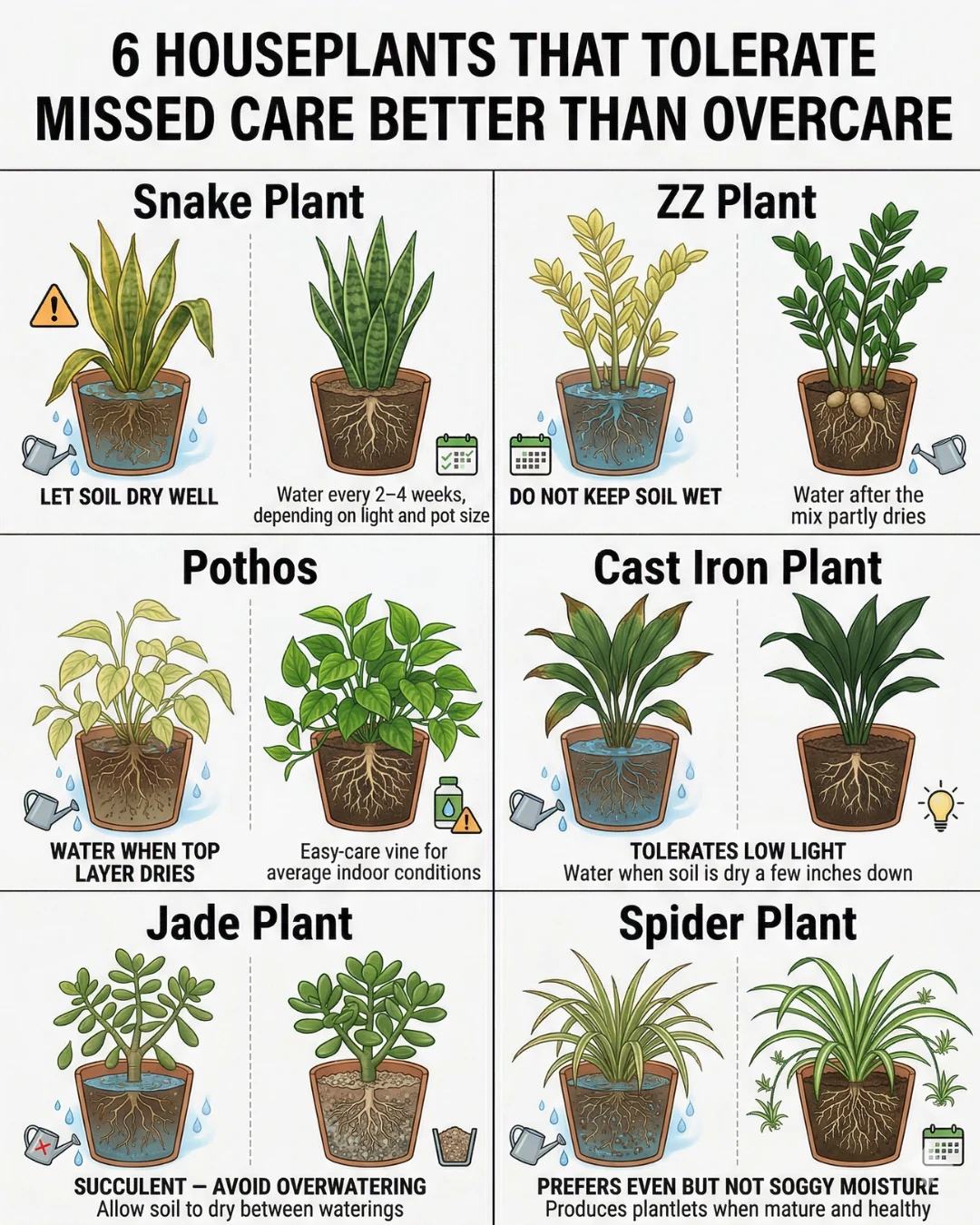
1. Snake Plant: one of the best indoor plants for forgetful watering
Snake plant is one of the strongest examples of a houseplant that prefers being left alone. Its upright leaves store moisture, and its root system is far more comfortable with dryness than constant wetness.
What it needs
Snake plant does best when the soil is allowed to dry well between waterings. In many homes, that means watering every 2 to 4 weeks, depending on the pot size, light level, and season.
Why people lose it
Not because they forgot it—but because they watered it too often. A snake plant in wet soil may turn soft at the base, yellow, or collapse suddenly.
Best care routine
Use a pot with drainage and a fast-draining mix. Water deeply, then wait until the soil has dried well before watering again.
Practical tip
If you are unsure whether to water, wait another few days. Snake plant almost always handles slight delay better than excess moisture.
2. ZZ Plant: tough, glossy, and much happier without soggy soil
ZZ plant is one of the most reliable houseplants for average indoor spaces. It has thick underground rhizomes that store water, which makes it impressively tolerant of irregular watering.
What it needs
ZZ plant should not be kept wet. Water only after the potting mix has partly dried. It tolerates moderate neglect very well.
Why people love it
It stays neat, upright, and polished-looking with very little intervention. It also handles normal indoor light better than many fussier plants.
Best care routine
Place it in bright indirect light if possible, though it tolerates lower light well. Use a well-draining soil mix and avoid oversized pots that stay wet too long.
Practical tip
If your ZZ plant’s stems start yellowing while the soil stays damp, the issue is usually too much water, not too little.
3. Pothos: forgiving, adaptable, and excellent for average homes
Pothos is one of the best all-around beginner houseplants because it adjusts well to typical indoor conditions and recovers gracefully from minor mistakes.
What it needs
Water pothos when the top layer of soil dries. It likes a steady pattern of moisture, but not constantly wet roots.
Why it works so well
Pothos is less rigid than succulents and less demanding than some tropical plants. It gives visible signals when it needs help. Leaves may soften slightly when thirsty, then bounce back quickly after proper watering.
Best care routine
Keep it in bright indirect light for best growth, though it can tolerate lower light. Let the top inch or so of soil dry before watering again.
Practical tip
Do not confuse “easy” with “likes constant water.” Pothos is adaptable, but it still grows better when the soil gets a chance to breathe between waterings.
4. Cast Iron Plant: dependable even in low-light corners
Cast iron plant earns its reputation honestly. It handles lower light, inconsistent attention, and less-than-perfect indoor conditions with quiet strength.
What it needs
It tolerates low light and prefers to be watered when the soil is dry a few inches down rather than kept constantly damp.
Why it is so useful
Not every room in a home is bright. Cast iron plant makes it possible to keep greenery in places where more delicate plants decline.
Best care routine
Use a container with drainage, keep it out of harsh direct sun, and resist the urge to water on a rigid schedule. Check the soil before watering.
Practical tip
Low light does not mean high water needs. In fact, low-light plants often use water more slowly, so overwatering becomes even more likely if you do not adjust your routine.
5. Jade Plant: a beautiful succulent that dislikes fuss
Jade plant is an excellent choice for people who enjoy structured, long-lived plants with a calm, sculptural look. But like many succulents, it suffers when treated like a thirsty tropical.
What it needs
Jade plant wants the soil to dry between waterings. It should never sit in constantly wet potting mix.
Why people struggle with it
Because its thick leaves make it look lush and active, some owners assume it needs frequent watering. In reality, jade stores moisture and performs best with restraint.
Best care routine
Give it bright light, a gritty succulent-friendly mix, and a pot with excellent drainage. Water thoroughly, then let the soil dry before watering again.
Practical tip
Wrinkled leaves often signal thirst, but soft yellowing leaves usually point to overwatering. Learn that difference and jade becomes much easier to manage.
6. Spider Plant: easygoing, but happiest with balance
Spider plant is slightly different from the other plants here because it prefers more even moisture—just not soggy conditions.
What it needs
Spider plant likes consistent moisture, but the soil should never stay waterlogged. Think “evenly moist” rather than constantly wet.
Why it remains beginner-friendly
It grows quickly, adapts well, and often produces plantlets when mature and healthy. That gives the grower feedback that the care routine is working.
Best care routine
Water when the top layer begins to dry, then let excess water drain away. Bright indirect light is ideal.
Practical tip
Spider plant is forgiving, but if the pot stays heavy and wet for too long, root issues and browning can follow. It likes balance, not saturation.
How to water these houseplants the right way
The biggest improvement most indoor gardeners can make is to stop watering by memory and start watering by condition.
Instead of asking, “Did I water this last week?” ask:
- Is the soil dry at the depth this plant prefers?
- Is the pot still heavy from the last watering?
- Is the plant in active growth or slower winter rest?
- Is this a dry-loving plant or a more evenly moist one?
This small shift changes everything.
A simple guide
- Snake plant and jade plant: let soil dry well
- ZZ plant: let mix partly dry
- Pothos: water when top layer dries
- Cast iron plant: water when soil is dry a few inches down
- Spider plant: keep evenly moist, but never soggy
Pot choice matters just as much as watering
A well-timed watering routine can still fail if the pot traps too much moisture.
Choose:
- pots with drainage holes
- soil mixes matched to the plant type
- container sizes that are only slightly larger than the root ball
Avoid very large pots for drought-tolerant plants. More soil means more retained moisture, and more retained moisture means more risk.
Signs you are overcaring, not undercaring
Many people assume yellow leaves mean thirst, but with indoor plants, yellowing often points to too much water instead.
Watch for:
- soft stems
- yellow lower leaves with wet soil
- musty smell from the pot
- persistent fungus gnats
- soil that stays wet for many days
- blackened or mushy roots
These are often signals that the plant needs less frequent watering, better drainage, or both.
A realistic weekly routine for low-maintenance houseplants
A better plant routine is not more frequent. It is more observant.
Once or twice a week:
- check soil with your finger, not just your eyes
- lift the pot to judge weight
- trim dead or yellow leaves
- rotate the plant for even growth
- look for pests or standing water
- leave the plant alone if it does not need anything
That last step matters. Good plant care often includes doing nothing at the right moment.
Final thoughts
The best low-maintenance houseplants are not the ones that never need care. They are the ones that handle imperfect routines without falling apart. Snake plant, ZZ plant, pothos, cast iron plant, jade plant, and spider plant all prove that strong indoor plants often prefer thoughtful restraint over constant attention.
Snake plant wants dry soil. ZZ plant should not stay wet. Pothos likes watering when the top layer dries. Cast iron plant handles low light and patient watering. Jade plant needs the soil to dry between drinks. Spider plant prefers even moisture, but not soggy roots.
That is the deeper lesson behind all six: successful plant care is not about doing more. It is about doing the right thing at the right time. Once you learn that, your indoor garden becomes calmer, healthier, and much easier to enjoy.