There is a special kind of joy in watching a fruit seed wake up in water. A seed that looked hard, dry, and ordinary begins to split. A root appears. Then a shoot rises, and what started as kitchen waste becomes a living plant. For gardeners, parents, teachers, and curious plant lovers, this is one of the most satisfying ways to begin growing.
Water-sprouting is simple, affordable, and deeply educational. It helps you understand how seeds germinate, how roots behave, and how timing affects plant health. It also makes the process visible. Instead of guessing what is happening beneath the soil, you can watch each stage unfold right in front of you.
Many fruit seeds respond well to this method, including avocado, papaya, mango, lemon, pomegranate, passion fruit, lychee, date, mamey sapote, tamarind, and guava. The key is not just putting them into water and hoping for the best. Success depends on using fresh seeds, clean water, the right container height, regular water changes, and timely transplanting.
Why water-sprouting works so well
Water-sprouting gives seeds constant access to moisture, which is one of the main signals that tells them it is time to grow. It also allows you to monitor their condition closely. If a seed rots, stalls, or roots strongly, you can see it right away.
This method is especially helpful because it teaches real gardening skills:
- how to identify viable seed
- how to keep germination conditions clean
- how to recognize healthy root growth
- how to transplant before roots become weak or tangled
- how different seed sizes need different handling
It is not the final growing method for most fruit plants, but it is a very effective way to begin.
The overlooked detail that matters: container height and water depth
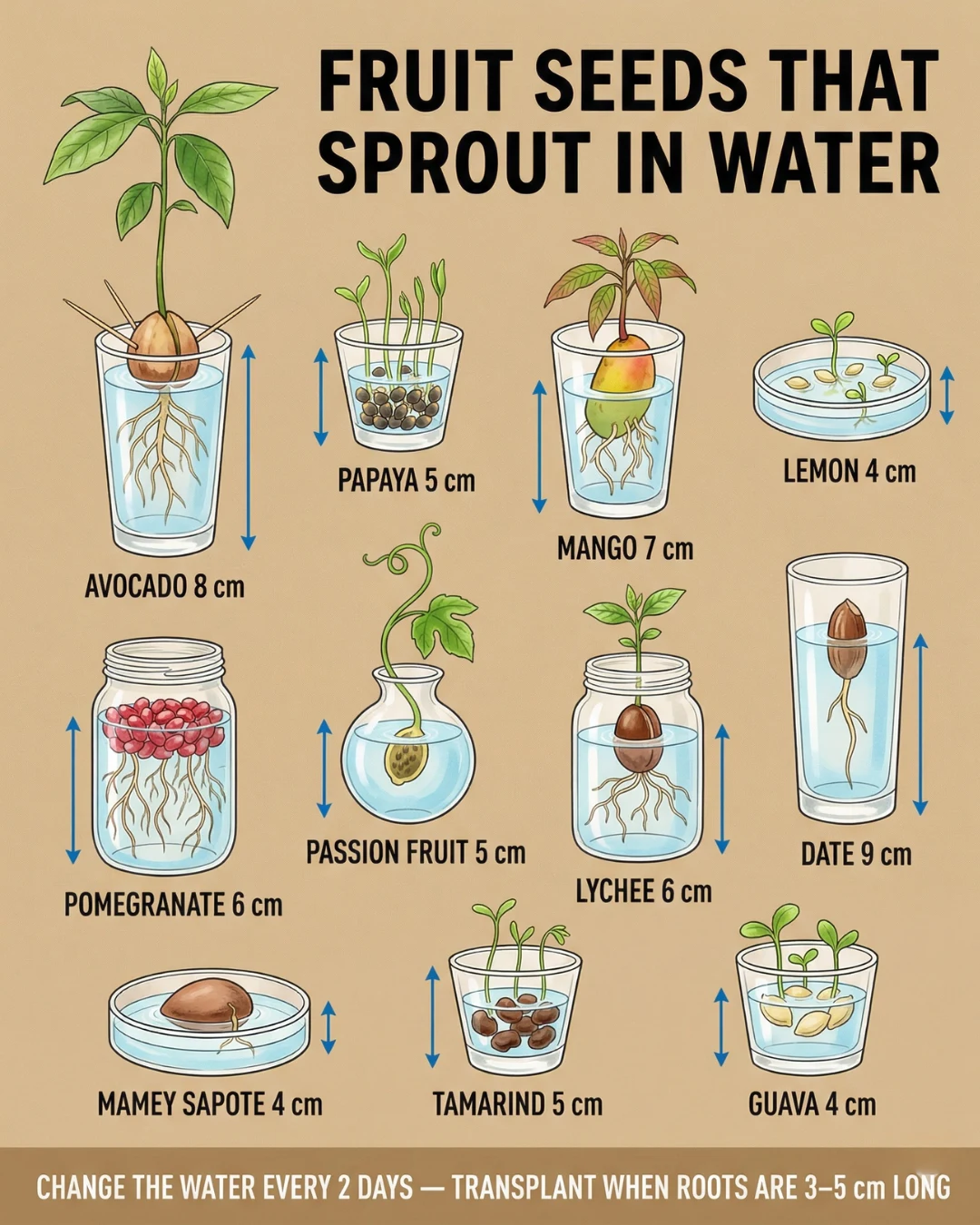
One of the most practical details in water-sprouting is choosing a container that matches the seed. Many people focus on the seed itself but forget that the height of the glass, jar, or shallow dish directly affects rooting success.
A container that is too shallow may not give the root enough room to extend cleanly. A container that is too deep can make the seed sit too wet, increase the chance of stagnation, or make it harder to keep the upper portion dry when needed.
These measurements are best treated as practical container height guides, not rigid rules. The idea is simple: large seeds with long early roots need taller containers, while smaller seeds often do better in shallower water setups that are easier to keep fresh.
Start with the freshest seed possible
Freshness is one of the biggest factors in germination success. Seeds taken from recently cut fruit usually perform much better than seeds that have been sitting out and drying for days.
This matters especially with:
- lychee
- mango
- papaya
- passion fruit
- pomegranate
- guava
Before placing any seed in water, clean it thoroughly. Remove all fruit flesh, sticky coating, and pulp. Leftover fruit material encourages mold and cloudy water, and that can quickly ruin the process.
The basic water-sprouting routine
Most fruit seeds do well with a very simple routine:
- use a clean glass, jar, or shallow dish
- place the seed in the correct depth of water
- keep it in bright, indirect light
- change the water every 2 days
- transplant once roots are about 3 to 5 cm long
That last point is important. Water is for starting, not for finishing. Once the seed has active roots, it needs potting mix and air around those roots to keep growing strongly.
Best fruit seeds to sprout in water
1. Avocado
Avocado is the classic water-sprouting seed and one of the most rewarding to watch.
Use a container around 8 cm tall so the root has space to grow downward. Suspend the seed so the broader lower end touches the water and the pointed end stays above it.
The seed coat will eventually crack, then roots and a shoot will appear. Avocado often takes longer than beginners expect, so patience matters.
Best tip
Keep only the lower portion in water. If the whole seed stays submerged, rot becomes much more likely.
2. Papaya
Papaya seeds are small, fast, and fun to start in groups. A 5 cm water setup is usually enough.
After cleaning off the gelatinous coating, place several seeds in a shallow glass or dish. Papaya is a good crop to start in numbers because you can later keep the strongest seedlings.
Best tip
Do not crowd too many seeds into one tiny container. Good spacing keeps the water cleaner and makes root growth easier to see.
3. Mango
Mango is highly satisfying but needs a little more care. A container around 7 cm tall is useful because the early root can grow firmly once it starts.
After removing the outer husk and exposing the inner seed, keep it moist and supported. Mango roots can lengthen quickly, so do not leave the seed in water too long once sprouting begins.
Best tip
Handle the exposed seed gently. Once removed from its shell, it is more vulnerable to damage and rot.
4. Lemon
Lemon is one of the easiest fruit seeds for beginners. A shallow setup of about 4 cm is often enough.
Fresh lemon seeds sprout best when they are cleaned and placed into a low water container without being allowed to dry out first.
Best tip
Start several seeds at once. Lemon seeds are easy to get, and growing a small batch improves your chances of success.
5. Pomegranate
Pomegranate offers the advantage of quantity. A medium-depth jar or cup of about 6 cm works well for multiple seeds.
Once cleaned well, the seeds can be started together and later separated or thinned if several germinate strongly.
Best tip
Do not leave sticky red pulp on the seed. Clean seed makes a much cleaner jar.
6. Passion fruit
Passion fruit seeds respond well when fresh and properly cleaned. A 5 cm water depth is usually enough for early germination.
These seeds like warmth and steady moisture, and they often do best in a bright, warm indoor space rather than a cold windowsill.
Best tip
Warmth matters here. A comfortable, consistently warm room usually gives better results than a chilly kitchen corner.
7. Lychee
Lychee seeds are especially sensitive to drying out, so freshness matters a great deal. A medium-height container around 6 cm gives enough room for early root development.
Best tip
Start lychee seeds quickly after eating the fruit. Delayed planting usually reduces success.
8. Date
Date seeds often need the deepest water setup on this list, around 9 cm, because the early root can extend noticeably downward.
They are not always fast, but they can be very rewarding with patience and warmth.
Best tip
Do not mistake slow germination for failure too quickly. Dates often take longer than smaller, fresher tropical seeds.
9. Mamey sapote, tamarind, and guava
These three are excellent for growers who enjoy experimenting.
- Mamey sapote – 4 cm
- Tamarind – 5 cm
- Guava – 4 cm
Mamey sapote is slower and more specialized, tamarind often benefits from soaking and warmth, and guava usually does better when several seeds are started together.
Best tip
For tamarind and guava especially, start more than one seed. Multiple tries usually lead to better overall results.
When and how to transplant
One of the most common mistakes is leaving seeds in water too long. Once roots are around 3 to 5 cm long, prepare a small pot with drainage holes and light, well-draining potting mix.
Make a planting hole first, then lower the seed in gently so the root is not bent sharply. Cover lightly, settle the mix, and water just enough to help the roots make contact with the soil.
After transplanting, keep the seedling in bright indirect light for a while before exposing it to stronger sun.
Common mistakes to avoid
A few problems ruin many otherwise promising seeds:
- using dirty containers
- leaving fruit pulp attached
- not changing the water often enough
- choosing a container that is too deep or too shallow
- transplanting too late
- handling new roots roughly
Cleanliness and timing matter far more than fancy equipment.
Final thoughts
Growing fruit seeds in water is one of the simplest and most satisfying ways to begin a plant. Avocado, papaya, mango, lemon, pomegranate, passion fruit, lychee, date, mamey sapote, tamarind, and guava can all become rewarding projects when you combine fresh seed with clean water, patience, and careful observation.
The most useful habit is also the easiest to remember: change the water every 2 days, use a container height that suits the seed, and transplant once the roots reach 3 to 5 cm. That small routine turns a casual experiment into a much more successful growing process.
And that is where the deeper value lies. Water-sprouting is not just about getting a root to appear. It is about learning how life begins, how plants respond to care, and how even a single seed can reconnect you with the quiet, steady wonder of growing.