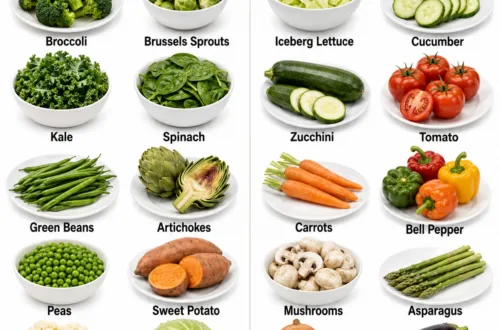
A “balanced color bowl” is not just about eating more vegetables — it’s about structuring your meal in a way that stabilizes energy, improves digestion, and keeps you full longer.
Instead of focusing on calorie restriction, this approach focuses on nutrient balance and food combinations. Research in nutrition science consistently shows that meals combining carbohydrates, protein, fiber, and healthy fats lead to better metabolic outcomes than isolated foods.
👉 In simple terms: what you combine matters more than what you cut.
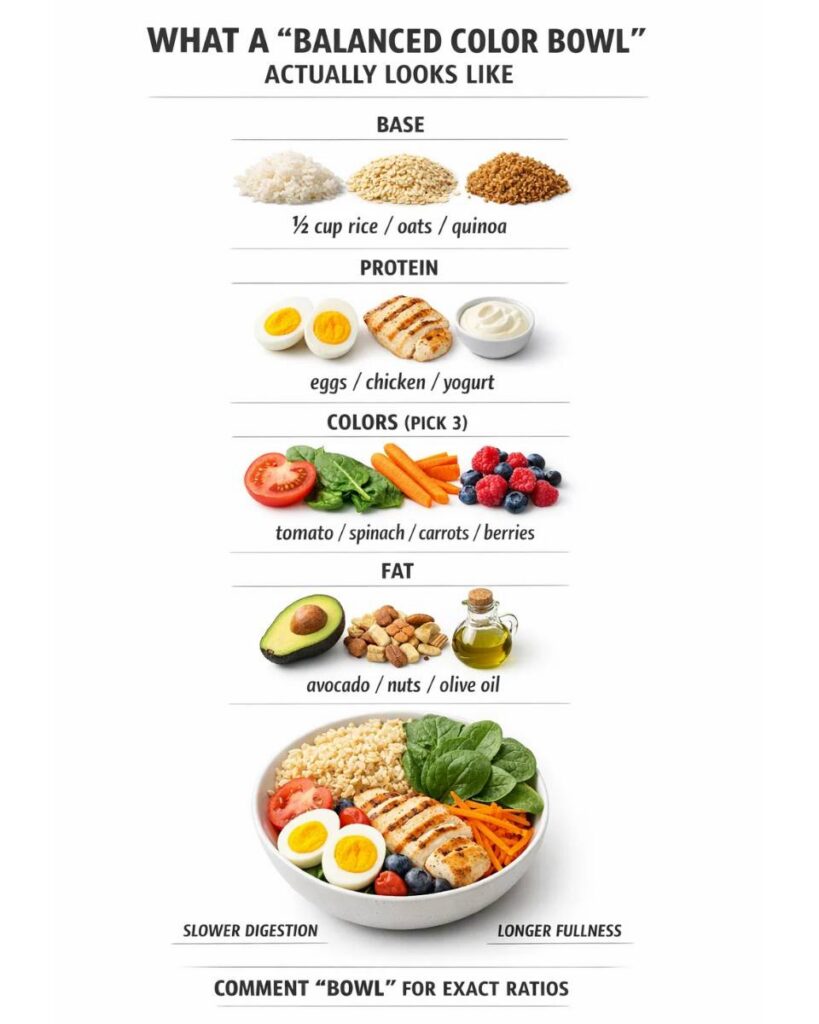
The 4-Part Structure of a Balanced Bowl
A properly structured bowl typically includes:
- Base (carbohydrates)
- Protein
- Color (fiber + micronutrients)
- Fat
Each component plays a specific role in how your body processes food.
1. Base: Controlled Energy Release
Examples:
- rice
- oats
- quinoa
These are your primary carbohydrate sources.
From a scientific perspective, carbohydrates are broken down into glucose and enter the bloodstream relatively quickly. However, the glycemic response (how fast blood sugar rises) depends heavily on what they are paired with.
👉 When eaten alone:
- rapid glucose spike
- insulin surge
- energy crash
👉 When combined properly:
- slower digestion
- stable blood sugar
- sustained energy
This is why portion control matters — the image suggests ½ cup, which aligns with research on managing post-meal glucose levels.
2. Protein: Stabilizing Blood Sugar and Appetite
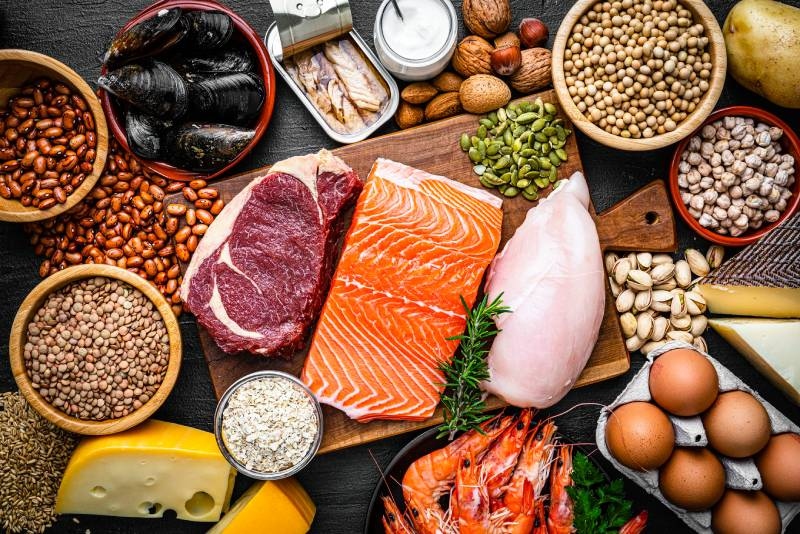
Examples:
- eggs
- chicken
- yogurt
Protein plays a key role in:
- slowing gastric emptying
- reducing glucose spikes
- increasing satiety hormones (like GLP-1)
Studies show that adding protein to a carbohydrate meal can significantly reduce post-meal blood sugar spikes and prolong fullness.
👉 For example:
- rice alone → quick hunger return
- rice + chicken → longer satiety
This is one of the most effective strategies for:
- weight management
- appetite control
- metabolic health
3. Colors (Pick 3): Fiber and Micronutrient Density
Examples:
- tomato
- spinach
- carrots
- berries
The “color” concept is not just visual — it represents different phytochemicals and nutrients.
Each color group provides distinct benefits:
- Red (tomato, berries) → antioxidants (lycopene, anthocyanins)
- Green (spinach) → gut health, magnesium
- Orange (carrots) → beta-carotene (vitamin A precursor)
From a physiological perspective, fiber in these foods:
- slows carbohydrate absorption
- supports gut bacteria
- reduces overall glycemic load
👉 This is why adding vegetables changes the entire metabolic response of a meal.
4. Healthy Fats: The Missing Piece Most People Ignore
Examples:
- avocado
- nuts
- olive oil
Fat is often misunderstood, but it plays a crucial role in:
- delaying digestion
- stabilizing blood sugar
- enhancing nutrient absorption (fat-soluble vitamins A, D, E, K)
Scientific insight:
Meals with fat take longer to leave the stomach, which directly reduces the speed at which glucose enters the bloodstream.
👉 Result:
- fewer energy crashes
- longer fullness
- reduced snacking

Why This Structure Works (Scientific Insight)
A balanced bowl works because it combines:
- carbohydrates (energy)
- protein (stability)
- fiber (slow absorption)
- fat (delayed digestion)
This combination creates a low glycemic response meal, even if the individual ingredients are not low GI.
👉 Key mechanism:
- slower gastric emptying
- gradual glucose release
- reduced insulin spikes
This directly impacts:
- hunger hormones
- energy stability
- long-term metabolic health
Real-World Examples of Balanced Bowls
Example 1: Classic Balanced Bowl
- rice (base)
- grilled chicken (protein)
- spinach + carrots + tomatoes (colors)
- olive oil (fat)
👉 Balanced energy + high satiety
Example 2: Breakfast Bowl
- oats
- yogurt
- berries
- nuts
👉 Stable morning energy, reduced cravings
Example 3: Plant-Based Bowl
- quinoa
- beans
- mixed vegetables
- avocado
👉 Complete protein + high fiber
Example 4: Quick Meal Prep Bowl
- rice
- boiled eggs
- frozen veggies
- olive oil
👉 Low cost + high nutritional efficiency
Who Benefits Most From This Approach
Balanced bowls are especially useful for:
- people struggling with overeating
- those with unstable energy levels
- individuals trying to lose weight sustainably
- people with blood sugar sensitivity
👉 Because it reduces decision fatigue and creates consistency.

Final Takeaway
Balanced eating is not about restriction — it’s about structure.
By combining:
- a controlled carb base
- quality protein
- diverse vegetables
- healthy fats
you create a meal that supports:
- stable energy
- better digestion
- longer fullness
👉 The goal is not perfection — it’s repeatable balance.
Scientific References
Research supports the importance of balanced meals combining carbohydrates, protein, and fats:
- A study published in the American Journal of Clinical Nutrition shows that combining protein and fat with carbohydrates helps reduce post-meal blood sugar spikes.
- According to Harvard T.H. Chan School of Public Health, balanced meals improve satiety and reduce overeating by stabilizing energy levels.
- The National Institutes of Health (NIH) highlights that mixed macronutrient meals improve metabolic responses compared to isolated nutrient intake.