May is one of the best months to start a kitchen herb garden that actually pays you back all summer. The soil is warming, frost risk is fading in many parts of the United States, and herbs begin growing with real energy instead of just surviving. This is the moment when a few thoughtful plantings can turn into bowls of basil for pasta, handfuls of parsley for salads, chives for eggs, mint for cold drinks, and rosemary for grilled dinners.
The beauty of herbs is that they make gardening feel immediately useful. You do not have to wait months to enjoy them. They fit into raised beds, porch pots, balcony planters, and small backyard corners. They teach timing, pruning, soil awareness, and harvest rhythm in a very practical way. And once you learn how each herb grows, your daily routine becomes more skilled and more productive.
This guide covers nine excellent kitchen herbs to plant in May, how they behave, where they fit by USDA zone, and the care habits that keep them full, fragrant, and ready for summer cooking.
Why May is such a good month for kitchen herbs
May sits in a sweet spot. In cooler regions, it is often the first reliable planting window after frost danger eases. In moderate regions, it is the moment when herbs establish quickly without the stress of midsummer heat. In warmer parts of the country, May is still productive, but growers need to think more carefully about water, mulch, and afternoon protection for softer herbs.
Most kitchen herbs fall into one of two groups:
- Tender warm-season herbs, like basil, which want real warmth and resent cold nights.
- Perennial or semi-hardy herbs, like rosemary, thyme, oregano, and chives, which can handle a wider range of conditions once established.
That difference matters. A smart herb gardener does not treat all herbs the same.
USDA zone timing: how to use May wisely
Zones 3–5
May is prime planting time for most herbs, though basil may still need patience until nights settle. Containers are especially useful because they warm faster than garden soil.
Zones 6–7
This is one of the best herb-planting windows in the country. Almost all nine herbs can be planted now with strong results.
Zones 8–10
May is still excellent, but soft herbs like cilantro may bolt faster, and moisture management becomes more important. Planting in morning sun with some afternoon relief can make a real difference.
1. Basil: the summer kitchen essential
If one herb captures the feeling of summer cooking, it is basil. It loves warmth, grows fast, and gives you repeated harvests when handled properly. It is ideal for pesto, tomato salads, herb butter, and quick pasta dishes.
Plant character
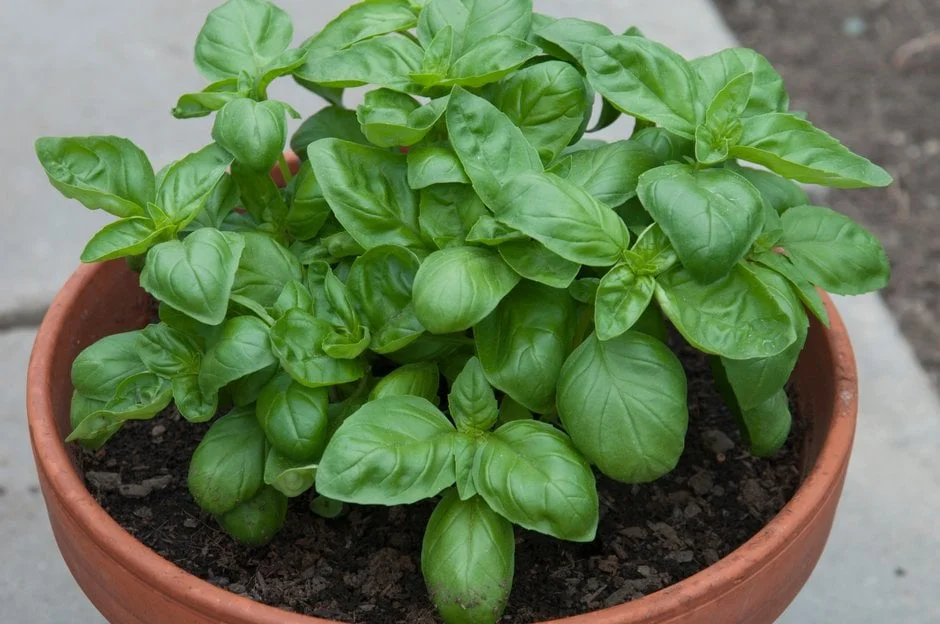
Basil is a tender annual with soft stems, broad fragrant leaves, and fast upright growth. It wants full sun, warmth, and steady moisture.
Practical growing advice
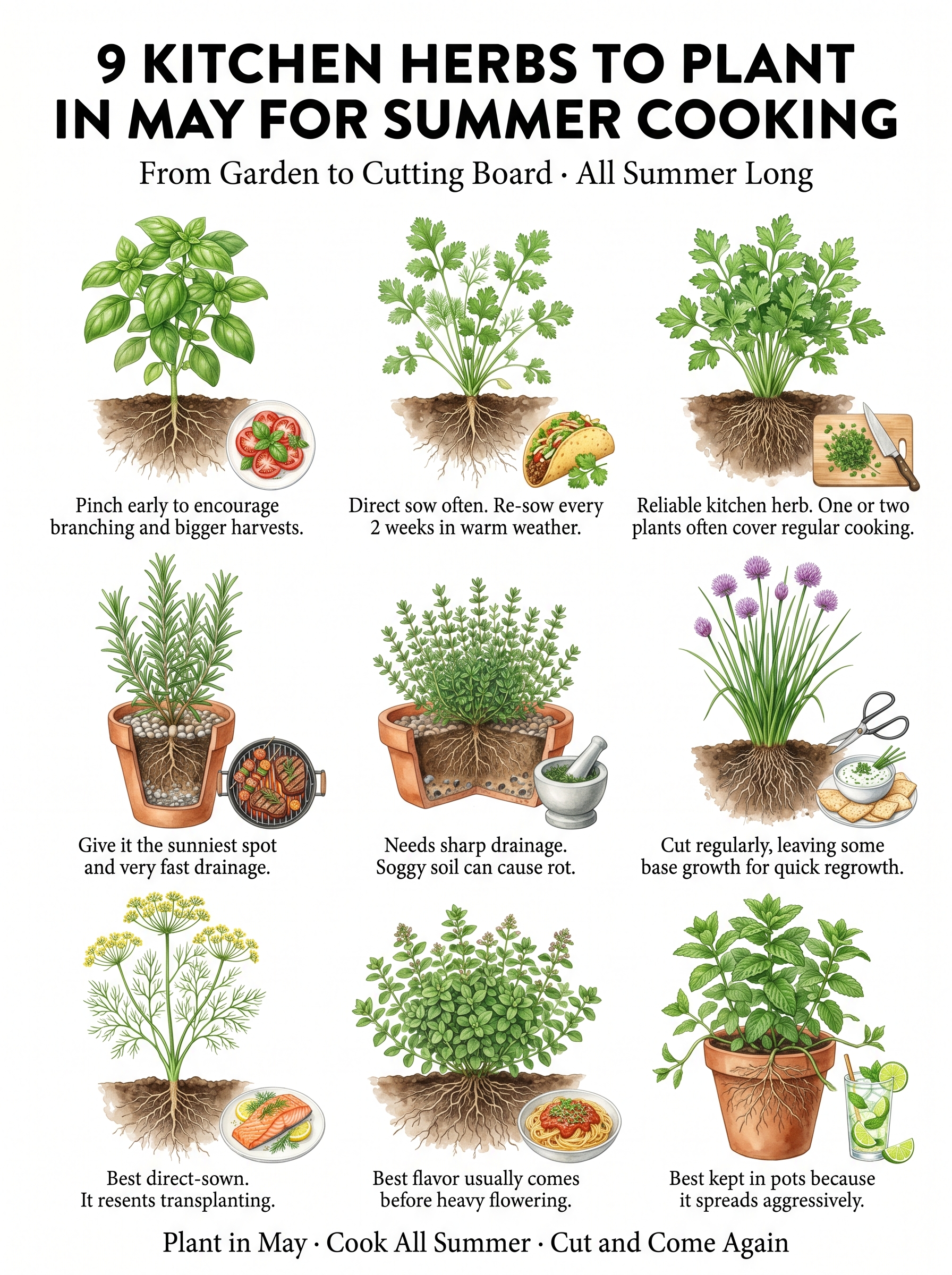
Pinch basil early, not late. Once the plant has several sets of leaves, pinch the top growing tip. This encourages branching and turns one stem into many. That one habit can easily double your harvest.
Best placement
Sunny raised beds, patio containers, herb boxes, and near tomatoes if you have the space.
2. Cilantro: fast, useful, and best in waves
Cilantro is one of the most useful kitchen herbs for fresh sauces, tacos, soups, chutneys, and summer salads. It also teaches one of the most important herb-garden lessons: not every herb is built for heat.
Plant character
Cilantro is fast-growing, shallow-rooted, and prone to bolting when weather turns hot. It performs best in cooler stretches or when grown in succession.
Practical growing advice
Direct sow cilantro often instead of planting one big patch once. Re-sow every 2 weeks if you want a steady harvest. In warmer zones, choose a spot with morning sun and some light shade after midday.
Best placement
Direct-sown garden rows, deep window boxes, or wide containers with loose soil.

3. Italian Parsley: the reliable workhorse
Italian parsley is one of the most useful herbs for everyday cooking. It is not flashy, but it earns its place in soups, sauces, marinades, rice dishes, roasted vegetables, and salad dressings.
Plant character
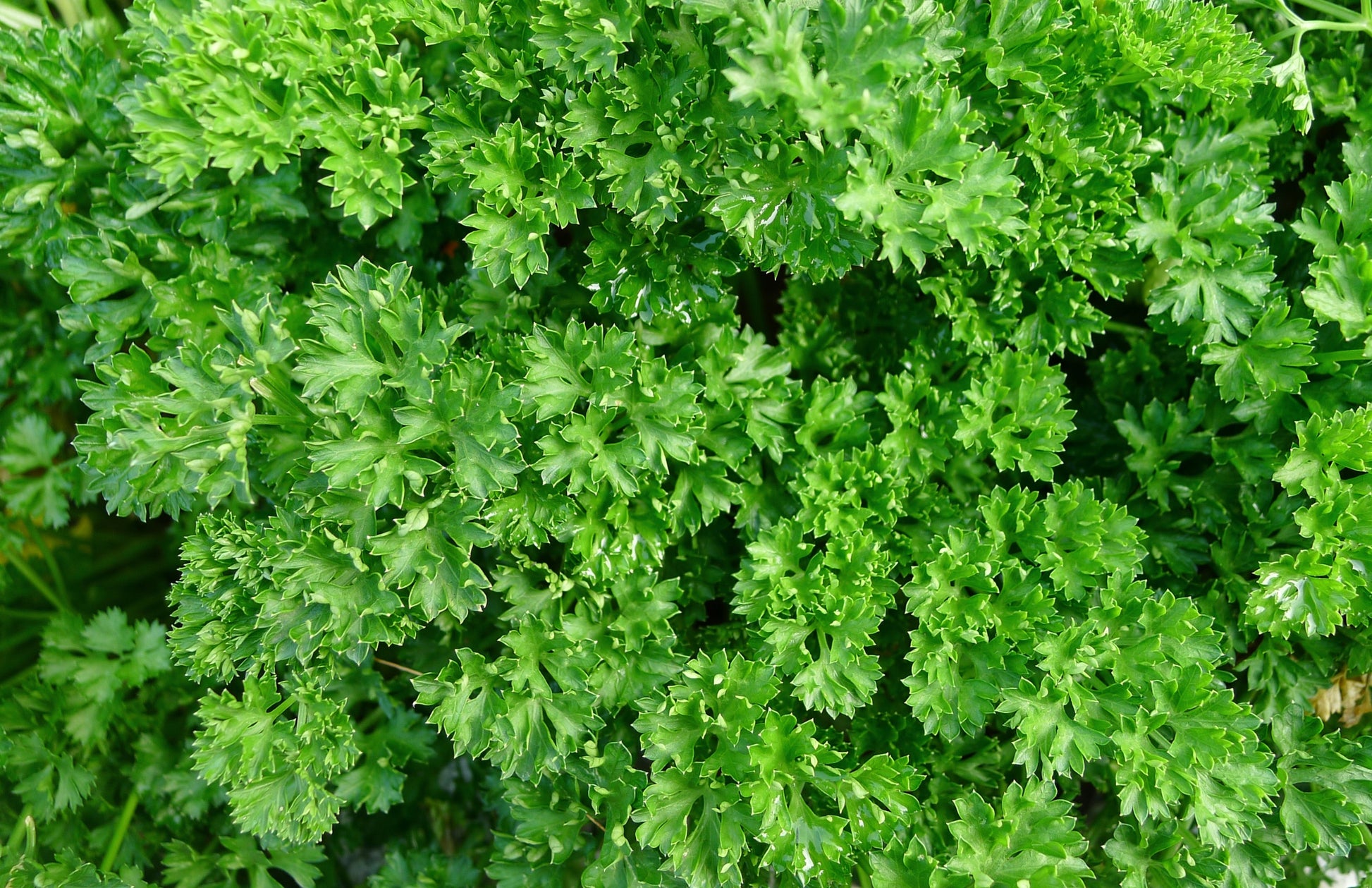
It forms leafy clumps, handles repeated cutting well, and stays productive with regular moisture. Compared with cilantro, it is much steadier and more forgiving.
Practical growing advice
Harvest outer stems from the base, not random leaves from the top. This keeps the center growing strong and helps the plant hold shape longer.
Best placement
Mixed herb beds, containers, or tucked into vegetable gardens where it gets regular attention.
4. Rosemary: for sunny, dry, and disciplined growing
Rosemary is one of the most rewarding herbs for gardeners who understand restraint. It does not want soggy soil, overfeeding, or constant fuss. Give it sun and drainage, and it becomes one of the most valuable herbs in the garden.
Plant character
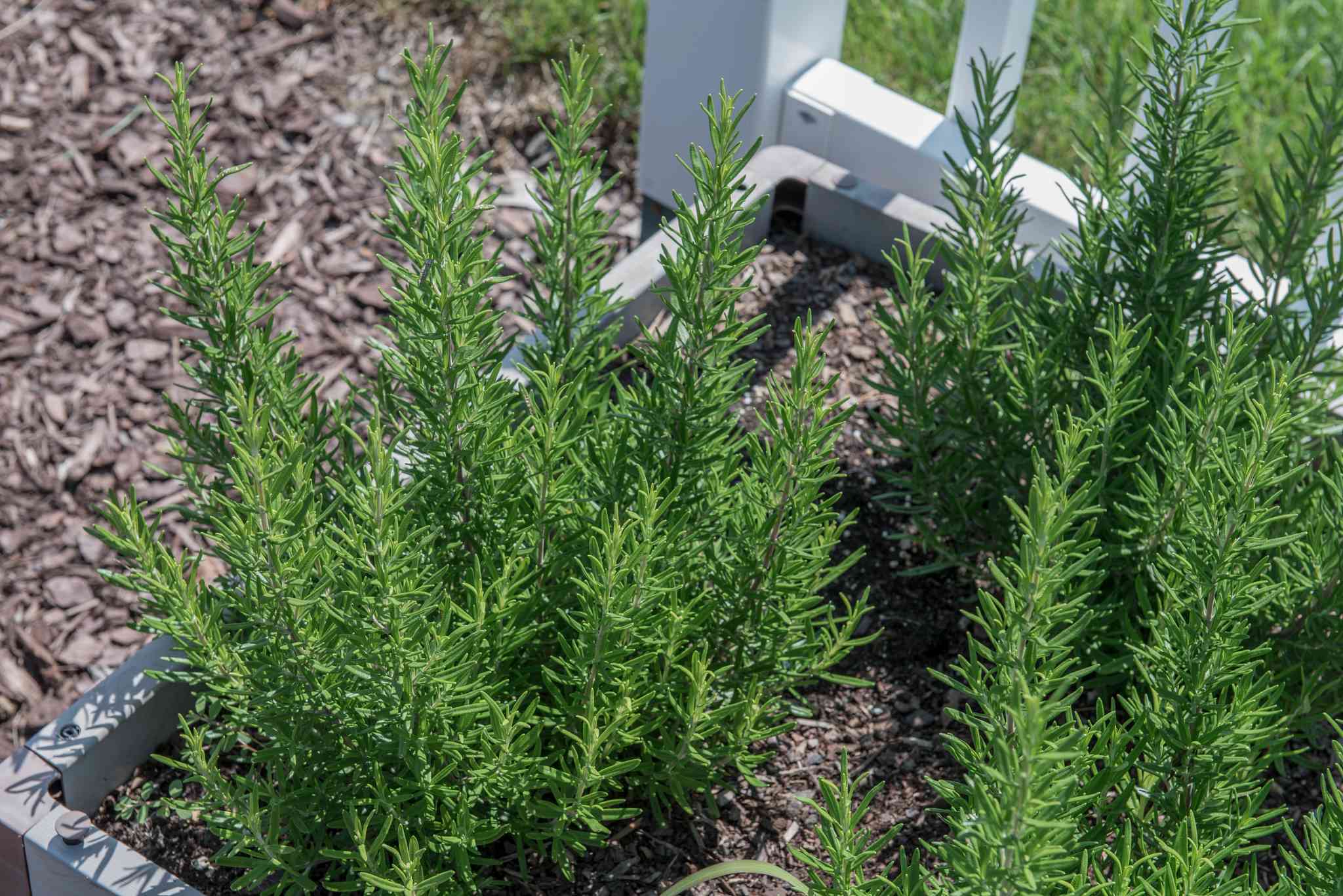
Woody, aromatic, upright, and long-lived in warmer zones, rosemary brings strong structure and year-round value where winters are mild.
Practical growing advice
Give rosemary the sunniest spot you have and very fast drainage. In heavy soil, it often performs better in raised beds or containers. Water deeply, then let the soil dry somewhat before watering again.
Best placement
Terracotta pots, gravelly beds, herb spirals, and sunny border edges.
5. Thyme: small leaves, big usefulness
Thyme is one of the smartest herbs for gardeners who want strong flavor from a compact plant. It fits beautifully into small gardens and containers, and it pairs well with grilled vegetables, chicken, fish, beans, and roasted potatoes.
Plant character
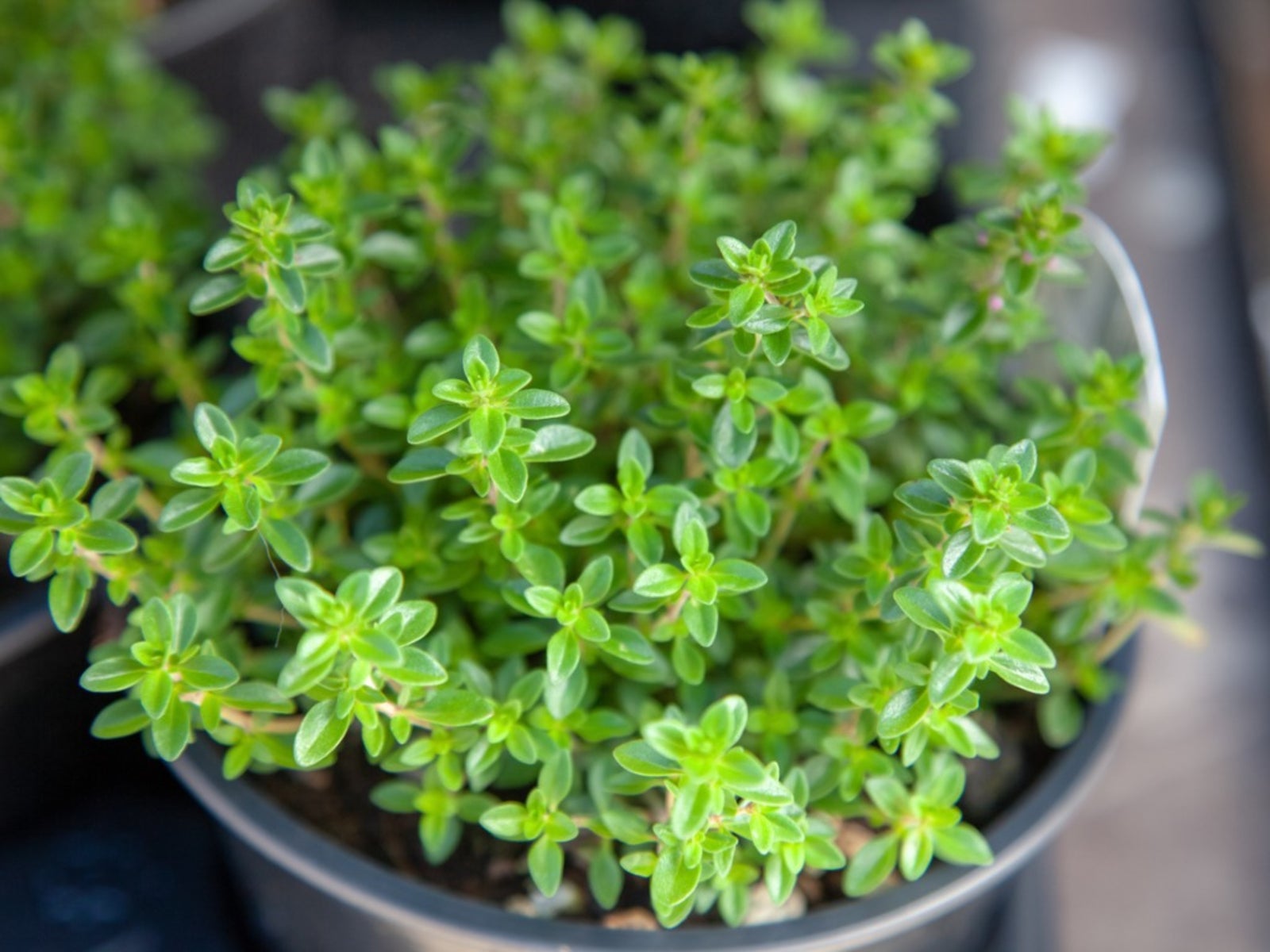
Low, woody, tidy, and sun-loving, thyme prefers leaner conditions than many leafy herbs.
Practical growing advice
Sharp drainage matters. Soggy soil is one of the fastest ways to lose thyme. Keep it in a fast-draining mix or a drier corner of the herb bed. Trim it regularly to prevent it from getting too woody and sparse.
Best placement
Container edges, stone borders, raised beds, and herb planters.
6. Chives: the easiest cut-and-come-again herb
Chives are one of the best herbs for beginners because they are productive, neat, and easy to harvest. They bring mild onion flavor to eggs, potatoes, salads, soups, and creamy sauces.
Plant character
They grow in grassy clumps, return reliably in many regions, and tolerate frequent cutting very well.
Practical growing advice
Cut regularly, but leave some base growth behind. This keeps the plant recovering quickly and prevents it from becoming rough or exhausted.
Best placement
Kitchen-door pots, raised herb beds, or mixed edible borders where they can be reached easily.

7. Dill: light, feathery, and best sown in place
Dill brings a different texture to the herb garden. It is airy, upright, and valuable for fish, pickles, yogurt sauces, potatoes, and herb blends. It also attracts beneficial insects when allowed to flower.
Plant character
Tall, soft-stemmed, and fast-growing, dill dislikes root disturbance and usually performs best when direct sown.
Practical growing advice
Plant dill where it will stay. It resents transplanting more than many herbs do. If you want a longer season, sow a second round later instead of trying to move seedlings around.
Best placement
Direct-sown garden rows, deeper containers, or pollinator-friendly herb corners.

8. Oregano: a strong perennial flavor base
Oregano is one of the most useful Mediterranean herbs for summer cooking. It belongs in sauces, grilled dishes, pizza, roasted vegetables, beans, and herb oils.
Plant character
Low, spreading, aromatic, and woody with age, oregano handles heat well once established.
Practical growing advice
The best flavor often comes before heavy flowering. Harvest regularly and shear back lightly if the plant starts getting long or open in the center.
Best placement
Sunny containers, bed edges, raised herb gardens, and dry, well-drained spots.

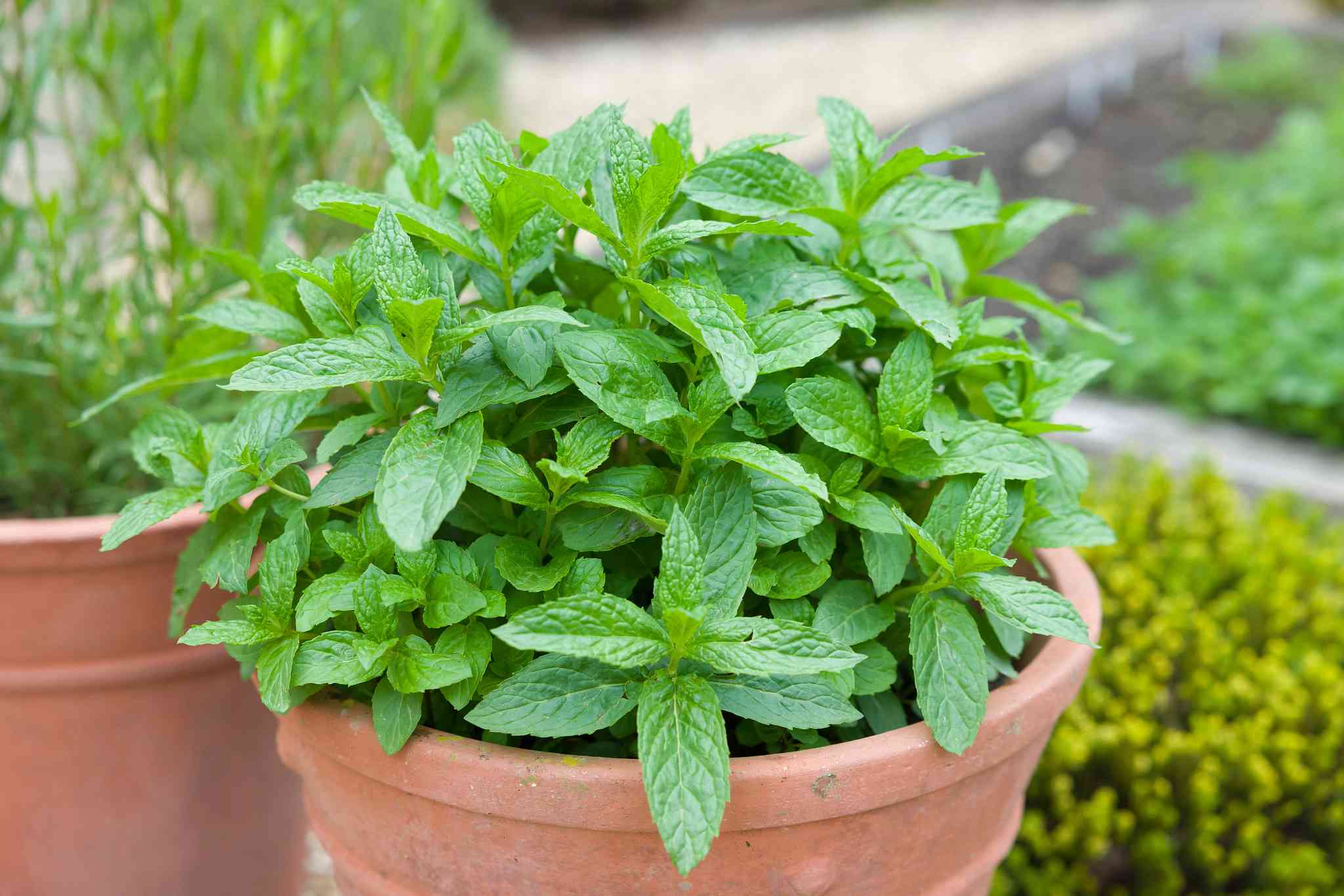
9. Mint: powerful, refreshing, and best controlled
Mint is one of the most generous herbs you can grow, but it needs boundaries. It is wonderful for teas, fruit salads, sauces, cold drinks, and summer desserts, yet it spreads aggressively if planted straight into open ground.
Plant character
Fast-growing, leafy, fragrant, and moisture-loving compared with Mediterranean herbs.
Practical growing advice
Keep mint in pots unless you truly want it to roam. A container keeps it useful instead of overwhelming. Harvest often to keep stems tender and leafy.
Best placement
Dedicated pots, patio planters, or a contained herb station near the kitchen.
How to group these herbs for easier care
One of the smartest ways to make your herb garden easier is to group plants by water needs.
Higher-moisture herbs
Basil, parsley, cilantro, chives, and mint prefer more regular moisture and slightly richer soil.
Drier, sun-loving herbs
Rosemary, thyme, and oregano want excellent drainage and a lighter watering rhythm.
Dill in the middle
Dill likes even moisture while young, but it also wants to be direct sown and left undisturbed.
This simple grouping prevents one of the most common problems in herb gardening: growing rosemary like parsley or mint like thyme.
Practical habits that give bigger summer harvests
Harvest early and often
Regular cutting encourages fresh growth. Waiting too long often leads to legginess, flowering, and lower leaf quality.
Feed lightly, not heavily
Most herbs do not need aggressive fertilizing. Too much feeding often reduces flavor and creates weak, soft growth.
Mulch after the soil warms
A light mulch layer helps hold moisture for basil, parsley, cilantro, and chives. Keep the drier herbs less heavily mulched if drainage is borderline.
Re-sow short-lived herbs
Cilantro and dill are often better grown in repeated sowings than in one all-at-once planting.
Keep cooking in mind
Grow what you actually use. One strong parsley plant or a pot of chives may serve you better than a dozen neglected herbs you never cut.
Final thoughts: May herbs turn small spaces into productive kitchens
A pot of basil, a row of cilantro, a clump of parsley, a sunny rosemary, a neat patch of thyme, a handful of chives, airy dill, spreading oregano, and a contained mint plant can transform the way summer cooking feels. The garden stops being separate from daily life. It starts feeding it directly.
That is the real pleasure of growing kitchen herbs in May. You plant now, and by summer you are not just harvesting leaves. You are building a routine that is fresher, more skilled, and more connected to the season.