A productive container garden does not have to begin and end with annual herbs and salad greens. Some of the smartest edible plants for small spaces are perennials: crops you plant once, care for well, and harvest for years. That changes the whole rhythm of gardening. Instead of rebuilding every container from scratch each spring, you begin shaping a long-term edible system one pot for asparagus, another for sorrel, a deep tub for horseradish, a large barrel for rhubarb. Over time, the garden becomes more stable, more efficient, and more deeply yours.
This kind of growing is especially rewarding on patios, balconies, driveways, and small urban yards. Containers let you control soil quality, drainage, and plant spread. They also make it easier to grow unusual perennial edibles that might otherwise roam too widely or struggle in the wrong ground. The key is to choose crops with the right temperament for pot culture, then give them the root room and seasonal care they deserve.
One important reality comes first: perennial container plants are more exposed to winter cold than plants in the ground, because roots in pots are not insulated by surrounding soil. In colder regions, many perennial edibles can still be grown successfully in containers, but they often need extra winter protection or a sheltered overwintering spot.
Why perennial edibles work so well in containers
Perennial edibles suit containers for three practical reasons. First, many of them benefit from protected, well-prepared soil that stays loose and fertile. Second, pots help control plants that spread aggressively, such as horseradish or walking onions. Third, container growing lets you match each crop to its exact needs acidic mix for blueberries, deep rich soil for asparagus, sharp drainage for Mediterranean herbs, moisture-retentive loam-like mix for leafy perennial greens.
The real advantage, though, is long-term return. A well-managed perennial pot becomes a working food plant, not just a seasonal display. And that shifts your gardening from short-term color and quick replacement toward stewardship and steady harvest.
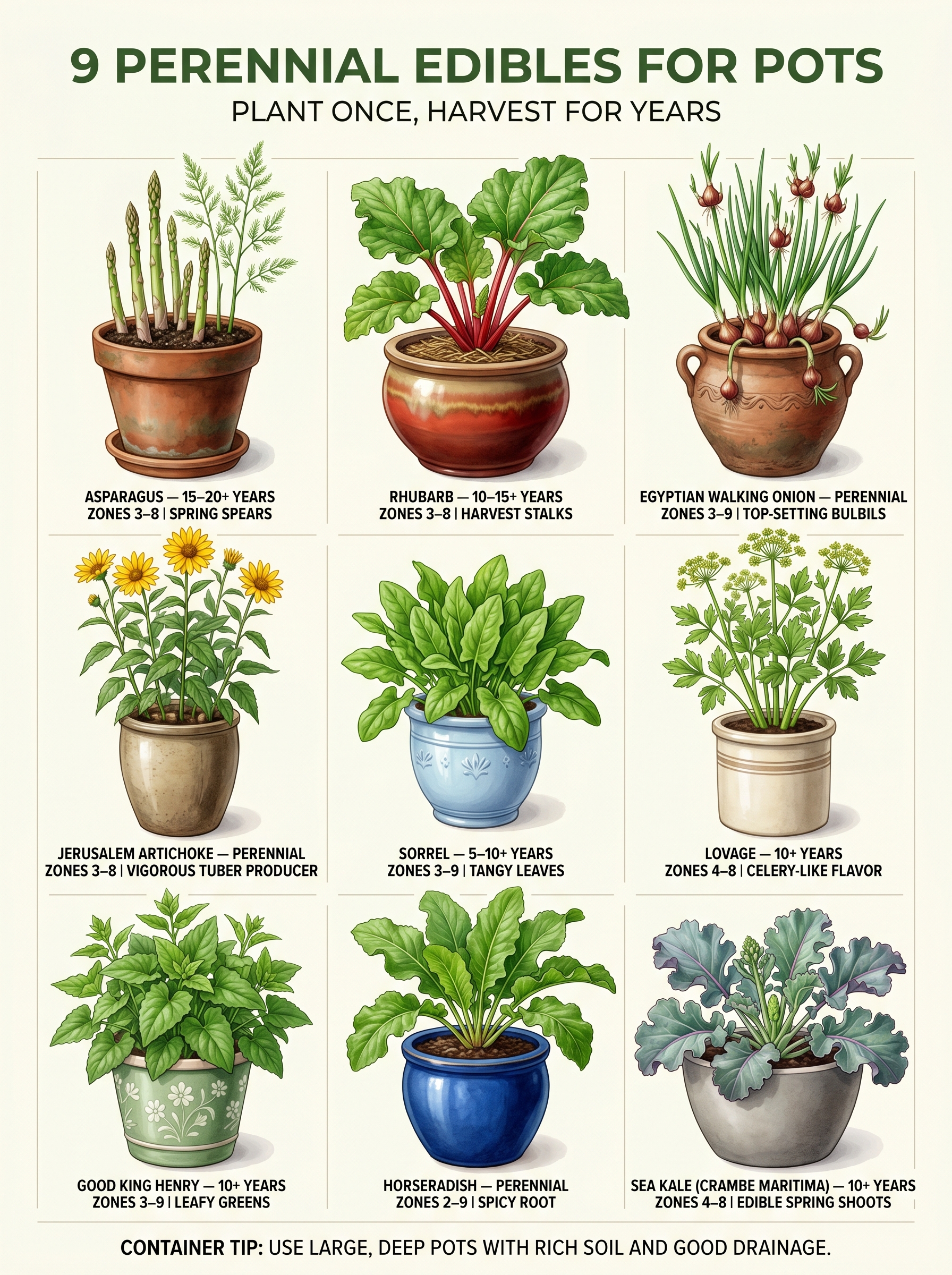
1. Asparagus: a patient grower with big long-term reward
Asparagus is one of the most satisfying perennial vegetables you can grow if you are willing to think ahead. It is a perennial crop that produces edible spring spears and then grows into tall ferny tops after harvest. Missouri Botanical Garden notes that asparagus is planted in early spring, prefers organically rich, evenly moist soil, and usually needs 2 to 3 years before harvest begins in earnest.
For containers, asparagus needs a large, deep pot and a gardener who understands that the first year is about root establishment, not immediate reward. It is best suited to USDA Zones 3–8 in the ground, but container growers near the cold edge of that range should protect pots in winter because exposed roots are less hardy than in-ground roots.
Practical tip: Do not harvest too heavily early on. Let the crowns build strength. That patience is what turns a good asparagus pot into a long-lived one.

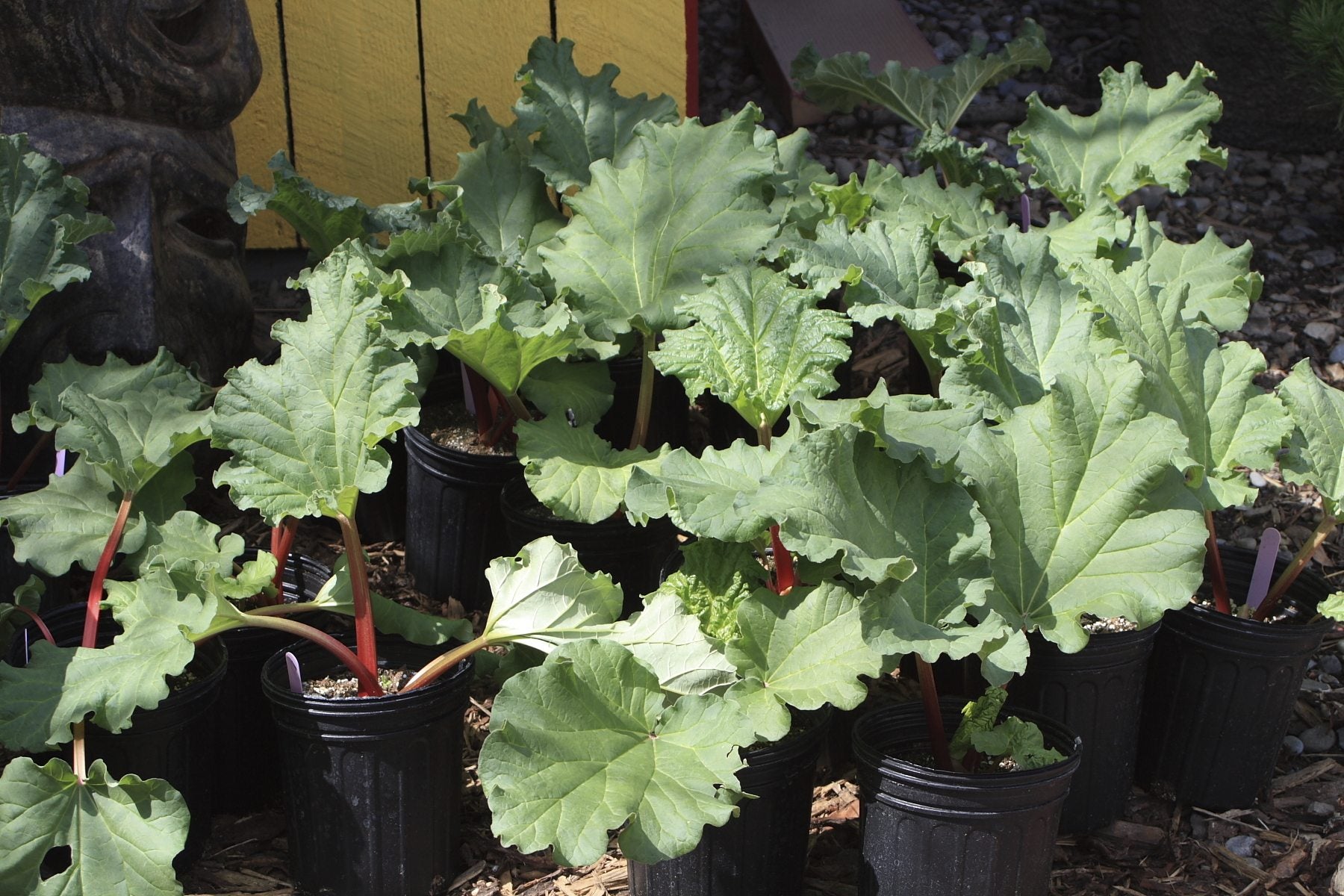
2. Rhubarb: dramatic foliage and tart kitchen harvests
Rhubarb is both ornamental and useful. Missouri Botanical Garden describes it as a clump-forming perennial vegetable grown for its edible leaf stalks, with poisonous leaves and tart stalks used in sauces, jams, and pies. Mature plants can reach roughly 3 feet tall and 4 feet wide, which tells you immediately that rhubarb needs a serious container, not a decorative little pot.
It fits USDA Zones 3–8 well as a perennial, especially where winters provide the chill it enjoys. In a container, rhubarb appreciates rich soil, steady moisture, and enough room that the crown is not cramped by midsummer. It can be a superb edible centerpiece on a patio if you like plants that look bold and useful at the same time.
Practical tip: Harvest stalks, not leaves, and never strip the plant bare. A strong rhubarb container performs best when enough foliage remains to recharge the crown.
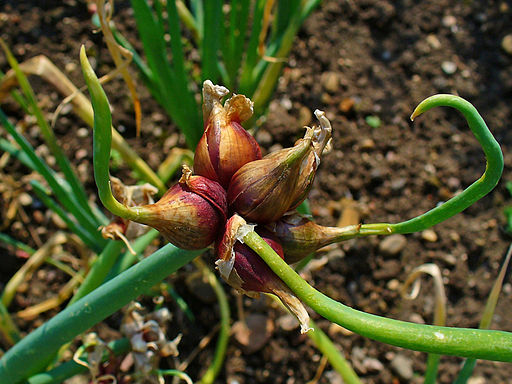
3.: one of the smartest edible container plants
Egyptian walking onion is a practical gardener’s plant. It is perennial, productive, and unusually interesting, producing top-setting bulbils instead of behaving like an ordinary bunching onion. The JC Raulston Arboretum identifies Allium × proliferum as Egyptian walking onion, and the common habit is exactly what makes it so useful in a pot: you can keep the plant contained instead of letting it “walk” across a bed over time.
It suits Zones 3–9 well in general garden culture. In containers, it becomes a tidy, renewable allium patch for greens, small bulbs, and bulbils.
Practical tip: Give it a wide pot rather than a deep, narrow one. The plant forms clumps and multiplies, so horizontal space matters.
4. Jerusalem artichoke: vigorous, productive, and best controlled
Jerusalem artichoke is a perennial sunflower grown for its tubers. RHS describes it as a tall herbaceous perennial cultivated for knobbly edible tubers, and also notes that some forms can become a nuisance if not managed carefully.
That warning is exactly why containers are so valuable here. A large tub or half barrel lets you enjoy harvests without giving the plant open ground to colonize. It suits Zones 3–8 well and likes a sunny site with moisture-retentive but well-drained soil.
Practical tip: Use a sturdy container and expect height. Even in pots, this is not a tiny plant. Place it where its size is useful, not inconvenient.

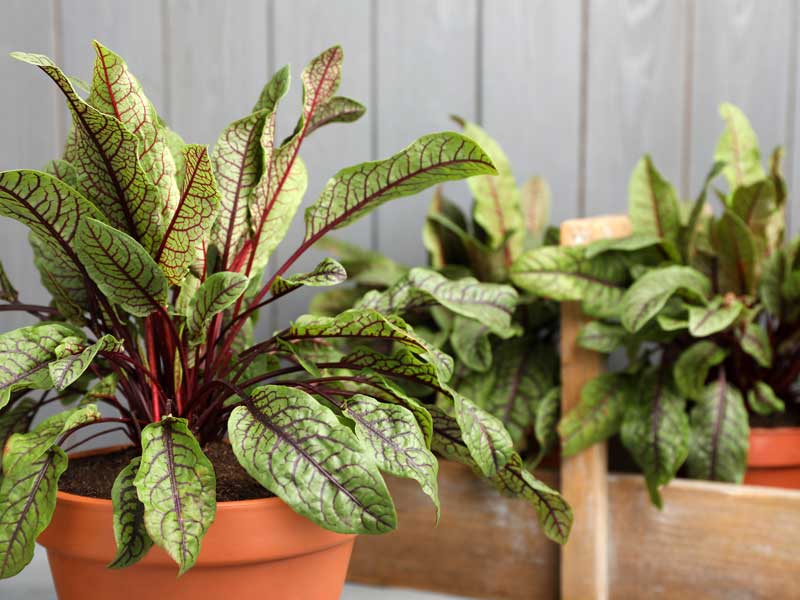
5. Sorrel: one of the best perennial greens for everyday picking
Sorrel deserves much more attention in home edible gardens. RHS describes sorrel as an easy-to-grow perennial herb valued for its tangy leaves, and notes that it can be grown in containers and harvested regularly as a cut-and-come-again crop.
This makes it one of the very best perennial edibles for pots. It suits Zones 3–9 broadly, depending on type, and gives repeated harvests of lemony leaves for salads, soups, omelets, and sauces.
Practical tip: Harvest young leaves often. Older leaves become tougher and more bitter, while regular picking keeps the plant tender and productive.
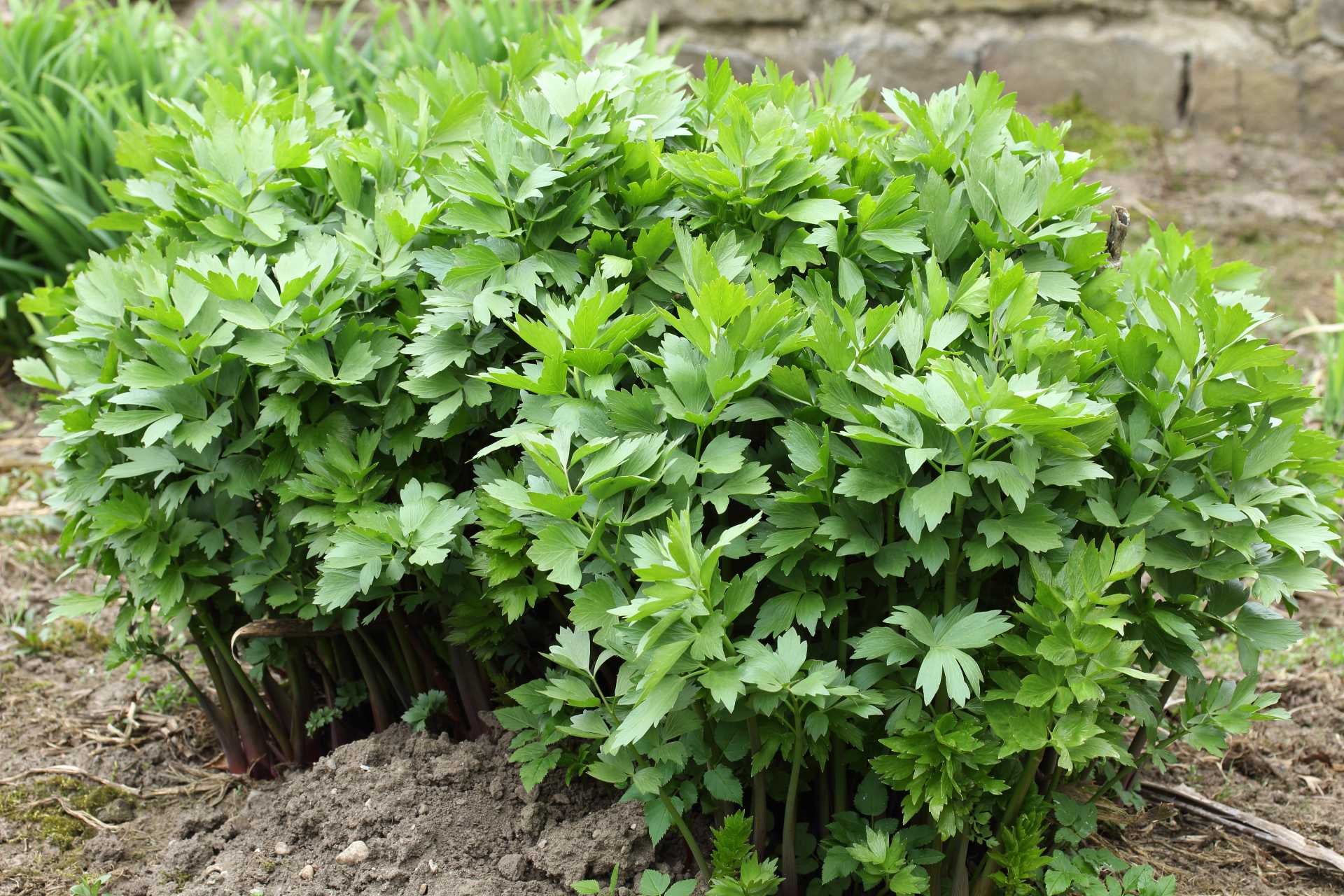
6. Lovage: for gardeners who cook often
Lovage is one of the most useful but undergrown perennial herbs. RHS describes it as a perennial to 2 meters tall and 1 meter wide, with celery-like flavor and aromatic seeds, and recommends rich, moist soil that does not dry out or stay waterlogged. It also points out that one plant is usually enough for most households.
That size means lovage needs a large pot, but it also means excellent return from a single plant. It suits roughly Zones 4–8 and works beautifully for cooks who want a strong perennial herb for soups, broths, and savory dishes.
Practical tip: Place it where a taller herb is welcome. Lovage is not background filler; it is a feature plant with culinary purpose.
7. Good King Henry: an old-fashioned perennial spinach substitute
Good King Henry is an edible perennial with bright green leaves that can be eaten raw or cooked and taste similar to spinach, according to RHS. It is one of those old kitchen-garden plants that makes sense again once you start thinking in perennial terms.
It suits Zones 3–9 and works well in containers because you can keep the soil rich and the harvesting regular. Rather than treating it as a novelty, think of it as a long-term leafy green for repeated spring and summer picking.
Practical tip: Pick often to keep leaves tender and to delay the plant’s urge to run to seed.

8. Horseradish: ideal for a deep pot and a controlled root zone
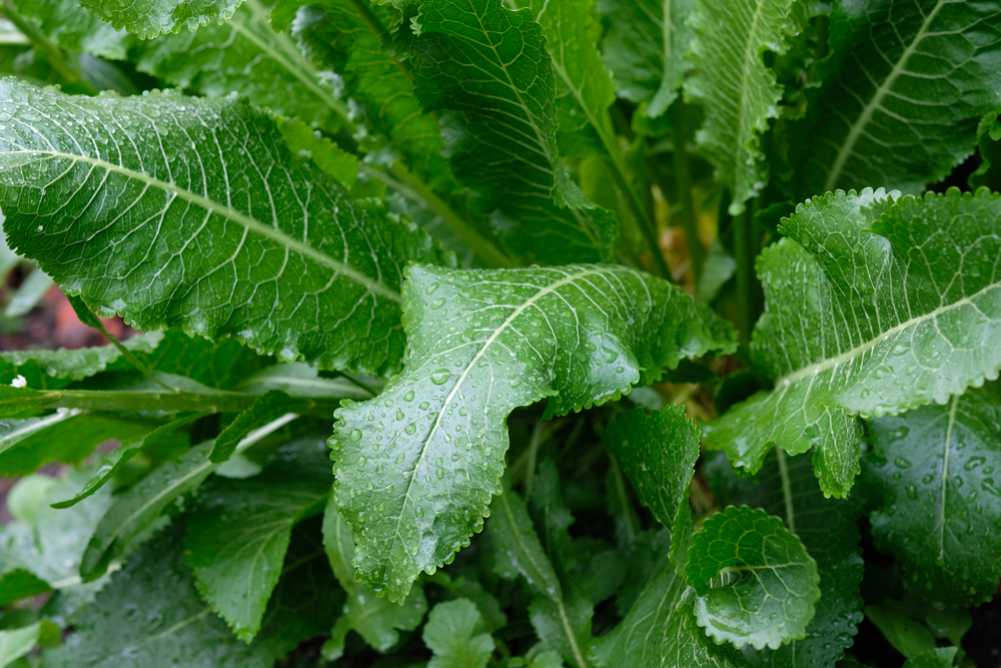
Horseradish is almost made for containers if you value order. Missouri Botanical Garden describes it as a coarse vegetable grown for its pungent fleshy roots, while UMN Extension notes that roots become malformed and yields fall on hard, shallow, stony soils; it prefers prepared soil to 8 to 10 inches deep with plenty of organic matter.
In other words, a deep container with loose rich soil is a gift to horseradish. It suits Zones 2–9 broadly and benefits from the containment pots provide.
Practical tip: Start with a deep container from the beginning. Horseradish roots want depth, and transplanting a mature plant out of a cramped pot is rarely enjoyable.
9. Sea kale: the elegant perennial edible for patient gardeners
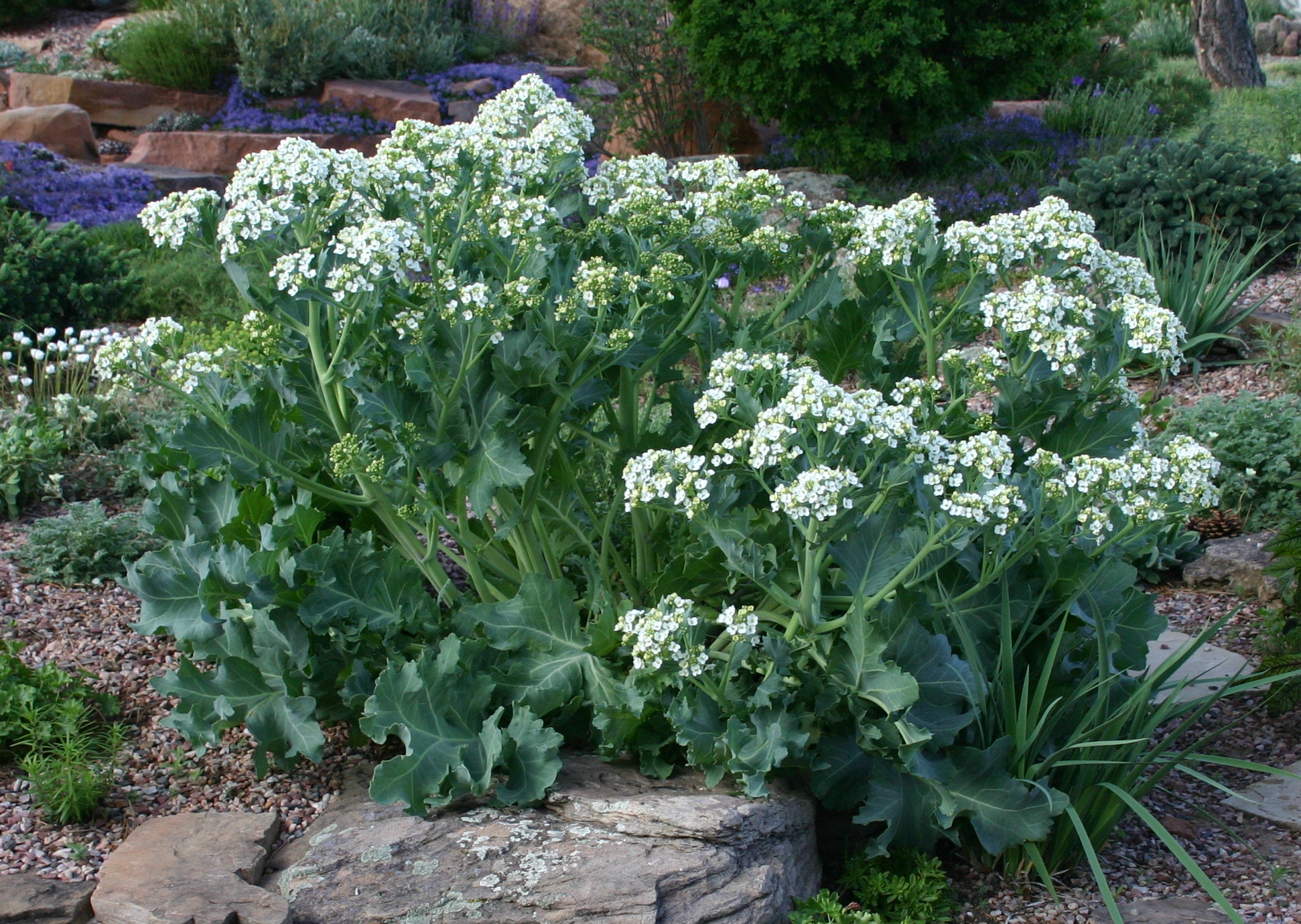
Sea kale is one of the most distinctive perennial edibles on this list. Missouri Botanical Garden notes that Crambe maritima is grown both as an ornamental and as a vegetable, with edible leaves, stems, flowers, and roots. Its blue-green foliage makes it attractive enough for ornamental containers, while its edible spring growth gives it real kitchen value.
Sea kale suits Zones 4–8 well. It wants excellent drainage and a gardener who appreciates spring shoots more than nonstop summer harvesting.
Practical tip: Treat it like a specialty crop. Give it a prominent, beautiful pot and grow it as both an edible and a conversation piece.
How to make perennial containers succeed
The single best container rule for perennial edibles is this: use larger, deeper pots than you think you need. Restricted roots mean more frequent watering and faster nutrient loss. RHS notes that container plants depend on us for water because of their limited root area, and winter protection is often necessary because container roots are more exposed.
Build your container system around these habits:
Use a rich but well-drained potting mix for heavy feeders like rhubarb and asparagus. Use excellent drainage for sea kale and, to a lesser degree, sorrel. Water deeply, not superficially. Refresh the top layer of mix or repot when the crown becomes crowded. And in cold climates, group pots together, insulate them, or move them into a sheltered place before the hardest freezes arrive.
Final thoughts
Perennial edibles in pots change the way a small-space garden feels. A container is no longer just a temporary home for one season’s color. It becomes a long-term food plant, a repeating harvest, a living investment. Asparagus teaches patience. Rhubarb rewards room. Walking onions multiply. Sorrel gives quick leaves. Lovage serves the cook. Horseradish stays contained. Sea kale adds beauty and rarity.
That is the deeper pleasure of container gardening: not just growing something, but building something that comes back better each year.