Have you ever walked through your garden after a good rain and noticed an unexpected sprout of mushrooms? While some gardeners might see them as a sign of trouble, these fascinating fungi are actually incredible natural diagnosticians, offering valuable clues about the health and vitality of your garden’s soil. Far from being mere decorations, they play a crucial role in the intricate ecosystem beneath your feet!
At Garden – L. Quyên, we believe that understanding your soil is the first step to a thriving garden. Today, let’s delve into the mysterious world of garden fungi and learn to interpret their silent messages.
The Hidden World Beneath Your Feet
Mushrooms are just the fruiting bodies of a much larger network of fungi that live mostly underground. This vast, often invisible network of mycelium is a bustling highway of activity, essential for breaking down organic matter and recycling nutrients. Think of them as the silent workers of your garden, constantly toiling to enrich the soil.
What Do Fungi Tell You About Your Soil?
The presence of fungi, especially mushrooms, can indicate several important things about your garden’s environment:
1. Rich Organic Matter
Many fungi are decomposers, meaning they thrive on breaking down dead plant material like wood chips, leaves, and old roots. If you see mushrooms popping up, especially in mulched areas or around decaying wood, it’s often a positive sign that your soil is rich in organic matter and that the decomposition cycle is active. This process releases vital nutrients back into the soil, making them available for your plants.
2. Good Moisture Levels
Fungi generally prefer moist, humid conditions. Their sudden appearance often coincides with periods of rain or consistent watering. While excessive dampness can be an issue for some plants, a moderate presence of fungi can indicate healthy, consistent soil moisture – not too dry, not waterlogged.
3. Healthy Soil Ecosystem
A garden with fungi is a garden with a healthy, balanced ecosystem. These organisms are key players in the soil food web, forming symbiotic relationships with plants (like mycorrhizal fungi, which help roots absorb nutrients) and breaking down complex materials that other organisms can’t. Their presence suggests a vibrant microbial community working hard for your plants.
4. Soil Structure and Aeration
The mycelial network of fungi can help bind soil particles together, improving soil structure and aeration. This leads to better water penetration and root growth for your plants.
Common Garden Fungi and Their Meanings
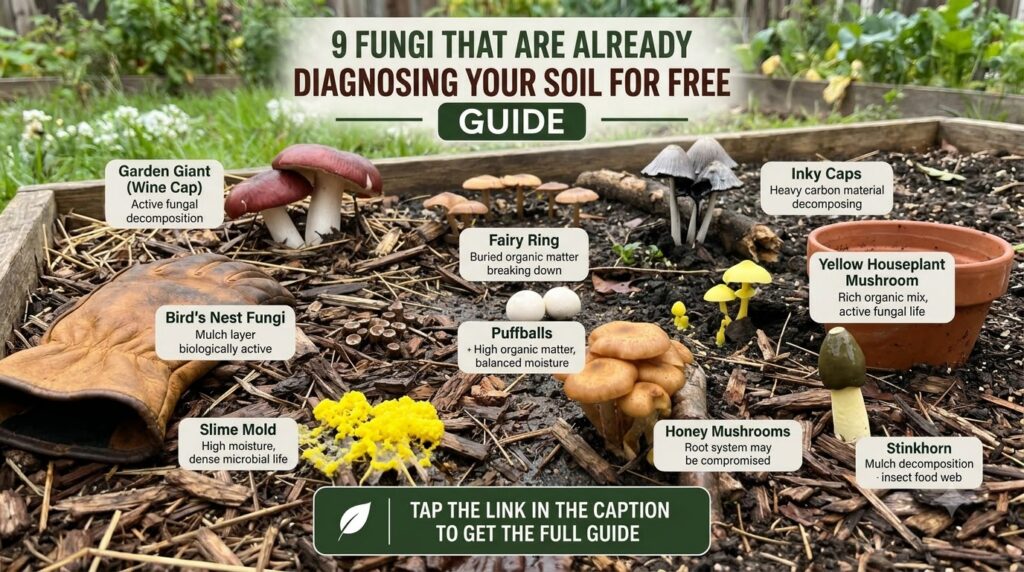
- Saprophytic Fungi (e.g., many common lawn and garden mushrooms, puffballs): These are the decomposers. Their presence signifies an abundance of organic matter being broken down. They’re generally harmless to living plants and a sign of a healthy soil ecosystem.
- Mycorrhizal Fungi: These form beneficial partnerships with plant roots, extending the plant’s reach for water and nutrients. While their fruiting bodies (mushrooms) are less commonly seen, their unseen networks are vital for plant health.
- Wood-Rotting Fungi (e.g., shelf fungi, honey mushrooms on stumps): These indicate decaying wood, which provides long-term organic matter. If they’re on living trees, they might signal a problem, but on stumps or wood chips, they’re just doing their job.
- Slime Molds: Though often mistaken for fungi, slime molds are protists. They too feed on decaying organic matter, bacteria, and other microorganisms, indicating moist conditions and plenty of organic material. They are generally harmless and will disappear when conditions dry out.
When Should You Be Concerned?
Most fungi you see in your garden are beneficial or harmless. However, there are a few instances where you might pay closer attention:
- Fungi growing directly on living plant stems or leaves: This could indicate a plant disease, especially if accompanied by wilting or discoloration.
- Mushrooms appearing in large numbers and very quickly: While often harmless, if they are particularly slimy or smelly, it might be worth investigating if there’s an underlying drainage issue or excessive organic matter.
- Known poisonous species: If you have pets or small children, it’s wise to identify common mushrooms in your area and remove any known poisonous ones, just to be safe. Always err on the side of caution.
Encouraging a Healthy Fungal Network
To foster a thriving fungal community that benefits your garden:
- Add Organic Matter: Regularly incorporate compost, well-rotted manure, and leaf mold into your soil. Mulch with wood chips or straw.
- Minimize Tillage: Frequent digging can disrupt the delicate fungal networks in the soil. Try no-till or minimal-till gardening.
- Avoid Chemical Fungicides: These can harm beneficial fungi along with the problematic ones, disrupting your soil’s natural balance.
- Ensure Good Drainage: While fungi like moisture, waterlogged soil can lead to anaerobic conditions that harm both plants and beneficial microbes.
Conclusion
So, the next time you spot a mushroom in your garden, don’t just see a fungus; see a natural diagnostician at work! These humble organisms are critical to a healthy, vibrant garden ecosystem, breaking down waste, recycling nutrients, and creating a fertile environment for your beloved plants. Embrace them as a sign of life, and continue to nurture your soil with organic practices, and your garden will thank you.
Share Your Fungal Finds!
Have you seen any interesting mushrooms in your garden lately? Share your observations and any tips you have for maintaining healthy soil in the comments below! We love learning from our Garden – L. Quyên community!