A container vegetable garden can be incredibly productive, but one of the most common reasons it struggles has nothing to do with fertilizer, sun, or seed quality. It comes down to container depth.
When a pot is too shallow, roots hit a limit early. Moisture swings become sharper. Plants dry out faster, tip over more easily, and often produce smaller harvests than they should. When the depth matches the crop, everything improves. Roots spread properly. Water stays more stable. Nutrients hold longer. Growth becomes stronger and more balanced.
This is one of those practical gardening skills that changes your whole routine. You stop guessing. You stop wasting time on the wrong containers. You start planting with confidence because the setup supports the crop from day one.
Why container depth matters more than most gardeners think
A plant does not only grow above the soil. Its real stability, feeding power, and drought tolerance begin below the surface. In containers, that hidden root zone is limited, so every inch matters.
The right depth helps vegetables in four important ways:
- it gives roots enough room to grow naturally
- it holds moisture longer between waterings
- it reduces heat stress around the roots
- it supports better nutrient uptake and steadier harvests
Depth is not the only factor. Container volume matters too. A deep but narrow pot may still not support a hungry crop well. A plant like zucchini needs both depth and width. A plant like parsnip needs depth more than width. Understanding that difference is what makes container gardening smarter.
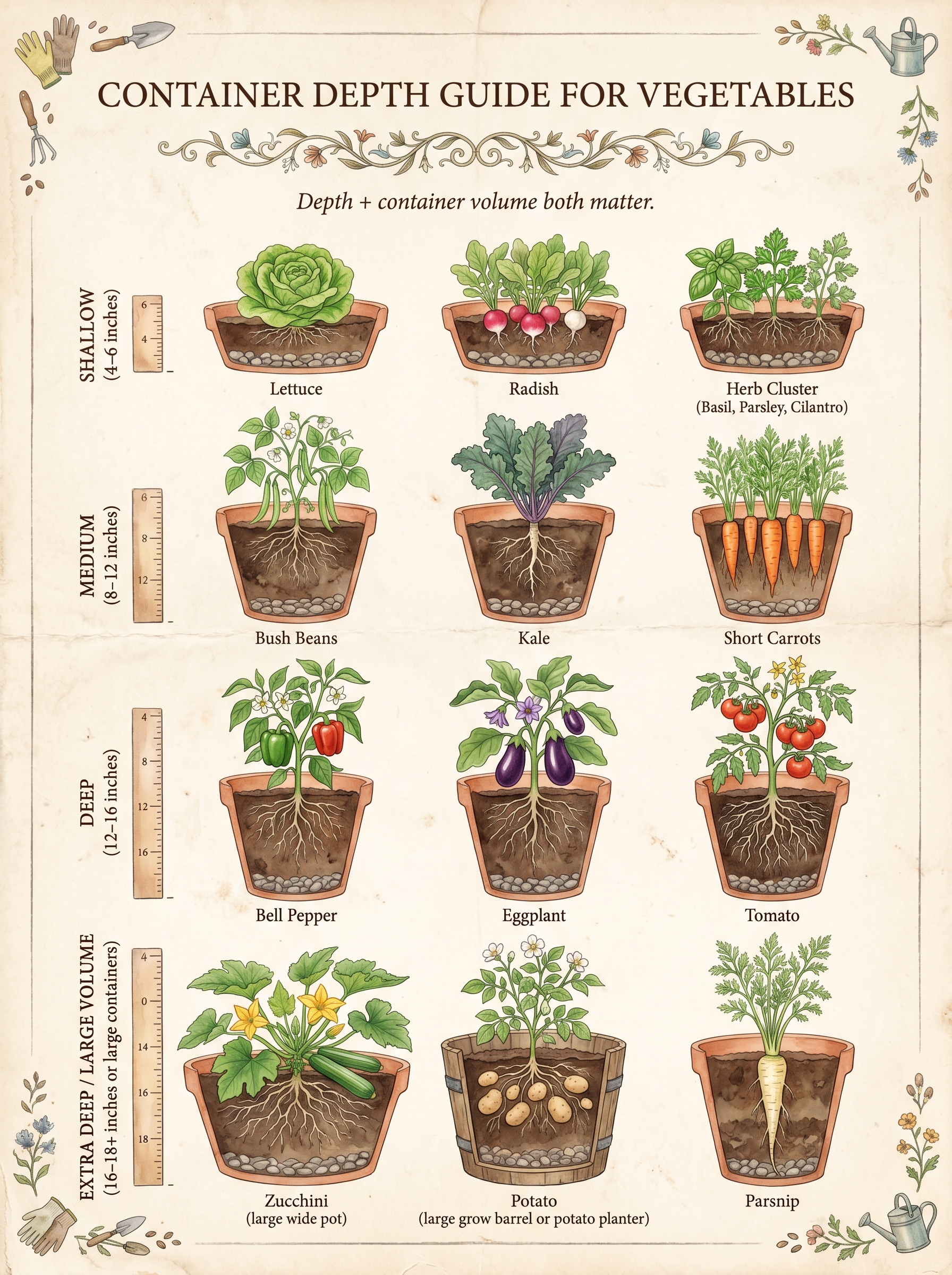
A simple way to think about container depth
Vegetables generally fit into four groups:
- Shallow: 4–6 inches
- Medium: 8–12 inches
- Deep: 12–16 inches
- Extra deep or large volume: 16–18+ inches, or very large containers
Once you learn which crops belong in each group, planning containers becomes much easier.
Shallow containers: 4–6 inches deep
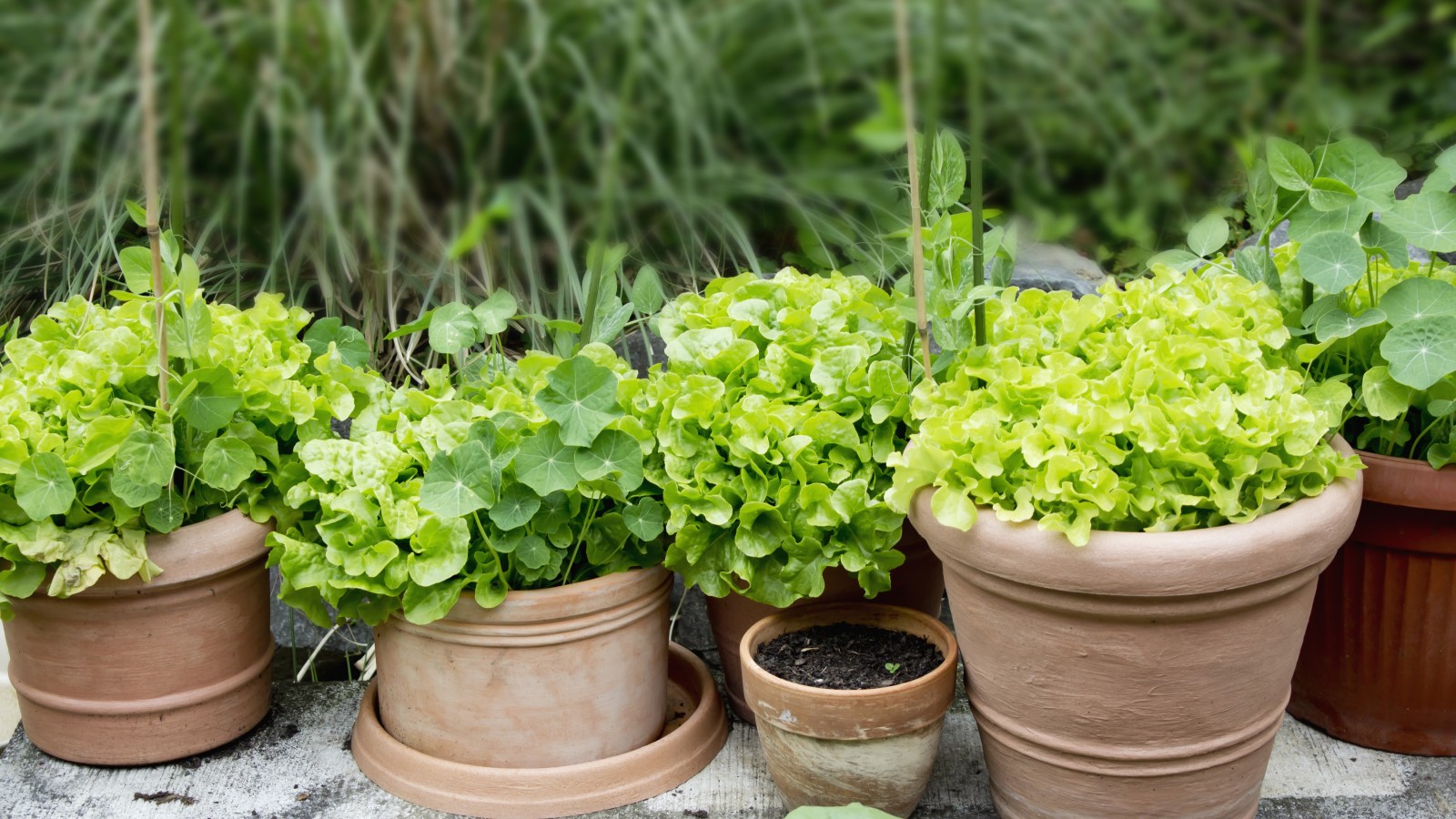
Shallow containers are best for vegetables with compact or surface-oriented root systems. These crops do not need a huge root run, but they do need consistent moisture because shallow pots dry out faster.
Lettuce
Lettuce is one of the easiest and most rewarding shallow-rooted vegetables for containers. It grows quickly, fits well in wide bowls or window boxes, and gives repeated harvests if you pick outer leaves regularly.
Practical tip: Wide shallow containers often work better than narrow ones. Lettuce likes room to spread across the surface more than it needs depth.
Radish
Radishes are perfect for shallow containers because they mature quickly and do not need long root channels like carrots or parsnips do. They are excellent for beginner gardeners who want fast success.
Practical tip: Do not crowd them too tightly. Even in shallow pots, spacing matters if you want round, clean roots instead of leafy tops and tiny bulbs.
Herb cluster: basil, parsley, cilantro
A shallow herb box can be highly productive if it is watered well and harvested often. Basil, parsley, and cilantro all work in shallower containers, especially when grown young and cut regularly.
Practical tip: Group herbs by moisture needs. Parsley and cilantro enjoy more even moisture, while basil wants warmth and sun but still dislikes repeated dry stress.
Medium containers: 8–12 inches deep
This range is ideal for vegetables that need more root space than salad crops, but do not require a full barrel or deep grow bag.
Bush beans
Bush beans do very well in medium-depth containers. They are compact, productive, and easier to manage than pole beans when space is limited.
Practical tip: Use a pot that is not only deep enough but also wide enough for a small block planting. Beans usually perform better in groups than as lonely single plants.
Kale
Kale is a strong medium-depth container crop because it forms a deeper root system than lettuce but still fits comfortably in moderate-sized pots. It also gives a long harvest season if you pick outer leaves first.
Practical tip: Keep harvesting regularly. A container kale plant becomes more productive when you treat it as a cut-and-come-again crop instead of waiting for perfection.
Short carrots
Not all carrots need deep pots. Short or round-rooted varieties are much better suited to containers in the 8–12 inch range.
Practical tip: Choose the variety first, then the pot. A short carrot in a medium pot works beautifully. A long storage carrot in the same pot often ends up forked or stunted.

Deep containers: 12–16 inches deep
This is where serious fruiting vegetables begin to perform properly. These crops need stronger rooting volume to support top growth, flowering, and fruit production.
Bell pepper
Bell peppers can survive in smaller pots, but they perform much better in deeper containers that support steady moisture and root strength. This matters even more once they begin setting fruit.
Practical tip: Peppers do not just need depth. They also need warmth and steady feeding. A too-small pot often leads to blossom drop, slow growth, or small fruit.
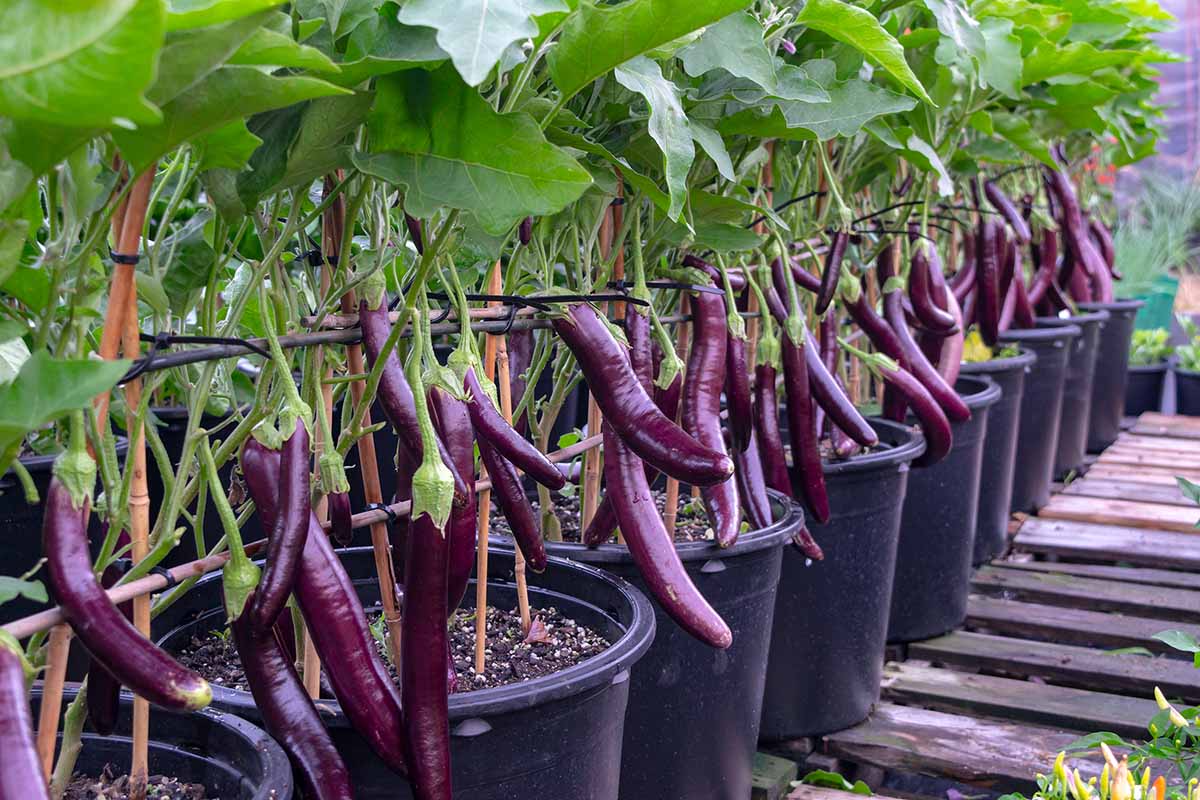
Eggplant
Eggplant needs a stable root zone and benefits from deeper containers that keep it upright and better hydrated through heat. It is especially well suited to container growing if given enough room.
Practical tip: Use a sturdy pot. Eggplant can become top-heavy once fruit begins developing, and a lightweight container may tip easily.
Tomato
Tomatoes are one of the most common container vegetables, and also one of the most commonly under-potted. A deep container helps support stronger roots, more stable moisture, and better fruit production.
Practical tip: Do not focus on depth alone. Tomatoes also need substantial volume. A 12–16 inch deep pot is only helpful if it also has enough width and soil mass to support the plant properly.
Extra deep or large-volume containers: 16–18+ inches
Some crops need serious root space, either because they are large feeders, develop long roots, or need both depth and bulk soil volume to thrive.
Zucchini
Zucchini is often underestimated in containers. People see one plant and assume one medium pot will do. It usually will not. Zucchini needs a large wide pot with real soil volume.
Practical tip: Think of zucchini as a patio crop with garden-sized ambition. It needs room, steady feeding, and enough root area to support constant water use in summer.
Potato
Potatoes are one of the best crops for deep containers, barrels, or dedicated potato planters. They benefit from volume because tubers develop along buried stems and need loose soil around them.
Practical tip: A large grow barrel works better than a decorative pot. Potatoes are a yield crop, and yield depends heavily on usable soil space.
Parsnip
Parsnips need depth more than most container vegetables. Their long roots demand a deep, loose root zone if you want straight, well-shaped harvests.
Practical tip: Use a tall container and a stone-free, airy mix. Parsnips do not forgive compacted soil or shallow walls.

Depth is only half the story: container volume matters too
This is the part many gardeners miss. A 14-inch-deep container might still be wrong if it is too narrow. Plants do not grow roots in a perfect vertical line. They also spread outward.
Here is the practical difference:
- Lettuce and radish care more about width than great depth
- Tomato and pepper need both depth and volume
- Zucchini and potato need large overall soil mass
- Parsnip needs depth first, then enough width to keep moisture stable
A plant with a restricted root zone dries faster, feeds less efficiently, and becomes stressed sooner in heat. That stress shows up above ground as poor growth, fewer flowers, and lower harvest quality.
How to choose the right container before planting
Match the crop to the pot, not the pot to the crop
Do not choose a decorative container first and then try to force the wrong vegetable into it. Start with the plant’s needs.
Prefer larger pots when you are unsure
A pot that is slightly too large is usually easier to manage than one that is too small. Larger pots buffer moisture better and give roots more consistent conditions.
Look for both depth and drainage
Even a deep container fails if it stays soggy. Good drainage holes are essential, especially for tomatoes, peppers, eggplant, and herbs.
Think ahead to midsummer
A pot that seems fine in spring may become far too small in heat. Always imagine the crop at full size, not just at transplant stage.
Practical watering advice based on depth
Container depth changes watering rhythm.
Shallow pots
These dry fast and need more frequent checking. Lettuce, radishes, and herbs in shallow containers can go from perfect to stressed very quickly on hot days.
Medium pots
These hold moisture better, but leafy crops like kale and bush beans still need consistency. Do not let them cycle between drought and soaking.
Deep and extra-deep pots
These are more forgiving, but they still need deep watering. Surface watering alone often leaves deeper roots dry.
A smart gardener waters according to pot depth, crop size, and weather together, not by habit alone.
Common mistakes that reduce container harvests
Using shallow decorative pots for deep-rooted crops
Tomatoes, peppers, and eggplants often survive this, but they rarely thrive.
Ignoring volume
A deep narrow pot is not enough for a sprawling, hungry crop like zucchini.
Growing long roots in compact soil
Carrots and parsnips need loose soil just as much as they need proper depth.
Overcrowding shallow containers
Lettuce and herbs may look cute when packed tight, but airflow and root competition matter even in small pots.
Final thoughts: better containers make better gardeners
One of the biggest upgrades you can make in vegetable gardening is learning to match container depth to the crop. It sounds simple, but it changes everything. Lettuce, radishes, and herbs do beautifully in shallow containers. Bush beans, kale, and short carrots fit comfortably in medium pots. Bell peppers, eggplant, and tomatoes need deeper rooting space. Zucchini, potatoes, and parsnips need truly large or extra-deep homes.
Once you start gardening this way, the whole process feels more logical. Plants grow more steadily. Watering gets easier to understand. Harvests become stronger. And your containers stop being guesses and start becoming real growing systems.