Bugleweed herb, sometimes associated with Ajuga species in traditional herbal practices, has long been used in folk wellness routines and natural herbal remedies. Many people searching for natural thyroid support or traditional calming herbs are becoming interested in how bugleweed tincture and herbal infusions are prepared.
Although herbal medicine has a long history, it’s important to understand that scientific evidence on many traditional herbs remains limited. This article explores:
- bugleweed herb benefits
- traditional uses
- herbal preparation methods
- safety considerations
- how to make herbal tinctures and infusions at home
Always consult a healthcare professional before using herbs for thyroid health or hormone-related conditions.
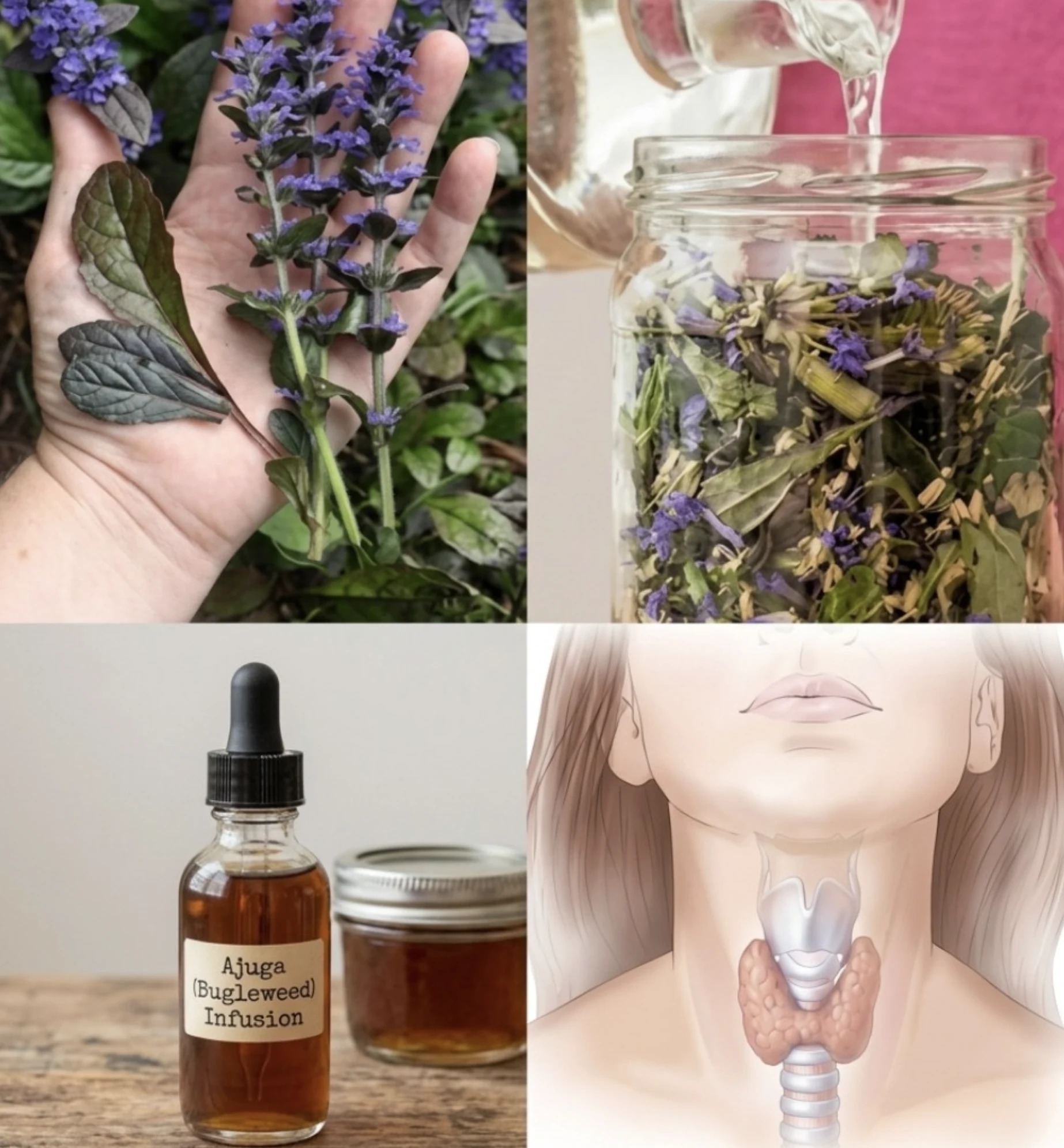
What Is Bugleweed Herb?
Bugleweed is a flowering herb traditionally used in European and North American herbal medicine. Some varieties belong to the mint family, while Ajuga reptans uses are often discussed in folk herbal traditions because of their calming and cooling properties.
The plant is recognizable by:
- purple-blue flowers
- dark green leaves
- low-growing stems
- mild earthy aroma
Traditional herbalists historically used bugleweed herb for:
- calming support
- stress-related tension
- circulation support
- thyroid-related wellness routines
Modern interest often focuses on natural thyroid support and nervous system balance.
Traditional Uses of Bugleweed Herb
1. Thyroid Support
One of the most searched topics around bugleweed herb benefits is its traditional association with thyroid wellness.
Historically, herbalists used bugleweed in wellness routines aimed at:
- rapid heartbeat sensations
- nervous tension
- overstimulation
- thyroid balance support
However, this does NOT replace medical care for thyroid disorders.
People researching herbs for thyroid health often combine bugleweed with:
- lemon balm
- motherwort
- chamomile
- oat straw
Always seek professional medical evaluation for thyroid symptoms.
2. Calming and Relaxation Support
Traditional herbal remedies frequently used bugleweed infusions as calming nighttime teas.
Some people describe the herb as:
- mildly relaxing
- cooling
- grounding
This explains why bugleweed tincture blends are sometimes included in relaxation-focused herbal routines.
3. Herbal Wellness Practices
In folk traditions, bugleweed was also used in:
- homemade infusions
- tinctures
- infused oils
- botanical wellness blends
Today, many herbal enthusiasts enjoy learning how to make herbal tinctures using dried herbs for educational and traditional purposes.
How to Identify Bugleweed Safely
Before harvesting any wild herb:
- verify the plant correctly
- avoid roadside harvesting
- avoid chemically treated areas
- consult experienced plant identification resources
Misidentification can be dangerous.
Characteristics often include:
- square stems
- clustered purple flowers
- soft textured leaves
- mint-family appearance
Never consume unidentified plants.
How to Make a Simple Herbal Infusion
Many people searching herbal infusion recipe ideas prefer simple preparations.
Ingredients
- 1 tbsp dried bugleweed herb
- 1 cup hot water
Instructions
- Place dried herb into a jar or tea infuser.
- Pour hot water over the herb.
- Cover and steep for 10–15 minutes.
- Strain before drinking.
Some people combine bugleweed with:
- lemon balm
- chamomile
- peppermint
for a milder flavor.
How to Make a Basic Bugleweed Tincture
People researching bugleweed tincture preparations often use alcohol extraction methods.
Ingredients
- fresh or dried herb
- vodka or food-grade alcohol
- glass jar with lid
Instructions
- Fill a clean jar halfway with chopped herb.
- Cover completely with alcohol.
- Seal tightly.
- Store in a cool dark place for 4–6 weeks.
- Shake gently every few days.
- Strain through cheesecloth.
- Store in amber dropper bottles.
This is one of the oldest traditional herbal remedies used for long-term herbal storage.
Possible Benefits of Bugleweed Herb
While research is still limited, traditional herbal communities associate bugleweed herb benefits with:
- calming support
- relaxation
- cooling herbal properties
- traditional thyroid support practices
- nervous system balance
However, natural does not always mean safe or effective for everyone.
Important Safety Warnings
Avoid During Pregnancy
Some herbal experts recommend avoiding bugleweed during pregnancy or breastfeeding.
Thyroid Medication Interactions
Because the herb is often discussed in relation to natural thyroid support, it may interact with thyroid medications.
Never combine herbal remedies with prescription medications without professional guidance.
Possible Side Effects
Potential concerns may include:
- fatigue
- dizziness
- digestive upset
- hormonal effects
Stop use immediately if symptoms occur.
Who Should Avoid Bugleweed?
Avoid self-treating with bugleweed if you have:
- diagnosed thyroid disease
- hormone disorders
- heart conditions
- chronic illness
- medication-dependent health conditions
Professional supervision is strongly recommended.
Herbal Wellness Tips for Beginners
If you’re new to traditional herbal remedies:
- start with small amounts
- research thoroughly
- avoid combining too many herbs
- buy from reputable herbal suppliers
- keep a wellness journal
Many people exploring Ajuga reptans uses enjoy learning about herbs as part of broader wellness education rather than relying on them as cures.
Final Thoughts
Interest in bugleweed herb benefits continues to grow among people researching:
- natural thyroid support
- herbal infusion recipes
- bugleweed tincture preparation
- traditional herbal remedies
- herbs for thyroid health
While traditional use has a long history, herbal remedies should always be approached carefully and realistically. Proper identification, safe preparation, and medical guidance are essential before using any herb regularly.
Herbal wellness can complement healthy lifestyle habits, but it should never replace professional healthcare or prescribed treatment plans.