Cocklebur, scientifically known as Xanthium strumarium, is a wild plant recognized by its spiky green seed pods and broad leaves. For generations, various cultures included this plant in traditional herbal remedies and folk wellness practices.
Today, interest in wild medicinal plants and herbal infused oil preparation has led many people to search for:
- cocklebur plant uses
- how to make infused oils
- traditional herbal remedies
- herbal oil preparation methods
However, cocklebur is also considered potentially toxic, making proper identification and safety awareness extremely important.
This article explains:
- what cocklebur is
- traditional uses
- how infused oils are traditionally prepared
- possible risks
- why caution matters
What Is Cocklebur?
Cocklebur (Xanthium strumarium) is a wild-growing plant found in:
- fields
- roadsides
- riverbanks
- disturbed soil areas
The plant is best known for:
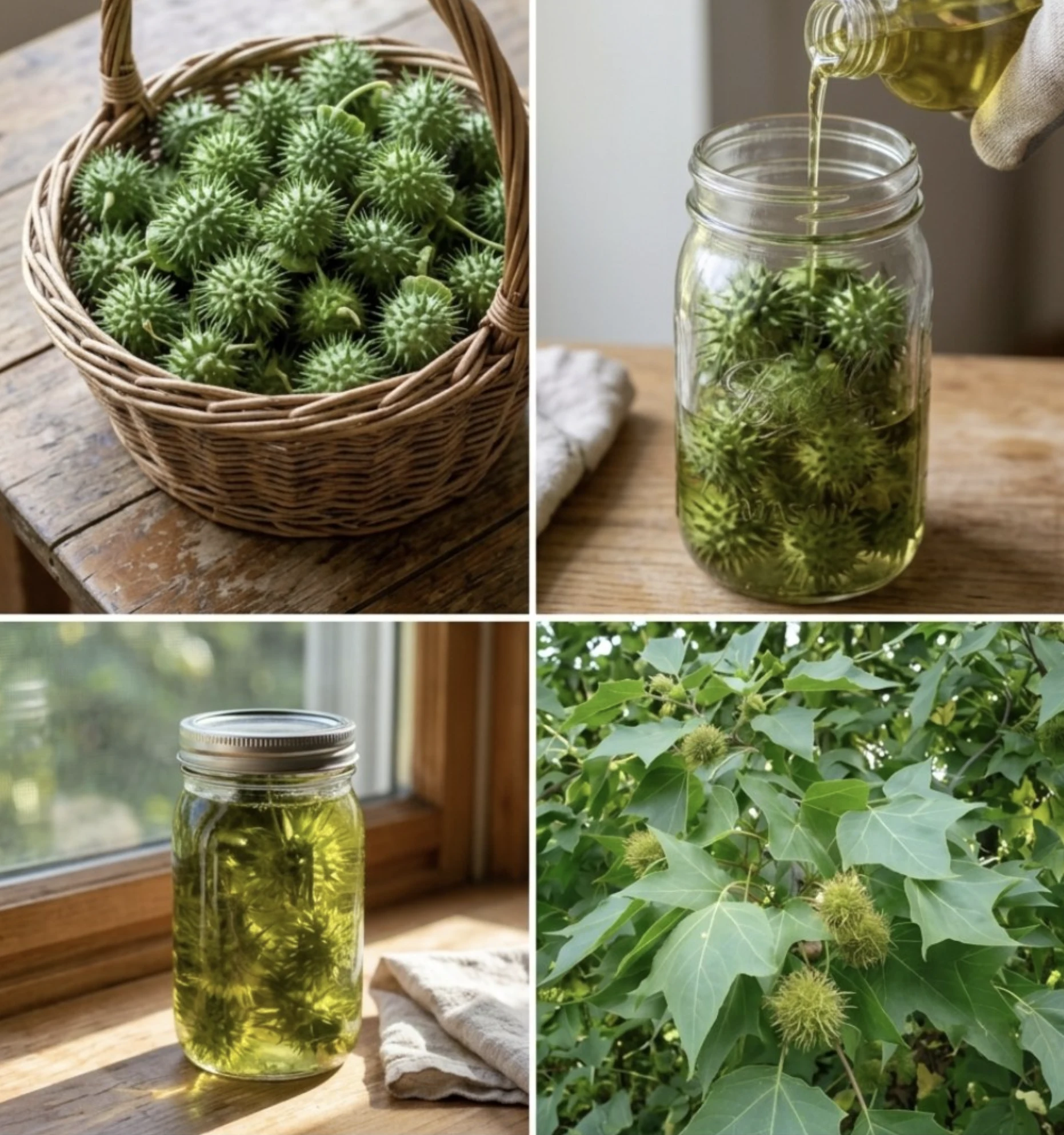
- green spiky burrs
- large triangular leaves
- fast-growing stems
- sticky seed pods that cling to clothing or animal fur
The burrs shown in many herbal preparation photos are the plant’s seed pods.
Traditional Cocklebur Plant Uses
Historically, some traditional herbal systems used cocklebur in external wellness preparations and folk remedies.
People researching cocklebur benefits often find references to traditional uses connected to:
- topical applications
- infused oils
- folk skin preparations
- historical herbal practices
In some traditional systems, parts of the plant were processed carefully before use.
However, modern safety experts strongly warn against casual internal consumption due to toxicity concerns.
Why Cocklebur Requires Caution
One of the most important things to understand about Xanthium strumarium is that parts of the plant may contain toxic compounds.
Improper use may lead to:
- digestive distress
- liver complications
- poisoning risks
- dangerous reactions in humans and animals
Young seedlings and seeds are especially associated with toxicity concerns.
This is why educational herbal blogs should always emphasize:
- proper identification
- careful handling
- avoiding self-medication
- consulting professionals
What Is Herbal Infused Oil?
Herbal infused oil is created by soaking plant material in carrier oil over time.
Common carrier oils include:
- olive oil
- sunflower oil
- jojoba oil
- almond oil
Traditional herbal remedies often used infused oils for:
- massage
- external applications
- skin-conditioning preparations
People interested in herbal oil preparation often enjoy the craft and history behind traditional botanical infusions.
Traditional Infused Oil Preparation Process
Important Note Before Starting
Because cocklebur may contain toxic compounds, many herbal safety experts do NOT recommend homemade medicinal use without professional guidance.
The following information is educational only.
Supplies
- clean glass jar
- dried plant material
- carrier oil
- cheesecloth or fine strainer
Step 1 — Dry the Plant Material
Traditional herbalists often dried plant material before making herbal infused oil.
This helps reduce moisture and lower spoilage risk.
Never use moldy or damaged plants.
Step 2 — Fill the Jar
Place dried plant material loosely into a clean jar.
Do not overpack.
Step 3 — Add Oil
Cover the herbs completely with oil.
Make sure all plant material stays submerged.
Step 4 — Infusion Period
Seal the jar and place it in:
- a warm area
- indirect sunlight
- dry environment
Traditional methods often infused oils for:
- 2–6 weeks
Shake gently every few days.
Step 5 — Strain and Store
After infusion:
- Strain thoroughly.
- Discard plant solids.
- Store oil in a dark glass bottle.
Keep away from heat and direct sunlight.
Why People Explore Wild Medicinal Plants
Interest in wild medicinal plants continues growing because many people enjoy:
- traditional wellness practices
- herbal education
- botanical self-sufficiency
- homemade herbal projects
However, “natural” does not automatically mean safe.
Many plants used in traditional herbal remedies require:
- careful preparation
- expert knowledge
- dose awareness
- proper identification
Common Mistakes When Foraging Herbs
Misidentifying Plants
Many toxic plants resemble harmless species.
Using Fresh Wet Material in Oil
Too much moisture may cause spoilage or bacterial growth.
Assuming Traditional Equals Safe
Historical use does not guarantee safety or effectiveness.
Safer Herbs Often Used for Infused Oils
People interested in learning how to make infused oils often start with gentler herbs such as:
- calendula
- chamomile
- lavender
- rosemary
- plantain leaf
These herbs are commonly used in beginner-friendly herbal oil preparation projects.
Final Thoughts
Cocklebur (Xanthium strumarium) remains one of the more controversial wild medicinal plants discussed in traditional herbal remedies. While historical cocklebur plant uses appear in folk traditions, the plant also carries important toxicity concerns that should never be ignored.
If you’re interested in:
- herbal infused oil
- how to make infused oils
- wild plant education
- herbal oil preparation
- traditional botanical practices
always prioritize:
- proper plant identification
- safety research
- professional guidance
- cautious handling
Herbal education can be fascinating and rewarding, but responsible use is essential when working with powerful or potentially toxic plants.