Imagine a vibrant balcony bursting with blooms, a cozy patio corner adorned with lush foliage, or a sunny windowsill showcasing a delicate floral display. Container gardening offers incredible flexibility, allowing you to cultivate beauty even in the smallest spaces. But here’s a secret that can transform your container garden from struggling to stunning: the right pot size makes all the difference.
Many aspiring gardeners underestimate the crucial role a pot plays in a plant’s life. It’s more than just a decorative vessel; it’s the foundation of your plant’s home, influencing everything from root development to bloom production. Choosing the ideal pot size isn’t just about aesthetics; it’s about providing the perfect environment for your flowering plants to thrive, unleashing their full potential for growth and breathtaking blossoms.
This comprehensive guide will demystify the art of matching flowering plants with their perfect pot counterparts. We’ll dive deep into why size matters, explore common pot capacities, and give you actionable advice to ensure your container garden flourishes with vitality and color. Get ready to cultivate a thriving, sustainable practice that deepens your connection with nature and elevates your daily routine!
Why Pot Size Is Your Plant’s Best Friend (or Worst Enemy)
The pot your plant lives in directly impacts its health and growth. Think of it as a plant’s personal real estate. Here’s why selecting the right pot size is non-negotiable for a flourishing flower:
- Root Development: Roots are the lifeline of a plant, absorbing water and nutrients. Too small a pot, and roots become root-bound, circling frantically with no room to expand, leading to stunted growth. Too large a pot, and the excess soil retains too much moisture, potentially leading to root rot.
- Nutrient Uptake: A healthy root system in a suitably sized pot allows for optimal nutrient absorption from the potting mix. Plants in undersized pots often struggle to find enough nutrients, no matter how much you fertilize.
- Water Retention & Drainage: The volume of soil dictates how much water the pot can hold. Small pots dry out quickly, requiring frequent watering, which can be a hassle and lead to stress for moisture-loving plants. Large pots retain more moisture, reducing watering frequency but demanding excellent drainage to prevent waterlogging.
- Plant Stability: Taller, bushier flowering plants need a wider, heavier base to prevent them from toppling over in windy conditions. A pot that’s too small or too light can leave your plant vulnerable.
- Overall Plant Health & Blooms: When all these factors align, your plant experiences less stress, leading to more vigorous growth, healthier foliage, and, most importantly, an abundance of beautiful flowers!
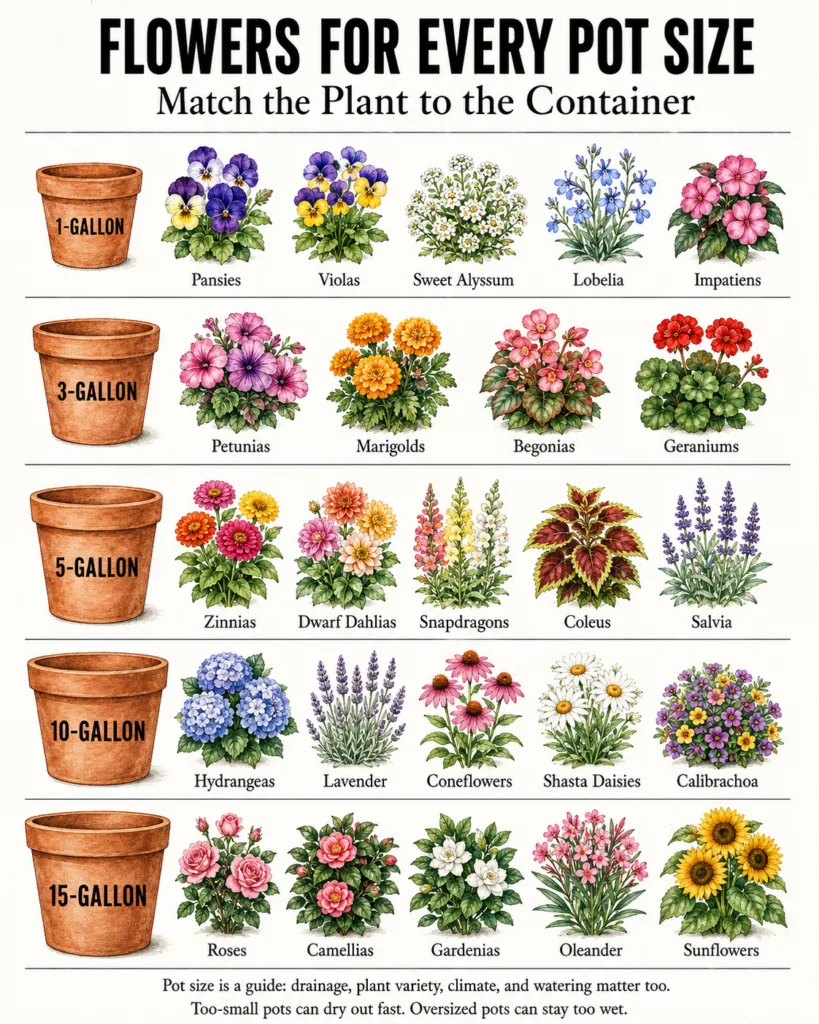 Choosing the right pot size is crucial for healthy root development and abundant blooms.
Decoding Pot Capacities and Plant Pairings
Pot sizes are often measured in gallons, especially in the USA, and understanding these capacities is key to making informed choices. Let’s break down which flowering plants thrive in different size categories:
1. Small Pots (1 to 2 Gallons)
These compact pots are perfect for plants with smaller root systems or those that enjoy being slightly root-bound. They are ideal for adding splashes of color to windowsills, tabletops, or as part of a larger arrangement.
- Suitable Flowering Plants: Pansies, Violas, Marigolds (dwarf varieties), Impatiens, Lobelia, Dwarf Petunias, small annual herbs like Chives or Thyme that also flower. These are excellent choices for adding immediate color and can often be rotated seasonally.
- Tips: Due to their smaller soil volume, these pots dry out very quickly, especially in hot weather or full sun. Daily watering is often required. Ensure they have excellent drainage to prevent waterlogging.
2. Medium Pots (3 to 5 Gallons)
This is a versatile range, accommodating a wide array of popular flowering plants that need a bit more room to spread their roots and produce more substantial blooms. These pots work well on patios, decks, and as focal points.
- Suitable Flowering Plants: Larger Petunias (like Wave Petunias), Geraniums, Fuchsias, Salvia, Begonias, small Bush Roses, Lantana, Zonal Geraniums, compact varieties of Hydrangeas (especially for cooler USA zones), and even single Tomato plants (which produce flowers before fruit).
- Tips: These pots offer a good balance of moisture retention and root space. Aim for watering every 1-3 days depending on climate and plant type. Consider slow-release fertilizer for continuous feeding.
3. Large Pots (7 to 10 Gallons)
For more substantial flowering plants, small shrubs, or to create stunning mixed arrangements, large pots provide ample space for robust root systems and impressive growth. They make excellent statement pieces.
- Suitable Flowering Plants: Standard Rose bushes, larger Hydrangeas (especially for USA zones 5-9), Camellias (in appropriate climates), ornamental Grasses with flowering plumes, Lavender (for Mediterranean gardens), Dwarf Fruit Trees (like citrus in pots for warmer zones, or dwarf apples/peaches), and even smaller varieties of Japanese Maples, which have subtle but beautiful flowers in spring.
- Tips: These pots hold moisture well, reducing watering frequency. Ensure the potting mix is well-draining to prevent compaction. Consider using pot feet to elevate them and improve air circulation beneath for better drainage.
4. Extra-Large Pots (15+ Gallons)
These majestic containers are for creating dramatic displays, housing small trees, or cultivating mature, long-term plants. They require a significant amount of potting mix but offer incredible stability and growing potential for large specimens or multi-plant designs.
- Suitable Flowering Plants: Small deciduous trees like Dogwoods (for their spectacular spring flowers), larger ornamental shrubs, substantial climbing roses with a trellis, multi-plant arrangements combining various annuals and perennials for a grand effect, or even larger fruit trees that can be pruned to remain in containers. For USA zones, consider larger varieties of Hibiscus or even smaller olive trees.
- Tips: While these pots require less frequent watering than smaller ones, when you do water, water thoroughly until it drains from the bottom. Repotting can be a major task, so choose your plant wisely for long-term commitment.
Beyond Size: Other Critical Considerations for Container Success
While pot size is paramount, several other factors contribute to your flowering plant’s happiness in a container:
1. Drainage Holes are Non-Negotiable
Every single pot MUST have drainage holes. Without them, water accumulates, leading to root rot, the silent killer of container plants. If a decorative pot lacks holes, use it as a cachepot (a decorative outer pot) and place a functional pot with drainage inside.
2. Pot Material Matters
- Terracotta/Clay: Porous, allowing air and moisture to pass through. Plants in terracotta pots dry out faster, which is great for plants that prefer drier feet but means more frequent watering.
- Plastic/Resin: Non-porous, retaining moisture longer. Lighter and often more affordable. Excellent for moisture-loving plants or those in hot climates.
- Glazed Ceramic: Retains moisture similar to plastic but heavier and often more decorative.
- Wood: Offers good insulation and aeration. Can be prone to rotting over time.
3. Root System Characteristics
Some plants, like carrots or certain perennials, develop a deep taproot, requiring a taller pot. Others, like most annuals, have fibrous root systems that spread horizontally, doing well in wider, shallower pots.
4. Climate and Sun Exposure
In hot, sunny climates (e.g., warmer USA zones), larger pots are generally better as they retain moisture longer, protecting roots from extreme temperature fluctuations. Smaller pots will dry out very quickly, stressing plants.
5. High-Quality Potting Mix
Never use garden soil in containers; it compacts too much and lacks proper drainage and aeration. Invest in a good quality potting mix designed for containers. For specific flowering plants, you might need specialized mixes (e.g., acid-loving plant mix for azaleas or camellias).
Actionable Advice for a Thriving Container Garden
- When in Doubt, Go Slightly Larger: If you’re torn between two pot sizes, err on the side of slightly larger. This gives your plant more room to grow, delays the need for repotting, and offers better moisture retention.
- Check for Root-Bound Plants: If your plant starts wilting quickly after watering, has stunted growth, or roots are growing out of the drainage holes, it’s a sign it needs a bigger pot. Gently slide the plant out of its pot to inspect the root ball.
- Consider Group Plantings: For a lush look, plant multiple complementary flowering plants in a single large container. Follow the ‘thriller, filler, spiller’ method (a tall focal plant, bushy plants to fill, and cascading plants to spill over the edge). Ensure all chosen plants have similar light and water requirements.
- Fertilize Regularly: Nutrients in potting mix deplete faster than in garden beds. Use a balanced liquid fertilizer or a slow-release granular fertilizer as per package instructions to fuel continuous blooms.
- Monitor Watering: Feel the top inch or two of soil. If it’s dry, it’s time to water. Adjust frequency based on weather, pot size, and plant needs.
Conclusion: Your Path to a Blooming Paradise
Choosing the perfect pot size for your flowering plants is a fundamental skill that transforms ordinary container gardening into an art form. By understanding the needs of your plants and providing them with adequate space, drainage, and care, you’re not just growing flowers; you’re cultivating a vibrant, healthy ecosystem right in your own space.
Armed with this knowledge, you are now equipped to make confident choices that will lead to more robust growth, more spectacular blooms, and a deeper connection with the natural world around you. Step into your garden, or even your tiny balcony, with renewed confidence. Your plants are waiting to flourish!