Imagine your garden not just as a patch of ground, but as a vibrant, living conversation. What if you could understand every whisper your plants send, every subtle hint your soil provides? As gardeners and farmers, our greatest success stories often begin with listening – specifically, listening to the ground beneath our feet. Healthy soil is the beating heart of any thriving ecosystem, and mastering its language is the first step toward cultivating truly spectacular results.
This isn’t about memorizing complex scientific formulas; it’s about practical, hands-on understanding. It’s about feeling the earth, observing its nuances, and knowing exactly what action to take. Join me as we uncover the secrets your soil is eager to share, transforming your daily routine into a deeply rewarding, sustainable practice. Get ready to boost your skills, increase your productivity, and deepen your connection with nature.
The Unseen Foundation: Why Healthy Soil is Your Garden’s Greatest Asset
Many gardeners focus on what’s above ground – the beautiful blooms, the lush foliage, the abundant fruits. But the true magic, the very foundation of life, lies hidden beneath the surface. Soil isn’t just dirt; it’s a dynamic, living ecosystem teeming with microbes, fungi, and countless tiny creatures that work tirelessly to support plant life. When your soil is healthy, it provides:
- Optimal Nutrient Delivery: Essential minerals are readily available to your plants.
- Excellent Drainage & Aeration: Roots get the oxygen they need and aren’t waterlogged.
- Strong Root Development: Plants are anchored firmly and can access water and nutrients efficiently.
- Disease Resistance: A balanced soil microbiome helps fight off pathogens.
- Water Retention: Healthy soil acts like a sponge, holding moisture for longer, reducing irrigation needs.
Understanding your soil health is like having a direct line to your garden’s well-being. And the good news? Your soil is constantly communicating with you. You just need to know how to interpret its messages.
Decoding Your Dirt: What Your Soil is Telling You
Grab a trowel, get your hands dirty, and let’s explore. Each handful of earth holds clues about its condition, its history, and its potential. Here are some common messages your soil might be sending, along with actionable advice to help you respond.
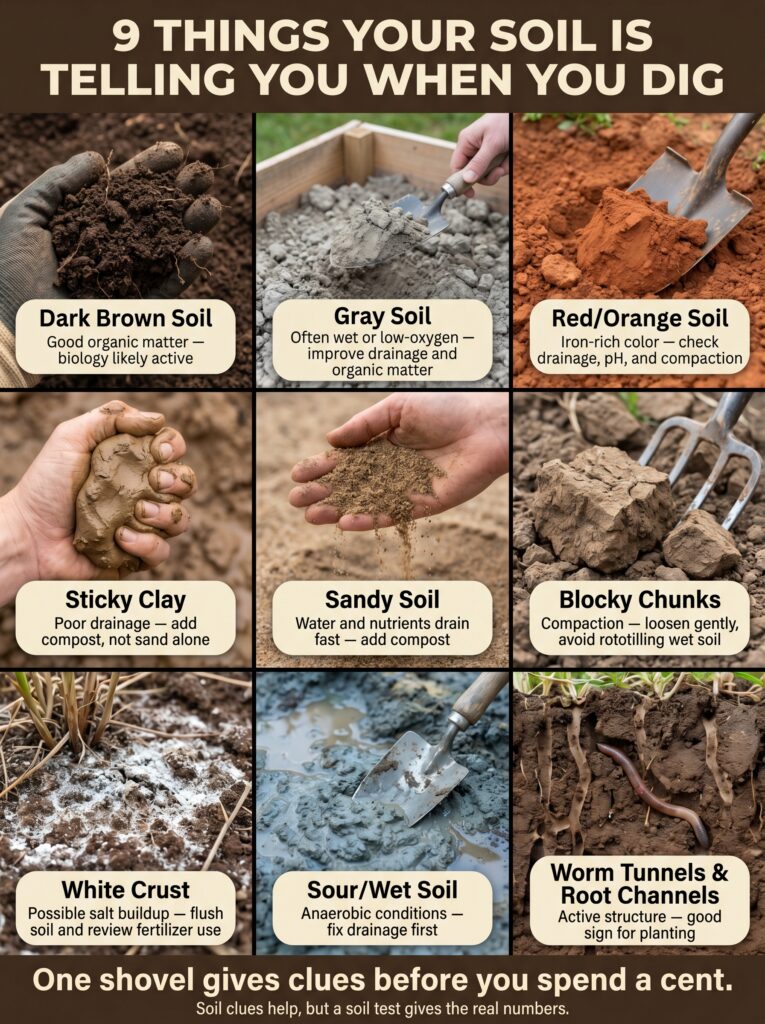 Learn to interpret your soil’s unique language and unlock its full potential.
Dark, Rich & Crumbly: The Dream Soil
The Message: If your soil is dark brown or black, smells earthy, and crumbles easily in your hand like chocolate cake, you’ve hit the jackpot! This indicates high organic matter content, excellent drainage, and a thriving microbial community. It’s ideal for most plants.
Your Action: Keep up the good work! Continue adding organic matter regularly through compost, well-rotted manure, or cover cropping. Avoid tilling excessively, which can disrupt this delicate structure. Mulch to retain moisture and suppress weeds.
The Pale & Lifeless Look: Nutrient Deficiency
The Message: Is your soil a light gray or pale brown? Does it feel gritty or lifeless? This often signals a lack of essential nutrients and organic matter, leading to poor plant growth and yellowing leaves.
Your Action: Incorporate copious amounts of organic matter. Composted kitchen scraps, leaf mold, and aged manure are excellent. Consider a soil test to identify specific nutrient deficiencies and amend accordingly with balanced organic fertilizers.
Sticky Situations: Dealing with Clay Soil
The Message: Clay soil feels slick and sticky when wet, and forms hard, dense clumps when dry. While it’s rich in nutrients, its fine particles mean poor drainage and compaction, suffocating roots.
Your Action: The key here is aeration and improving structure. Add plenty of coarse organic matter like compost, sand (in moderation), and gypsum. Raised beds can also be a fantastic solution for heavy clay, allowing you to build up a new, ideal soil mix.
The Slippery Slope of Sandy Soil
The Message: Sandy soil feels gritty and drains very quickly. It warms up fast in spring but struggles to retain water and nutrients, which can leach away quickly, starving your plants.
Your Action: The goal is to improve water and nutrient retention. Incorporate substantial amounts of organic matter like compost, peat moss, or coco coir. Cover crops can also significantly improve sandy soil over time by adding biomass and root structure.
Rock Hard & Blocky: Signs of Compaction
The Message: When you dig, does the soil come up in large, hard, blocky chunks? This is a classic sign of compaction, often caused by heavy foot traffic or machinery. Compacted soil restricts root growth, airflow, and water penetration.
Your Action: Avoid walking on wet soil. Loosen the soil gently with a broadfork or garden fork, trying not to invert layers. Apply a thick layer of organic mulch and consider no-till gardening practices. Over time, beneficial soil organisms will help break down the compaction.
The Salty Scourge: White Crust on the Surface
The Message: A white, powdery crust on the soil surface, especially in dry climates or pots, indicates a buildup of salts. This can inhibit water uptake by plants and cause leaf burn.
Your Action: Reduce the use of high-salt fertilizers. Flush the soil thoroughly with clean water to leach out salts. In pots, occasionally leach by watering until water drains freely for several minutes. Improving drainage and adding organic matter also helps.
Mucky & Smelly: When Soil Gets Too Wet
The Message: If your soil is constantly waterlogged, muddy, and smells sour or rotten (like sulfur), it means it’s anaerobic – lacking oxygen. This suffocates roots and promotes harmful bacteria.
Your Action: Improve drainage! This might involve adding organic matter, creating raised beds, or even installing drainage systems in severe cases. Avoid overwatering and ensure proper grading around your garden to prevent water from pooling.
The Red Alert: Iron Rich or Drainage Issues?
The Message: Reddish or orange soil often indicates a high iron content. While iron is a necessary nutrient, excessive amounts can sometimes lock up other nutrients. It can also point to drainage challenges in certain contexts.
Your Action: Typically, iron-rich soil is fertile. Focus on maintaining good organic matter levels to ensure nutrient balance. If drainage is poor, follow the advice for clay or waterlogged soils. A soil test can clarify if nutrient imbalances are present.
The Buzz of Life: Worms, Roots, and Riches
The Message: When you dig, do you see earthworms, a healthy network of roots, and small soil aggregates (little clumps of soil)? This is the ultimate sign of a healthy, biodiverse, and well-aerated soil environment. Your plants are happy!
Your Action: Continue fostering this life! Minimize disturbance, keep the soil covered with mulch or cover crops, and consistently feed your soil with organic matter. Remember, you’re not just feeding plants; you’re feeding the soil that feeds your plants.
Beyond the Soil: Cultivating Thriving Plants
While soil is foundational, successful gardening extends to other crucial practices. Integrating these tips will create a holistic approach to plant care.
Know Your Zone: The USDA Plant Hardiness Map
One of the most vital pieces of information for any gardener in the USA is their USDA Plant Hardiness Zone. This map divides the country into zones based on average annual extreme minimum winter temperatures. Knowing your zone (e.g., Zone 6b, Zone 9a) helps you select plants that can survive winter in your specific region.
- How to Find Yours: Easily look up your zip code on the USDA Plant Hardiness Zone Map website.
- Why It Matters: Planting outside your zone means your plants might not tolerate the cold winters or, conversely, may not get enough chill hours if they require them. Always check plant tags for their recommended hardiness zone.
Right Plant, Right Place: Choosing for Success
Selecting the correct plants for your specific climate and site conditions is paramount. Don’t fight nature; work with it!
- Native Plants: These are naturally adapted to your local climate, soil types, and pests, often requiring less water and fewer interventions. Research characteristic plants for your USA zone.
- Sunlight Requirements: Understand how much sun your garden receives (full sun, partial shade, full shade) and choose plants accordingly.
- Mature Size: Plan for the plant’s full grown size to avoid overcrowding and future problems.
Watering Wisely: Precision Hydration
Even with perfect soil, improper watering can doom your efforts. Learn to water effectively:
- Deep & Infrequent: Encourage roots to grow deeper by watering thoroughly when you do, allowing the top inch or two of soil to dry out between waterings.
- Morning is Best: Water in the morning to allow foliage to dry before nightfall, reducing fungal diseases.
- Consider Soil Type: Sandy soils need more frequent, lighter watering; clay soils need less frequent, deeper watering.
- Use Mulch: A good layer of organic mulch dramatically reduces water evaporation, keeping your soil moist for longer.
Scaling Up: Sustainable Practices for Every Plot
Whether you manage a small backyard garden or a sprawling farm, these principles of soil health and thoughtful plant care are universal. Implementing strategies like crop rotation (changing what you plant in a specific area each season) helps prevent nutrient depletion and breaks pest cycles. Integrating cover crops protects and enriches the soil during off-seasons. These sustainable practices not only improve your yield but also build resilience in your land, fostering a deeper, more profound connection with the natural world.
Your Journey to a Thriving Garden Starts Now!
Empowered with the knowledge of how to listen to your soil and care for your plants with intention, you’re no longer just a gardener; you’re a soil whisperer, a plant advocate, and a steward of the earth. These practical tips are not just theory; they are tools to transform your daily gardening and farm management into a more productive, enjoyable, and sustainable experience.
Step outside, dig your hands into the soil, and start decoding its story. You’ll be amazed at what it tells you, and even more amazed at the thriving, vibrant growth that follows. Happy gardening!