During periods of intense pressure or burnout, many people find their usual eating habits shifting. The body often stops craving extreme flavors or ultra-processed snacks and instead yearns for predictability, warmth, softness, and foods that are simply ‘easy’ to handle. This isn’t just about comfort; it’s a primal response to stress, where your body seeks safety, not additional stressors.
It’s a common misconception that comfort eating during stress primarily involves sugary or fatty foods. While those cravings can emerge, a deeper, often overlooked pattern involves a desire for meals that support the nervous system, offer stable energy, and are gentle on digestion. These are the stress support meals that help you feel calm, full, and mentally clear, even when your world feels chaotic.
This article unpacks why certain meals become your go-to on high-stress days, focusing on how they impact digestion, nervous system calmness, stable energy, and sustained satiety without heaviness. We’ll explore the ‘why’ behind these choices and offer practical tips for incorporating them into your routine.
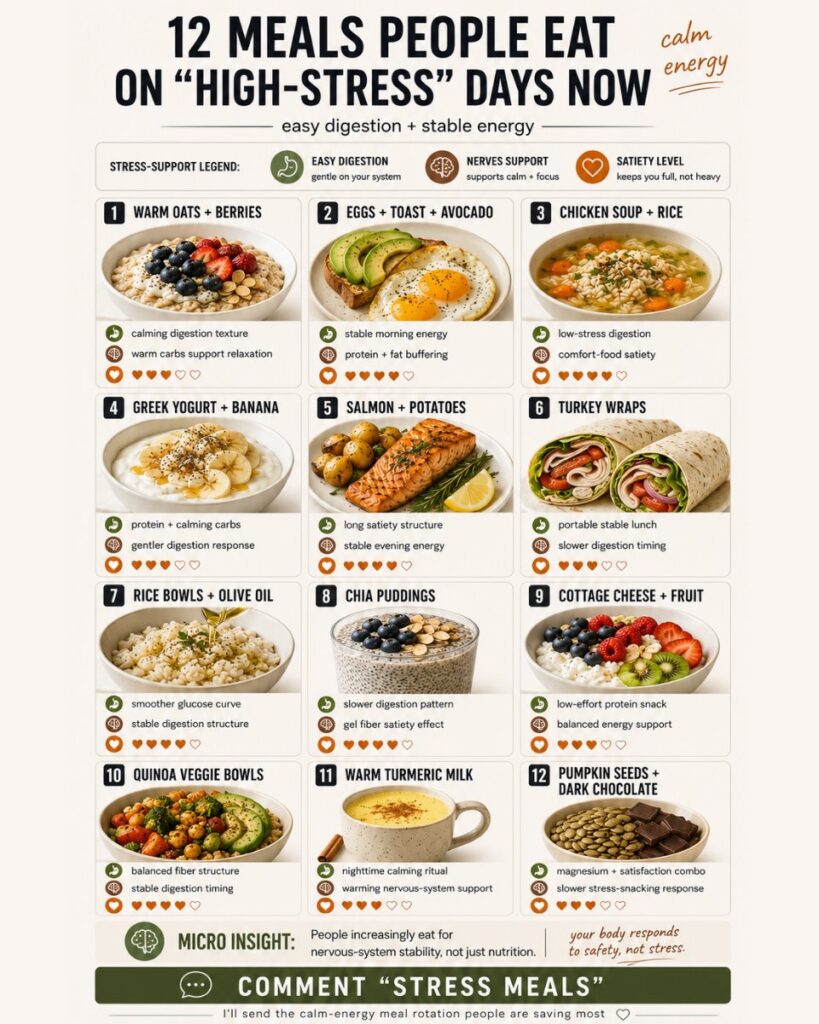
Discover meals that naturally support your body’s need for safety during stressful times.
The Science of ‘Safe’ Eating: Why Your Body Craves Predictability
When you’re under stress, your body enters a ‘fight or flight’ state. Digestion slows down, and your system prioritizes immediate energy and defense. Eating foods that are difficult to digest or cause rapid blood sugar spikes can add to this physiological burden, intensifying feelings of anxiety or fatigue.
Conversely, meals that offer gentle textures, sustained energy, and balanced nutrients signal safety to your nervous system. This helps shift your body out of a stressed state, promoting a sense of calm and allowing digestive processes to function more smoothly. It’s about feeding not just your hunger, but your entire physiological response to stress.
How Protein, Fiber, and Healthy Fats Change Fullness and Mood
The magic trio of protein, fiber, and healthy fats is crucial for managing stress-related eating patterns. Protein provides amino acids essential for neurotransmitter production, while fiber slows digestion and helps stabilize blood sugar. Healthy fats contribute to satiety and overall brain health.
- Protein: Helps build and repair tissues, and provides a steady release of energy.
- Fiber: Promotes gut health, prevents rapid blood sugar spikes, and contributes to lasting fullness.
- Healthy Fats: Essential for hormone production and nutrient absorption, also enhance satiety.
Together, these nutrients help regulate your blood sugar response, preventing the crashes that often trigger intense cravings and worsen mood swings. Keeping your blood sugar balanced is a key strategy for managing cortisol patterns, the body’s primary stress hormone.
Your Go-To Stress Support Meals: Gentle Nourishment for Overwhelmed Days
Let’s dive into specific meals that exemplify these principles, offering practical ideas for nourishing yourself during stressful periods.
1. Warm Oats & Berries: Stable Morning Energy and Calm Digestion
There’s a reason warm oats feel so comforting. Their soft texture is easy on a stressed digestive system, and they provide complex carbohydrates for sustained energy. Berries add natural sweetness and antioxidants.
- Why it’s calming: The warmth and gentle texture are soothing. Soluble fiber helps stabilize blood sugar.
- Digestion structure: Slow, steady release of glucose, preventing energy crashes.
- Satiety pattern: High fiber content keeps you full without feeling heavy.
- Stable energy: Complex carbs prevent the ‘sugar high’ and subsequent ‘crash.’
- Practical meal-prep: Overnight oats in jars are excellent for grab-and-go mornings. Add a scoop of protein powder for an extra boost.
2. Eggs, Toast & Avocado: A Balanced Plate for Sustained Focus
This classic combination offers a perfect balance. Eggs provide high-quality protein, whole-grain toast offers complex carbs, and avocado delivers healthy fats and fiber.
- Why it’s calming: Balanced macronutrients prevent energy fluctuations.
- Digestion structure: Protein and fat slow carb digestion.
- Satiety pattern: High protein and healthy fats provide long-lasting fullness.
- Stable energy: A steady supply of glucose for mental clarity and focus.
- Practical meal-prep: Hard-boiled eggs can be prepped in advance. Consider quick avocado smash packets.
Warm oats with berries offer a comforting start, providing sustained energy without overwhelming your system.
[IMAGE PLACEHOLDER: A close-up, inviting shot of a bowl of warm oatmeal topped with fresh berries and a drizzle of honey, set on a rustic wooden table with soft, natural light, in a Pinterest-friendly style.]
3. Chicken Soup & Rice: Ultimate Digestive Ease and Hydration
Beyond being a traditional remedy, chicken soup offers easily digestible protein and carbohydrates, plus electrolytes for hydration.
- Why it’s calming: Warm liquid and soft ingredients are gentle on the gut.
- Digestion structure: Minimal effort required from the digestive system.
- Satiety pattern: Filling without being heavy, aids in hydration.
- Stable energy: Simple carbs from rice offer quick, accessible energy.
- Practical meal-prep: Make a large batch and freeze in individual meal prep containers.
4. Greek Yogurt & Banana: Quick Protein and Gut Support
Greek yogurt is packed with protein and probiotics, while bananas provide quick energy and potassium. A simple yet powerful stress-friendly snack.
- Why it’s calming: Probiotics support gut-brain axis, and protein provides satiety.
- Digestion structure: Easy to digest, especially for those with sensitive stomachs.
- Satiety pattern: High protein keeps hunger at bay.
- Stable energy: Natural sugars from banana for a gentle energy boost.
- Practical meal-prep: Portion out yogurt into containers the night before.
5. Salmon & Potatoes: Nutrient-Dense for Brain Health
Salmon is rich in Omega-3 fatty acids, crucial for brain health and inflammation reduction. Potatoes offer complex carbs and potassium.
- Why it’s calming: Omega-3s are vital for nervous system function.
- Digestion structure: Cooked well, these are generally easy to digest.
- Satiety pattern: Protein and complex carbs offer balanced fullness.
- Stable energy: Sustained release from complex carbohydrates.
- Practical meal-prep: Bake or air fry salmon and potatoes for easy reheating.
6. Turkey Wraps: Lean Protein and Fresh Veggies
Lean turkey provides tryptophan, a precursor to serotonin, a mood-regulating neurotransmitter. Paired with whole-grain wraps and fresh vegetables, it’s a balanced and quick meal.
- Why it’s calming: Tryptophan supports mood.
- Digestion structure: Easy to assemble and digest.
- Satiety pattern: Lean protein and fiber-rich veggies are filling.
- Stable energy: Balanced macros for steady energy.
- Practical meal-prep: Have pre-sliced turkey and washed greens ready.

Chicken soup provides soothing warmth and easily digestible nutrients, perfect for a stressed system.
7. Rice Bowls with Olive Oil & Veggies: Customizable and Gentle
A simple rice bowl with cooked vegetables and a drizzle of olive oil is incredibly versatile and gentle on the stomach. The olive oil adds healthy fats and flavor.
- Why it’s calming: Simple, predictable, and easy to customize.
- Digestion structure: Cooked veggies are easier to digest than raw for some.
- Satiety pattern: Carbs offer fullness, olive oil adds satiety.
- Stable energy: Provides a good base of carbohydrates.
- Practical meal-prep: Cook a large batch of rice and chop veggies for multiple meals.
8. Chia Puddings: Fiber Powerhouse for Gut Health
Chia seeds are a fantastic source of soluble fiber and Omega-3s. When soaked, they form a gel-like texture that’s incredibly soothing for the digestive system.
- Why it’s calming: High fiber for gut health, which is linked to mood.
- Digestion structure: Gentle, slow-digesting, aids regularity.
- Satiety pattern: Expands in the stomach, promoting long-lasting fullness.
- Stable energy: Slow-release carbohydrates for sustained energy.
- Practical meal-prep: Prepare in overnight oats jars the night before.
9. Cottage Cheese & Fruit: Protein-Rich and Refreshing
Cottage cheese offers slow-digesting casein protein, keeping you full for hours. Paired with fruit, it’s a refreshing and nutrient-dense option.
- Why it’s calming: Sustained protein release prevents hunger pangs.
- Digestion structure: Generally easy to digest, though some dairy sensitivities exist.
- Satiety pattern: High protein content ensures lasting fullness.
- Stable energy: Steady energy flow due to slow protein digestion.
- Practical meal-prep: Portion into small containers with a side of fruit.
10. Quinoa Veggie Bowls: Complete Protein and Fiber
Quinoa is a complete protein and a good source of fiber. Combined with roasted vegetables, it creates a satisfying and nutrient-dense meal.
- Why it’s calming: Balanced nutrients support overall well-being.
- Digestion structure: Good fiber content aids digestion without being harsh.
- Satiety pattern: High protein and fiber keep you full and satisfied.
- Stable energy: Excellent source of complex carbohydrates for sustained energy.
- Practical meal-prep: Cook a large batch of quinoa and roast a variety of vegetables for the week.

Quinoa veggie bowls offer complete protein and fiber, a perfect blend for sustained energy and calm.
11. Warm Turmeric Milk: An Evening Soother
Warm turmeric milk, often called ‘golden milk,’ is known for its anti-inflammatory properties and soothing warmth. It can be a calming ritual before bed.
- Why it’s calming: Warmth and turmeric’s compounds have a soothing effect.
- Digestion structure: Gentle, warm liquid.
- Satiety pattern: Not a meal, but can curb evening cravings.
- Stable energy: No significant energy impact; focus is on relaxation.
- Practical meal-prep: Keep turmeric paste ready for quick mixing.
12. Pumpkin Seeds & Dark Chocolate: Magnesium-Rich Stress Support Snack
Pumpkin seeds are a fantastic source of magnesium, a mineral vital for nervous system regulation. Dark chocolate, in moderation, also contains magnesium and antioxidants.
- Why it’s calming: Magnesium supports muscle relaxation and nerve function.
- Digestion structure: Simple, quick snack.
- Satiety pattern: Healthy fats and fiber offer a satisfying crunch.
- Stable energy: A small, balanced energy boost.
- Practical meal-prep: Portion out into small snack bags.
Why Stressed People Often Prefer Repeat Meals
When stress is high, decision fatigue sets in. The mental load of choosing, preparing, and even thinking about food can feel overwhelming. This is why many gravitate towards repeat meals or simple, established routines. Predictability reduces cognitive burden, allowing your nervous system to allocate its resources elsewhere.
Embracing a few go-to low-effort healthy meals that you know are easy to prepare and digest can be a powerful self-care strategy. It removes one more decision from your plate, allowing you to conserve mental energy for other challenges.
Fast Comfort Foods vs. Calming Meals: Understanding the Difference
There’s a significant difference between seeking immediate, often temporary, gratification from ultra-processed ‘comfort foods’ and choosing genuinely calming meals. Fast comfort foods, high in refined sugars and unhealthy fats, can offer a quick dopamine hit but often lead to blood sugar crashes, increased inflammation, and a worsening of emotional eating patterns in the long run. They can trap you in a cycle of seeking external stimulation, rather than internal regulation.
Calming meals, on the other hand, support the body’s natural regulatory systems. They help stabilize blood sugar, nourish the gut, and provide sustained energy, contributing to genuine nervous system regulation. This distinction is crucial for understanding how to break free from stress eating habits that don’t truly serve your well-being.

Strategic meal prep, using healthy meal prep containers, reduces decision fatigue on stressful days.
Taking the Next Step: Monitoring Your Body’s Response to Food
Understanding how specific foods impact your personal stress response can be incredibly empowering. For those who want to dive deeper, tools like CGM sensors (Continuous Glucose Monitors) offer real-time insights into your body’s blood sugar monitoring, revealing how different meals affect your individual glucose response. Similarly, regular fasting glucose blood tests can provide valuable snapshots of your metabolic health, which is closely linked to stress resilience.
If you’re looking for personalized guidance on building a diet that specifically supports your nervous system and helps manage stress eating, consider a dietitian consultation. A registered dietitian can provide tailored medical nutrition therapy, helping you identify foods that work best for your unique needs and lifestyle. They can also discuss meal planning programs that fit into busy schedules or even workplace stress eating strategies.
Exploring your health plan benefits is also a smart move. Many employer health plans or private insurance policies offer coverage for nutrition counseling. Understanding the specifics of public vs private coverage for dietitian services, or country-specific rules, can make professional support more accessible.
Building Resilience Through Intentional Eating
Choosing stress support meals isn’t just about what’s on your plate; it’s about building a foundation of resilience. By consciously opting for foods that promote stable energy, calm digestion, and sustained satiety, you’re sending signals of safety to your body. This mindful approach can significantly impact your ability to navigate high-stress days with greater clarity and a more regulated nervous system.
It’s a gentle, practical step towards supporting your mental and physical well-being, one nourishing meal at a time. [Read next: The Surprising Link Between Gut Health and Mood]
This is general information, not medical advice. [Source: Harvard Health]