Welcome back! Today, we’re diving deep into the lifeblood of every flourishing garden: water. It sounds simple, right? Just give your plants a drink. But ask any seasoned gardener, and they’ll tell you that mastering the art of watering is one of the most impactful skills you can cultivate. It’s not just about applying water; it’s about applying the right amount, at the right time, and with the right method for each of your beloved plants.
Improper watering is a common pitfall that can lead to stressed plants, wasted resources, and ultimately, a less productive garden. Whether you’re tending to a sprawling vegetable patch, nurturing delicate flowers, or managing a collection of potted herbs, understanding your plants’ unique hydration needs is key to transforming your green space into a vibrant, sustainable haven. Let’s explore how to make every drop count and elevate your practical gardening skills.
Understanding Your Garden’s Thirst: Why ‘One Size Fits All’ Doesn’t Work
Just like people, plants have different needs. A cactus won’t thrive with the same watering schedule as a fern. Your garden is a dynamic ecosystem influenced by soil type, sunlight, wind, and even the microclimates within your yard. Heavy clay soil holds water longer than sandy soil, and a plant basking in full sun will dry out faster than one in partial shade.
Considering your specific environment is the first step toward efficient plant care. This also extends to where you live and your USDA Plant Hardiness Zone. While zones primarily dictate what plants can survive winter temperatures, they also indirectly influence watering needs, as plants suited to a specific zone often have adapted to the local rainfall patterns and heat.
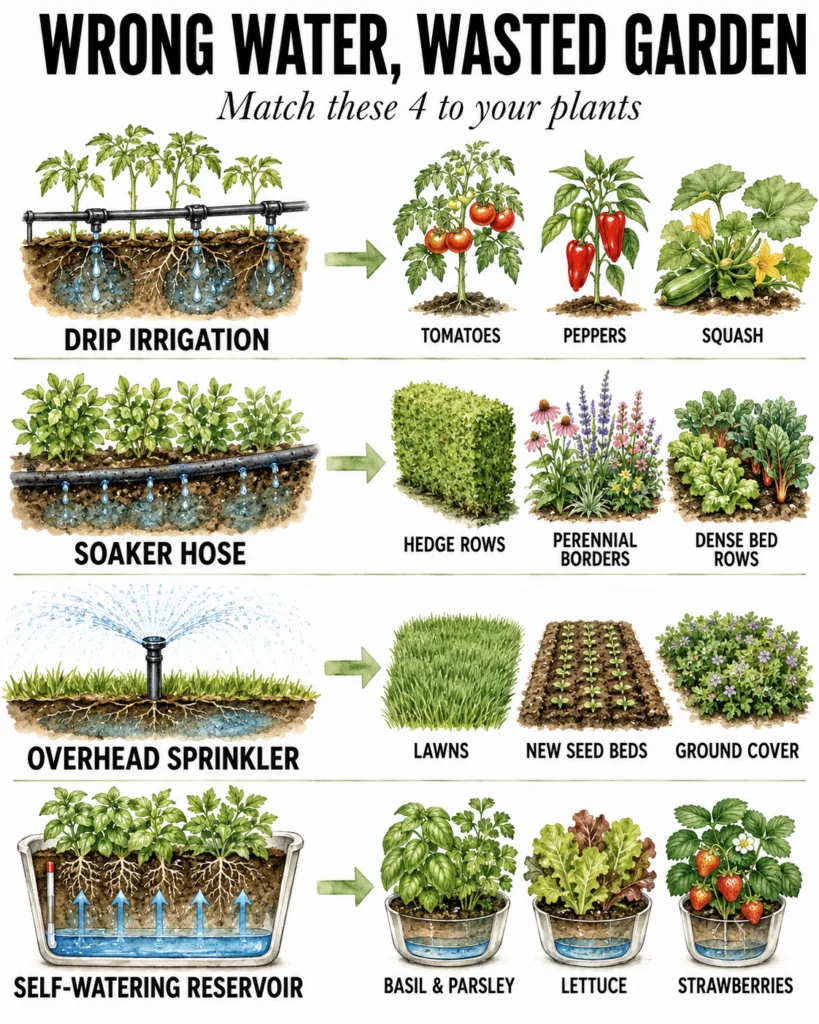 Choosing the right watering method can make all the difference for your garden’s health.
Decoding Watering Methods: Tailoring Hydration for Optimal Growth
Let’s dive into the various watering techniques, each with its own advantages for different garden scenarios:
1. Drip Irrigation: Precision for Perennials and Rows
What it is: A system of hoses with emitters that deliver water directly to the plant’s root zone, drop by drop. Why it’s great: Minimizes water waste through evaporation and runoff, prevents fungal diseases by keeping foliage dry, and allows for consistent, deep watering. Ideal for:
- Vegetable rows: Tomatoes, peppers, corn, beans benefit from consistent moisture.
- Perennial beds: Delivers water efficiently to established plants without disturbing delicate flowers or leaves.
- Shrubs and trees: Ensures deep root development.
- Sloped gardens: Prevents runoff and erosion.
2. Soaker Hoses: Gentle Hydration for Beds and Groundcovers
What it is: Porous hoses that weep water along their entire length, slowly saturating the soil. Why it’s great: Similar to drip irrigation in water efficiency, but covers a broader area, making it less precise but often easier to set up for larger beds. Ideal for:
- Raised garden beds: Provides even moisture across the entire bed.
- Groundcovers: Hydrates dense plantings without wetting foliage.
- Hedges and new plantings: Encourages strong root growth.
- Areas with moderate water pressure.
3. Overhead Sprinklers: Broad Coverage (with a few caveats)
What it is: Devices that spray water over a wide area, mimicking rainfall. Why it’s great: Efficient for large, uniform areas like lawns, and can be useful for germinating seeds that need consistent surface moisture. Ideal for:
- Lawns and turfgrass: Designed for this type of broad coverage.
- New seedbeds: Helps keep the soil surface moist for germination, but be mindful of displacement.
Caveat: Overhead watering can lead to increased evaporation and promote fungal diseases on some plants if done in the evening. Always water in the early morning if using sprinklers!
4. Self-Watering Reservoirs/Pots: Automated Care for Containers
What it is: Pots or planters with a built-in water reservoir that wicks moisture up to the plant’s roots as needed. Why it’s great: Reduces the frequency of watering, ensures consistent moisture, and is perfect for busy gardeners or when you’re away. Ideal for:
- Container gardens: Patio plants, herbs, and flowering annuals.
- Indoor plants: Maintains consistent moisture levels, preventing common over/underwatering issues.
- Heavy feeders: Plants that require steady moisture, like tomatoes or peppers in containers.
Watering Wisely: General Best Practices for Every Gardener
Beyond the method, these fundamental practices will supercharge your watering routine:
- Water Deeply and Infrequently: Encourage roots to grow deeper by giving a thorough soak rather than frequent, shallow sips. Deep roots make plants more resilient to dry spells.
- Morning is Best: Water in the early morning. This allows the water to penetrate before the heat of the day causes evaporation and gives foliage time to dry, reducing disease risk.
- Check Soil Moisture: Don’t just water on a schedule. Stick your finger about 2-3 inches into the soil. If it feels dry, it’s time to water. Moisture meters are also helpful tools.
- Monitor Weather: Adjust your watering based on rainfall and temperature forecasts. A rainy week means less manual watering, while a heatwave means more.
- Mulch, Mulch, Mulch!: A 2-4 inch layer of organic mulch (straw, wood chips, shredded leaves) significantly reduces soil moisture evaporation, suppresses weeds, and regulates soil temperature.
Characteristic Plants and Watering Needs Across USA Zones
While the watering method is crucial, the type of plants you choose for your USDA zone also dictates their overall hydration needs. Here’s a quick look:
- Zones 3-6 (Cold Temperate): Plants like Hostas, Peonies, and Coneflowers thrive here. They typically appreciate consistent, moderate watering, especially during dry spells in summer. Often, drip irrigation or soaker hoses are ideal for these beds.
- Zones 7-8 (Warmer Temperate): Many plants here, such as Lavender, Rosemary, and some varieties of Fig Trees, can become quite drought-tolerant once established. While they need regular watering when young, mature plants might require less intervention, especially if mulched well. Drip systems are great for establishing these and providing supplemental water during extended dry periods.
- Zones 9-11 (Subtropical to Tropical): Plants like Citrus, Bougainvillea, and many tropical edibles thrive in warmth but often need more consistent watering due to higher temperatures and faster evaporation. However, drainage is equally critical to prevent root rot in these zones. Self-watering containers are excellent for tropical edibles on patios, and drip irrigation works wonders for fruit trees.
Troubleshooting Common Watering Mistakes
- Overwatering: Yellowing leaves (especially lower ones), stunted growth, soggy soil, or even a moldy smell are signs. Roots need oxygen, and too much water suffocates them. Ensure good drainage!
- Underwatering: Wilting, crispy leaves, slow growth, or dry, cracked soil. Plants will often recover quickly after a good drink, but chronic underwatering stresses them.
- Watering Foliage in Heat: Avoid watering leaves in the midday sun, as water droplets can act like tiny magnifiers, scorching the leaves.
Cultivate Confidence, Grow Abundance
By understanding your plants’ individual needs, choosing the right watering method, and implementing best practices, you’re not just watering; you’re nurturing a relationship with your garden. This knowledge transforms your daily routine into a thriving, sustainable practice, increasing your productivity and deepening your connection with nature.
So, go forth and water wisely! Your garden will thank you with lush foliage, abundant blooms, and a bountiful harvest. Happy gardening!