Raw salads. Protein bars. Greens powders. Fiber snacks. Smoothie bowls.
Individually, these foods can be healthy.
But when too many “wellness foods” stack together in the same day, digestion can start feeling surprisingly overwhelmed.
That’s the pattern behind the growing idea of digestive overload — when your gut receives too many competing digestion signals at once instead of a stable eating rhythm.
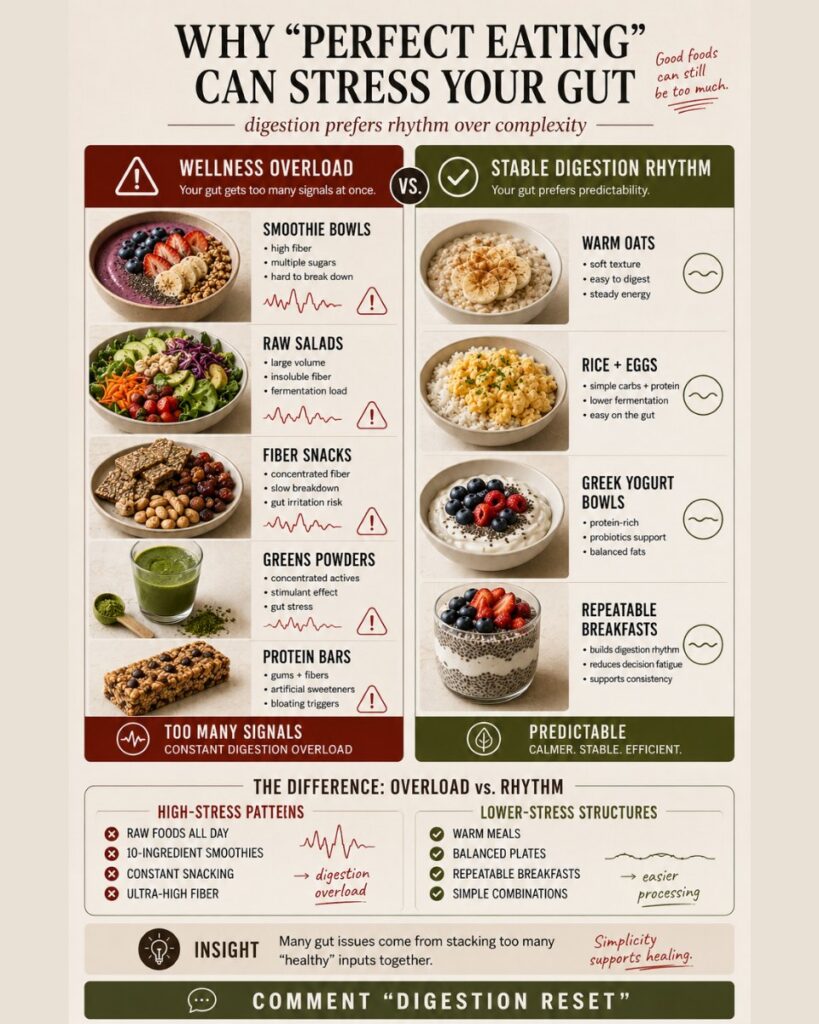
The infographic above taps into a frustration many people quietly experience:
- bloating after “healthy” meals
- feeling full but unsatisfied
- constant stomach noise
- heaviness after smoothie bowls
- reacting poorly to high-fiber meals
- feeling worse after trying to “eat cleaner”
And for many people, the issue is not necessarily the foods themselves.
It’s the combination intensity.
Why Your Gut Often Prefers Rhythm Over Complexity
Modern wellness culture encourages people to stack:
- raw vegetables
- chia seeds
- protein powder
- nut butter
- greens powder
- probiotics
- fiber bars
- smoothies
- supplements
…sometimes all before lunch.
The digestive system now has to process:
- large fiber loads
- multiple textures
- fast sugars
- concentrated fats
- fermentation-heavy ingredients
- artificial sweeteners
- constant grazing
That creates what many people describe as:
- digestive fatigue
- bloating after healthy foods
- uncomfortable fullness
- irregular appetite
- gut irritation
- “food noise”
This is why some people suddenly feel better when they temporarily return to simpler meals like:
- rice and eggs
- warm oats
- yogurt bowls
- soup and toast
- repeat breakfasts
- gentle protein meals
Not because those meals are “perfect.”
But because they reduce digestive decision-making.
The Hidden Problem With “Healthy Food Overload”
The infographic contrasts two patterns:
Wellness Overload
Foods that create too many competing digestion demands:
- smoothie bowls
- giant raw salads
- fiber snack stacks
- greens powders
- protein bars
These often contain:
- concentrated fiber
- multiple sugar sources
- gums and additives
- hard-to-digest raw vegetables
- constant stimulation
For sensitive people, this can increase:
- bloating
- gas
- fermentation discomfort
- unstable fullness
- reactive hunger
Stable Digestion Rhythm
Simpler meals with more predictable digestion:
- warm oats
- rice + eggs
- Greek yogurt bowls
- repeat breakfasts
- balanced simple plates
These meals tend to create:
- steadier digestion
- calmer appetite signals
- easier gastric emptying
- less digestive stress
- more stable energy
This is especially important during:
- stressful periods
- burnout
- anxiety
- poor sleep
- nervous system dysregulation
Because stress already slows digestion for many people.
Why “Healthy” Foods Sometimes Cause Bloating
One of the biggest related-search trends right now is:
- “Why do healthy foods make me bloated?”
- “Why do salads hurt my stomach?”
- “Why do smoothies upset my gut?”
- “Can too much fiber cause bloating?”
- “Why does protein powder hurt my stomach?”
The answer is often about load and layering, not individual ingredients.
For example:
Smoothie Bowls
A typical “healthy” smoothie bowl may combine:
- banana
- berries
- protein powder
- nut butter
- chia seeds
- oats
- granola
- honey
That creates:
- rapid sugars
- thick fiber load
- fat slowing digestion
- multiple fermentation pathways
For some digestive systems, that becomes overwhelming quickly.
Raw Salads
Large raw salads may contain:
- insoluble fiber
- cruciferous vegetables
- seeds
- dressings
- legumes
- nuts
Raw fiber requires more digestive effort than cooked foods.
People with:
- IBS tendencies
- stress-related digestion issues
- sensitive stomachs
- anxiety-related gut symptoms
…often tolerate cooked meals more easily.
Protein Bars & Wellness Snacks
Many bars contain:
- sugar alcohols
- gums
- chicory root fiber
- artificial sweeteners
These ingredients frequently appear in searches related to:
- bloating after protein bars
- stomach pain after fiber bars
- gut issues from artificial sweeteners
The Gut Often Likes Predictability
One of the most interesting ideas from this infographic is the concept of repeat meals.
Many people assume variety is always healthier.
But during high-stress periods, repetitive simple meals can actually reduce:
- digestive burden
- food anxiety
- decision fatigue
- irregular eating patterns
This is why many calming meal structures look repetitive:
- same breakfast daily
- same protein rotation
- same lunch base
- warm cooked foods
- fewer ingredients per meal
The gut tends to process predictable patterns more efficiently than constant novelty.
Signs Your Gut May Be Overloaded
You may be stacking too many “healthy” foods if you regularly experience:
- bloating after meals
- fullness that lasts too long
- stomach discomfort after smoothies
- excessive gas from fiber
- reacting poorly to salads
- needing digestive supplements constantly
- appetite swings
- feeling exhausted after eating
This does not mean healthy foods are bad.
It may simply mean:
- your digestion needs less intensity
- your meal structure needs simplifying
- your nervous system needs calmer eating patterns
A Simpler Digestion Reset Strategy
Instead of removing entire food groups, many people improve digestion by simplifying meal structure temporarily.
Common “digestive reset meals” include:
Warm Breakfasts
- oats
- eggs
- toast
- yogurt bowls
Easy Protein Meals
- rice + chicken
- potatoes + eggs
- salmon + rice
Lower-Stimulation Snacks
- fruit + yogurt
- cottage cheese
- nuts in smaller portions
Cooked Vegetables
Often easier than giant raw salads during stressful periods.
The Bigger Insight: Your Gut Processes Stress Too
One reason this topic resonates so strongly online is because digestion is deeply connected to the nervous system.
People often focus only on:
- calories
- macros
- fiber grams
- “clean eating”
But digestion also responds to:
- stress
- eating speed
- meal complexity
- predictability
- overstimulation
Sometimes the healthiest thing is not adding more superfoods.
It’s reducing the amount of competing signals your gut has to manage at once.
Final Thoughts
“Perfect eating” can quietly become stressful when every meal turns into:
- optimization
- stacking
- supplementation
- constant health chasing
For many people, digestion improves not from more complexity — but from more rhythm.
Simple meals.
Repeatable structure.
Cooked foods.
Balanced portions.
Less overload.
Because a calmer digestive system often starts with calmer eating patterns.