Most people do not need a detox. They need more fiber.
That message may sound simple, but it is one of the most useful nutrition reminders out there. Fiber supports digestion, helps meals feel more satisfying, and can make it easier to build steadier eating habits without constantly chasing snacks. It also helps food move through the gut more smoothly and often improves the overall quality of the plate.
The challenge is that many people think of fiber as something boring or difficult. In reality, some of the best high-fiber foods are easy to shop for, easy to cook, and easy to combine into meals you already enjoy.
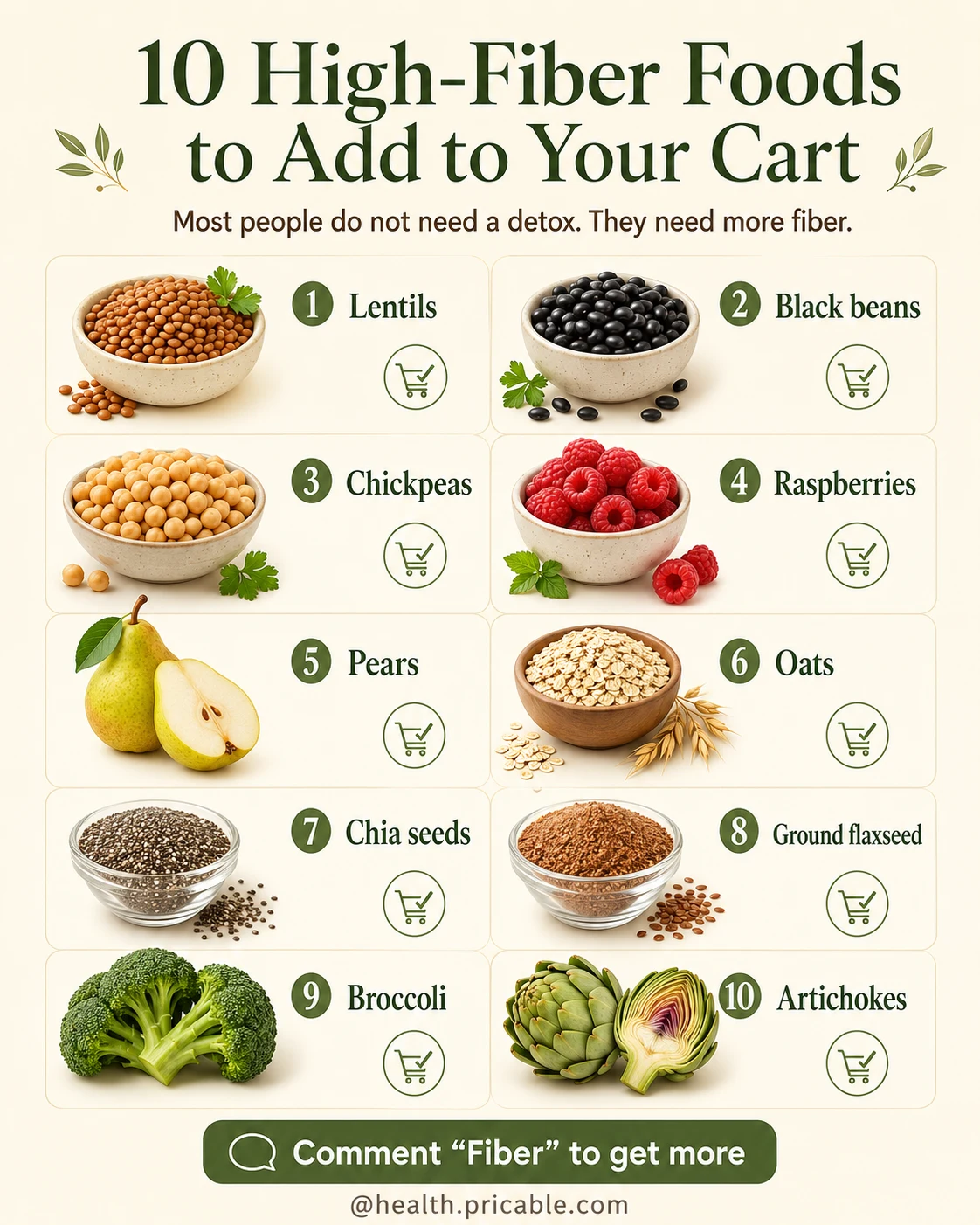
This list includes 10 smart picks: Lentils, Black beans, Chickpeas, Raspberries, Pears, Oats, Chia seeds, Ground flaxseed, Broccoli, and Artichokes. Each one brings fiber in a slightly different way, and that matters because variety usually works better than relying on just one “healthy” food.
Why Fiber Matters More Than People Think
Fiber does more than help with regularity.
A fiber-rich meal usually digests more slowly, which can help with fullness and more stable energy. Foods high in fiber also tend to be less ultra-processed and more nutrient-dense overall. That means when you add more fiber, you often improve the quality of your diet in several ways at once.
The best part is that you do not need to overhaul everything. A few smart foods in your cart can change a lot.
1. Lentils
Lentils are one of the easiest high-fiber staples to keep around. They also provide plant protein, iron, and slow-digesting carbohydrates, which makes them especially useful for building satisfying meals.
They work well in soups, stews, curries, warm bowls, and simple salads. If you want a stronger meal, combine lentils with rice or quinoa and add vegetables on the side. That creates a balanced plate with fiber, protein, and better staying power.
2. Black beans
Black beans are another strong fiber food that also helps with fullness. They bring plant protein, minerals, and a hearty texture that makes meals feel more substantial.
They are especially easy to use in burrito bowls, soups, chili, wraps, or taco-style salads. Pair them with rice, avocado, tomatoes, and greens for a meal that feels both grounding and fresh.
3. Chickpeas
Chickpeas are one of the most flexible foods on the list. They give you fiber, plant protein, and a mild flavor that fits into many types of meals.
You can use chickpeas in salads, curries, grain bowls, soups, or roast them for a crunchy snack. They also blend well into spreads and dips. For a simple meal, try chickpeas with cucumbers, tomatoes, olive oil, lemon, and herbs.
4. Raspberries
Raspberries are one of the most impressive fiber-rich fruits you can buy. They are light, refreshing, and much more helpful nutritionally than many sweet snacks people reach for instead.
They work beautifully in yogurt bowls, oatmeal, chia pudding, smoothies, or cottage cheese bowls. Because they are naturally high in fiber, they help fruit-based meals feel more balanced and satisfying.
5. Pears
Pears are a classic high-fiber fruit, especially when eaten whole. They are sweet, juicy, portable, and very easy to turn into a better snack.
They pair especially well with Greek yogurt, nuts, cottage cheese, or a little nut butter. A pear on its own is good, but a pear with protein or healthy fat usually keeps you fuller longer.
6. Oats
Oats are one of the most practical fiber foods for everyday eating. They are affordable, familiar, and easy to use for breakfast or snacks. They also help create a softer, more sustained energy feel than many sugary breakfast choices.
Oats work best when combined with protein and healthy fat. Try oats with Greek yogurt, milk, chia seeds, flaxseed, nuts, or nut butter. This turns a basic bowl into something much more balanced.
7. Chia seeds
Chia seeds are small, but they do a lot. They provide fiber and absorb liquid well, which helps them work in a wide range of meals.
You can stir chia seeds into oatmeal, yogurt, smoothies, overnight oats, or make chia pudding. They are especially useful when you want to increase fiber without changing the flavor of the meal too much.
8. Ground flaxseed
Ground flaxseed is another smart fiber booster. It also brings healthy fats, which makes it a nice addition to breakfast foods and snack bowls.
Ground flaxseed is best added to oatmeal, yogurt, smoothies, pancakes, or baked oats. It blends in easily and helps meals feel more nourishing. Using it in ground form makes it easier to incorporate into daily eating.
9. Broccoli
Broccoli is one of the most useful vegetables for a fiber-rich plate. It is easy to cook, pairs well with many proteins, and adds volume without making meals too heavy.
Roast it, steam it, stir-fry it, or add it to bowls and pasta dishes. Broccoli works especially well with eggs, salmon, tofu, chicken, lentils, or rice-based meals.
10. Artichokes
Artichokes are often overlooked, but they are one of the standout high-fiber vegetables on this list. They can feel a little less familiar, but they are worth adding when you want more variety.
Artichokes work well in salads, grain bowls, Mediterranean-style dishes, or alongside fish and roasted vegetables. Even adding them occasionally can diversify your fiber intake in a useful way.
How to Combine These Foods in Real Life
The easiest way to eat more fiber is not to obsess over numbers. It is to build meals that naturally include fiber-rich foods.
A few easy combinations:
- Oats + chia seeds + raspberries + Greek yogurt
- Lentils + broccoli + rice
- Black beans + chickpeas + tomatoes + greens
- Pears + nut butter
- Ground flaxseed + smoothie or yogurt bowl
- Artichokes + salad + beans
- Broccoli + eggs or tofu
This is where fiber becomes practical. It stops being a health concept and starts becoming part of meals that actually keep you full.
When You’ll Notice a Difference
Some people notice better fullness and smoother digestion within a few days of eating more fiber consistently. For others, it may take a couple of weeks, especially if fiber intake was low before.
The key is to increase fiber gradually and drink enough water. Adding too much too quickly can feel uncomfortable, especially if your usual diet is low in whole foods.
Final Takeaway
The best high-fiber foods to add to your cart are often the simplest ones: Lentils, Black beans, Chickpeas, Raspberries, Pears, Oats, Chia seeds, Ground flaxseed, Broccoli, and Artichokes.
You do not need a detox. You need meals with more fiber, more structure, and better combinations. When you build your plate around foods like these, digestion, fullness, and overall meal quality usually improve in a very practical way.
Related nutrition note: whole foods that combine fiber with protein, water, and slow-digesting carbohydrates usually do much more for fullness and gut support than quick-fix cleanses ever will.