As the seasons change and the air grows crisp, gardeners often face the inevitable challenge of protecting their beloved plants from the biting grip of frost. A sudden drop in temperature can turn your thriving garden into a sad, wilted landscape overnight if you’re not prepared. But don’t worry, fellow plant lovers! With a little knowledge and timely action, you can safeguard your green friends and ensure they emerge vibrant when warmer weather returns.
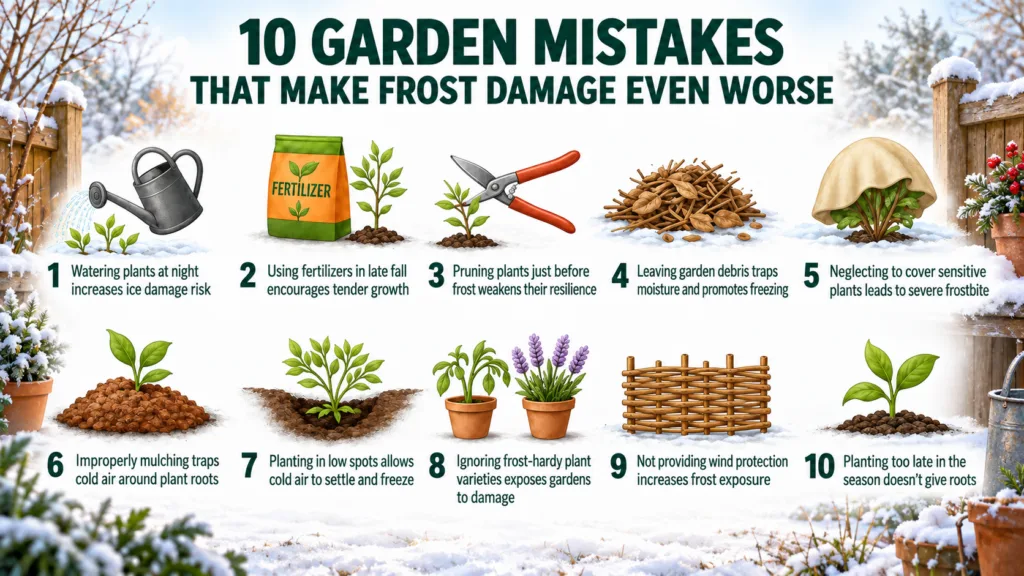
We’ve put together a guide highlighting 10 common garden mistakes that can make frost damage even worse. By avoiding these pitfalls, you’ll give your plants the best chance to survive and even thrive through the colder months.
1. Neglecting to Water Adequately Before a Freeze
It might seem counterintuitive to water plants when it’s cold, but well-hydrated soil actually retains heat better than dry soil. Moist soil also releases latent heat slowly throughout the night, acting as a natural insulator for plant roots. Watering thoroughly a day or two before a predicted hard freeze can make a significant difference. Just be sure to water in the morning or early afternoon so excess moisture has time to drain away before temperatures drop below freezing, preventing ice from forming around plant stems.
2. Fertilizing Too Late in the Season
Applying nitrogen-rich fertilizers late in the fall encourages new, tender growth that is extremely vulnerable to frost. This fresh growth hasn’t had time to harden off and will be the first to suffer severe damage when temperatures plunge. It’s best to stop fertilizing deciduous plants a few weeks before the first anticipated frost. If you must fertilize, opt for a low-nitrogen, high-potassium fertilizer (like a ‘bloom’ or ‘winterizer’ formula) earlier in the fall, which helps plants build stronger cell walls and improves cold hardiness.
3. Pruning Sensitive Plants in Late Fall
Resist the urge to prune frost-sensitive plants late in the fall. While it might seem tidy, fresh cuts expose vulnerable plant tissue to cold temperatures, making them more susceptible to damage and disease. Additionally, existing foliage, even if it looks a bit ragged, provides a natural layer of insulation for the plant’s inner structure. Save major pruning for late winter or early spring after the danger of severe frost has passed.
4. Leaving Garden Debris Around
While some leaves can provide a light mulch, excessive garden debris can create a damp, cold environment around your plants, trapping moisture and encouraging fungal issues rather than providing warmth. Clear away spent annuals, diseased leaves, and excessive plant litter from around the base of your perennial and shrub borders. A light, airy mulch like straw or pine needles, applied correctly, is beneficial, but heavy, wet debris can be detrimental.
5. Not Covering Sensitive Plants at All
One of the most common mistakes is simply failing to cover plants that aren’t naturally cold-hardy for your region. When frost is imminent, even a simple sheet, burlap, or a frost blanket can make a world of difference. The key is to drape the covering loosely over the plant, extending to the ground if possible, to trap residual warmth from the soil. Remove coverings during the day if temperatures rise above freezing to allow for air circulation and sunlight.
6. Ignoring Potted Plants and Containers
Potted plants are exceptionally vulnerable to frost damage because their roots are much more exposed to cold air compared to plants in the ground. The soil in containers freezes faster and more thoroughly. Always move potted plants indoors or into a sheltered area like a garage, shed, or covered porch when frost is expected. For very large containers, you can insulate the pots with bubble wrap, burlap, or straw bales.
7. Planting Non-Cold-Hardy Varieties for Your Zone
While tempting to push the limits, planting species that aren’t suited to your USDA Plant Hardiness Zone is a recipe for frost damage. Research the cold tolerance of any new plant you introduce to your garden. Choosing plants that are known to thrive in your specific climate will save you a lot of heartache and effort in the long run. There are many beautiful cold-hardy alternatives for almost every plant type.
8. Using Improper Covering Materials
While covering plants is crucial, the material you choose matters. Avoid using plastic directly on foliage, as it can transfer cold and trap excessive moisture, potentially doing more harm than good. If you must use plastic, ensure it doesn’t touch the leaves directly by supporting it with stakes or hoops. Breathable materials like frost blankets, old sheets, blankets, or burlap are far superior as they allow some air circulation while providing insulation.
9. Underestimating Microclimates in Your Garden
Even within a single garden, different areas can have varying temperatures. Structures like fences, walls, or even large rocks can absorb heat during the day and radiate it at night, creating warmer ‘microclimates.’ Low-lying areas tend to be colder because cold air sinks. Take note of these differences in your garden and plant more sensitive species in warmer, more protected spots, and hardier ones in the colder zones.
10. Waiting Until the Last Minute to Act
Procrastination can be a plant killer when it comes to frost. Stay informed about local weather forecasts, especially during transitional seasons. Knowing when a cold snap is coming gives you time to water, gather your coverings, and move potted plants. A little preparation a day or two in advance can prevent a lot of damage and stress.
Grow a Thriving Garden, Even Through Winter!
Protecting your garden from frost doesn’t have to be a daunting task. By avoiding these common mistakes and implementing simple protective measures, you can help your plants weather the cold and bounce back beautifully. Happy gardening!