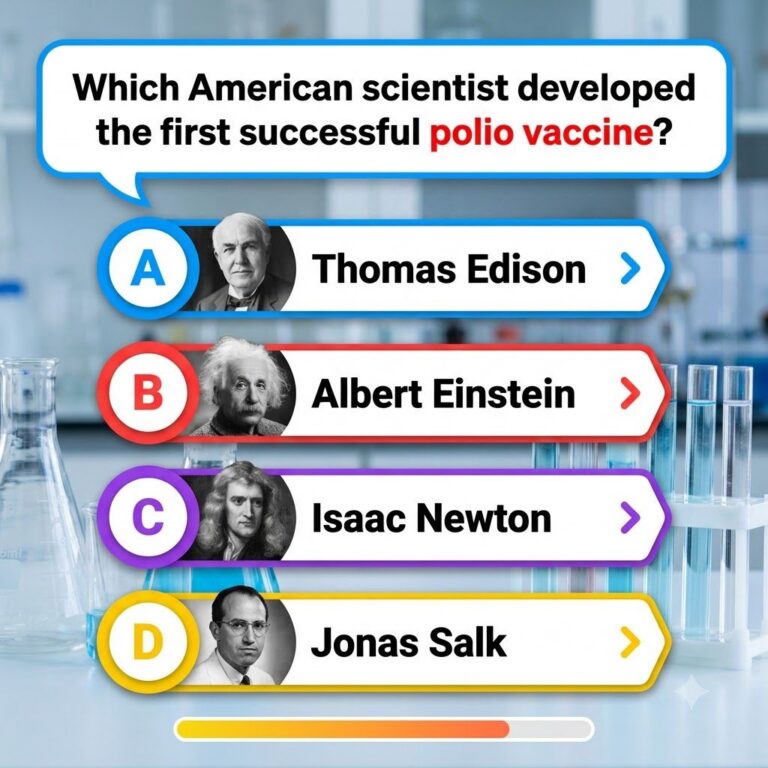
Science History Challenge: Unmasking the Mind Behind the First Polio Vaccine
Only true science buffs know this! Can you identify which iconic American figure developed the groundbreaking first successful polio vaccine? While history is filled with brilliant minds, few have made such a profound impact on global health as the scientist who conquered polio. Let’s dive into this critical piece of medical history.
For decades, polio was a terrifying global threat, causing paralysis and death, especially among children. Summer months were often dubbed “polio season,” and parents lived in fear, keeping their children away from public pools and crowded places. The disease left countless individuals with lifelong disabilities, and iron lungs became a somber symbol of its devastating power.
The Quest for a Cure
The urgency to find a preventative measure was immense. Scientists worldwide dedicated their careers to understanding and combating the polio virus. The challenge was formidable, requiring deep biological insight and painstaking experimental work. Many researchers contributed to the fundamental understanding of the virus, paving the way for a vaccine.
Jonas Salk: The Pioneer
Among these dedicated scientists, one name stands out for developing the first effective vaccine: Dr. Jonas Salk. Working tirelessly at the University of Pittsburgh in the early 1950s, Salk and his team developed an inactivated polio vaccine (IPV). This vaccine used a “killed” form of the virus, stimulating the body’s immune system to produce protective antibodies without causing the disease itself.
The Historic Field Trials and Triumph
In 1954, one of the largest medical field trials in history commenced, involving nearly two million children across the United States. The results, announced on April 12, 1955 (the tenth anniversary of Franklin D. Roosevelt’s death, a prominent polio victim), were triumphant: the Salk vaccine was safe and highly effective. This announcement sparked widespread celebration and hope.
The rapid rollout of the Salk vaccine in the following years led to a dramatic decline in polio cases, transforming public health. Salk famously refused to patent the vaccine, believing it belonged to the people, stating, “Who owns the sun?” His selfless act underscored his dedication to humanity.
The Legacy Continues
While the oral polio vaccine (OPV), developed later by Albert Sabin, also played a crucial role in global eradication efforts due to its ease of administration and ability to provide community immunity, Salk’s IPV was the pioneering breakthrough. Both vaccines have been instrumental in bringing the world to the brink of polio eradication, a testament to scientific ingenuity and global cooperation.
So, the next time you hear about significant medical advancements, remember the monumental contribution of Dr. Jonas Salk, an American scientist whose work truly changed the world for the better!