Some traditional skin remedies look almost too strange to be real.
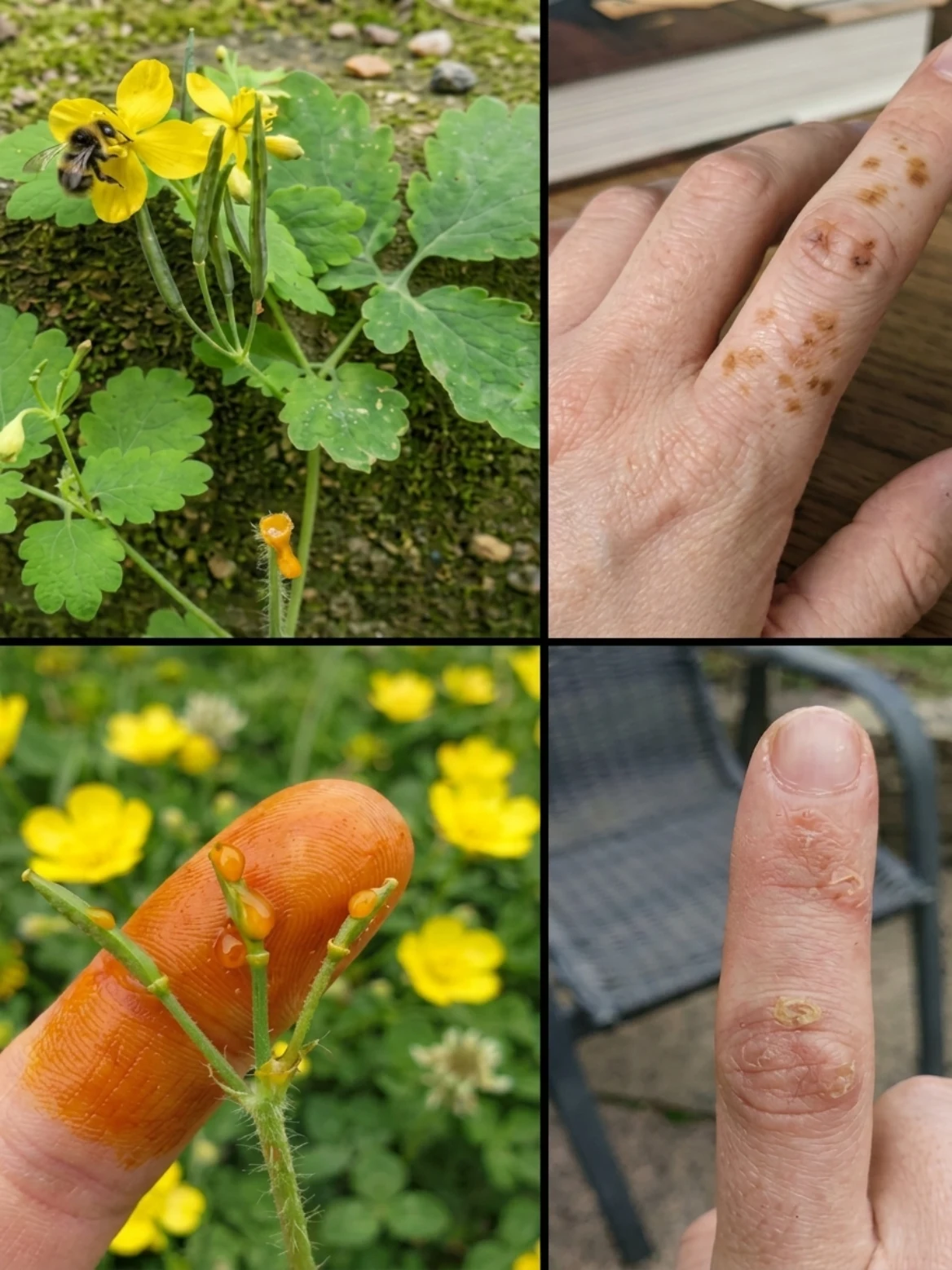
Greater celandine (Chelidonium majus) is one of them. It has soft, rounded blue-green leaves, bright yellow four-petaled flowers, and a striking orange-yellow sap that appears when the stem or seed pod is broken. That colorful latex is exactly why this plant has such a long folk reputation for warts and other small skin growths. Scientific reviews note that the yellow-orange latex of Chelidonium majus has been used in folk medicine against warts for centuries.
What makes this herb so interesting is also what makes it risky. Greater celandine is not a gentle kitchen herb. It is a biologically active plant, and official European safety documents and LiverTox both warn about liver toxicity from oral use and also report skin reactions from topical use.
So this is one of those remedies that should be discussed honestly: fascinating, traditional, sometimes used externally for warts, but definitely not something to use casually.
What This Plant Is Traditionally Used For
Greater celandine is most commonly talked about for external wart use.
In folk practice, people have traditionally applied the fresh orange sap directly to:
- common warts
- verrucas
- small rough skin spots
Modern research papers on the plant still reference that traditional use, especially the use of fresh latex against visible HPV-related skin lesions such as warts.
That does not mean it is proven, guaranteed, or safe for everyone. It means this is a very old external-use remedy that continues to attract attention because the sap is easy to collect and highly noticeable.
Ingredients
A traditional-style greater celandine wart remedy uses very little:
- 1 fresh stem, seed pod, or broken part of greater celandine
- a cotton swab, optional
- petroleum jelly or protective balm for the surrounding skin, optional
That is all. The fresh sap is the main ingredient.

How to Prepare It
This remedy is usually made fresh, not stored.
Step 1: Confirm the plant carefully
Correct identification matters. Greater celandine has yellow flowers, lobed leaves, and a vivid orange latex when broken.
Step 2: Break a fresh stem or pod
Gently snap a stem or immature pod so the orange sap appears.
Step 3: Collect only a tiny amount
You only need a drop or two. This is a spot treatment, not a broad skin treatment.
How to Use It
Traditionally, the orange sap is applied directly to the wart only.
Step 1: Protect surrounding skin
If needed, place a little balm around the wart so the sap touches as little healthy skin as possible.
Step 2: Dab the sap onto the wart
Use the fresh plant tip or a cotton swab to place a very small amount directly on the wart.
Step 3: Let it dry
Allow it to dry briefly on the spot.
Step 4: Repeat cautiously
People who use this remedy traditionally repeat it in a careful, limited way over time rather than applying large amounts.
Why People Believe It Works
The reputation of greater celandine comes from both tradition and chemistry.
Researchers note that the latex contains active compounds, including alkaloids and proteins, and that these may contribute to the plant’s biological activity. That is one reason the sap has been studied in relation to wart-related folk use.
There is also the simple fact that the sap feels active. It stains the skin orange, dries visibly, and makes people feel like something is happening. That sensory effect often helps traditional remedies keep their reputation.
Still, the strongest statement that can be made is modest: greater celandine latex has a long traditional history of topical wart use. That is not the same as saying it is a first-line medical treatment.
When You Might Notice Changes
This kind of remedy is usually slow.
If it helps, the first changes are often:
- the wart surface drying a little
- the spot looking darker or more irritated
- gradual shrinking over days to several weeks
A wart rarely disappears overnight. If a skin spot is spreading, painful, bleeding, or changing shape, it should not be assumed to be “just a wart.”
Important Safety Notes
This is the most important part.
Do not take greater celandine by mouth
LiverTox reports clinically apparent acute liver injury from greater celandine, and the European Medicines Agency states that products containing it were withdrawn in some countries because of adverse effects, especially liver toxicity.
Topical use can still irritate skin
EMA documents report contact dermatitis from using Chelidonium majus on warts, including severe itching and redness.
Avoid eyes, lips, genitals, and broken skin
This sap is far too irritating for sensitive areas.
Do not use on uncertain skin lesions
A mole, skin cancer, infected bump, or other lesion can be mistaken for a wart.
Be extra cautious with children and sensitive skin
This is not a harmless cosmetic plant.
Seek care for stubborn or painful warts
NHS guidance notes that warts and verrucas are common and that medical help may be needed when they are painful, numerous, or persistent.
Final Takeaway
Greater celandine is one of the most unusual traditional wart remedies because of its vivid orange sap and long folk history. That history is real, and modern papers still describe its use against warts. But the safety concerns are real too: topical irritation can happen, and oral use carries a documented risk of liver injury.
The smartest way to view this plant is simple: a traditional external remedy that should be used, if at all, with caution, precise identification, and very realistic expectations.
Related Source Science
Research articles describe Chelidonium majus latex as a traditional wart remedy used for centuries, while LiverTox and EMA safety documents report acute liver injury with oral use and contact dermatitis with topical use. That combination makes greater celandine scientifically interesting, but also one of the clearer examples of why “natural” does not always mean safe.