As the crisp air of autumn settles in and the garden beds begin to wind down, many gardeners might think their growing season is over. But for those of us who love a head start, October isn’t an end—it’s a new beginning! By starting certain vegetables indoors this month, you can ensure a super-early and bountiful spring harvest, giving your garden a fantastic advantage when warmer weather finally arrives.
Imagine plucking fresh greens and robust vegetables from your garden weeks before your neighbors even plant their first seeds! Indoor sowing in October is a game-changer for extending your growing season, nurturing healthier plants, and maximizing your yield. Let’s dive into why and how you can make this happen.
Why Start Seeds Indoors in October?
Starting seeds indoors in the cooler months offers several fantastic benefits:
- Beat the Cold: Protect delicate seedlings from harsh winter conditions and late frosts.
- Extended Growing Season: Get a jump on spring, enjoying harvests weeks or even months earlier.
- Stronger Plants: Seedlings grown indoors often develop stronger root systems and become more robust before transplanting.
- Cost Savings: Growing from seed is significantly cheaper than buyingBonnie plants from a nursery.
- Wider Variety: Access to a broader selection of seeds than what’s typically available as starter plants.
- Pest Protection: Young plants are less vulnerable to outdoor pests and diseases in their early stages.
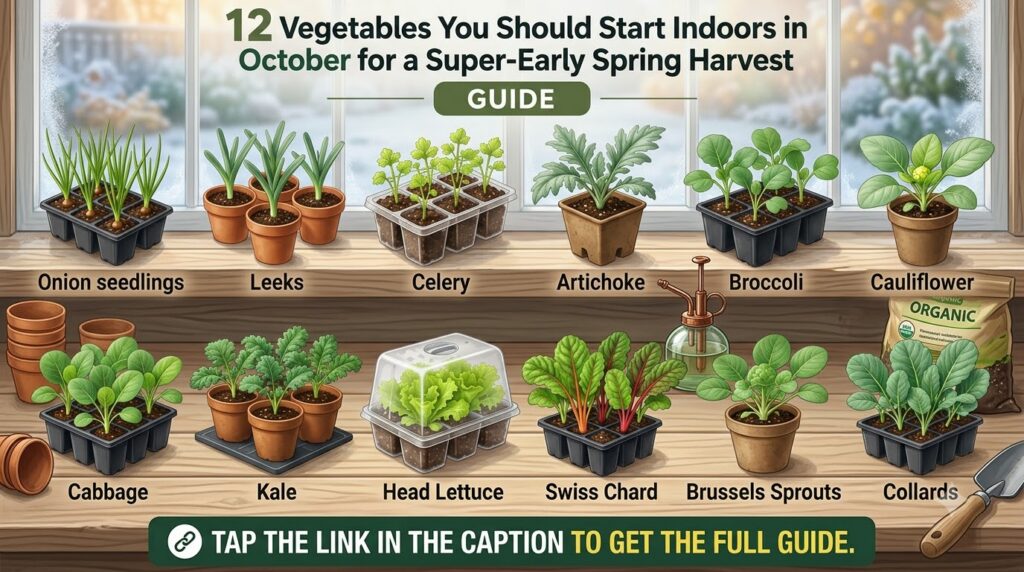
12 Vegetables You Should Start Indoors in October
Ready to get your hands dirty? Here are some fantastic vegetables that thrive when started indoors in October, preparing them for an early spring debut:
Leafy Greens & Herbs
- Lettuce: Many varieties are perfect for indoor starts. Choose cold-hardy types for spring transplanting.
- Spinach: A classic cool-season crop, spinach germinates well indoors.
- Kale: Robust and nutritious, kale seedlings are excellent for an early spring boost.
- Swiss Chard: Beautiful and resilient, Swiss chard loves an early start.
- Arugula: Quick-growing and peppery, arugula can be harvested young or transplanted.
- Cilantro: While it can bolt in summer heat, an early spring crop from indoor-started seeds is ideal.
- Parsley: Slow to germinate, parsley benefits greatly from an early indoor start.
Root & Stem Vegetables
- Onions: Start from seed for larger, healthier bulbs than sets.
- Leeks: These take a long time to mature, so an October start is crucial for a substantial spring harvest.
- Celery: Another slow grower, celery seeds benefit from ample time indoors.
Cruciferous Crops
- Broccoli: Give these nutritious florets a head start to enjoy them sooner in spring.
- Cabbage: Early cabbage varieties can be transplanted for an early spring crop.
Your Step-by-Step Guide to Indoor Seed Starting
Getting started is easier than you think! Follow these simple steps for successful indoor planting:
1. Gather Your Supplies
- Seed Starting Trays or Pots: Clean containers with drainage holes.
- Seed Starting Mix: A lightweight, sterile, soilless mix is crucial for germination.
- Quality Seeds: Choose fresh seeds from a reputable supplier.
- Light Source: A south-facing window is good, but grow lights are even better for consistent, strong light.
- Watering Can or Spray Bottle: For gentle watering.
- Labels: Don’t forget to label your seedlings!
2. Prepare Your Containers
Fill your trays or pots with the seed starting mix, gently moistening it before planting. Ensure the mix is damp but not soggy.
3. Sow Your Seeds
Follow the specific planting instructions on your seed packets for depth and spacing. Generally, plant seeds at a depth two to three times their width. Cover lightly with mix and gently pat down.
4. Provide Light and Warmth
Place your planted containers in a warm spot, ideally between 65-75°F (18-24°C). If you’re using grow lights, position them just a few inches above the soil surface. Keep the lights on for 12-16 hours a day. Warmth from a heating mat can significantly improve germination rates for many seeds.
5. Watering & Care
Keep the soil consistently moist but never waterlogged. A spray bottle is excellent for newly sown seeds, while bottom-watering (placing trays in a shallow pan of water) is good once seedlings emerge. Ensure good air circulation to prevent damping-off disease.
6. Hardening Off
About 1-2 weeks before you plan to transplant them outdoors in early spring, begin the hardening-off process. Gradually expose your seedlings to outdoor conditions for increasing periods each day. This toughens them up and prevents shock when they move to their permanent garden beds.
7. Transplanting
Once the danger of hard frost has passed and your seedlings are hardened off, they are ready for their new home in the garden! Dig a hole slightly larger than the root ball, carefully place the seedling, and backfill with soil. Water thoroughly.
Embrace the Early Start!
Don’t let the colder months fool you into thinking your gardening journey is on hold. October indoor planting is a secret weapon for an early, abundant, and incredibly satisfying spring harvest. It’s a joyful way to nurture your plants from tiny seeds into thriving vegetables, giving you a tangible connection to your garden even when it’s chilly outside.
So, gather your seeds, prepare your indoor space, and get ready to enjoy the fruits (and vegetables!) of your early labor. Happy planting!