The phrase “food is medicine” can sound dramatic, but the real meaning is much more practical.
Food does not replace emergency care, prescriptions, or a proper diagnosis. What it does do is shape the environment your body works in every day. The nutrients you eat influence hydration, energy production, digestion, circulation, recovery, and how well you handle physical and mental stress.
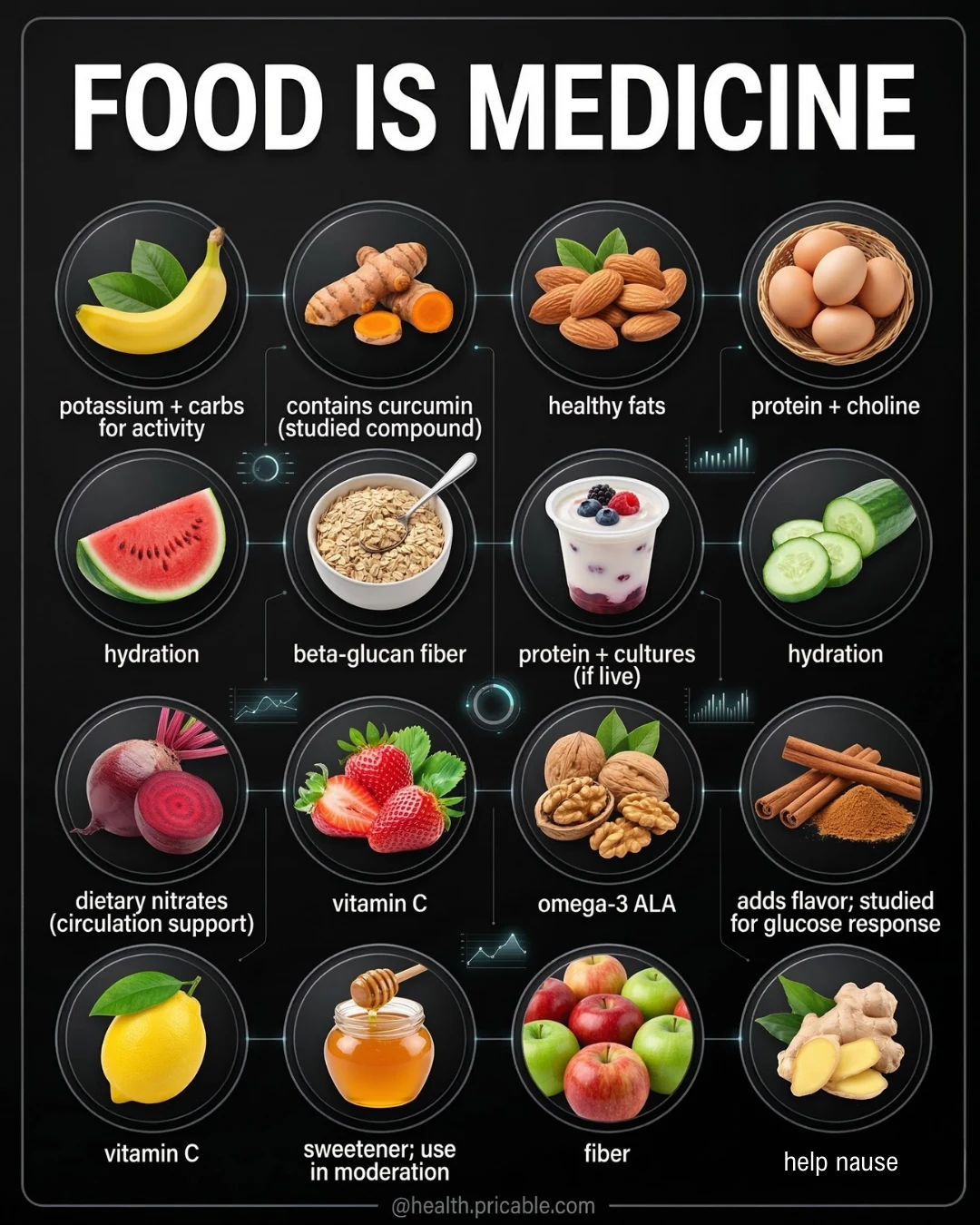
That is why simple, repeatable foods matter so much more than expensive wellness products. Each linked to a specific nutritional role. Some support hydration. Some bring fiber. Others provide healthy fats, protein, vitamin C, or plant compounds that have been studied for metabolic and recovery benefits.
What “food is medicine” really means
A strong diet does not need to be perfect. It needs to be consistent.
When your meals regularly include whole foods with fiber, protein, minerals, antioxidants, and healthy fats, your body is better supported in the background. That can mean steadier energy, better fullness, fewer cravings, improved digestion, and stronger nutrition over time.
The goal is not to expect one food to “fix” a problem. The goal is to let each food do its small job well.
1. Bananas
Bananas provide carbohydrates and potassium, which makes them useful before activity or when energy is low. They are easy to digest and can work well as a quick snack before walking, training, or busy mornings.
2. Turmeric
Turmeric contains curcumin, the compound most often studied for its role in inflammation and antioxidant pathways. It is best understood as a supportive food, not a fast cure. Using turmeric regularly in cooking is usually more realistic than relying on it as a miracle remedy.
3. Almonds
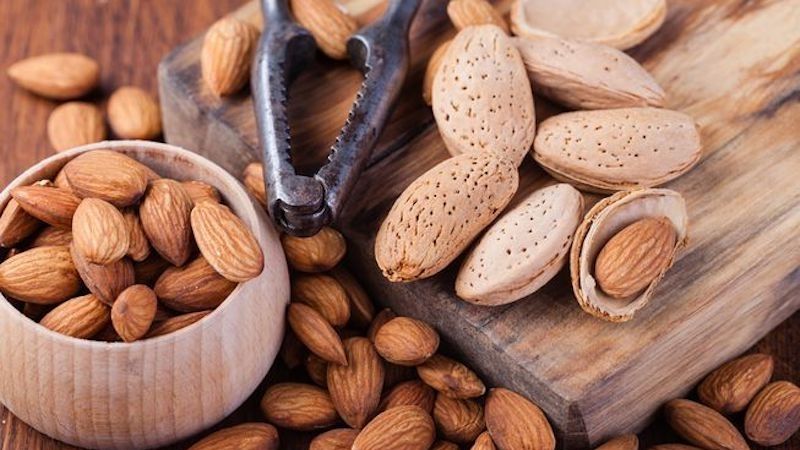
Almonds bring healthy fats, vitamin E, and a little protein, which helps with fullness and supports cell protection. They are especially useful when you need a more balanced snack that does not spike hunger again too quickly.
4. Eggs
Eggs provide high-quality protein and choline. That combination makes them valuable for muscle maintenance, satiety, and brain-related nutrition. They are one of the easiest foods to build a steady breakfast around.
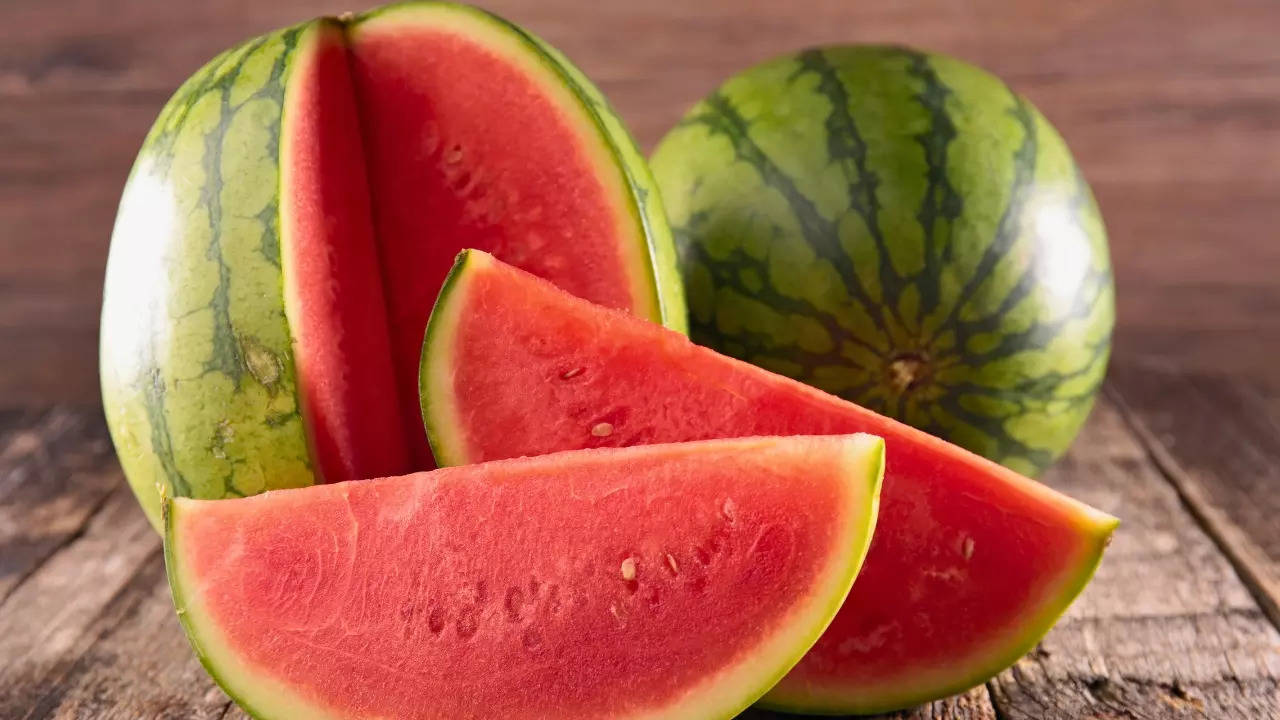
5. Watermelon
Watermelon is mostly water, so its biggest strength is hydration. On hot days, after exercise, or when appetite feels low, water-rich fruit can be one of the easiest ways to support fluid intake.
6. Oats
Oats are rich in beta-glucan fiber, a type of soluble fiber that helps with fullness and supports a steadier blood sugar response compared with many processed breakfast foods. They are one of the best examples of a simple food doing a very important job quietly.
7. Yogurt
Yogurt offers protein, and if it contains live active cultures, it may also support gut health. The combination of protein and fermented dairy can make yogurt a useful breakfast or snack option, especially when paired with fruit, oats, or seeds.
8. Cucumber
Like watermelon, cucumber mainly supports hydration. It is light, refreshing, and easy to add to meals without making them feel heavy. That matters more than people think, especially for people who struggle to eat vegetables consistently.
9. Beets
Beets are known for dietary nitrates, which are often discussed in relation to circulation and exercise support. They are not a performance shortcut, but they can fit well into a diet built for energy and recovery.

10. Strawberries
Strawberries provide vitamin C, which supports collagen formation, antioxidant defense, and general tissue health. They are also easier to use regularly than many people realize, since they work in breakfast bowls, snacks, and simple desserts.
11. Walnuts
Walnuts provide ALA omega-3 fats, a plant form of omega-3. They also add texture and satiety to meals. They are especially useful in breakfasts and snacks, where a little healthy fat can make the meal much more satisfying.
12. Cinnamon
Cinnamon is not a cure for blood sugar issues, but it is widely used because it adds flavor without extra sugar, and it has been studied for its relationship with glucose response. Its most practical benefit is that it helps make healthier meals more enjoyable.
13. Lemon
Lemon adds vitamin C and acidity, which can brighten meals and drinks without much effort. It is a good example of how small ingredients can improve food quality and make nutrient-dense meals easier to repeat.
14. Honey
Honey is included in the image with the note to use it in moderation, and that is exactly the right approach. It can be a useful sweetener, especially in tea or yogurt, but it still counts as a concentrated sugar source.

15. Apples
Apples provide fiber, especially when eaten with the skin. They are one of the best examples of a simple whole food that supports fullness and makes snacking more stable when paired with protein or fat.
16. Ginger
Ginger is often used to help with nausea and digestive comfort. It is not only a “sick day” food either. Fresh ginger can make everyday meals, teas, and smoothies more functional and easier on the stomach for some people.