The phrase “zero calorie foods” gets thrown around a lot online, but the truth is a little more realistic and much more useful. These foods are not truly zero calories. They are simply very low-calorie, high-water foods that can help meals feel bigger, fresher, and more satisfying.
That is why they matter.
Most people do not need extreme restriction. They need smarter volume. When you build meals around foods that are naturally light but still full of texture, water, and fiber, it becomes much easier to eat in a way that feels balanced instead of punishing.
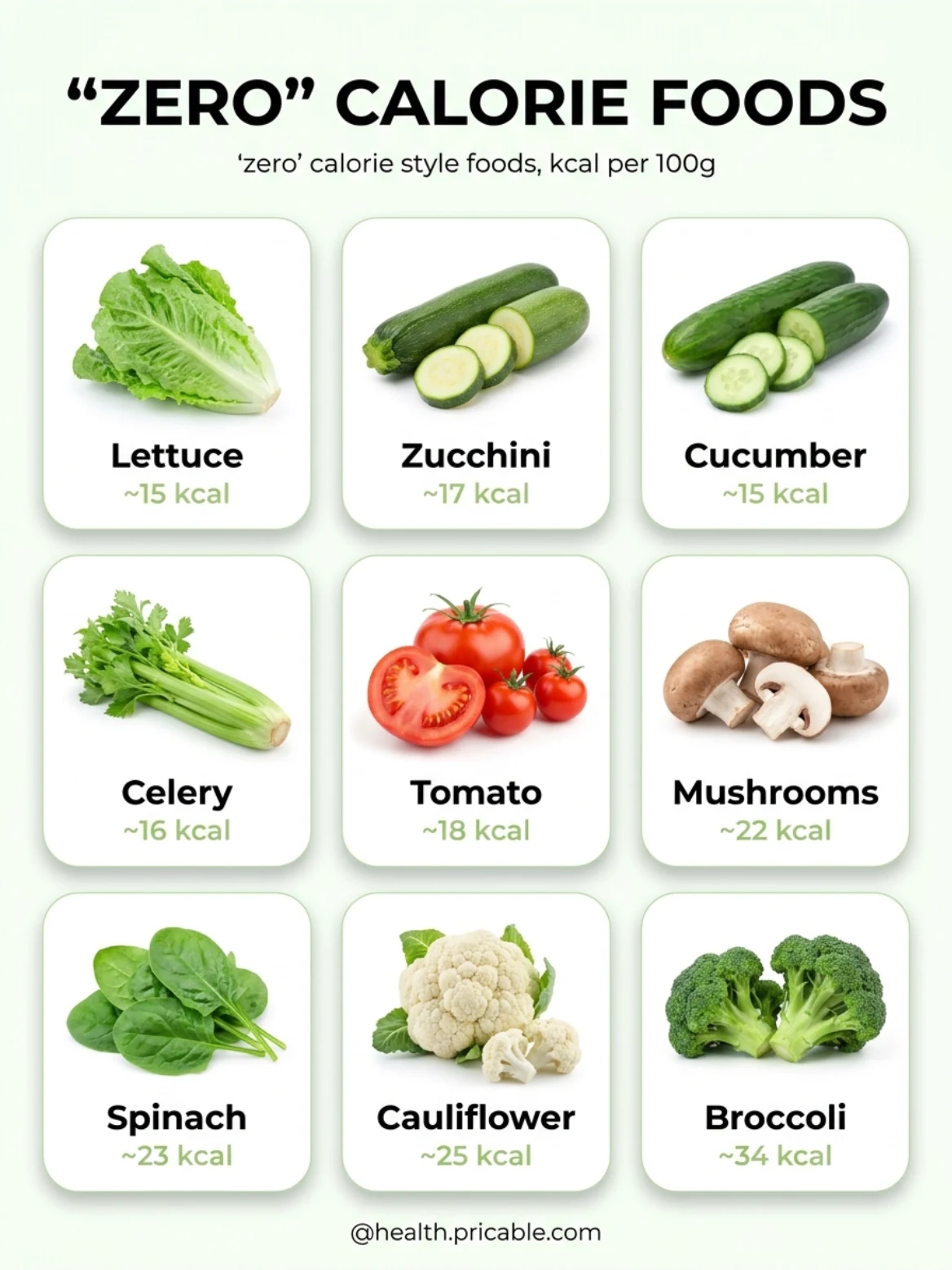
This list highlights 9 popular low-calorie vegetables and produce foods often called “zero calorie style foods”: Lettuce, Zucchini, Cucumber, Celery, Tomato, Mushrooms, Spinach, Cauliflower, and Broccoli.
What “Zero Calorie Foods” Really Mean
These foods are low in calories per 100 grams because they contain a lot of water and relatively little fat. That makes them useful for people who want meals that feel more filling without becoming too heavy.
But they are not magic foods.
They do not cancel out other calories, and they do not replace the need for protein, healthy fats, or balanced meals. What they do offer is volume, freshness, fiber, and flexibility. That is exactly why they are so helpful in healthy eating.
1. Lettuce
Lettuce is one of the easiest foods to use when you want more volume in a meal. It adds crunch and freshness without making the plate feel heavy.
It works well in salads, wraps, sandwiches, burger bowls, taco bowls, and simple lunch plates. On its own, lettuce is not very filling, but it becomes much more useful when paired with protein like eggs, chicken, tuna, tofu, or beans.
Best way to eat it
Use lettuce as a base, not the whole meal. Add a protein, a crunchy vegetable, and a satisfying topping like avocado or seeds.
2. Zucchini
Zucchini is one of the most versatile low-calorie vegetables because it can be grilled, roasted, sautéed, spiralized, or added to soups and stir-fries.
It has a mild flavor, which makes it easy to combine with stronger ingredients like garlic, tomatoes, eggs, Parmesan, tofu, or lean meat.
Best way to eat it
Try zucchini with olive oil, herbs, and a protein source. It also works well mixed into pasta dishes to lighten the meal without losing volume.
3. Cucumber
Cucumber is crisp, hydrating, and especially useful when you want a snack or meal to feel lighter and fresher. Because it is so high in water, it adds bulk without much energy density.
It is great in salads, yogurt bowls, sandwich plates, snack boxes, or served with cottage cheese, hummus, or tuna.
Best way to eat it
Pair cucumber with something that gives more staying power, such as Greek yogurt dip, eggs, cheese, beans, or nuts.
4. Celery
Celery is often underestimated, but it can be a very practical add-on food. It brings crunch and works well in soups, salads, tuna mixtures, and snack plates.
It is not a strong calorie source, which is exactly why it helps make richer foods feel more balanced.
Best way to eat it
Use celery with nut butter, hummus, tuna salad, or chopped into soups and grain salads for more texture.
5. Tomato
Tomato is one of the most useful foods on this list because it adds both freshness and flavor. It is juicy, colorful, and easy to use in nearly every meal style.
Tomatoes work well with eggs, toast, pasta, salads, sandwiches, cottage cheese, avocado, and beans.
Best way to eat it
Use tomato to brighten heavier meals. It pairs especially well with protein and healthy fat, such as eggs and avocado, or tuna and olive oil.
6. Mushrooms
Mushrooms are slightly higher in calories than the others here, but they are still very light and extremely valuable because of their savory flavor. They help meals feel deeper, richer, and more satisfying.
This is why mushrooms are so good in omelets, noodle bowls, soups, stir-fries, grain bowls, and pasta.
Best way to eat it
Cook mushrooms with garlic, herbs, eggs, tofu, or chicken for a meal that feels hearty without becoming overly heavy.
7. Spinach
Spinach is one of the smartest greens to keep around because it blends into so many meals so easily. It adds volume, color, and useful nutrients while staying very light.
It works in eggs, smoothies, soups, rice bowls, curries, pasta, wraps, and salads.
Best way to eat it
Add spinach to meals that already contain protein, such as eggs, lentils, chicken, tofu, or cottage cheese. That gives you a more complete meal instead of just a pile of greens.
8. Cauliflower
Cauliflower is especially useful for people who want a light but comforting vegetable. It can be roasted, mashed, blended into soups, or turned into cauliflower rice.
Because it has a neutral flavor, it easily takes on spices, sauces, and seasonings.
Best way to eat it
Pair cauliflower with protein and healthy fats, such as salmon, tofu, eggs, or tahini. Roasted cauliflower also works beautifully with garlic and yogurt-based sauces.
9. Broccoli
Broccoli is the most substantial food on this list, and that is part of what makes it so helpful. It is still low in calories, but it offers more fiber and structure than watery vegetables like cucumber or lettuce.
It works especially well in bowls, stir-fries, pasta, soup, roasted dinner plates, and meal prep lunches.
Best way to eat it
Use broccoli with a stronger anchor food like salmon, eggs, tofu, chicken, or beans. That is when it becomes part of a truly filling meal.
How to Build Meals With These Foods
The biggest mistake people make with “zero calorie foods” is trying to eat them by themselves and expecting fullness.
These foods work best when they help expand a meal, not replace one.
A better formula looks like this:
- One low-calorie vegetable from the list
- One protein source
- One satisfying fat or smart carb
- Flavor from herbs, spices, or dressing
For example:
- Lettuce + chicken + avocado
- Cucumber + cottage cheese
- Zucchini + eggs
- Tomato + beans + olive oil
- Broccoli + salmon
- Cauliflower + tofu + tahini
That is how these foods become useful in real life.
When You’ll Notice the Difference
Many people notice within a few days that meals feel bigger, lighter, and easier to manage when they use these foods more often. You may also feel less tempted to overeat heavier foods when your plate has more volume and texture.
The benefit is usually not dramatic weight loss overnight. It is better meal structure, better fullness, and easier consistency.
Quick Reality Check
These foods are helpful, but they are not truly zero calories, and they are not enough on their own. Eating only low-calorie vegetables is not balanced nutrition. Your body still needs protein, healthy fats, and enough overall energy.
Final Takeaway
The best “zero calorie foods” are really low-calorie, high-volume foods that make healthy eating easier. Lettuce, Zucchini, Cucumber, Celery, Tomato, Mushrooms, Spinach, Cauliflower, and Broccoli can all help meals feel fresher, bigger, and more satisfying.
The real secret is not to eat them alone. It is to use them to build better meals around protein, fiber, and smart combinations.