There’s nothing quite as satisfying as watching your garden flourish, especially when it comes to growing your own spicy chili peppers! From a tiny seed to a plant laden with vibrant red and green pods, the journey is incredibly rewarding. But even with the right soil and sunshine, one crucial element can make or break your chili harvest: water.
Proper watering isn’t just about dousing your plants; it’s a strategic art that ensures healthy growth, robust flavor, and an abundant yield. Let’s dive into the best ways to keep your chili pepper plants perfectly hydrated and thriving.
Why Proper Watering is Crucial for Chili Peppers
Chili pepper plants, like most vegetables, are sensitive to water stress. Both too little and too much water can lead to serious problems:
- Underwatering: Causes wilting, stunted growth, flower drop, and poor fruit development. The plants become more susceptible to pests and diseases.
- Overwatering: Leads to root rot, a fungal disease that suffocates the roots and can quickly kill the plant. It can also leach essential nutrients from the soil.
- Inconsistent Watering: Can cause blossom end rot (a common issue where the bottom of the pepper fruit turns black and soft), splitting fruit, and an overall decline in plant health.
Signs Your Chili Plant Needs Water
Learning to ‘read’ your plants is one of the most valuable gardening skills. Here’s what to look for:
- Wilting Leaves: The most obvious sign. Leaves will look droopy, especially during the hottest part of the day. They should perk up after watering.
- Dry Soil: Stick your finger about an inch or two into the soil. If it feels dry, it’s likely time to water. For larger plants, check a bit deeper.
- Lightweight Pots: If your chili plants are in containers, a dry pot will feel significantly lighter than a well-watered one.
How Much and When to Water
Deep and Infrequent is Best
Chili pepper plants prefer deep, thorough watering rather than frequent, shallow sips. Deep watering encourages roots to grow deeper into the soil, making the plant more resilient to dry spells and heat. Aim to saturate the soil until water drains from the bottom of the pot (for container plants) or soaks several inches deep into the garden bed.
Timing is Everything
- Morning is Ideal: Watering in the morning allows the plants to absorb moisture before the heat of the day, reducing evaporation. It also gives any moisture on the leaves time to dry, which helps prevent fungal diseases.
- Avoid Midday: Watering during the hottest part of the day leads to rapid evaporation, wasting water and potentially scalding leaves if water droplets act as tiny magnifying glasses.
- Avoid Night: Watering at night can leave leaves and soil wet for too long, creating an environment ripe for fungal growth and pests.
Frequency Varies
There’s no one-size-fits-all schedule. Factors affecting frequency include:
- Weather: Hot, sunny, and windy days will dry out soil much faster than cool, cloudy days.
- Plant Size: Larger, more mature plants with more foliage will transpire more water.
- Container Size: Smaller pots dry out faster than larger ones or garden beds.
- Soil Type: Sandy soils drain quickly and may need more frequent watering, while clay soils retain water longer.
Generally, check your plants every 1-3 days during hot weather and every 3-7 days during cooler periods. Always check the soil moisture before watering.
Best Watering Techniques
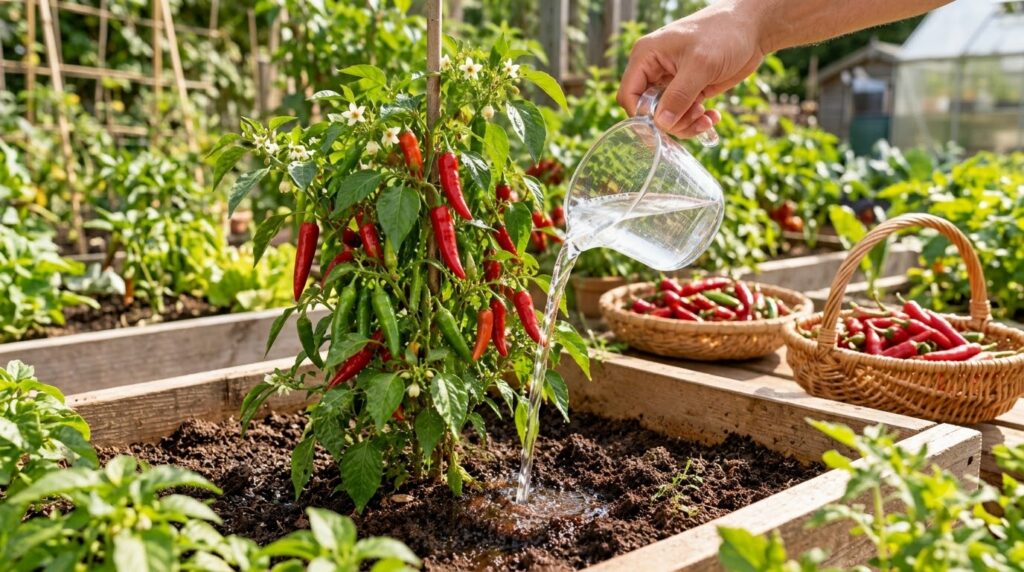
- Water at the Base: Direct water to the soil around the base of the plant, avoiding wetting the leaves. This minimizes fungal diseases.
- Slow and Steady: Don’t rush. Pour water slowly to allow it to penetrate the soil deeply rather than running off the surface.
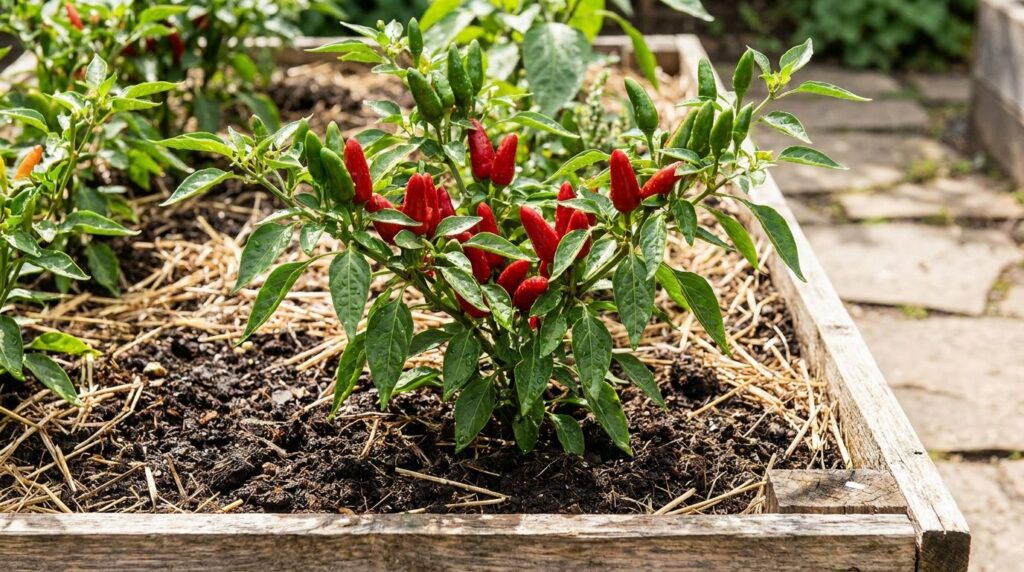
- Mulch: Apply a layer of organic mulch (like straw, shredded leaves, or wood chips) around your chili plants. Mulch helps retain soil moisture, suppresses weeds, and regulates soil temperature.
- Drip Irrigation or Soaker Hoses: For larger gardens, these systems deliver water directly to the root zone slowly and efficiently, saving time and water.
Tips for Container-Grown Chilies
Chili peppers thrive in containers, but they need a bit more attention when it comes to watering:
- Choose Large Pots: Bigger pots hold more soil and moisture, meaning less frequent watering.
- Drainage is Key: Ensure your pots have drainage holes to prevent waterlogging and root rot.
- Monitor Closely: Container plants dry out much faster than in-ground plants, so check them daily, especially during hot weather.
- Elevate Pots: Raising pots slightly can improve air circulation and drainage.
By understanding your chili pepper plants’ watering needs and applying these simple strategies, you’ll be well on your way to a prolific and flavorful harvest. Happy gardening!