There’s nothing quite like picking fresh, crisp green beans right from your own garden. They’re a versatile vegetable, easy to grow, and incredibly rewarding for both new and experienced gardeners. If you’ve ever dreamt of a garden overflowing with delicious green beans, you’re in the right place! This comprehensive guide will walk you through everything you need to know to achieve a bountiful harvest.
1. Choosing the Right Green Bean Variety
Before you even think about planting, it’s essential to select the right type of green bean for your garden and growing conditions. There are two main types:
- Bush Beans: These are compact plants that grow to about 1-2 feet tall and produce beans all at once. They don’t require support and are excellent for small spaces or container gardening.
- Pole Beans: These are vining plants that can grow up to 6-10 feet tall, requiring a trellis, pole, or fence for support. They produce beans over a longer season, offering a continuous harvest.
Consider your available space and how much effort you want to put into support structures when making your choice. Also, look for varieties known to do well in your local climate.
2. Site Selection and Soil Preparation
Sunlight is Key
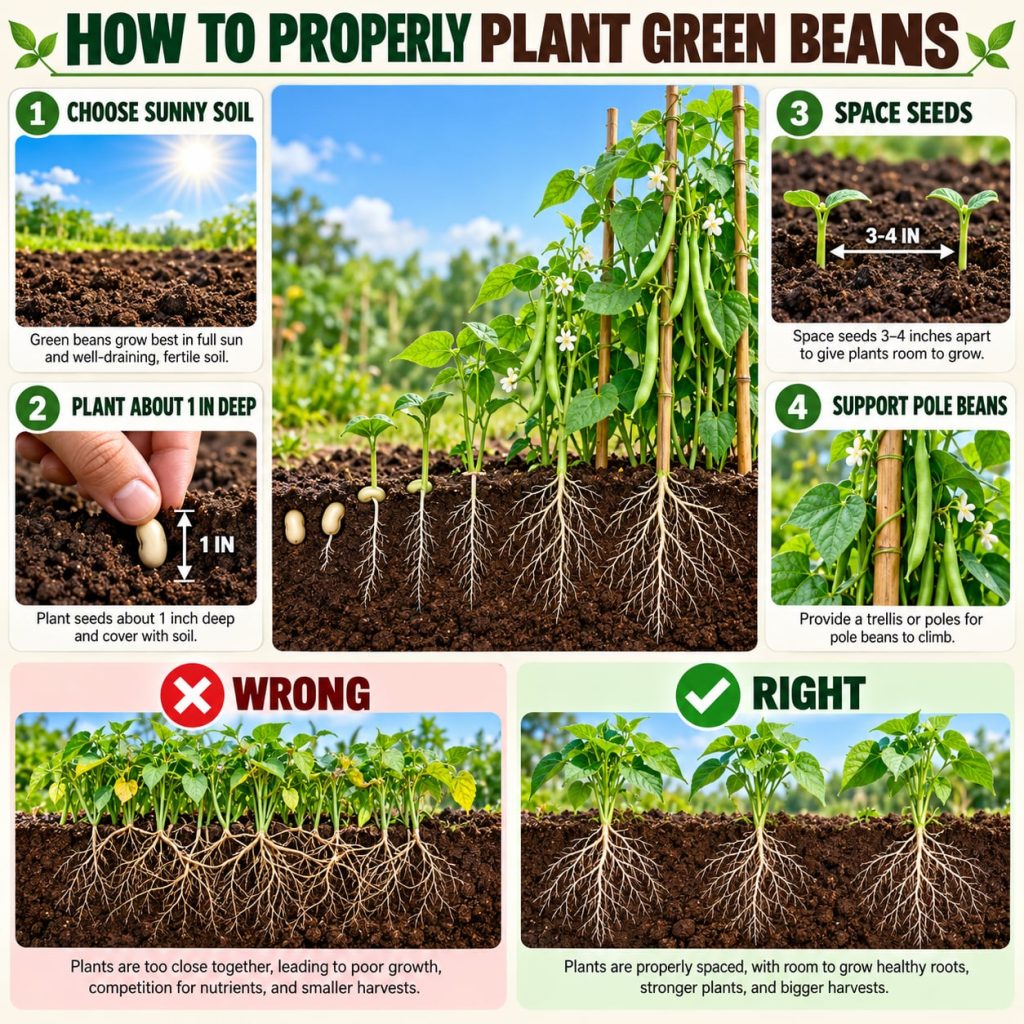
Green beans thrive in full sun, meaning they need at least 6-8 hours of direct sunlight per day. Choose a spot in your garden that receives ample sun throughout the day.
Prepare Your Soil
Green beans prefer well-draining soil that is rich in organic matter. A pH between 6.0 and 7.0 is ideal. If your soil is heavy clay or very sandy, amend it with compost, well-rotted manure, or other organic materials to improve its structure and fertility. Healthy soil is the foundation for healthy plants!
3. When to Plant Green Beans
Green beans are sensitive to frost, so it’s crucial to wait until all danger of frost has passed in your area and the soil has warmed up. Generally, this is in late spring or early summer, when daytime temperatures are consistently above 60°F (15°C).
- For a continuous harvest: Plant new batches of bush beans every 2-3 weeks until about two months before your first expected fall frost.
- Pole beans: Plant them once, and they will produce over a longer period.
4. Planting Green Bean Seeds
Once your site is ready and the timing is right, it’s time to plant your seeds!
- Soaking Seeds (Optional but Recommended): Some gardeners like to soak green bean seeds in lukewarm water for a few hours before planting to encourage faster germination. However, don’t soak for too long (no more than 12 hours), as it can lead to rot.
- Planting Depth and Spacing:
- Bush Beans: Plant seeds 1 inch deep and about 3-4 inches apart in rows that are 18-24 inches apart.
- Pole Beans: Plant seeds 1 inch deep in hills of 4-6 seeds, with hills spaced 3-4 feet apart. Alternatively, plant them 4-6 inches apart along a trellis or support structure.
- Watering: Water thoroughly after planting to settle the soil around the seeds.
5. Ongoing Care for Healthy Plants
Watering
Green beans need consistent moisture, especially during flowering and pod development. Aim for about 1 inch of water per week, either from rainfall or irrigation. Water at the base of the plant to keep foliage dry, which helps prevent fungal diseases.
Mulching
Apply a layer of organic mulch (like straw, shredded leaves, or wood chips) around your plants. Mulch helps retain soil moisture, suppress weeds, and regulate soil temperature.
Support for Pole Beans
If you’re growing pole beans, ensure your support structure (trellis, stakes, or netting) is in place at planting time. Guide the young vines towards the support as they begin to grow.
Pest and Disease Management
Keep an eye out for common pests like aphids, bean beetles, and slugs. Use organic pest control methods such as hand-picking, neem oil, or introducing beneficial insects. Ensure good air circulation and avoid overhead watering to prevent fungal diseases like powdery mildew.
6. Harvesting Your Green Beans
Green beans are typically ready for harvest 50-60 days after planting, depending on the variety. The best time to pick them is when the pods are firm, crisp, and snap easily. They should be long enough for the variety but before the seeds inside begin to bulge significantly.
- How to Harvest: Gently snap or cut the beans from the plant, being careful not to damage the plant itself.
- Frequency: Harvest frequently (every 2-3 days) to encourage the plant to produce more beans.
Enjoy Your Bountiful Harvest!
Growing your own green beans is a simple pleasure that yields delicious rewards. With a little planning and consistent care, you’ll be enjoying fresh, homegrown green beans all season long. Happy gardening!