The term “gut cleanse” is often used in wellness circles, but it’s important to understand that your digestive system already has its own natural cleansing mechanisms. The liver, kidneys, digestive tract, and gut microbiome work continuously to process food, remove waste, and maintain balance.
However, many foods commonly featured in gut cleanse routines may help support digestion, hydration, regular bowel movements, and overall gut wellness when used as part of a balanced diet.
Let’s take a closer look at some of the most popular ingredients and what science actually says about them.
What Is a Gut Cleanse?
A gut cleanse generally refers to dietary practices aimed at supporting digestive health.
Rather than focusing on extreme detox programs, many nutrition experts recommend:
- Eating more fiber
- Staying hydrated
- Supporting beneficial gut bacteria
- Reducing ultra-processed foods
- Increasing plant diversity
The foods below are often included because they may contribute to one or more of these goals.
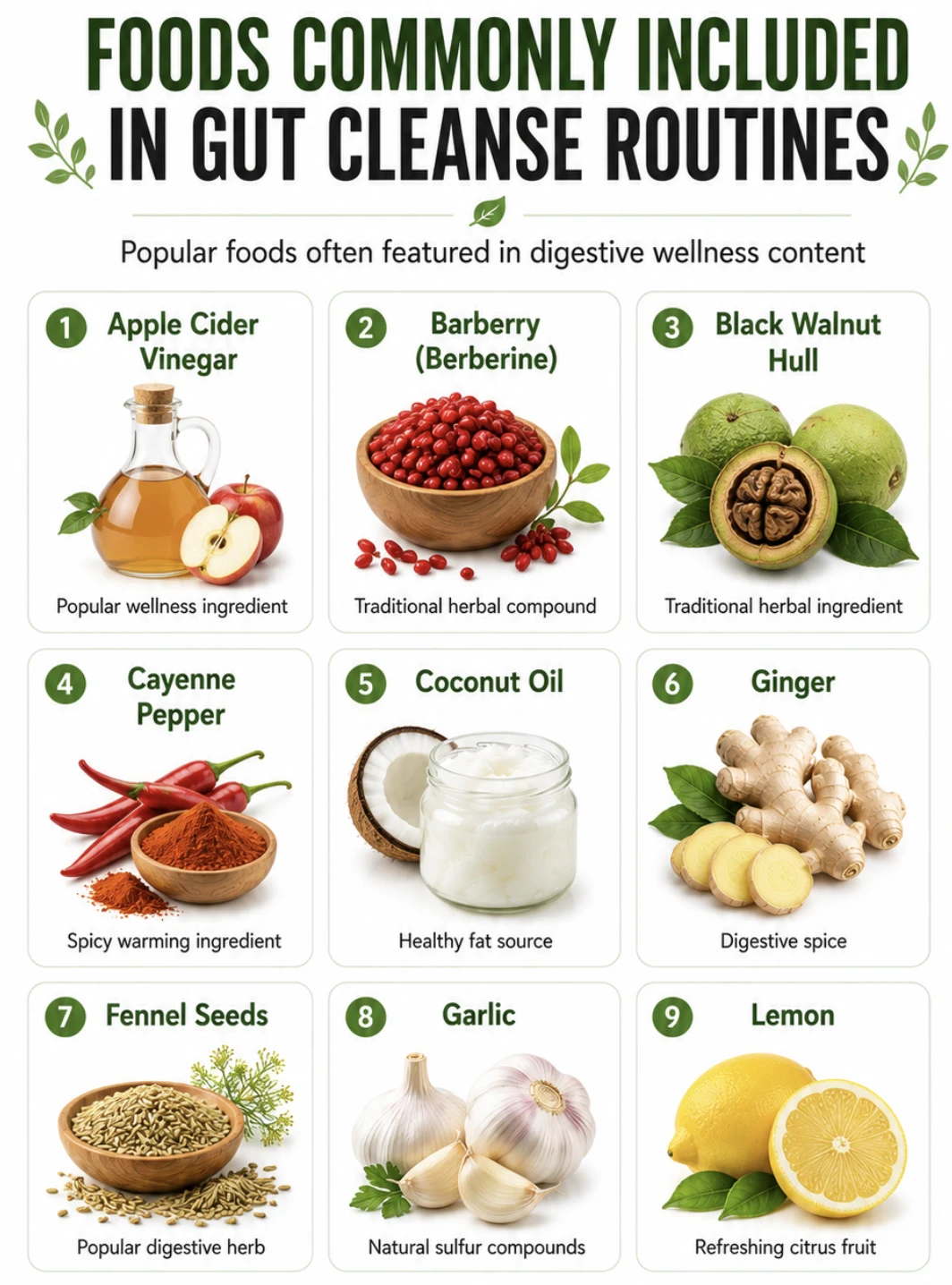
1. Apple Cider Vinegar
Apple cider vinegar has become one of the most popular wellness ingredients worldwide.
Potential Benefits
- May support healthy digestion
- Can be used in low-calorie dressings
- May help some people feel fuller after meals
How to Use It
- Mix 1–2 teaspoons into water
- Use in homemade salad dressings
- Add to marinades
Never drink apple cider vinegar undiluted, as it can irritate the throat and damage tooth enamel.
2. Barberry (Berberine Source)
Barberry contains berberine, a plant compound that has attracted attention for its potential effects on metabolism and digestive health.
Potential Benefits
- May support healthy blood sugar management
- Contains antioxidant compounds
- Traditionally used in herbal wellness practices
Because berberine may interact with medications, consult a healthcare professional before supplementation.
3. Black Walnut Hull
Black walnut hull has a long history of traditional use in herbal medicine.
Common Uses
- Featured in herbal digestive protocols
- Contains plant compounds with antioxidant properties
Scientific evidence remains limited, and concentrated supplements should only be used under professional guidance.
4. Cayenne Pepper
Cayenne pepper contains capsaicin, the compound responsible for its heat.
Possible Benefits
- May stimulate digestion
- Supports circulation
- Adds flavor without extra calories
Easy Ways to Use It
- Soups
- Chili recipes
- Roasted vegetables
- Homemade spice blends
Those with acid reflux or sensitive stomachs may prefer smaller amounts.
5. Coconut Oil
Coconut oil contains medium-chain triglycerides (MCTs), which are metabolized differently than many other fats.
Benefits
- Provides a quick source of energy
- Useful in cooking and baking
- Popular in many traditional diets
Use in moderation as part of a balanced eating pattern.
6. Ginger
Ginger is one of the most widely studied digestive-supportive foods.
Potential Benefits
- May help reduce nausea
- Supports gastric emptying
- Traditionally used for digestive comfort
Best Ways to Enjoy Ginger
- Ginger tea
- Smoothies
- Stir-fries
- Soups
Fresh ginger often provides the strongest flavor and aroma.
7. Fennel Seeds
Fennel seeds have been used for centuries as a digestive aid.
Why They’re Popular
- Traditionally used after meals
- May help reduce feelings of bloating
- Provide a pleasant licorice-like flavor
Easy Uses
- Herbal tea
- Spice blends
- Chewed after meals
- Added to soups
8. Garlic
Garlic contains natural sulfur compounds and prebiotic fibers that help nourish beneficial gut bacteria.
Benefits
- Supports microbial diversity
- Adds flavor without excess calories
- Contains antioxidant compounds
Cooking Ideas
- Roasted garlic
- Soups
- Sauces
- Vegetable dishes
9. Lemon
Lemons provide vitamin C and refreshing flavor.
Potential Benefits
- Encourages hydration
- Adds flavor without sugar
- Supports healthy eating habits
Simple Uses
- Lemon water
- Salad dressings
- Seafood dishes
- Herbal teas
While lemon water is refreshing, it is not a detox cure.
10. Cloves
Cloves are rich in antioxidants and have long been used in traditional wellness practices.
Ways to Use Cloves
- Herbal teas
- Curries
- Baked goods
- Spice blends
A little goes a long way due to their strong flavor.
11. Papaya Seeds
Papaya seeds are often featured in digestive wellness discussions.
Nutritional Highlights
- Contain plant compounds
- Commonly used in traditional diets
- Provide a peppery flavor
Most people consume papaya fruit far more often than the seeds themselves.
12. Oregano
Oregano is an aromatic herb packed with flavor and beneficial plant compounds.
Benefits
- Rich in antioxidants
- Enhances meals naturally
- Supports plant diversity in the diet
Easy Uses
- Pizza sauce
- Pasta dishes
- Roasted vegetables
- Salad dressings
Building a Gut-Friendly Routine
Instead of focusing on aggressive cleanses, consider building daily habits that support digestive wellness.
Eat More Fiber
Good sources include:
- Fruits
- Vegetables
- Beans
- Whole grains
- Seeds
Stay Hydrated
Water helps fiber work effectively and supports normal digestion.
Include Fermented Foods
Examples include:
- Yogurt
- Kefir
- Sauerkraut
- Kimchi
- Miso
Move Your Body
Regular physical activity can support digestive function and overall health.
Prioritize Sleep
Poor sleep can negatively affect gut health and appetite regulation.
A Simple Digestive Wellness Drink
Try this gentle morning beverage:
Ingredients
- 1 cup warm water
- Juice from half a lemon
- Small piece of fresh ginger
- Optional: 1 teaspoon apple cider vinegar
Directions
- Warm the water.
- Add lemon juice.
- Stir in grated ginger.
- Add apple cider vinegar if desired.
- Drink slowly.
This won’t “cleanse toxins,” but it can be a refreshing way to start the day while encouraging hydration.
Important Note About Gut Cleanses
Many products marketed as gut cleanses make claims that are not supported by strong scientific evidence. Your body already possesses highly effective detoxification systems through the liver, kidneys, lungs, and digestive tract.
The most sustainable approach to digestive health typically involves:
- Eating nutrient-dense foods
- Increasing fiber intake
- Managing stress
- Staying active
- Getting enough sleep
Final Thoughts
Foods such as ginger, garlic, fennel seeds, lemon, oregano, and fermented foods can play a valuable role in supporting digestive wellness. While they are often included in gut cleanse routines, their greatest benefits come from consistent inclusion in a balanced diet rather than short-term detox programs. Focusing on fiber-rich foods, hydration, and healthy lifestyle habits remains one of the most effective ways to support long-term gut health.