Gut health has become one of the most discussed topics in nutrition—and for good reason. Your digestive system does much more than process food. It plays a role in nutrient absorption, immune function, metabolism, and even mood regulation.
One of the best ways to support a healthy gut is through diet. Certain foods provide probiotics, prebiotics, fiber, resistant starch, and beneficial plant compounds that help nourish the trillions of microorganisms living in your digestive tract.
Here are 20 foods commonly associated with better digestive wellness and how to include them in your daily meals.
Why Gut Health Matters
A healthy gut microbiome can help:
- Support digestion
- Promote regular bowel movements
- Improve nutrient absorption
- Support immune function
- Reduce occasional bloating
- Help maintain overall wellness
The key is variety. Different gut bacteria thrive on different foods, which is why eating a diverse range of plant foods is often recommended.
Fermented Foods That Provide Probiotics
Probiotics are live microorganisms that may help support a balanced gut microbiome.
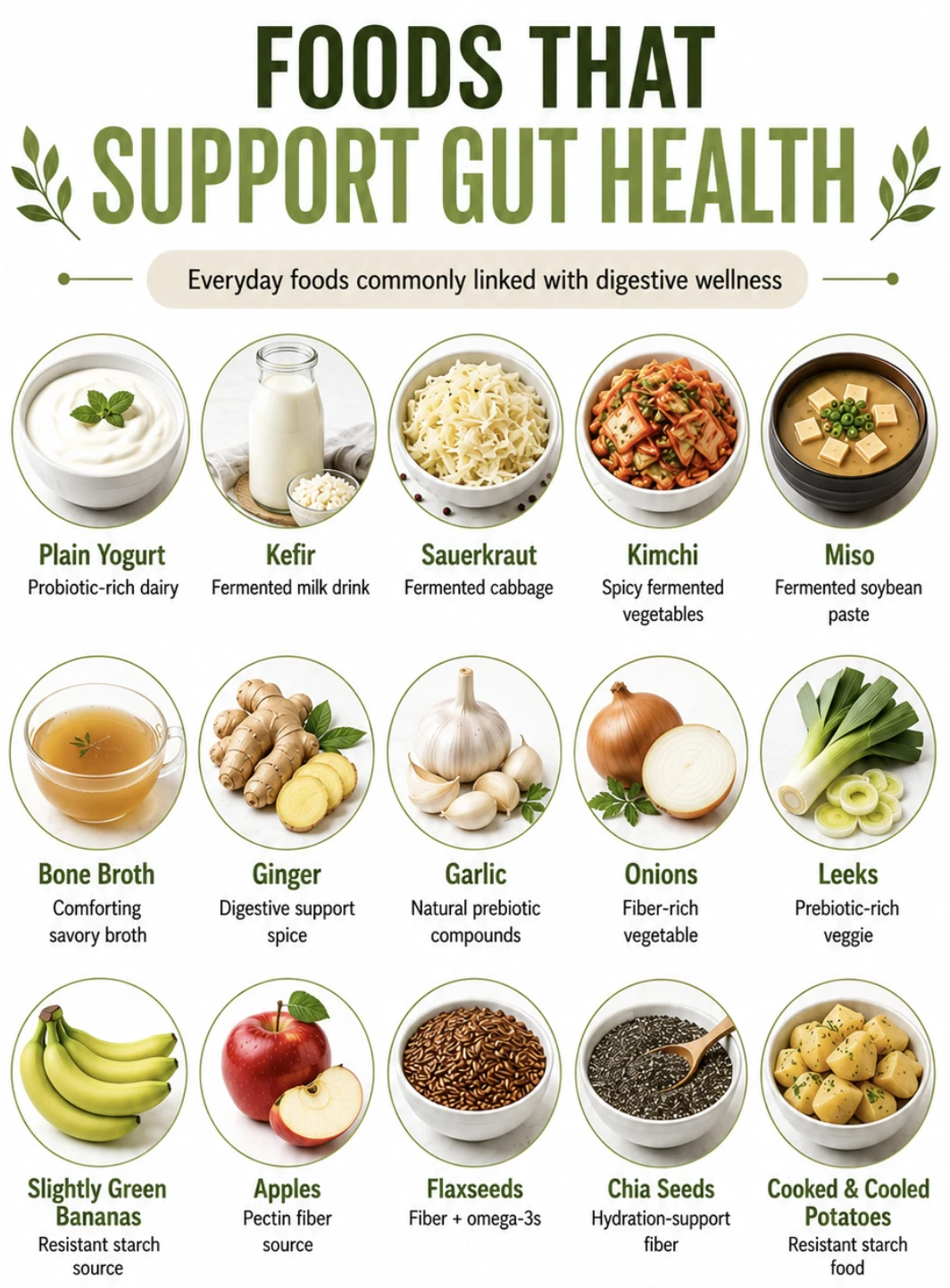
Plain Yogurt
Plain yogurt contains beneficial bacteria and is one of the easiest probiotic foods to find.
Best ways to enjoy it:
- With berries
- In smoothies
- As a breakfast bowl
- Mixed with nuts and seeds
Choose varieties with live active cultures and minimal added sugar.
Kefir
Kefir is a fermented milk drink containing a wider variety of beneficial microbes than many yogurts.
Potential benefits include:
- Probiotic support
- Protein
- Calcium
- Easy digestion for some individuals
Sauerkraut
Made from fermented cabbage, sauerkraut contains probiotics and fiber.
Try it:
- On sandwiches
- In salads
- Alongside grilled meats
- As a side dish
Kimchi
Kimchi is a traditional Korean fermented vegetable dish.
Benefits may include:
- Probiotics
- Fiber
- Antioxidants
- Diverse plant nutrients
Miso
Miso is a fermented soybean paste commonly used in Japanese cuisine.
Popular uses:
- Miso soup
- Marinades
- Sauces
- Salad dressings
Foods That Support Digestion Naturally
Bone Broth
Bone broth contains amino acids and minerals that may support digestive comfort.
Many people enjoy it:
- As a warm beverage
- In soups
- As a cooking liquid for grains
Ginger
Ginger has been traditionally used for digestive support for centuries.
Potential benefits:
- May help reduce nausea
- Supports digestion
- Adds flavor without extra calories
Easy uses include tea, stir-fries, soups, and smoothies.
Garlic
Garlic contains compounds that may act as prebiotics, helping feed beneficial gut bacteria.
Try adding garlic to:
- Soups
- Roasted vegetables
- Sauces
- Meat dishes
Onions
Onions are rich in prebiotic fibers that help nourish healthy gut microbes.
Both raw and cooked onions can contribute beneficial compounds.
Leeks
Leeks belong to the same family as garlic and onions and provide similar prebiotic benefits.
They’re excellent in:
- Soups
- Roasted vegetable dishes
- Grain bowls
- Casseroles
High-Fiber Foods for a Healthy Gut
Fiber serves as food for beneficial bacteria and helps maintain regular digestion.
Apples
Apples contain pectin, a type of soluble fiber that supports gut health.
Enjoy them:
- Fresh
- Sliced with nut butter
- Added to oatmeal
- In salads
Flaxseeds
Flaxseeds provide both soluble fiber and omega-3 fatty acids.
Best consumed:
- Ground into smoothies
- Mixed into yogurt
- Added to oatmeal
- Included in baked goods
Chia Seeds
Chia seeds absorb water and form a gel-like texture that supports digestive regularity.
Popular uses:
- Chia pudding
- Smoothies
- Yogurt toppings
- Oatmeal mix-ins
Legumes
Beans, lentils, and chickpeas are among the best sources of fiber and plant protein.
Benefits include:
- Feeding beneficial bacteria
- Supporting fullness
- Providing important minerals
Resistant Starch Foods
Resistant starch behaves similarly to fiber and can nourish beneficial gut bacteria.
Slightly Green Bananas
Less-ripe bananas contain higher levels of resistant starch than fully ripe bananas.
They can be added to:
- Smoothies
- Oatmeal
- Breakfast bowls
Cooked and Cooled Potatoes
Cooling potatoes after cooking increases resistant starch content.
Try them in:
- Potato salad
- Meal prep bowls
- Chilled side dishes
Cooked and Cooled Rice
Rice that has been cooked and then cooled also develops resistant starch.
Great options include:
- Rice salads
- Grain bowls
- Meal-prep lunches
Colorful Plant Foods for Microbial Diversity
Berries
Blueberries, strawberries, raspberries, and blackberries provide antioxidants and fiber.
Regular consumption may help support a diverse gut microbiome.
Artichokes
Artichokes are particularly rich in prebiotic fiber.
They can be enjoyed:
- Roasted
- Grilled
- Added to salads
- Mixed into pasta dishes
A Variety of Plant Foods
One of the simplest gut-health strategies is eating more plant diversity.
Aim to include:
- Fruits
- Vegetables
- Beans
- Whole grains
- Nuts
- Seeds
- Herbs and spices
Research suggests that people who eat a wider variety of plant foods often have greater gut microbial diversity.
Sample Gut-Friendly Day
Breakfast
Plain yogurt with berries, chia seeds, and flaxseeds
Lunch
Rice bowl with cooled rice, vegetables, garlic, onions, and chickpeas
Snack
Apple with almonds
Dinner
Salmon with roasted vegetables and sauerkraut
Evening
Cup of ginger tea
This combination provides probiotics, prebiotics, fiber, resistant starch, and antioxidants throughout the day.
Important Note
Gut health is influenced by many factors including diet, sleep, physical activity, hydration, stress management, and overall lifestyle. While these foods may support digestive wellness, they are not treatments for medical conditions. Individuals with digestive disorders should consult a healthcare professional for personalized advice.
Final Thoughts
Supporting gut health doesn’t require expensive supplements or restrictive diets. Simple foods such as yogurt, kefir, kimchi, garlic, onions, apples, legumes, chia seeds, berries, and resistant starch-rich foods can all contribute to a healthier digestive environment. By focusing on variety, fiber, and fermented foods, you can help nourish your gut microbiome and support overall health one meal at a time.