Understanding how different foods impact your body is a cornerstone of achieving stable energy and supporting overall metabolic health. Often, the conversation around healthy eating can feel overwhelming, but at its heart, it’s about making informed choices that empower your well-being. Today, we’re diving into a crucial topic: how certain foods can cause a rapid ‘spike’ in your insulin levels, while others help keep things steady and balanced.
This guide will help you decode your plate, giving you the knowledge to make choices that nourish your body and promote lasting vitality.
What is Insulin and Why Does it Matter?
Before we categorize foods, let’s briefly understand insulin. Insulin is a hormone produced by your pancreas, and its main job is to help your body’s cells absorb glucose (sugar) from your bloodstream for energy. Think of it as a key that unlocks your cells to let sugar in. When you eat, especially carbohydrate-rich foods, your blood glucose levels rise, signaling your pancreas to release insulin.
A healthy insulin response is essential for converting food into energy efficiently. However, frequent and significant insulin spikes can lead to your cells becoming less responsive to insulin over time, a condition known as insulin resistance. This can contribute to various metabolic challenges and leave you feeling fatigued, sluggish, and craving more sugary foods.
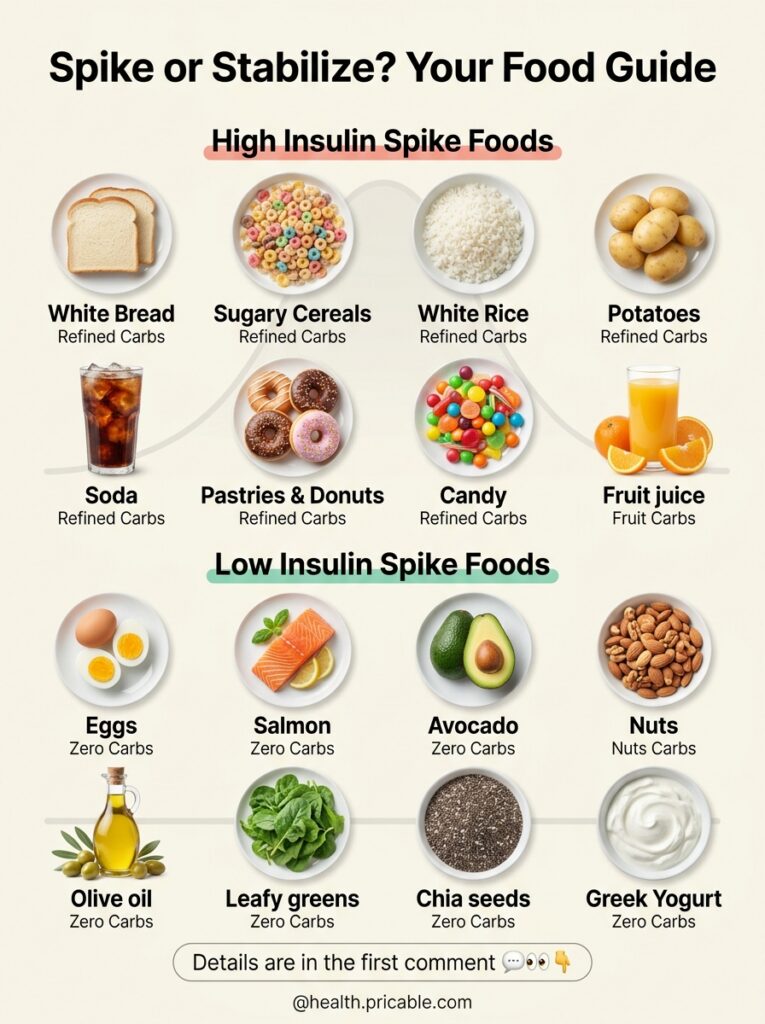 This visual guide illustrates common foods that cause high versus low insulin responses.
High Insulin Spike Foods: The Quick Release
These are the foods that cause a rapid and significant rise in your blood sugar, prompting a large release of insulin. They are often characterized by being high in refined carbohydrates and sugars, with little to no fiber, protein, or healthy fats to slow down absorption.
What They Are and Why They Spike Insulin:
- Refined Grains: Think white bread, white pasta, pastries, and many breakfast cereals. These have had their fiber-rich outer layers (bran and germ) removed, making their starches easy for your body to convert into glucose quickly. For instance, highly processed sugary cereals are classic examples of foods that lead to a rapid surge in blood sugar.
- Sugary Beverages: Sodas, fruit juices (even 100% juice lacking fiber), and sweetened teas/coffees flood your system with sugar without any fiber to buffer the impact.
- Sweets and Candies: As seen with candies, these are essentially concentrated sugar, leading to an immediate and sharp glucose peak.
- Processed Snacks: Many crackers, chips, and baked goods fall into this category, often combining refined flours with added sugars and unhealthy fats.
The Impact of Frequent Spikes:
While an occasional treat is fine, regularly consuming these foods can lead to:
- Energy Crashes: The sudden rush of sugar is often followed by an equally sudden drop, leaving you feeling tired and sluggish.
- Increased Cravings: The blood sugar roller coaster can trigger cravings for more sugary or carb-heavy foods.
- Long-Term Metabolic Strain: Over time, constant high insulin levels can contribute to insulin resistance, making it harder for your body to manage blood sugar effectively.
Low Insulin Spike Foods: The Steady Support
These foods are your allies in maintaining stable blood sugar and consistent energy levels. They are typically whole, unprocessed, and rich in fiber, protein, and healthy fats – all components that slow down glucose absorption and minimize insulin demands.
What They Are and Why They Stabilize Insulin:
- Lean Proteins: Foods like salmon, chicken breast, turkey, eggs, and lean beef have little to no carbohydrates, so they don’t directly raise blood sugar or stimulate a large insulin response. Protein also promotes satiety, helping you feel full and satisfied.
- Healthy Fats: Sources like avocado, nuts, seeds, and olive oil also have minimal impact on blood sugar. Fats slow down digestion, which in turn slows the release of glucose into the bloodstream when consumed with carbohydrates.
- Fiber-Rich Vegetables: Leafy greens (spinach, kale), broccoli, bell peppers, and other non-starchy vegetables are packed with fiber, which delays sugar absorption. They provide essential nutrients with very few digestible carbohydrates.
- Certain Whole Grains & Legumes: In moderation, whole grains like quinoa, oats, and brown rice, and legumes such as lentils and beans, release glucose more slowly due to their fiber content.
- Berries and Some Fruits: While fruits contain natural sugars, berries (like blueberries, strawberries) are generally lower in sugar and higher in fiber than many other fruits, leading to a gentler blood sugar response.
The Benefits of Stable Blood Sugar:
- Sustained Energy: No more afternoon slumps! You’ll experience more consistent energy throughout the day.
- Improved Mood and Focus: Stable blood sugar helps prevent mood swings and supports better cognitive function.
- Reduced Cravings: By keeping insulin levels even, you’re less likely to experience intense hunger or cravings for quick sugar fixes.
- Enhanced Metabolic Health: Supporting a healthy insulin response is key to preventing insulin resistance and promoting long-term well-being.
Making Smart Choices: Practical Tips for Your Plate
Empowering yourself with knowledge is the first step. Here are some actionable tips to help you navigate your food choices for better blood sugar balance:
- Prioritize Whole Foods: Build your meals around unprocessed ingredients like lean proteins, healthy fats, and plenty of non-starchy vegetables.
- Balance Your Plate: When you do consume carbohydrates, pair them with protein and healthy fats. For example, add avocado and nuts to your salads, or enjoy a piece of salmon with a side of leafy greens.
- Read Labels Carefully: Become a detective! Look for added sugars (under various names like high-fructose corn syrup, dextrose, maltose) and prioritize foods with higher fiber content and fewer refined ingredients.
- Choose Fiber Wisely: Opt for whole fruits over juice, and choose whole grains in their least processed forms.
- Hydrate with Water: Plain water is always the best choice. Avoid sugary drinks that offer no nutritional value and can cause significant spikes.
Empower Your Wellness Journey
Understanding the difference between high and low insulin spike foods isn’t about rigid restrictions; it’s about empowerment. It’s about knowing how to fuel your body for optimal performance, stable energy, and long-term metabolic health. By consciously choosing foods that stabilize your blood sugar, you’re investing in a more vibrant, balanced, and energetic you. Start making small, positive changes today and feel the difference!