Ever wondered what makes your garden truly thrive, pushing out those juicy tomatoes and crisp cucumbers? While good soil and plenty of sunshine are super important, there’s a whole community of tiny helpers working tirelessly behind the scenes: our native pollinators! These amazing insects are the unsung heroes of our gardens, ensuring that our plants get what they need to produce a fantastic harvest. Let’s dive into the wonderful world of native pollinators and discover how they can help your garden flourish like never before.
Why Native Pollinators Are Your Garden’s Best Friends
When we think of pollination, honeybees often come to mind, and they certainly do a great job! But did you know that native bees and other local insects are often even more efficient at pollinating many of our beloved garden plants? They’ve evolved right alongside our local flora, making them perfectly suited for the job. They don’t just visit flowers for nectar; they actively transfer pollen, which is essential for fruit and seed development.
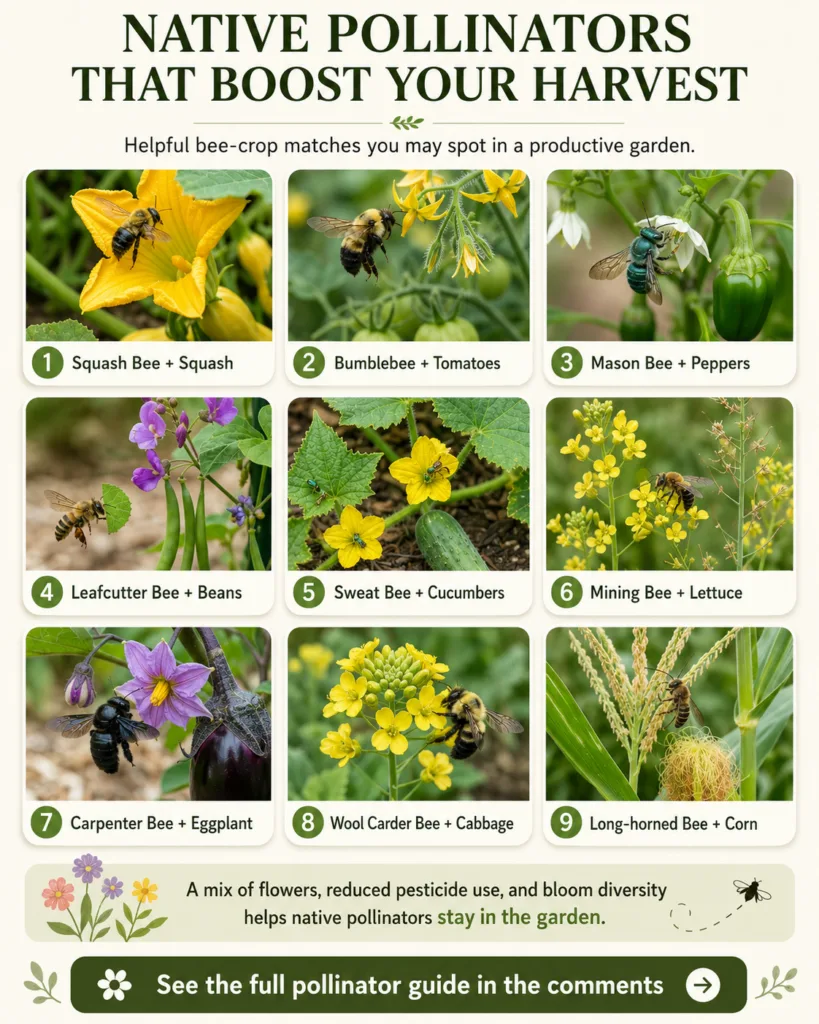 Meet your garden’s secret weapon: native pollinators and the crops they love to help grow!
Getting to Know Our Local Heroes
Take a peek at the infographic above, and you’ll see a fantastic lineup of some of our native bee friends. It’s truly eye-opening to see just how many different kinds of bees there are, each with their own special role in the garden. These aren’t just generic ‘bees’; they are specialized workers, perfectly adapted to help specific plants.
A Perfect Match: Bees and Their Favorite Crops
The beauty of native pollinators is their specialization. For instance:
- Squash Bees: These fuzzy fellows are early risers and are incredibly efficient at pollinating squash, pumpkins, and gourds, often before honeybees are even out and about.
- Bumblebees: Our big, fuzzy bumblebees are amazing at ‘buzz pollination’ (sonication), which is vital for crops like tomatoes, peppers, and eggplants. They literally shake the pollen loose!
- Mason Bees & Leafcutter Bees: These gentle solitary bees are fantastic generalists, but especially great for fruit trees, berries, and many garden vegetables like beans and cucumbers. They’re super efficient and rarely sting.
- Sweat Bees & Mining Bees: Often smaller and less noticeable, these bees contribute to pollinating a wide range of flowers and vegetables, including lettuce and cabbage.
Imagine the boost your harvest will get when these dedicated workers are busy in your garden!
Simple Ways to Invite Pollinators to Your Patch
Want more native pollinators in your garden? It’s easier than you might think! Here are some neighborly tips to make your garden a welcoming haven for these helpful insects:
Plant a Pollinator Feast
The best way to attract pollinators is to offer them what they need: food! Think about having a diverse mix of flowers that bloom throughout the growing season.
- Native Plants are Key: Choose plants native to your region. These are what local pollinators are accustomed to and often prefer.
- Variety is the Spice of Life: Plant a mix of colors, shapes, and sizes of flowers. Different pollinators are attracted to different types. For example, long-tongued bees prefer tubular flowers, while short-tongued bees like open, disc-shaped flowers.
- Succession Planting: Make sure something is always in bloom from early spring to late fall. This provides a continuous food source.
- Groupings: Plant flowers in clumps rather than single scattered plants. This makes it easier for pollinators to find them and forage efficiently.
Say No to Harmful Sprays
Pesticides, even those labeled ‘organic,’ can harm beneficial insects like our pollinators. Consider embracing organic pest control methods that focus on prevention and natural solutions.
- Hand-picking Pests: For larger pests, a quick daily patrol and hand-picking can save your plants without harming bees.
- Beneficial Insects: Encourage other beneficial insects like ladybugs and lacewings, which prey on garden pests.
- Healthy Soil, Healthy Plants: Strong, healthy plants grown in rich organic soil are more resistant to pest attacks naturally.
Give Them a Home Sweet Home
Pollinators need places to live and nest, not just food. Many native bees are solitary and nest in the ground or in hollow stems.
- Leave Bare Soil Patches: Many ground-nesting bees need undisturbed, sunny patches of bare soil.
- Create ‘Bee Hotels’: You can buy or make simple ‘bee hotels’ with hollow reeds or drilled wood blocks for tunnel-nesting bees like mason and leafcutter bees.
- Don’t Be Too Tidy: Leaving some plant stalks standing over winter provides nesting sites. Piles of leaves or logs can also offer shelter.
- Water Source: A shallow dish with pebbles or marbles for landing spots can provide a safe drinking source for thirsty bees.
The Bigger Picture: A Healthier Garden Ecosystem
By inviting native pollinators into your garden, you’re not just boosting your harvest; you’re contributing to a healthier, more vibrant local ecosystem. You’re supporting biodiversity and creating a resilient garden that can handle challenges better. Plus, there’s a wonderful joy in watching these busy little creatures go about their work!
Happy Buzzing, Happy Harvesting!
Embracing native pollinators is a simple, rewarding step towards a more productive and beautiful garden. With a little planning and a lot of love, you can create a buzzing paradise that yields an abundance of delicious fruits and vegetables. So, go ahead, plant some extra flowers, skip the chemicals, and watch your garden (and your harvest!) come alive with the help of these incredible native helpers. Happy gardening!