Consistent watering is truly the unsung hero of a flourishing garden. It’s the difference between plants that merely survive and those that truly thrive, bursting with vibrant color or bountiful harvests. Seeing your leafy greens perk up after a thoughtful drink, or your fruit trees laden with ripening produce, is one of gardening’s most rewarding experiences. But what does ‘consistent’ really mean? It’s not a one-size-fits-all solution. Each plant has its unique thirst, and understanding these individual needs is the cornerstone of effective plant care.
Many new gardeners, and even some seasoned ones, struggle with knowing exactly how much and how often to water. Overwatering can be just as detrimental as underwatering, leading to root rot, nutrient loss, and a host of other issues. That’s why diving into the specific hydration needs of your garden residents is an invaluable step towards a healthier, more productive space. Let’s explore how to quench your plants’ thirst perfectly, ensuring every drop counts for their vitality and your gardening success.
Understanding Your Plants’ Thirst
The secret to successful garden watering lies in observation and understanding. Factors like your soil type, local climate (temperature, humidity, wind), whether plants are in containers or in-ground, and the plant’s growth stage all influence its water requirements. Sandy soils drain quickly, requiring more frequent watering, while clay soils hold moisture longer, necessitating less frequent but potentially deeper irrigation. Hot, windy weather will dry out plants faster, and young seedlings always need more frequent attention than established plants.
Instead of watering on a strict schedule, make it a habit to check the soil moisture. Stick your finger about an inch or two into the soil. If it feels dry, it’s likely time to water. For larger plants, you might need to check deeper. This hands-on approach will teach you to recognize your garden’s unique rhythms.
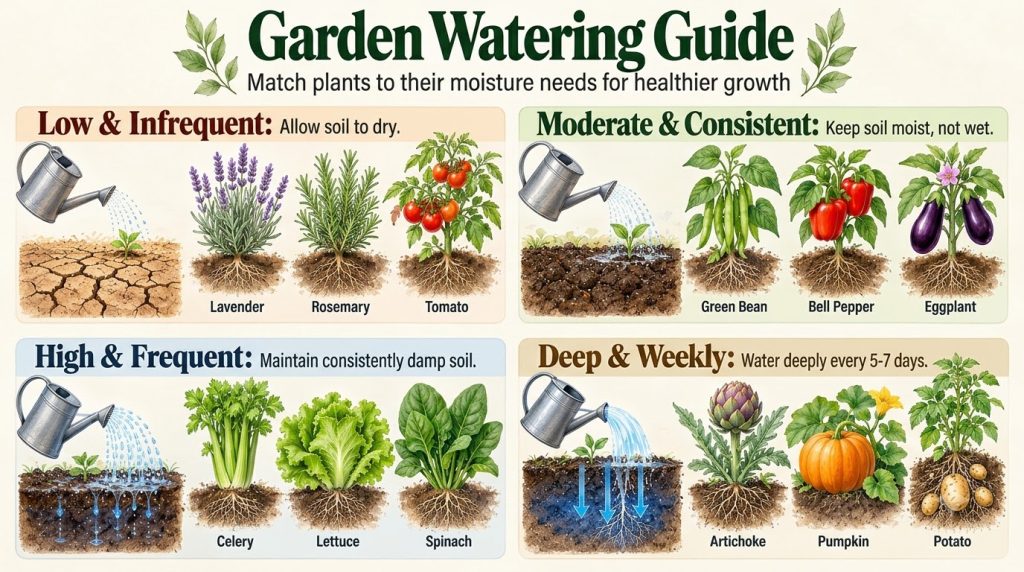
Little and Infrequent: The Drought-Tolerant Trio
Some plants thrive on neglect when it comes to water, preferring well-drained soil and periods of dryness between drinks. These are often Mediterranean herbs, adapted to arid conditions. Overwatering is their biggest enemy, leading to root rot and weak growth.
Lavender (Lavandula angustifolia)
Known for its soothing fragrance and beautiful purple spikes, lavender is a star of the dry garden. It prefers lean, well-drained soil and full sun.
- Hardiness: USDA Zones 5–9
- Plant type: Perennial subshrub
- Exposure: Full sun (at least 6-8 hours)
- Height: 1-3 feet
- Spread: 1-3 feet
Watering: Water deeply when young to establish roots, then only once every 2-4 weeks during dry periods. Allow the soil to dry out completely between waterings. Reduce watering significantly in winter.
Care Tip: Ensure excellent drainage. Consider raised beds or amending heavy clay soils with grit or sand.
Rosemary (Salvia rosmarinus)
This aromatic herb is indispensable in the kitchen and beautiful in the garden. Like lavender, it demands well-drained conditions and plenty of sun.
- Hardiness: USDA Zones 7–10 (can be grown as an annual or container plant elsewhere)
- Plant type: Perennial evergreen shrub/herb
- Exposure: Full sun
- Height: 2-6 feet (cultivar dependent)
- Spread: 2-4 feet
Watering: Water regularly until established, then allow the soil to dry out between waterings. Reduce frequency in cooler weather. It’s more tolerant of dry conditions than wet ones.
Care Tip: Provide good air circulation to prevent fungal issues, especially in humid climates.
Sage (Salvia officinalis)
Another culinary delight, common sage is remarkably tough and beautiful with its textured, grey-green leaves. It shares a love for sunshine and dry feet.
- Hardiness: USDA Zones 4–8
- Plant type: Perennial subshrub/herb
- Exposure: Full sun
- Height: 1-2.5 feet
- Spread: 1-2.5 feet
Watering: Water thoroughly after planting and keep consistently moist until it establishes a robust root system. Once established, water sparingly, only when the top few inches of soil are dry.
Care Tip: Prune in spring to encourage bushy growth and prevent woodiness.
Moderate and Consistent: The Balanced Drinkers
Many popular vegetables fall into this category, requiring a steady supply of moisture to develop properly without being waterlogged. Consistency is key here to prevent stress and encourage even growth.
Carrot (Daucus carota subsp. sativus)
For straight, sweet carrots, consistent soil moisture is crucial. Erratic watering can lead to splitting or stunted, bitter roots.
- Hardiness: Annual
- Plant type: Root vegetable
- Exposure: Full sun
- Height: 8-12 inches (foliage)
- Spread: 3-6 inches
Watering: Keep the soil consistently moist from sowing through harvest. Water deeply enough to penetrate the root zone, typically 6-8 inches. Avoid letting the soil dry out completely, then re-saturating.
Care Tip: Sow seeds into loose, stone-free soil for ideal root development.
Tomato (Solanum lycopersicum)
Tomatoes are famously thirsty, especially once they start setting fruit. Consistent watering prevents common issues like blossom end rot and fruit cracking.
- Hardiness: Annual (tender perennial in Zones 10-11)
- Plant type: Fruiting vegetable
- Exposure: Full sun (at least 6-8 hours)
- Height: 3-8 feet (determinate vs. indeterminate)
- Spread: 2-4 feet
Watering: Aim for deep, consistent watering, about 1-1.5 inches per week, increasing during hot weather or when fruits are developing. Water at the base of the plant to keep foliage dry and prevent fungal diseases.
Care Tip: Mulch around plants to retain soil moisture and regulate soil temperature.
Onion (Allium cepa)
Onions need consistent moisture to develop large, healthy bulbs. Irregular watering, especially when bulbs are forming, can lead to small, multiple, or split bulbs.
- Hardiness: Biennial (typically grown as annual)
- Plant type: Bulb vegetable
- Exposure: Full sun
- Height: 12-18 inches
- Spread: 4-6 inches
Watering: Keep the soil evenly moist, particularly during the early growth stages and as bulbs swell. Reduce watering slightly as the tops begin to yellow and fall over, signaling harvest time.
Care Tip: Avoid overhead watering late in the day, which can promote fungal issues.
Abundant and Frequent: The Constant Quenchers
These plants have shallow root systems or high demands for rapid growth, requiring frequent, often lighter, applications of water to keep their foliage lush and their produce tender.
Lettuce (Lactuca sativa)
Leafy greens like lettuce thrive in consistently moist soil. Any stress from lack of water can cause them to bolt (go to seed) prematurely or develop a bitter taste.
- Hardiness: Annual
- Plant type: Leafy vegetable
- Exposure: Full sun to partial shade
- Height: 6-12 inches
- Spread: 6-12 inches
Watering: Water frequently, often daily in hot, dry weather, to keep the top few inches of soil consistently moist. Avoid overhead watering in direct sun, which can scorch leaves.
Care Tip: Harvest outer leaves regularly to encourage continuous production and prevent bolting.
Radish (Raphanus sativus)
Fast-growing radishes need abundant, consistent moisture to develop quickly and taste mild. If they dry out, they become woody, hot, and unpleasant.
- Hardiness: Annual
- Plant type: Root vegetable
- Exposure: Full sun to partial shade
- Height: 4-8 inches (foliage)
- Spread: 1-3 inches
Watering: Provide consistent, even moisture. The soil should never be allowed to dry out. Water daily if necessary, especially during warm, dry spells, focusing on the shallow root zone.
Care Tip: Harvest promptly when roots are mature; leaving them too long makes them pithy.
Cabbage (Brassica oleracea var. capitata)
Cabbage plants are heavy feeders and extremely thirsty, especially as their heads begin to form. Consistent moisture is vital for large, dense heads.
- Hardiness: Biennial (grown as annual)
- Plant type: Leafy vegetable
- Exposure: Full sun
- Height: 1-2 feet
- Spread: 1.5-2.5 feet
Watering: Cabbage needs substantial water, about 1.5 inches per week. Ensure deep, consistent watering, especially during head formation. Mulching helps retain critical moisture.
Care Tip: Protect young plants from pests like cabbage worms with row covers.
Deep and Weekly: The Established Thirsty Giants
For established trees and vines, the goal is to encourage deep root growth, which makes them more resilient to dry spells. This means watering less frequently but very deeply.
Apple Tree (Malus domestica)
While young apple trees need frequent watering, established trees benefit from deep, infrequent irrigation to support fruit development and overall health.
- Hardiness: USDA Zones 3–9 (cultivar dependent)
- Plant type: Deciduous fruit tree
- Exposure: Full sun
- Height: 10-30 feet (dwarf, semi-dwarf, standard)
- Spread: 10-30 feet
Watering: For established trees, water deeply once a week during dry periods, especially from spring through harvest. Aim to moisten the soil to a depth of 1-2 feet. Young trees need more frequent watering.
Care Tip: Apply a generous layer of organic mulch around the base of the tree (keeping it away from the trunk) to conserve moisture.
Grape (Vitis vinifera or other Vitis species)
Grapevines are surprisingly drought-tolerant once established, but they do require deep, consistent watering for optimal fruit production, particularly during fruit set and ripening.
- Hardiness: USDA Zones 4–10 (species/cultivar dependent)
- Plant type: Deciduous woody vine
- Exposure: Full sun
- Height: Up to 30 feet (with support)
- Spread: 6-15 feet
Watering: Water established grapevines deeply every 1-2 weeks during dry periods, focusing on the root zone. Reduce watering as harvest approaches to concentrate sugars in the fruit. Young vines need more frequent watering for the first couple of years.
Care Tip: Provide a sturdy trellis or arbor for support, as grapevines are vigorous growers.
Walnut Tree (Juglans spp.)
Walnut trees, both Black and English varieties, are majestic and long-lived. Once established, they develop extensive root systems that benefit from deep, less frequent watering.
- Hardiness: USDA Zones 4–9 (species dependent)
- Plant type: Deciduous nut tree
- Exposure: Full sun
- Height: 50-100 feet
- Spread: 50-75 feet
Watering: Established walnut trees generally require minimal supplemental watering after a few years, but benefit from deep watering during prolonged dry spells, especially if they are young or bearing heavily. Aim to soak the root zone thoroughly.
Care Tip: Be aware that Black Walnut trees produce juglone, a chemical toxic to many other plants, so plan your garden layout accordingly.
Common Watering Mistakes to Avoid
- Overwatering: The most common killer. Leads to root rot, suffocates roots, and washes away nutrients. Symptoms include yellowing leaves, stunted growth, and soft, mushy stems. Always check soil moisture before watering.
- Underwatering: While less common than overwatering, it causes wilting, crispy leaves, slow growth, and poor yields. Plants will often recover quickly once watered, but prolonged dryness is damaging.
- Shallow Watering: Frequent, light watering encourages shallow root systems, making plants more susceptible to drought and heat stress. Aim for deep watering that penetrates the root zone.
- Inconsistent Watering: Especially detrimental for fruiting vegetables like tomatoes and squash, leading to blossom end rot, fruit splitting, and reduced yields. Strive for even moisture.
- Watering Foliage in Direct Sun: Water droplets can act as tiny magnifying glasses, scorching leaves. Also, wet foliage, especially overnight, can promote fungal diseases. Water at the base of the plant.
- Ignoring Soil Type: Different soils hold water differently. Adjust your watering frequency to your specific soil composition.
Regional and Climate Considerations for Watering
Gardening advice often needs translation for your specific climate. In hot, arid regions (e.g., much of the Southwest in USDA Zones 8-11), plants will naturally require more frequent and deeper watering than in cooler, humid regions (e.g., Pacific Northwest or parts of the Midwest in Zones 5-7). Always consider your local frost dates, average temperatures, rainfall patterns, and humidity levels.
For instance, an apple tree in Arizona will need much more supplemental irrigation than one in upstate New York. Similarly, lettuce grown in Florida’s humidity might be more prone to fungal issues with overhead watering compared to lettuce in a drier climate. Microclimates within your own garden, such as areas near a reflective wall or under a tree, will also affect soil moisture.
The best resource for localized watering advice is your local Cooperative Extension office. They can provide guidance tailored to your specific USDA zone, typical rainfall, and soil conditions.
Cultivate a Thriving Garden
Mastering garden watering isn’t about following a rigid schedule; it’s about developing an intuitive understanding of your plants and their environment. By paying attention to soil moisture, recognizing the unique needs of each species, and adapting your approach to local conditions, you’ll provide your plants with exactly what they need to flourish. This plant-by-plant approach to hydration transforms watering from a chore into a thoughtful act of care, leading to a more resilient, productive, and beautiful garden. So, grab your watering can, observe your plants, and enjoy the journey of cultivating a truly thriving outdoor space.