Welcome, fellow garden enthusiasts! Have you ever wondered why some of your plants flourish while others struggle, even with diligent watering and sunlight? Often, the secret lies beneath the surface – in the potting mix. It’s much more than just dirt; it’s a carefully balanced environment designed to support your plant’s unique needs. Choosing the right potting mix is one of the most crucial steps to ensure your indoor plants and container gardens truly thrive.
Think of potting mix as your plant’s foundation. A good mix provides aeration, retains moisture, allows for proper drainage, and supplies essential nutrients. A poor mix, on the other hand, can lead to root rot, nutrient deficiencies, and stunted growth. Let’s dive into the fascinating world of potting mixes and learn how to pick the perfect blend for every green friend in your collection!
Why Potting Mix Matters More Than You Think
Unlike garden soil, which is dense and designed for in-ground planting, potting mixes are engineered for contained environments. They are typically lighter, sterile, and provide the ideal balance of air and water retention needed for roots confined to a pot. Using garden soil in containers can compact, restrict root growth, and harbor pests or diseases, which is why specialized potting mixes are essential for container gardening and indoor plants.
Decoding Different Types of Potting Mixes
Just as different plants have varying needs for sunlight and water, they also have specific requirements for their growing medium. Understanding these differences is key to successful gardening.
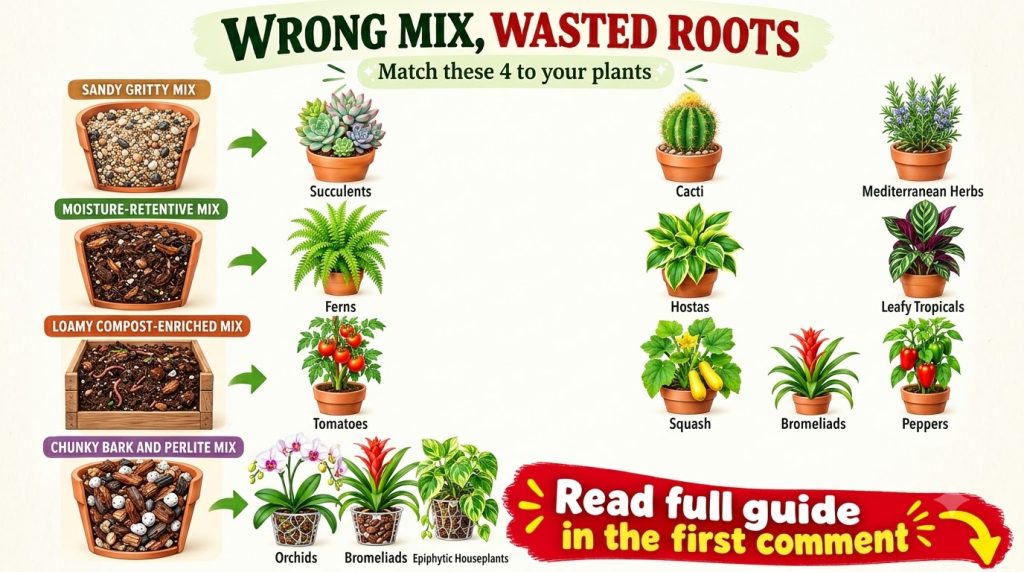
1. Sandy Gritty Mix
This mix is characterized by its excellent drainage and aeration properties. It’s typically composed of a higher percentage of sand, perlite, pumice, or grit, along with a small amount of peat or coir for some moisture retention. It dries out quickly, which is exactly what some plants love.
- Best for: Cacti, succulents, and other drought-tolerant plants that are sensitive to excess moisture and prone to root rot.
2. Loamy Compost-Enriched Mix
A richer, heavier mix, this type often contains a significant amount of compost, aged bark, peat moss, or coir, along with some perlite or vermiculite for drainage. It’s designed to hold moisture and nutrients effectively, providing a steady food source for hungry plants.
- Best for: Vegetables like tomatoes, leafy greens, herbs, and most flowering plants that require consistent moisture and a good supply of nutrients.
3. Orchid Mix
This is a highly specialized mix, often bark-based, designed to mimic the epiphytic nature of many orchids that grow on trees in their natural habitat. It provides superb drainage and air circulation, preventing soggy roots which orchids detest.
- Best for: All types of orchids, providing the coarse, free-draining environment they need to thrive.
4. All-Purpose Potting Mix
The most common and versatile option, an all-purpose mix is a balanced blend suitable for a wide range of indoor and outdoor container plants. It usually contains peat moss or coir, perlite or vermiculite, and sometimes a slow-release fertilizer.
- Best for: General houseplants, annuals, and perennials when a specific mix isn’t required. It’s a great starting point for many gardeners.
Key Components of a Quality Potting Mix
No matter the specific type, most good potting mixes share common components that serve different functions:
- Organic Matter: Peat moss, coco coir, compost, or aged bark provide structure, retain moisture, and hold onto nutrients.
- Aeration & Drainage: Perlite, vermiculite, pumice, sand, or grit prevent compaction and ensure roots get enough oxygen while allowing excess water to escape.
- Nutrients: Some mixes include a slow-release fertilizer to give plants a head start, though supplemental feeding will eventually be necessary.
- Wetting Agents: These help the mix absorb water evenly, especially in peat-heavy mixes that can become hydrophobic when dry.
Tips for Choosing and Using Potting Mixes
- Read the Label: Always check the packaging to understand what type of plants the mix is formulated for.
- Consider Your Climate: In hot, dry climates, you might prefer mixes with more moisture retention. In humid areas, faster-draining mixes are often better.
- Don’t Re-use Old Mix Indefinitely: Over time, potting mix breaks down, loses its structure, and can harbor pests. It’s best to refresh or replace it, especially when repotting.
- Moisten Before Use: Lightly pre-moisten your potting mix before planting. This helps prevent dry spots and ensures uniform hydration.
- Don’t Compact: While you want to eliminate large air pockets, avoid pressing the mix down too firmly. Roots need space to breathe and grow.
Cultivate Your Green Thumb with Confidence!
Choosing the right potting mix might seem like a small detail, but it makes a world of difference in your plants’ health and vitality. By understanding the specific needs of your plants and matching them with the appropriate mix, you’re setting them up for success. So go ahead, experiment, observe, and watch your garden flourish like never before! Happy gardening!