Are you looking to create a thriving vegetable garden that yields abundant harvests with less effort? The secret might be right under your nose – or rather, right on top of your soil! Mulching is one of the simplest yet most effective practices in gardening, transforming your garden beds into fertile, weed-free havens for your plants. It’s like a superpower for your soil, helping it retain moisture, suppress weeds, regulate temperature, and enrich its structure.
But with so many options out there, how do you choose the best mulch for your particular vegetable garden? Don’t worry, we’re here to help you navigate the wonderful world of mulching and unlock your garden’s full potential!
Why is Mulch Essential for Your Vegetable Garden?
Before diving into the different types, let’s understand why mulching is a game-changer for gardeners:
- Weed Suppression: A layer of mulch blocks sunlight, preventing weed seeds from germinating and smothering existing weeds. This means less time spent weeding and more time enjoying your garden!
- Moisture Retention: Mulch acts as a blanket, reducing water evaporation from the soil. This keeps your plants hydrated, especially during hot, dry spells, and means you’ll need to water less frequently.
- Temperature Regulation: Mulch insulates the soil, keeping it cooler in summer and warmer in winter. This protects plant roots from extreme temperature fluctuations.
- Soil Health Improvement: As organic mulches decompose, they add valuable nutrients and organic matter to the soil, improving its structure, fertility, and microbial activity.
- Pest and Disease Control: Some mulches can deter pests, while others can prevent soil-borne diseases from splashing onto plant leaves.
Key Factors to Consider When Choosing Mulch
The best mulch for your garden depends on several factors:
- Cost and Availability: Some mulches are readily available and inexpensive, while others might require a bigger investment.
- Decomposition Rate: Organic mulches break down over time, enriching the soil. Consider how often you’re willing to reapply.
- Nutrient Content: Some mulches add more nutrients to the soil than others.
- Appearance: While practical, the aesthetic appeal might also be a factor for some gardeners.
- Impact on Soil pH: Most mulches have a neutral effect, but some can slightly alter soil pH over time.
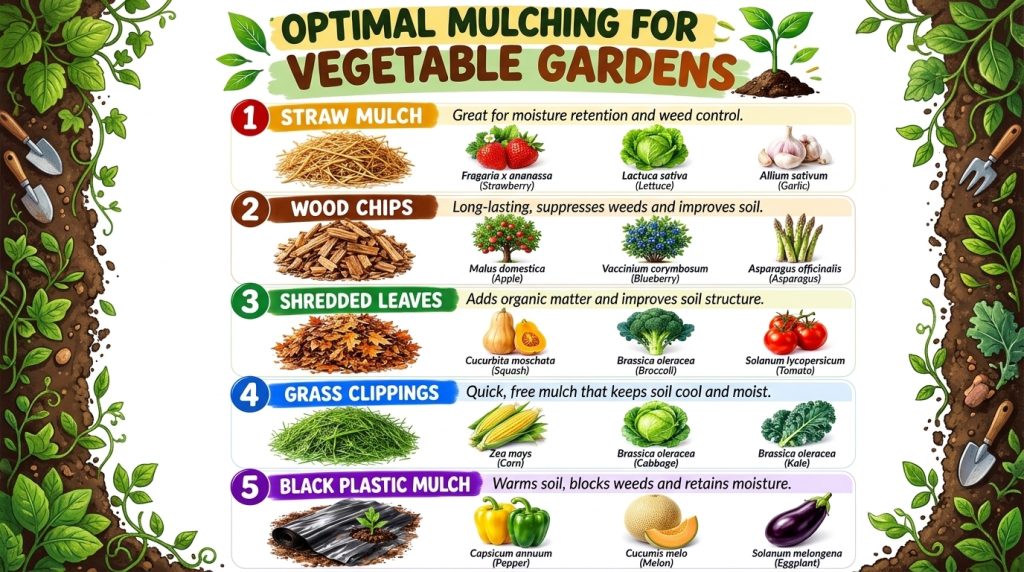
Top Mulch Types for Your Vegetable Garden
1. Straw
Straw (not hay, which contains weed seeds!) is a classic choice for vegetable gardens, especially for crops like strawberries and tomatoes. It’s lightweight, affordable, and widely available.
- Benefits: Excellent weed suppression, superb moisture retention, keeps fruits clean, decomposes slowly adding organic matter, and provides good insulation.
- Considerations: Can blow away in windy areas if not applied thickly, might introduce some unwanted seeds (though less than hay), and can harbor slugs if applied too thickly in wet conditions.
2. Wood Chips
Often sourced from arborists, wood chips are a durable and long-lasting mulch option. They are particularly good for pathways or perennial beds, but can also be used in vegetable gardens.
- Benefits: Long-lasting, excellent weed control, good moisture retention, attractive appearance, and improves soil structure as it breaks down.
- Considerations: Can initially tie up nitrogen in the soil (especially fresh wood chips), so apply a layer of compost underneath or use aged chips for annual vegetable beds. Best for established plants.
3. Shredded Leaves
Don’t let those fallen leaves go to waste! Shredding them (a lawnmower works wonders) creates an abundant and free source of nutrient-rich mulch.
- Benefits: Free and readily available, excellent for building soil fertility, good moisture retention, and provides habitat for beneficial organisms.
- Considerations: Can mat down if applied too thickly and wet, potentially hindering water penetration. Shredding them helps prevent this.
4. Grass Clippings
Another free and easy-to-access mulch, grass clippings can be a great way to recycle lawn waste. Just make sure they haven’t been treated with herbicides.
- Benefits: Free, adds nitrogen to the soil as it decomposes, good moisture retention, and suppresses weeds effectively.
- Considerations: Must be applied in thin layers (no more than 1-2 inches) to prevent matting, rotting, and foul odors. Avoid if your lawn has been treated with chemicals.
5. Black Plastic Mulch
While not organic, black plastic mulch is a popular choice for gardeners looking to warm the soil quickly, especially in cooler climates, or for crops that love heat like tomatoes, peppers, and melons.
- Benefits: Significantly warms soil (speeding up growth), excellent weed control, and conserves moisture.
- Considerations: Doesn’t add organic matter to the soil, can overheat soil in very hot climates, requires drip irrigation underneath, and needs to be removed and disposed of at the end of the season. Can also prevent rainfall from reaching the roots directly.
How to Apply Mulch Effectively
No matter which mulch you choose, proper application is key:
- Weed First: Ensure your garden bed is free of weeds before applying mulch.
- Water Thoroughly: Water your plants well before mulching to lock in moisture.
- Apply the Right Thickness: Generally, a 2-4 inch layer is ideal for organic mulches. For plastic mulch, ensure it’s taut and anchored.
- Keep it Away from Stems: Leave a small gap (an inch or two) around the base of plant stems to prevent rot and pest issues.
Conclusion
Mulching is a simple yet powerful practice that can revolutionize your vegetable garden, making it healthier, more productive, and easier to manage. Whether you opt for the classic straw, nutrient-rich shredded leaves, or heat-boosting black plastic, choosing the right mulch will set your garden up for success. Experiment with different types and see which works best for your plants and climate. Happy mulching!