Geraniums are a beloved staple in gardens and containers across the United States, celebrated for their vibrant, long-lasting blooms and cheerful disposition. Whether you adore their classic red hues, soft pinks, or bright whites, these tender perennials (often grown as annuals) bring an undeniable charm to any space. Yet, many gardeners face the frustrating challenge of geraniums that refuse to flower, producing lush foliage but no blossoms. It’s a common dilemma, but often rooted in a few easily correctable care mistakes.
Understanding your geranium’s needs is the first step toward a cascade of continuous color. By tuning into what these plants truly desire, you can transform a shy, green plant into a blooming powerhouse. Let’s delve into the top seven reasons why your geraniums might be holding back their beauty and discover simple adjustments to encourage them to flower profusely all season long.
The Secret to Prolific Geranium Blooms
Geraniums, botanically known as Pelargonium species, are sun-loving plants that thrive on consistent care and specific conditions to produce their iconic flower clusters. Like many flowering plants, they require a precise balance of light, water, nutrients, and proper cultural practices to channel their energy into blooming rather than just growing leaves. When any of these elements are out of sync, the plant prioritizes survival or vegetative growth, leaving you with a beautiful green specimen that lacks its show-stopping flowers.
1. Not Enough Sunlight
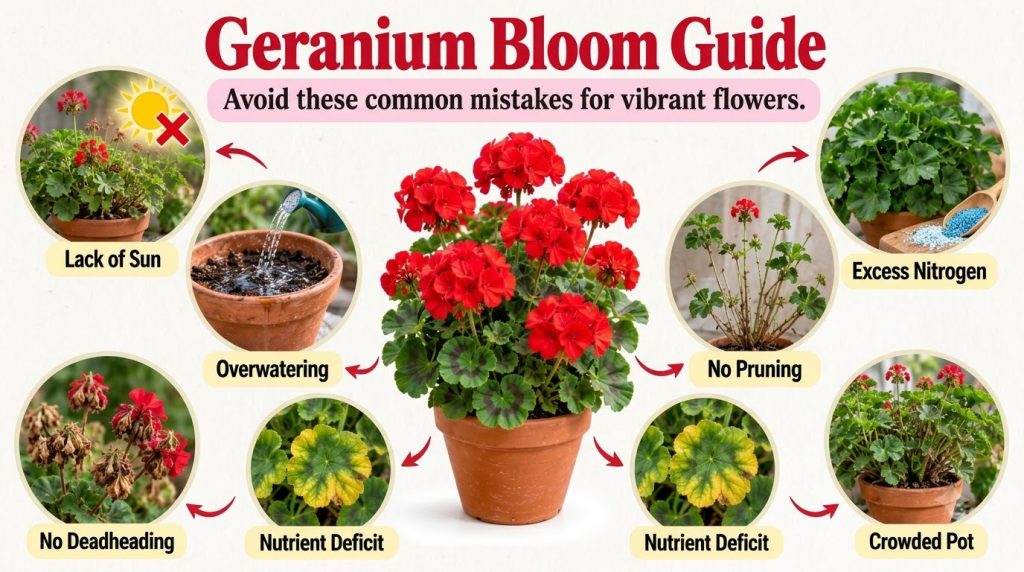
Geraniums are sun worshippers, requiring ample light to fuel their spectacular blooms. If your plant is in a shady spot, it will likely produce leggy stems and sparse, if any, flowers. Think of sunlight as the energy source for flower production.
- Actionable Advice: Aim for at least 6-8 hours of direct sunlight per day. In very hot climates (USDA Zones 8-11), some afternoon shade can be beneficial to prevent scorching, but morning sun is crucial.
- Practical Tip: Observe your garden’s sun patterns throughout the day. South-facing locations are often ideal, but east-facing spots can provide excellent morning sun without intense afternoon heat.
2. Overwatering Your Geraniums
While geraniums need consistent moisture, they are highly susceptible to root rot in waterlogged conditions. Overwatering suffocates the roots, leading to a stressed plant that cannot properly absorb nutrients or focus energy on flowering.
- Actionable Advice: Allow the top 1-2 inches of soil to dry out completely before watering again. When you do water, do so deeply until water drains from the bottom of the pot.
- Practical Tip: Always use pots with drainage holes. If growing in beds, ensure your soil has good drainage; amending heavy clay soils with organic matter can improve this significantly.
3. Lack of Essential Nutrients
Like all plants, geraniums need a balanced diet of macro and micronutrients. A lack of essential elements can lead to stunted growth, yellowing leaves, and a complete absence of flowers.
- Actionable Advice: Feed your geraniums every 2-4 weeks during the active growing season (spring through fall) with a balanced liquid fertilizer or incorporate a slow-release granular fertilizer at planting. Look for formulas with a slightly higher phosphorus (the middle number in the N-P-K ratio) to encourage blooming.
- Practical Tip: Yellowing lower leaves can indicate nitrogen deficiency, while purplish discoloration might suggest a phosphorus shortage. Adjust your feeding schedule and fertilizer type based on these visual cues.
4. Overcrowding in Planters or Beds
When geraniums are planted too closely together, they compete for precious resources like light, water, and nutrients. This competition leads to stressed plants with poor air circulation, making them more prone to disease and less likely to flower.
- Actionable Advice: Ensure proper spacing for adequate airflow and root development. For container planting, select a pot size appropriate for the mature size of the plant, often one geranium per 8-10 inch pot. In garden beds, space plants 10-12 inches apart.
- Practical Tip: If you notice plants looking sparse or lanky despite good care, consider repotting or thinning them out to give each plant room to thrive.
5. Using the Wrong Pot Size
The size of your pot significantly impacts your geranium’s health and blooming potential. A pot that is too small restricts root growth, leading to a root-bound plant. Conversely, a pot that is too large can hold excess moisture, increasing the risk of overwatering and root rot.
- Actionable Advice: For a single standard zonal geranium, a pot with a 8-10 inch diameter is generally sufficient. If you’re planting multiple geraniums, choose a larger container that allows at least 6-8 inches between plants.
- Practical Tip: When transplanting, try to move your geraniums to a pot that is only one size larger (e.g., from a 6-inch to an 8-inch pot) to prevent overpotting.
6. Neglecting Regular Pruning
Pruning is not just for shaping; it’s vital for encouraging bushier growth and more flowers. Geraniums left to their own devices can become leggy, directing energy into stem elongation rather than bloom production. Deadheading, the removal of spent flowers, is also crucial.
- Actionable Advice: Pinch back young plants to encourage branching. Regularly deadhead faded blooms by snapping the flower stalk at its base. This signals the plant to produce more flowers instead of setting seeds. For leggy plants, a more substantial prune in mid-season can rejuvenate growth and encourage new flowering.
- Practical Tip: Use sharp, clean pruners or simply pinch off spent flowers and leggy stems with your fingers just above a leaf node.
7. Incorrect Fertilizer (Too Much Nitrogen)
While nitrogen is essential for leafy green growth, too much of it can be detrimental to flowering. Fertilizers with a very high nitrogen content (the first number in the N-P-K ratio) will encourage your geranium to produce abundant foliage at the expense of developing buds and blossoms.
- Actionable Advice: Opt for a balanced fertilizer or one that is slightly higher in phosphorus (the middle number) and potassium (the last number) during the blooming season. Examples include formulations like 5-10-5 or 10-20-10. Avoid using lawn fertilizers, which are typically very high in nitrogen.
- Practical Tip: Read fertilizer labels carefully. A common mistake is to assume more fertilizer means more flowers. Always follow the manufacturer’s recommended dosage to prevent over-fertilization, which can burn roots.
Regional Considerations for Geranium Care
Geraniums (Pelargonium species) are tender perennials, meaning they are perennial only in warmer climates. In USDA Hardiness Zones 9-11, they can thrive outdoors year-round. However, in cooler zones (3-8), they are typically grown as annuals or brought indoors to overwinter before the first frost. Regardless of your zone, consistent care remains paramount.
- Zones 3-8: Plant after all danger of frost has passed in spring when soil temperatures are reliably warm. Focus on providing full sun and consistent feeding throughout their growing season until fall.
- Zones 9-11: Geraniums can be permanent fixtures, but still benefit from pruning to maintain shape and encourage continuous blooming. Pay attention to summer heat; while they love sun, extreme afternoon heat might warrant a spot with dappled shade.
Common Mistakes & How to Prevent Them
Beyond the seven specific issues, a general lack of observation is a common pitfall for gardeners. Regularly inspecting your geraniums allows you to catch problems early, whether it’s the beginning signs of nutrient deficiency, pest activity, or simply soil that’s too dry or wet. Healthy roots are key, so ensuring proper drainage and avoiding compaction are crucial for their overall well-being. Good airflow helps prevent fungal diseases, especially in humid conditions.
Remember that local microclimates and specific cultivars can also influence performance. Don’t be afraid to experiment with different pot placements or slight adjustments to your watering schedule based on how your individual plants respond.
Cultivate a Season of Geranium Glory
Watching your geraniums burst into a profusion of color is one of gardening’s true joys. By understanding their needs and sidestepping these common mistakes, you’re well on your way to cultivating robust, floriferous plants that will brighten your garden, patio, or window boxes all season long. Pay attention to their signals – a healthy geranium will tell you what it needs with its vibrant green leaves and abundance of cheerful blooms. Happy gardening!