Few plants capture the heart of a gardener quite like the hydrangea. With their lush foliage and magnificent, often abundant blooms, hydrangeas bring a touch of old-world charm and vibrant color to any garden space. Whether you’re dreaming of a cottage garden overflowing with pastel hues or a modern landscape punctuated by bold floral statements, there’s a hydrangea out there perfect for you. But with so many varieties, how do you choose and care for the right one? Let’s dive into the enchanting world of hydrangeas together!
Why Hydrangeas Are a Garden Favorite
Hydrangeas are truly special. They offer a prolonged blooming season, often from early summer well into fall, giving your garden continuous beauty. Their versatility means you can find a hydrangea for almost any garden spot – from sunny borders to shady nooks. Plus, their flowers aren’t just pretty; they often change color based on soil pH or age, adding an element of surprise!
Discovering the Wonderful World of Hydrangea Types
To truly appreciate hydrangeas, it’s helpful to know a little about their different types. Each has its own unique characteristics, growth habits, and care requirements. Let’s look at some of the most popular:
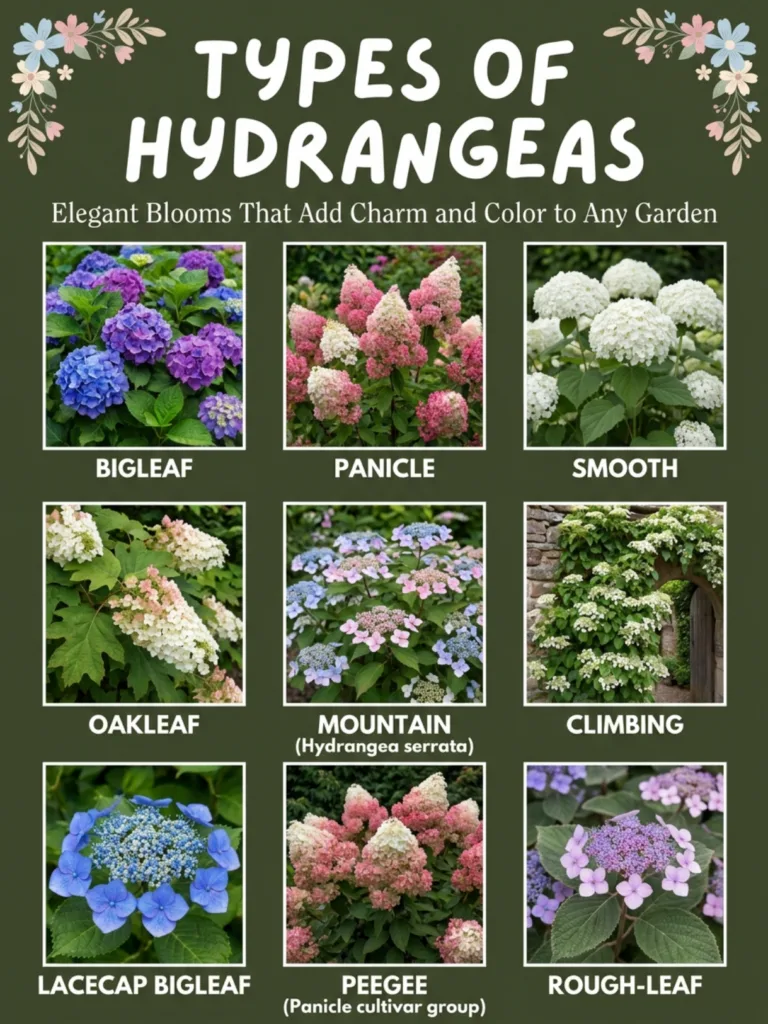 A visual guide to the diverse types of hydrangeas to help you identify your favorites.
1. Bigleaf Hydrangea (Hydrangea macrophylla)
- Characteristics: These are probably what most people picture when they think of hydrangeas. They feature large, showy flower clusters and boast two main forms:
- Mophead: Known for their large, round, globe-like flower heads.
- Lacecap: Characterized by flatter flower clusters with tiny fertile flowers in the center, surrounded by a ring of larger, showy sterile flowers.
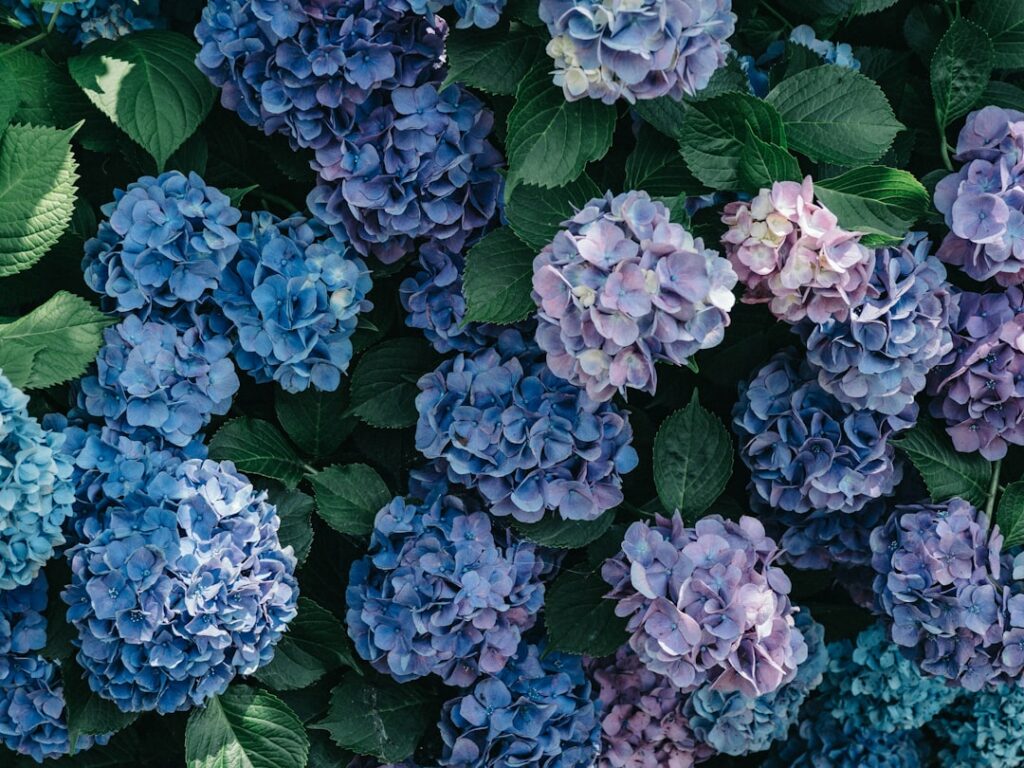
- Color Magic: Many Bigleaf varieties are famous for their ability to change flower color based on soil pH. Acidic soil (pH below 6.0) tends to produce blue flowers, while alkaline soil (pH above 7.0) leads to pink blooms. Neutral soil results in purple or a mix of both.
- Zones: USDA Hardiness Zones 5-9.
- Growing Tip: Many bloom on old wood, so careful pruning after flowering is key!
2. Panicle Hydrangea (Hydrangea paniculata)
- Characteristics: Often called ‘Peegee’ hydrangeas (referring to a popular cultivar group), these are some of the toughest and most adaptable hydrangeas. They produce large, cone-shaped flower clusters, usually white or lime green, that often age to pink or red later in the season.
- Sun Lovers: Unlike some of their cousins, Panicle hydrangeas can tolerate more sun, even full sun in cooler climates, and are more drought-tolerant once established.
- Zones: USDA Hardiness Zones 3-8. They are incredibly cold hardy!
- Growing Tip: They bloom on new wood, so prune them in late winter or early spring to shape the plant and encourage robust flowering.
3. Smooth Hydrangea (Hydrangea arborescens)
- Characteristics: Best known for the ‘Annabelle’ cultivar, Smooth hydrangeas produce enormous, domed clusters of white or sometimes pink flowers. They are native to the eastern United States.
- Reliable Bloomers: Like Panicle hydrangeas, they bloom on new wood, making them very reliable bloomers even after harsh winters.
- Zones: USDA Hardiness Zones 3-9.
- Growing Tip: Prune these back significantly in late winter or early spring to encourage strong stems and abundant flowers.
4. Oakleaf Hydrangea (Hydrangea quercifolia)
- Characteristics: This unique hydrangea stands out with its deeply lobed, oak-like leaves that turn magnificent shades of bronze, red, and purple in the fall, offering multi-season interest. Its flowers are elongated, cone-shaped clusters, typically white, aging to pink.
- Winter Interest: The peeling cinnamon-colored bark provides beautiful texture and color in the winter garden.
- Zones: USDA Hardiness Zones 5-9.
- Growing Tip: They bloom on old wood and generally require minimal pruning. Remove only dead or crossing branches after flowering.
5. Mountain Hydrangea (Hydrangea serrata)
- Characteristics: Often mistaken for Bigleaf hydrangeas, Mountain hydrangeas are generally smaller, more delicate, and more cold-hardy. They typically feature lacecap-style flowers and can also exhibit color changes based on soil pH.
- Zones: USDA Hardiness Zones 5-9.
- Growing Tip: Excellent for smaller gardens or woodland settings. Similar pruning to Bigleaf hydrangeas.
6. Climbing Hydrangea (Hydrangea anomala petiolaris)
- Characteristics: A true showstopper for vertical spaces, this woody vine climbs using aerial rootlets. It produces beautiful clusters of fragrant white lacecap-like flowers in late spring to early summer.
- Slow Start, Strong Finish: Can be slow to establish but becomes quite vigorous once settled.
- Zones: USDA Hardiness Zones 4-8.
- Growing Tip: Provide a sturdy support structure like a wall, fence, or arbor. Prune only to control size or shape after flowering.
Essential Hydrangea Care Tips for Thriving Blooms
No matter which hydrangea you choose, a little care and attention will ensure it flourishes and graces your garden with its stunning flowers.
Choosing the Right Spot
- Sunlight: Most hydrangeas prefer a location with morning sun and afternoon shade, especially in hotter climates. Too much intense afternoon sun can scorch the leaves and blooms. Panicle hydrangeas are the most tolerant of full sun.
- Soil: Well-draining soil is crucial. Hydrangeas like rich, moist soil, but they absolutely hate ‘wet feet.’ Amend heavy clay soils with compost to improve drainage.
- Space: Consider the mature size of your chosen variety and give it enough room to grow without overcrowding.
Watering Wisely
Hydrangeas are thirsty plants, especially when they are establishing or during hot, dry spells. Aim for consistent moisture. A good rule of thumb is to water deeply 2-3 times a week, rather than shallowly every day. Always check the soil moisture before watering – it should feel moist, but not soggy, about an inch or two down.
 Proper watering is key to keeping your hydrangeas lush and vibrant.
Pruning for Abundant Flowers
This is where knowing your hydrangea type really pays off! Improper pruning is a common reason for a lack of blooms.
- For Bigleaf, Oakleaf, and Mountain Hydrangeas (bloom on old wood): Prune immediately after the flowers fade in summer. Focus on removing dead, damaged, or weak stems, and thin out a few of the oldest stems to encourage new growth from the base. Avoid pruning after late summer, as you’ll be cutting off next year’s flower buds.
- For Panicle and Smooth Hydrangeas (bloom on new wood): These are much more forgiving! Prune in late winter or early spring while the plant is dormant. You can cut them back by one-third to one-half their height to encourage stronger stems and larger blooms.
- For Climbing Hydrangeas: Prune only to control size or shape after flowering, as needed.
Fertilizing and Soil pH
- Fertilizing: Hydrangeas aren’t heavy feeders. A balanced slow-release fertilizer in early spring is usually sufficient. Avoid over-fertilizing, especially with high-nitrogen fertilizers, as this can promote leafy growth at the expense of flowers.
- Soil pH (for Bigleaf and Mountain Hydrangeas): If you want to change the color of your Bigleaf or Mountain hydrangeas:
- To make them bluer: Lower soil pH by adding aluminum sulfate or elemental sulfur. Start with small amounts and test your soil regularly.
- To make them pinker: Increase soil pH by adding garden lime.
Protecting Your Hydrangeas Through the Seasons
In colder zones (USDA 5 or below), Bigleaf hydrangeas might benefit from some winter protection to ensure their old wood buds survive. A layer of mulch (like straw or pine needles) around the base can help. You can also build a cage around them and fill it with leaves for extra insulation.
Solving Common Hydrangea Riddles
- “My Hydrangea Isn’t Blooming!”
- Check Pruning: Most common culprit for old-wood bloomers.
- Winter Damage: Cold snaps can kill flower buds on old wood.
- Too Much Shade: They need some sun to produce flowers.
- Too Much Nitrogen: Encourages leaves, not flowers.
- “Yellow Leaves!”
- Overwatering: Drowning roots. Check soil moisture.
- Nutrient Deficiency: Iron chlorosis (often in alkaline soil).
- Underwatering: Leaves can also wilt and yellow from thirst.
Bringing It All Together
Growing hydrangeas is a truly rewarding experience. By understanding the different types and their specific needs, you can transform your garden into a captivating display of these magnificent blooms. Remember, gardening is all about observation and learning. Pay attention to what your hydrangeas tell you, and you’ll be enjoying their magic for years to come. Happy gardening, neighbor!