When we think of bees, often the first image that comes to mind is a busy honeybee buzzing around a vibrant flower. And while flowers are indeed vital, they are only one piece of the puzzle for our incredible native bee populations. Many gardeners, eager to support pollinators, focus solely on planting nectar and pollen-rich flora, but for native bees to truly thrive, we need to look beyond just the blooms. Their homes, their safe havens, are just as crucial as their food sources.
Native bees, unlike their European honeybee cousins, are often solitary and incredibly diverse. They come in all shapes and sizes, and with that diversity comes a wide array of nesting habits. Understanding these specific habitat needs is the key to creating a truly thriving pollinator garden and ensuring these essential workers can complete their life cycles.
Why Diverse Habitats Matter for Native Bees
Native bees play an indispensable role in pollinating our gardens, farms, and natural ecosystems. They contribute significantly to the fruit, vegetable, and seed production that sustains life on Earth. However, many native bee populations are in decline due to habitat loss, pesticide use, and climate change. By providing suitable nesting sites, we offer them a safe place to lay their eggs, protect their young, and overwinter, thereby directly boosting their numbers and diversity in our local environments.
The Two Main Types of Native Bee Nesters
Native bees generally fall into two broad categories when it comes to nesting:
- Ground-Nesting Bees: These bees, which make up about 70% of native bee species, dig tunnels in the soil. They prefer bare, undisturbed patches of well-drained soil, often on slight slopes or sunny spots.
- Cavity-Nesting Bees: The remaining 30% of native bees nest in pre-existing hollow spaces. This can include hollow plant stems, old beetle borings in wood, or even abandoned snail shells.
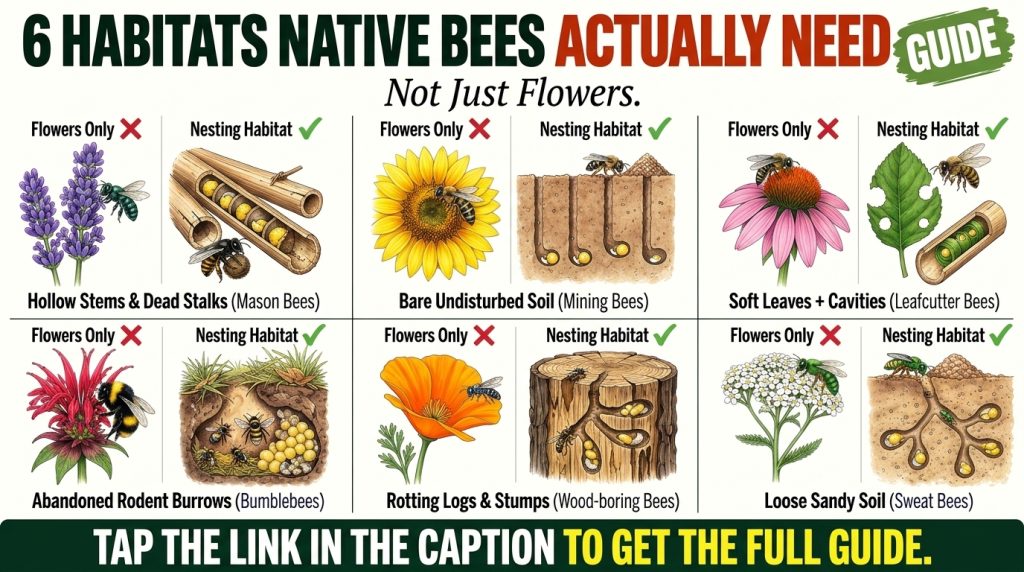
Essential Habitats Native Bees Actually Need
Let’s explore the crucial habitats beyond flowers that you can provide in your garden:
1. Bare Soil Patches
Forget the perfectly manicured lawn! Many solitary ground-nesting bees, like mining bees (Andrena spp.) and sweat bees (Halictus spp.), need access to bare soil. These bees dig their nests underground, where they lay their eggs and provision them with pollen and nectar. To help them, leave small, unmulched patches of well-drained soil exposed to the sun. Avoid tilling these areas, as it can disturb existing nests.
2. Hollow Stems and Pithy Stems
Many cavity-nesting bees, such as small carpenter bees (Ceratina spp.) and mason bees (Osmia spp.), utilize the hollow or pithy stems of plants. Instead of cutting back all your perennials in the fall, leave some stems standing over winter. Plants like sunflowers, coneflowers, elderberry, and raspberries have excellent hollow or pithy stems that bees can use for nesting. In spring, new growth will emerge around these older stems.
3. Dead Wood and Rotting Logs
Some native bees, including certain species of carpenter bees and leafcutter bees (Megachile spp.), will nest in soft, decaying wood. Leaving an old log or a stump in a quiet corner of your garden can provide valuable nesting habitat. You might also find them utilizing old beetle tunnels in snags or fallen branches.
4. Leaf Litter and Plant Debris
Don’t be too quick to tidy up every fallen leaf or dead plant matter. Many insects, including some native bees and overwintering butterflies, use leaf litter and plant debris for shelter and nesting. A light layer of leaves under shrubs and trees offers protection and nesting material for various beneficial garden creatures.
5. Rocky Areas and Stone Walls
Certain bees and other beneficial insects might find crevices in rock piles or dry-stacked stone walls to be ideal nesting sites. If you have a natural rock outcropping or are building a stone feature, consider leaving some small gaps or sheltered spots that could serve as homes.
6. “Bee Hotels” (With Caution)
While often well-intentioned, commercial bee hotels can sometimes do more harm than good if not properly maintained. If you choose to use one, ensure it’s made of natural, untreated materials, has tubes of varying sizes, and can be cleaned annually to prevent the build-up of parasites and diseases. Better yet, focus on creating natural habitats first!
Creating Your Native Bee Sanctuary
Transforming your garden into a native bee sanctuary is a rewarding process. Start small, observe which bees visit your garden, and gradually incorporate different habitat elements. Remember, a truly pollinator-friendly garden is a little wilder, a little messier, and much more alive.
By consciously providing diverse nesting sites in addition to beautiful flowers, you’re not just creating a garden; you’re building an entire ecosystem where native bees can thrive, ensuring a healthier and more vibrant world for everyone. Happy gardening!