There’s a special kind of magic that hums through a garden when bees are busy at work. Watching these diligent little creatures flit from flower to flower isn’t just a joy; it’s a sign of a healthy, vibrant ecosystem. Bees, alongside other pollinators, are the unsung heroes of our gardens and our dinner tables, responsible for pollinating a huge portion of the food we eat.
But sadly, our bee friends are facing some tough times. Habitat loss, disease, and pesticide use have put their populations at risk. The good news? We, as gardeners and caretakers of our little patches of earth, have the power to make a huge difference. By choosing to plant the right flowers and adopting bee-friendly practices, we can turn our yards into vital havens for these incredible insects.
Why Bees Need Our Help (and Why We Need Them!)
Think about your favorite fruits, vegetables, and even nuts. Chances are, a bee played a crucial role in bringing them to your plate. Bees transfer pollen from one flower to another, enabling plants to produce seeds and fruits. Without them, our harvests would dwindle, and the natural world would suffer immense losses.
Creating a bee-friendly garden isn’t just an act of kindness; it’s an investment in our own future and the health of our local environment. It enriches your garden with life, vibrancy, and often, better yields!
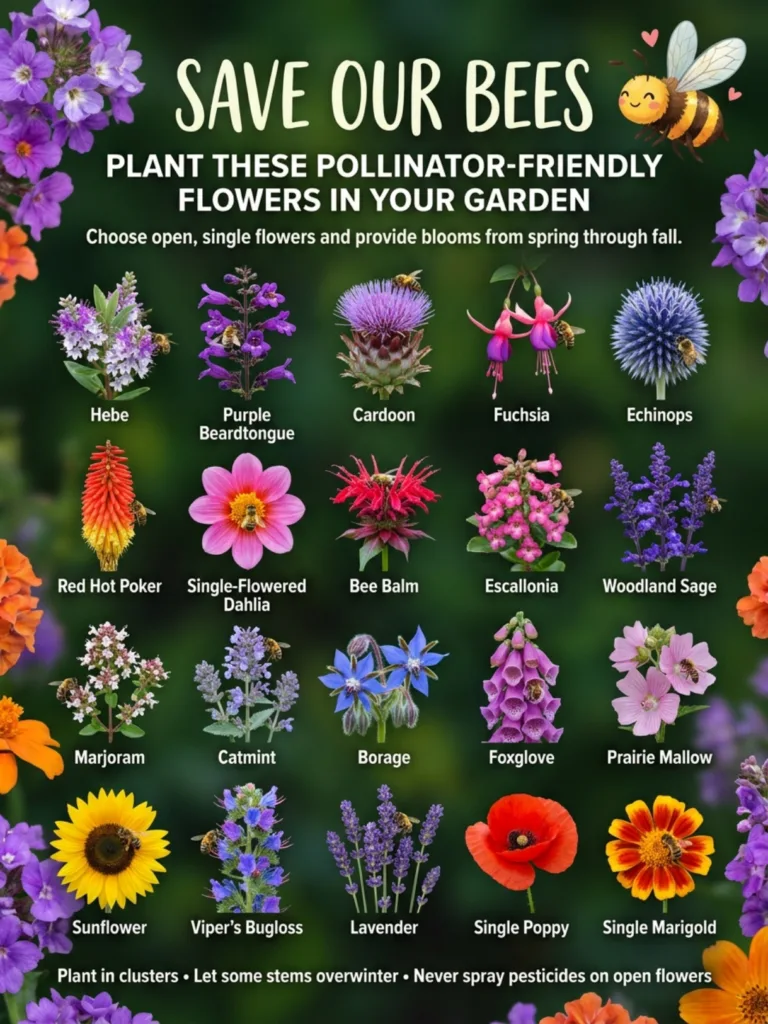 A helpful guide to some of the many beautiful flowers that bees love.
Choosing the Right Flowers for a Buzzing Garden
When it comes to inviting bees into your garden, variety and a long blooming season are key. Bees need a continuous supply of nectar and pollen from spring all the way through fall. Different bees have different preferences too, so offering a diverse menu of flowers will attract a wider range of pollinators.
Think Native Plants First
One of the best ways to support local bee populations is by planting native flowers. These plants have evolved alongside local bees, meaning they are perfectly suited to provide the right kind of nutrition and support for your area’s specific bee species. Check with your local extension office or a native plant nursery to find out what thrives in your USDA plant hardiness zone.
Opt for a Colorful Buffet
Bees are attracted to a wide array of colors, especially blues, purples, yellows, and whites. Flowers with simple, open structures, like daisies or sunflowers, make it easy for bees to access their nectar and pollen. Don’t forget herbs like lavender, rosemary, and borage – they’re not just for cooking; bees adore them!
Some Bee Favorites to Consider:
- Lavender: A fragrant favorite, great for borders.
- Coneflowers (Echinacea): Beautiful and resilient, a late-summer staple.
- Sunflowers: A dramatic statement and a bee magnet.
- Zinnias: Easy to grow and come in a dazzling array of colors.
- Borage: Its star-shaped blue flowers are irresistible to bees.
- Crocus & Snowdrops: Provide early spring sustenance when other food sources are scarce.
- Clover & Dandelions: Often considered weeds, but they are vital early food sources for bees! Consider letting some grow in unused lawn areas.
Practical Tips for a Bee-Friendly Haven
Beyond choosing the right plants, how you garden makes a huge difference. Here are some simple, actionable steps to make your garden truly bee-friendly:
Plant in Clusters
Rather than scattering individual plants, group similar flowers together in clumps of at least 1 square foot. This creates a larger, more visible target for foraging bees, allowing them to collect more nectar and pollen efficiently without expending too much energy flying between distant plants.
Let Some Stems Overwinter
It might sound a bit messy, but leaving some hollow or pithy plant stems standing over winter provides crucial nesting sites for native solitary bees. Many of these bees nest inside hollow stems. In spring, you can tidy up, but consider leaving a small patch undisturbed or cutting stems to varying lengths (6-15 inches) and bundling them in a sunny spot.
Never Spray Pesticides on Open Flowers
This is perhaps one of the most critical steps. Pesticides, even organic ones, can be harmful to bees. Avoid spraying any chemicals on plants that are in bloom, especially during the day when bees are most active. If you must use a pest control method, research bee-safe alternatives, apply them in the evening when bees are less active, and always follow label instructions carefully.
Provide a Water Source
Just like us, bees need water! A shallow bird bath with some pebbles or marbles for bees to land on can be a lifesaver, especially on hot days. They need a safe spot to drink without drowning.
Embrace a Little ‘Wild’
A perfectly manicured lawn might look nice to us, but a little bit of wildness is wonderful for bees. Consider letting a patch of clover grow in your lawn or allowing some native weeds to flourish in an out-of-the-way corner. These often provide valuable food sources.
Beyond Flowers: Holistic Bee Support
Creating a bee-friendly garden goes beyond just plants. It’s about cultivating an environment where bees feel safe and supported.
- Reduce or Eliminate Lawn Areas: Lawns offer very little for pollinators. Consider converting some lawn space into flower beds or native plant zones.
- Think About Shelter: Beyond overwintering stems, leaving small piles of leaves or brush can provide shelter and nesting spots for ground-nesting bees.
- Become a Chemical-Free Zone: Commit to gardening without synthetic pesticides, herbicides, and fungicides. Healthy soil and diverse plants can often manage pests naturally.
Bringing It All Together
Starting a bee-friendly garden doesn’t mean overhauling everything overnight. Begin with a few purposeful plant choices, adopt one or two new gardening habits, and watch the magic unfold. You’ll not only be helping our essential pollinators thrive, but you’ll also find immense joy in connecting more deeply with the natural world right outside your door.
Every flower planted, every pesticide avoided, and every moment spent observing these tiny wonders contributes to a healthier planet. Your garden can be a beacon of hope, a buzzing paradise, and a testament to the power of thoughtful, caring hands.