Did you know that certain prebiotic fibers act as an anti-fat storage switch in your body? It’s true! The secret lies in how these incredible fibers interact with your gut microbiome, leading to the production of beneficial compounds called Short-Chain Fatty Acids (SCFAs). These SCFAs play a pivotal role in regulating your metabolism, influencing everything from energy expenditure to how your body stores fat.
For anyone looking to support their gut health, boost metabolism, and manage weight effectively, understanding these specific fibers is a game-changer. Forget restrictive diets and complicated routines; often, the path to a healthier weight and thriving gut begins with smart food choices.
At Glowra Health, we believe in empowering you with actionable insights. This article dives deep into nine powerful SCFA-producing fibers, often overlooked, that can help turn on your body’s natural anti-fat storage mechanisms. Let’s explore these metabolic allies and how to incorporate them into your daily diet.
Understanding SCFA-Producing Fibers and Your Metabolism
Prebiotic fibers are non-digestible components of food that selectively stimulate the growth and activity of beneficial bacteria in your gut. When these good bacteria ferment prebiotic fibers, they produce Short-Chain Fatty Acids (SCFAs) like acetate, propionate, and butyrate. These SCFAs are not just waste products; they are powerful signaling molecules that profoundly impact your health.
What are Short-Chain Fatty Acids (SCFAs)?
SCFAs offer a wealth of benefits that directly contribute to the ‘anti-fat storage switch’ effect:
- Energy Regulation: SCFAs can influence appetite control and satiety, potentially helping you eat less.
- Insulin Sensitivity: Some SCFAs, particularly butyrate, may improve insulin sensitivity, which is crucial for blood sugar control and preventing fat storage.
- Metabolic Boost: They can affect metabolic rate and energy expenditure, encouraging your body to burn more calories.
- Gut Barrier Function: Butyrate is a primary fuel source for colon cells, strengthening the gut barrier and reducing inflammation, which is often linked to metabolic dysfunction.
- Immune Support: A healthy gut microbiome, fueled by SCFAs, contributes to a robust immune system.
By including SCFA-producing fibers in your diet, you’re not just feeding your gut; you’re actively supporting a cascade of metabolic processes that can work in your favor.
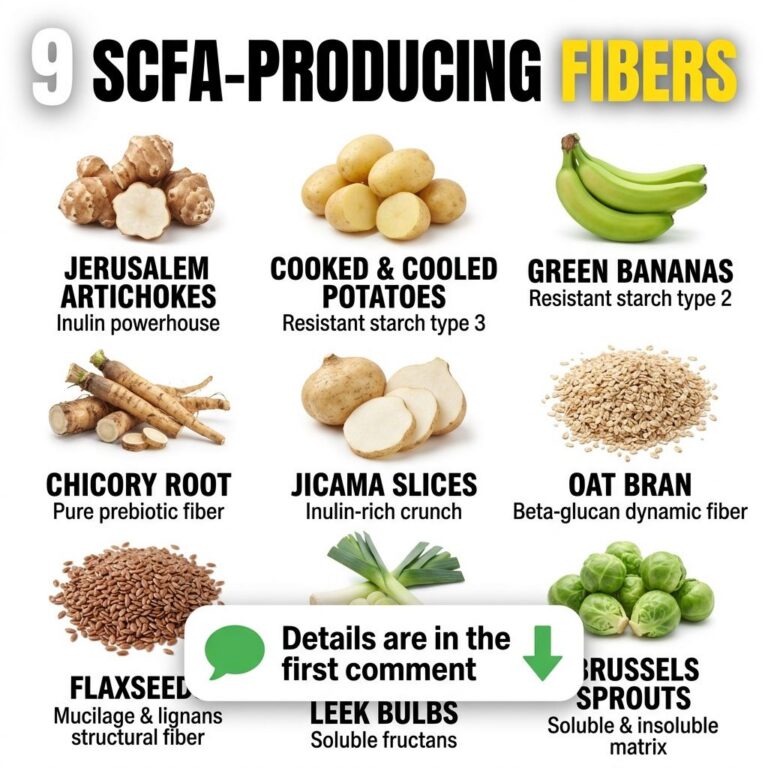
Your Anti-Fat Storage Arsenal: 9 SCFA-Producing Fibers
Here are nine remarkable fibers that can help optimize your gut health and metabolism:
1. Jerusalem Artichokes: The Tuber Powerhouse
Often called sunchokes, these knobby tubers are a fantastic source of inulin, a type of fructan. Inulin is a potent prebiotic fiber that feeds beneficial gut bacteria, leading to a significant increase in SCFA production. These SCFAs can help regulate blood sugar levels and may contribute to a feeling of fullness, aiding in weight management.
2. Cooked & Cooled Potatoes: Resistant Starch Revelation
When potatoes are cooked and then cooled, their starches transform into resistant starch. This type of starch resists digestion in the small intestine and instead travels to the large intestine, where it acts as a powerful prebiotic. Resistant starch is known for boosting butyrate production, which supports gut lining integrity and metabolic health.
3. Green Bananas: Unripe Goodness
Unlike ripe yellow bananas, green (unripe) bananas are rich in resistant starch. As they ripen, this resistant starch converts into simple sugars. Consuming green bananas provides an excellent source of prebiotic fiber that fuels healthy gut bacteria, promoting SCFA production and potentially helping to regulate blood sugar and appetite.
4. Chicory Root: An Inulin-Rich Secret
Chicory root is one of the richest natural sources of inulin fiber. It’s often used as a coffee substitute and its fiber extracted for supplements. Including chicory root in your diet, perhaps in powdered form in smoothies or baking, can significantly enhance SCFA production, benefiting gut health and metabolic function.
5. Jicama Slices: Crunchy Gut Support
This crisp, sweet root vegetable is a refreshing addition to salads and snacks. Jicama is packed with inulin-type fructans and oligofructose, which are excellent prebiotics. Enjoying jicama can encourage a diverse gut microbiome and robust SCFA synthesis, contributing to a healthy digestive system and metabolism.
6. Oat Bran: More Than Just Breakfast
Oat bran is the outer layer of the oat groat, known for its high soluble fiber content, particularly beta-glucans. Beta-glucans are powerful prebiotics that support the growth of beneficial gut bacteria and lead to increased SCFA production. Regular consumption of oat bran can help lower cholesterol, stabilize blood sugar, and enhance satiety.
7. Flaxseed: Tiny Seeds, Big Impact
These small, unassuming seeds are nutritional powerhouses. Flaxseeds are rich in both soluble and insoluble fiber, as well as lignans. The soluble fiber in flaxseed forms a gel in the digestive tract, slowing digestion and promoting fullness, while also serving as a prebiotic to generate SCFAs, supporting gut health and metabolic balance.
8. Leek Bulbs: Flavorful Fiber Boost
Leeks, a versatile and flavorful vegetable, are another excellent source of inulin and fructooligosaccharides (FOS). These prebiotic fibers are crucial for nurturing a healthy gut environment and promoting the production of SCFAs. Incorporating leeks into soups, stews, or stir-fries can provide a significant boost to your fiber intake and gut health.
9. Brussels Sprouts: Small but Mighty
These cruciferous vegetables are packed with both soluble and insoluble fiber, making them a fantastic food for gut health. The fibers in Brussels sprouts support the growth of beneficial bacteria, leading to the creation of SCFAs. They also contain sulfur compounds that support detoxification pathways, further contributing to overall metabolic well-being.
Maximizing Your Fiber Intake for Metabolic Health
Incorporating these SCFA-producing fibers into your diet doesn’t have to be complicated. Here are some simple tips:
- Variety is Key: Aim to eat a diverse range of plant foods to feed a wider variety of gut bacteria.
- Start Slowly: If you’re not used to a high-fiber diet, gradually increase your intake to avoid digestive discomfort.
- Stay Hydrated: Drink plenty of water when increasing fiber to help it move smoothly through your digestive system.
- Meal Prep: Prepare cooked and cooled potatoes or green banana smoothies in advance for easy, fiber-rich meals.
Frequently Asked Questions About SCFA Fibers
What is the best time to consume SCFA-producing fibers?
There’s no single